• Global CNC market projected to reach $128B by 2028 • New EU trade regulations for precision tooling components • Aerospace deman
NYSE: CNC +1.2%LME: STEEL -0.4%

What Global Manufacturing Means for CNC Buyers
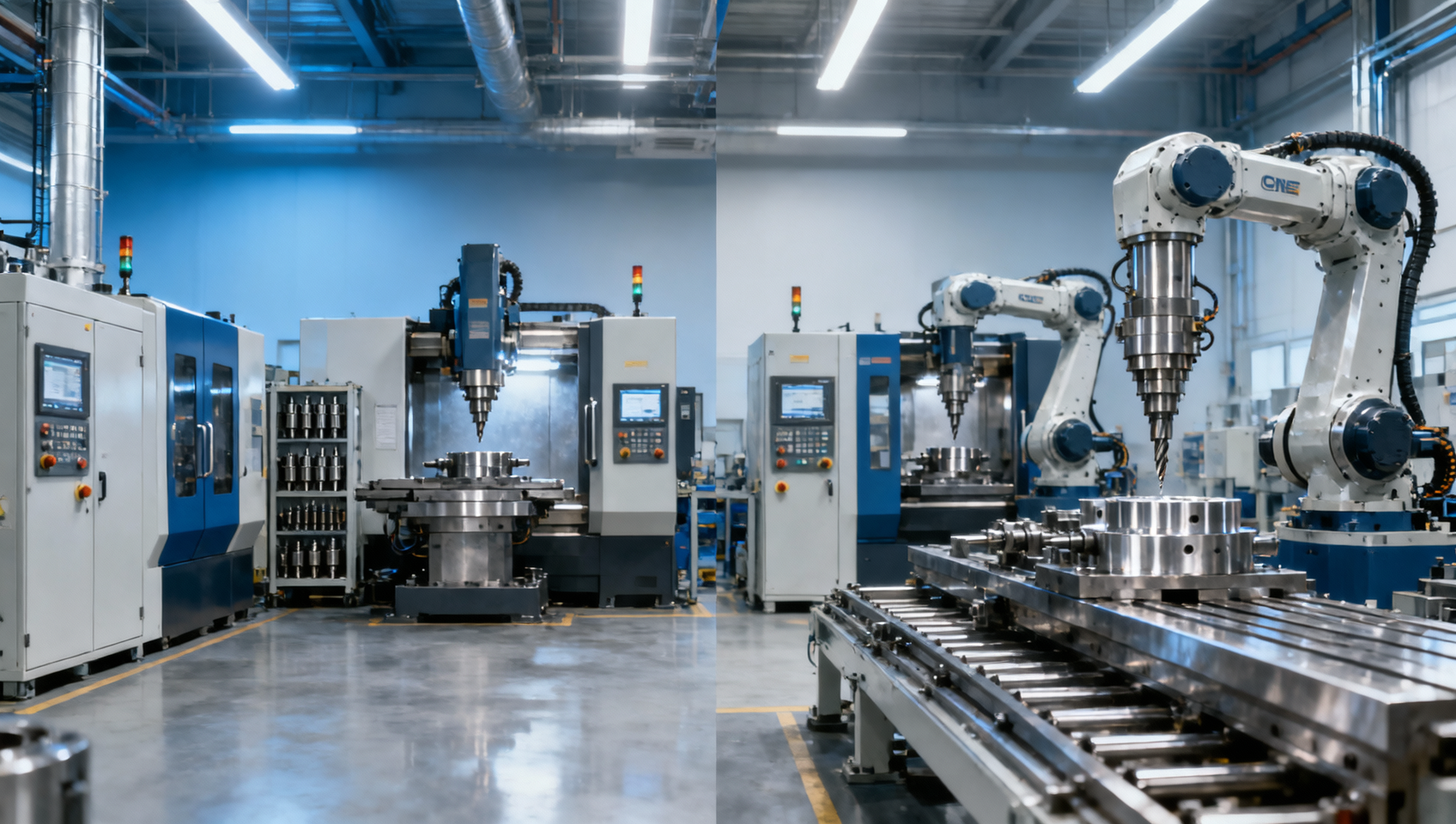
Global Manufacturing is reshaping how CNC buyers evaluate suppliers, technology, and cost across the Machine Tool Market. From industrial CNC and CNC milling to automated production lines and Industrial Automation, today’s Manufacturing Industry demands precision, flexibility, and global sourcing insight. This article explores what these shifts mean for purchasing decisions, production process planning, and long-term competitiveness.
For research-oriented readers, machine operators, procurement teams, and commercial evaluators, the biggest shift is no longer just where a CNC machine is built. The real issue is how global manufacturing affects lead time, spare parts availability, process capability, cost stability, and long-term service risk. A lower quote can look attractive at first, but if tooling support takes 6 weeks, software updates are delayed, or geometric accuracy drifts beyond tolerance, the total cost of ownership quickly rises.
In the CNC machine tool sector, global sourcing now connects machine builders, controller suppliers, spindle makers, ball screw manufacturers, fixture providers, and automation integrators across multiple countries. Buyers therefore need a broader decision framework. Instead of comparing only machine specifications, they must assess production process fit, international supply chain resilience, technical documentation, after-sales response, and the supplier’s ability to support automation, quality control, and future upgrades.
Why Global Manufacturing Changes CNC Buying Logic
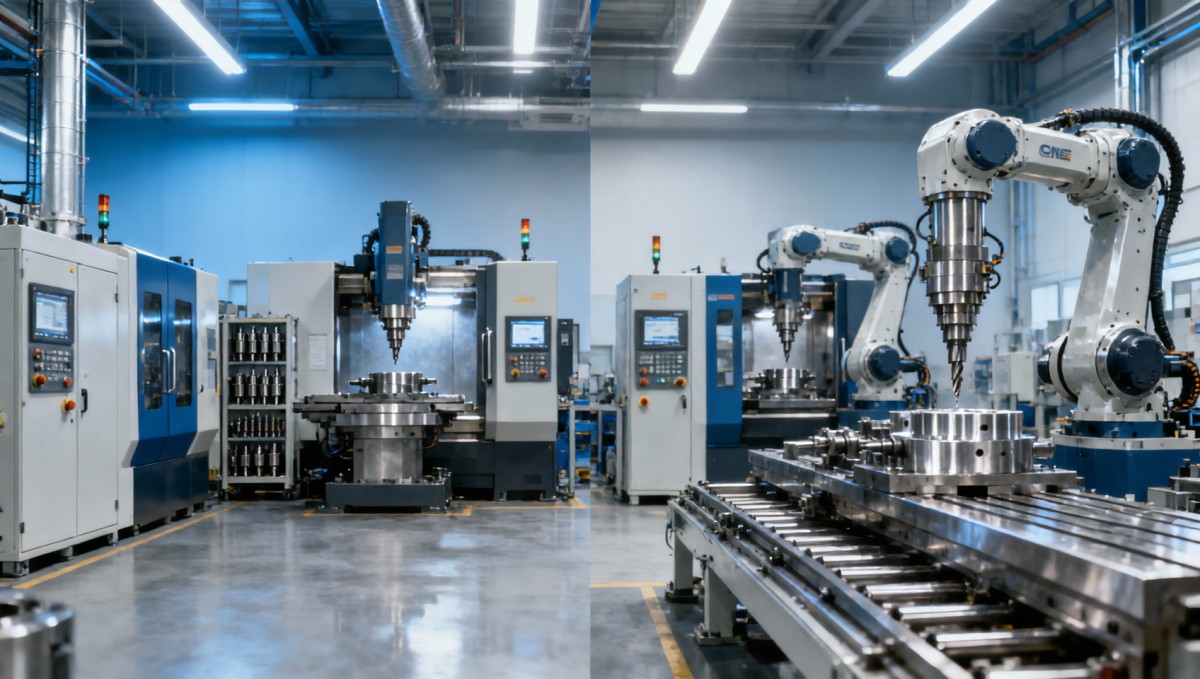
A decade ago, many buyers evaluated CNC equipment mainly by country of origin, spindle speed, and purchase price. Today, that approach is too narrow. A machining center may be assembled in one country, use a control system from another, and rely on castings, linear guides, servo motors, and probes from 3 to 5 different supply regions. This structure gives buyers more options, but it also adds complexity to qualification and risk control.
Global manufacturing has increased access to industrial CNC, CNC milling platforms, and automated production lines for companies of different sizes. Small and mid-sized factories can now compare 4-axis and 5-axis machines, robotic loading cells, and flexible manufacturing units that were previously available mainly to large enterprises. At the same time, price transparency has improved, which means procurement teams must justify why one machine costs 15% to 30% more than another with seemingly similar core parameters.
The key change is that CNC buyers now purchase an ecosystem, not just a machine. They are buying accuracy retention, software compatibility, maintenance responsiveness, training support, and integration readiness. For example, a machine with positioning accuracy of ±0.005 mm may still underperform if thermal compensation is weak, fixture repeatability is unstable, or the supplier cannot support process optimization for complex parts.
Commercial evaluators also need to consider geopolitical and logistics variables. Shipping time can range from 2 to 10 weeks depending on region, customs processes, and port congestion. For production-critical assets, an extra 21 days in delivery or a 10-day delay in replacement spindle shipment can directly affect customer commitments, overtime cost, and inventory planning.
Four priorities that have become more important
- Supply chain visibility: Buyers should know where major components come from and which parts have long replenishment cycles, especially spindles, drives, and control boards.
- Service localization: A supplier may export globally, but local commissioning and on-site support within 24 to 72 hours often matter more than brand visibility.
- Process compatibility: Machines must match part geometry, material type, batch size, and tolerance band rather than generic catalog claims.
- Upgrade potential: Buyers increasingly value interfaces for robotics, MES connectivity, tool monitoring, and data collection for smart manufacturing.
These priorities are especially relevant in automotive manufacturing, aerospace, energy equipment, and electronics production, where throughput, traceability, and repeatability directly influence margin and compliance. A machine that performs well in a showroom demo may not deliver acceptable cycle stability over 2,000 to 4,000 production hours per year without proper support infrastructure.
How Buyers Should Compare Global CNC Suppliers
Comparing suppliers in the global machine tool market requires more than a feature checklist. Buyers should evaluate technical strength, process understanding, export experience, and the ability to support real production conditions. A strong supplier can explain not only spindle power and travel range, but also chip evacuation behavior, thermal control, fixture recommendations, cutting strategy, and tooling match for the target workpiece.
For operators and production planners, machine usability matters just as much as specification depth. Control interface logic, alarm readability, tool change reliability, and accessibility for preventive maintenance can significantly affect downtime. In practical terms, saving 8 minutes per tool offset setup or reducing unplanned stoppages by even 3% to 5% can change annual output economics.
The table below outlines a practical supplier comparison model for CNC buyers working across industrial automation and precision manufacturing scenarios. It can be used during RFQ review, technical meetings, or internal scoring before capital approval.
The comparison model shows why the cheapest quotation is rarely the safest one. If the supplier cannot define acceptance tests, maintenance intervals, or software backup procedures, the hidden risk is high. Buyers should ask for a full quotation package that includes machine scope, optional accessories, utility requirements, installation exclusions, and training deliverables.
Questions procurement teams should ask before order placement
Technical and process questions
- What workpiece materials and part sizes has the machine been configured for: aluminum, stainless steel, cast iron, or hardened steel?
- Can the supplier recommend cutting tools, fixture concepts, and cycle time estimates for target parts with tolerance bands such as ±0.01 mm or surface roughness below Ra 1.6?
- What preventive maintenance tasks are required every 250, 500, and 1,000 operating hours?
Commercial and delivery questions
- Which critical components are imported, and what are their usual replacement lead times?
- Does the supplier provide FAT before shipment and SAT after installation, and how many acceptance points are documented?
- How many days of operator and maintenance training are included in the base contract?
Well-structured supplier evaluation helps research users gather reliable intelligence, operators anticipate practical challenges, and purchasing staff reduce expensive surprises after installation. In a global sourcing environment, disciplined comparison is a competitive advantage, not an administrative burden.
Cost, Lead Time, and Total Ownership in a Global CNC Market
Global manufacturing expands price competition, but it also changes cost structure. The initial machine price often represents only 55% to 75% of the 3-year ownership picture. The rest comes from tooling adaptation, installation, training, downtime, spare parts, software options, maintenance labor, and process optimization. Buyers who ignore these items may underestimate real project cost by 10% to 25%.
Lead time is another major factor. Standard CNC lathes or vertical machining centers may ship in 6 to 12 weeks under normal production conditions, while customized multi-axis systems or automated production lines can require 12 to 24 weeks. If the application includes robotic loading, in-line gauging, or pallet systems, the planning horizon often becomes longer because integration testing and safety validation add extra stages.
For buyers in the manufacturing industry, the real calculation is not just “How much does the machine cost?” but “How soon can it produce good parts at target cycle time?” A lower-cost machine that takes 4 extra weeks to stabilize production may cost more overall than a higher-priced machine with stronger application engineering support and faster ramp-up.
A practical ownership cost framework
The table below breaks down common cost elements that should be included in any CNC investment review. This is especially useful for business evaluators comparing suppliers across different countries and delivery models.
A cost framework like this helps teams avoid false savings. For example, if imported replacement electronics usually require 4 to 8 weeks, holding a small critical spare set may be justified. Likewise, if the supplier’s training package reduces scrap during the first 30 production days, that value should be included in the commercial review.
Common hidden cost triggers
- Underspecified utilities such as unstable air pressure, insufficient power quality, or weak coolant filtration.
- Missing interface details for robot integration, bar feeders, chip conveyors, or probing systems.
- Limited spare parts localization, which increases recovery time when failures occur.
- Acceptance criteria that are too vague to enforce during final inspection.
When buyers build total ownership analysis into the sourcing process, they make better long-term decisions. This is particularly important in high-precision manufacturing, where one unstable process can affect multiple downstream operations and customer deliveries.
Technology Integration, Automation, and Future Readiness
Global manufacturing is not only about where machines come from; it is also about how well they connect with modern factory systems. In many sectors, CNC equipment is expected to support more than cutting or turning. It must work with tool presetting, automatic loading, probing, quality traceability, and digital production monitoring. Buyers therefore need to evaluate future readiness at the same time as current part requirements.
For industrial automation projects, readiness usually includes communication interfaces, alarm reporting, cycle data access, and compatibility with robots or line controllers. A machine that can run standalone today but cannot support automation expansion in 12 to 24 months may limit factory modernization plans. This is especially relevant where labor constraints push factories toward lights-out operation or reduced manual intervention.
Operators and engineers should also look at practical usability. Tool magazine capacity, fixture access, chip management, coolant strategy, and in-process measurement options all affect real output. For example, moving from a 24-tool magazine to a 40-tool configuration can reduce setup changes for mixed-part production, while an automatic pallet changer may improve spindle utilization in medium-volume environments.
Key technology checkpoints for future-ready CNC investment
- Data connectivity: Confirm whether the machine can export production status, alarm logs, and basic performance data for factory management systems.
- Automation interfaces: Check readiness for robotic loading, bar feeders, pallet pools, or conveyor-linked parts transfer.
- Quality support: Evaluate probing, tool monitoring, and compensation functions that help maintain process stability over long runs.
- Expansion path: Ask whether software options and hardware ports allow additional functions without replacing the core machine platform.
When advanced capability is worth paying for
Not every factory needs the most advanced configuration. If production is low-mix, stable-volume, and tolerance demand is moderate, a simpler CNC solution may provide the best return. But when the application involves multi-part families, frequent setup changes, high traceability requirements, or labor shortages, features such as automatic tool measurement, quick-change fixturing, and remote diagnostics can shorten the payback period significantly.
A practical rule is to compare machine capability with a 3-year production roadmap, not just the current order book. If part complexity, precision requirements, or automation targets are likely to rise by 15% to 20%, choosing a platform with upgrade headroom can reduce future reinvestment and line disruption.
Risk Control, Delivery Planning, and Questions Buyers Often Ask
Global sourcing creates opportunity, but it also requires disciplined risk control. The most common problems in CNC procurement are not always machine failure. They include unclear specifications, incomplete project boundaries, weak acceptance procedures, language gaps in documentation, and poor planning for training or spare parts. These issues can usually be prevented with better preparation before the purchase order is released.
A structured implementation process is useful for both procurement and operations teams. In many machine tool projects, buyers benefit from dividing the project into 5 stages: requirement definition, technical review, quotation alignment, FAT and shipment, then installation and production validation. This approach makes it easier to identify missing details before they become expensive delays.
Five-step delivery and risk control process
- Define target parts, materials, tolerance bands, annual volume, and expected takt or cycle time.
- Review machine configuration, utilities, tooling plan, fixture concept, and automation interfaces in detail.
- Align commercial terms including lead time, Incoterms, warranty scope, FAT/SAT content, and training days.
- Conduct factory acceptance checks using agreed parts, test methods, and measurable quality criteria.
- Plan startup support, preventive maintenance, and spare parts strategy for the first 6 to 12 months.
Below are common buyer questions that reflect real search intent in the CNC and precision manufacturing market.
How do I choose between a lower-cost overseas CNC supplier and a higher-priced established brand?
Start with process requirements, not brand perception alone. If the supplier can demonstrate stable accuracy, document service response, provide spare parts planning, and support installation professionally, an overseas source may be commercially sound. But if your application requires near-zero downtime, validated automation interfaces, or complex multi-axis process support, paying more for stronger infrastructure may reduce risk.
What delivery time should I expect for CNC machines and automated production lines?
Standard machines often fall in the 6 to 12 week range, while configured systems typically need 10 to 16 weeks. More complex automated production lines can extend to 16 to 24 weeks depending on guarding, robotics, conveyors, and validation needs. Buyers should confirm whether quoted lead time starts from deposit, drawing approval, or final technical freeze.
Which indicators matter most during acceptance?
Focus on part-based results and operating stability. Useful indicators include dimensional repeatability, cycle time consistency, surface finish, alarm frequency, thermal drift behavior, and tool change reliability. For many projects, 3 to 10 consecutive sample parts under production-like conditions provide a better acceptance basis than a single demonstration piece.
How much spare parts planning is reasonable?
A practical starting point is to identify consumables, fast-wear items, and long-lead critical parts separately. Many factories maintain 3 months of common maintenance items and review critical imported spares for 6 to 12 months of exposure. The right plan depends on machine criticality, local technical coverage, and supplier response history.
Global manufacturing gives CNC buyers more choices than ever, but it also rewards better preparation. The strongest purchasing decisions combine process clarity, supplier verification, total ownership analysis, and future automation thinking. Whether you are comparing industrial CNC platforms, CNC milling systems, or broader machine tool and production line solutions, a structured evaluation will improve performance, reduce risk, and support long-term competitiveness. If you are assessing new equipment, planning a sourcing strategy, or reviewing automation-ready machine options, contact us to discuss your application, get a tailored recommendation, and explore more precision manufacturing solutions.
PREVIOUS ARTICLE
NEXT ARTICLE
Recommended for You
![]() China Releases First Eastern Sea Seabed Elemental MapGlobal Machine Tool Trade Research Center
China Releases First Eastern Sea Seabed Elemental MapGlobal Machine Tool Trade Research Center![]() AIMM National Standard Advances for CNC Smart Factory CertificationManufacturing Policy Research Center
AIMM National Standard Advances for CNC Smart Factory CertificationManufacturing Policy Research Center![]() eVTOL Mass Production Drives CNC Export GrowthGlobal Machine Tool Trade Research Center
eVTOL Mass Production Drives CNC Export GrowthGlobal Machine Tool Trade Research Center![]() China Launches World's Largest Agri-Meteorological Observation NetworkManufacturing Market Research Center
China Launches World's Largest Agri-Meteorological Observation NetworkManufacturing Market Research Center![]() Robotics ToB Scaling Hits Data Bottleneck in CNC AI InspectionCNC Machining Technology Center
Robotics ToB Scaling Hits Data Bottleneck in CNC AI InspectionCNC Machining Technology Center![]() SAMR to Complete 1,800+ Standards Revisions in 2026Manufacturing Policy Research Center
SAMR to Complete 1,800+ Standards Revisions in 2026Manufacturing Policy Research Center


Aris Katos
Future of Carbide Coatings
15+ years in precision manufacturing systems. Specialized in high-speed milling and aerospace grade alloy processing.
▶
What Global Manufacturing Means for CNC BuyersManufacturing Market Research Center▶
Global Manufacturing Shifts to Watch in 2026Manufacturing Market Research Center▶
How the Manufacturing Industry Is Cutting CostsManufacturing Market Research Center▶
What Is Changing Fast in the Manufacturing IndustryManufacturing Market Research Center▶
CIBF2026 Focuses on Zero-Carbon Supply ChainManufacturing Market Research Center
Mastering 5-Axis Workholding Strategies
Join our technical panel on Nov 15th to learn about reducing vibrations in thin-wall components.

Providing you with integrated sanding solutions
Before-sales and after-sales services
Comprehensive technical support