• Global CNC market projected to reach $128B by 2028 • New EU trade regulations for precision tooling components • Aerospace deman
NYSE: CNC +1.2%LME: STEEL -0.4%

Global Manufacturing Shifts to Watch in 2026
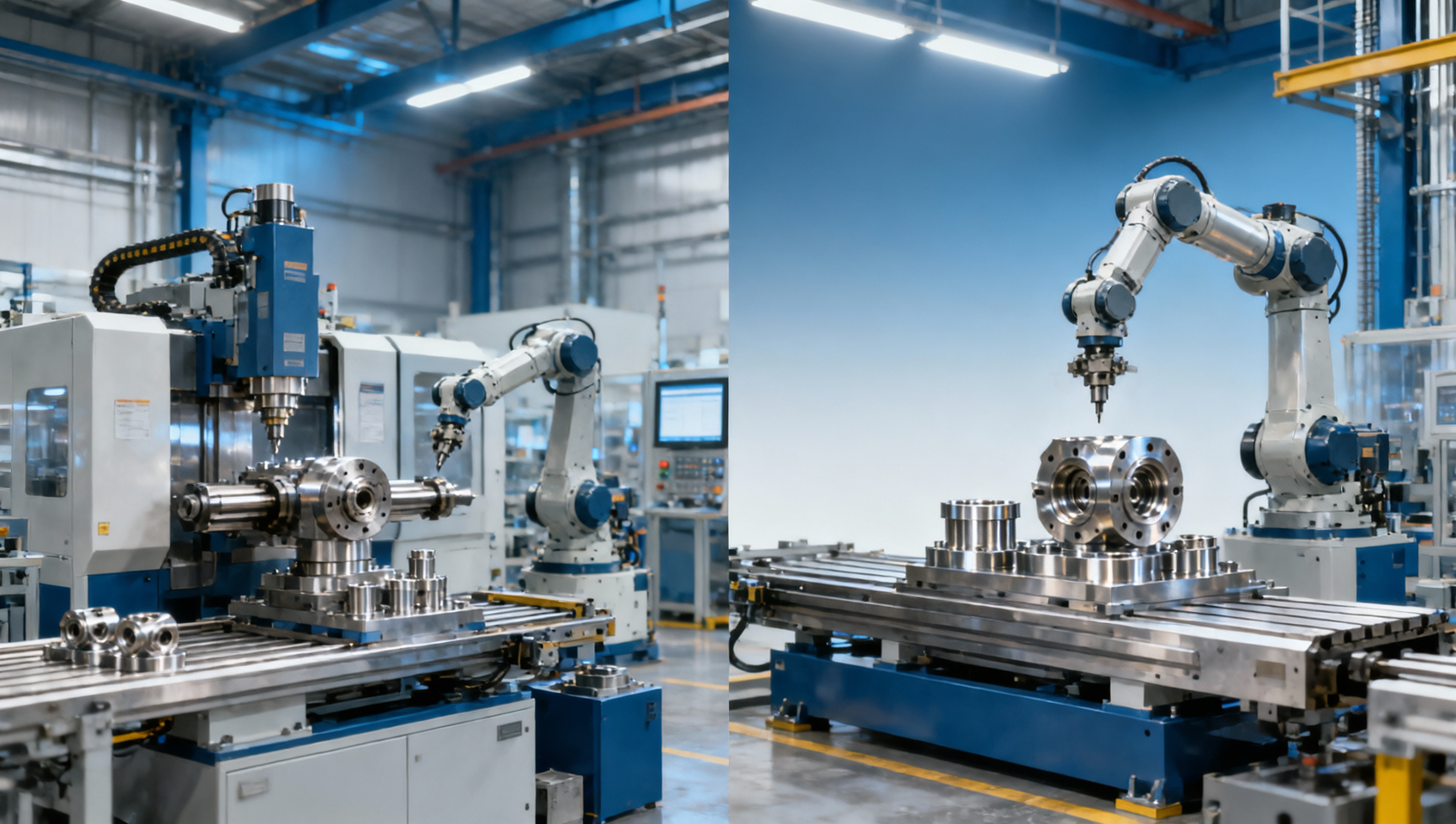
In 2026, Global Manufacturing will be reshaped by industrial CNC innovation, automated production, and smarter production process strategies across the Manufacturing Industry. From CNC metalworking and CNC milling to industrial robotics and automated production line upgrades, the Machine Tool Market is entering a new phase. This article highlights the key shifts buyers, operators, and analysts should watch as precision, flexibility, and digital integration redefine competitive manufacturing worldwide.
Which Global Manufacturing Shifts Will Matter Most in 2026?
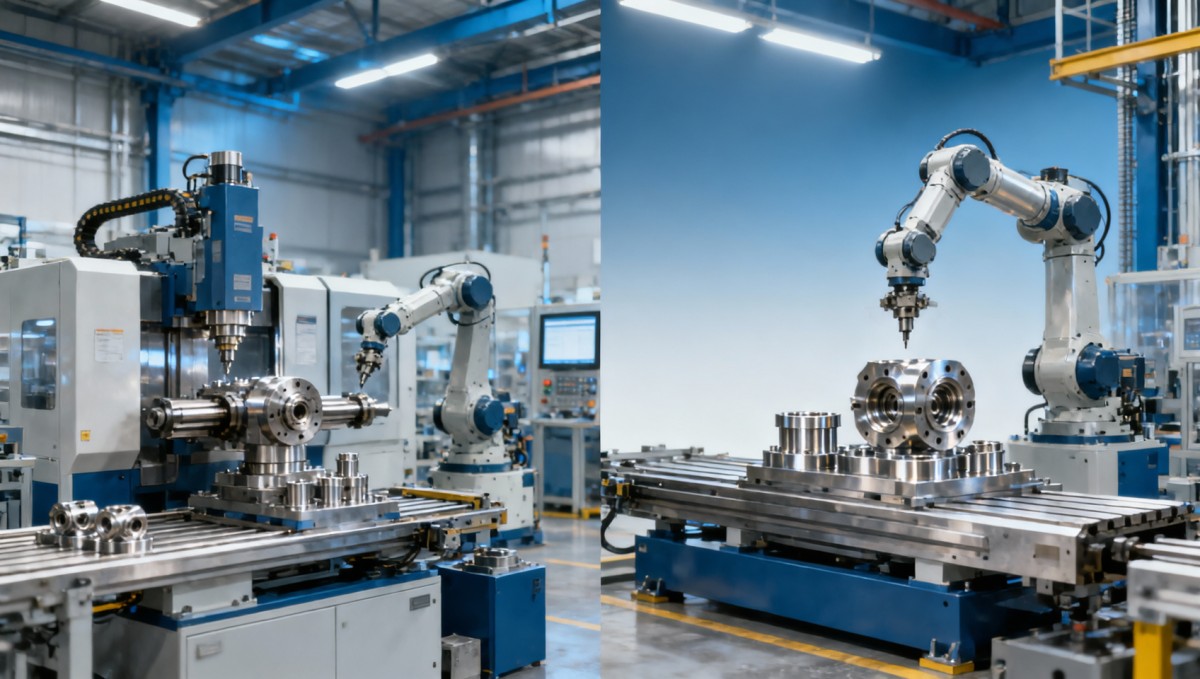
The biggest manufacturing shift in 2026 is not a single technology launch. It is the convergence of CNC machining, automation, digital monitoring, and supply chain regionalization into one operating model. For information researchers, this means market analysis can no longer focus only on machine specifications. For operators and procurement teams, the decision now includes software compatibility, spare parts availability, and the ability to scale from small-batch to mid-volume production within 2–4 weeks rather than several months.
Across automotive, aerospace, energy equipment, electronics, and general industrial manufacturing, buyers are comparing not only machine tool brands but also production systems. A CNC lathe or machining center is increasingly evaluated as part of a complete line that may include tool presetting, robotic loading, fixture control, in-process inspection, and data feedback. This is especially important when tolerances move into tighter ranges, cycle times must remain stable over 8–16 hours of continuous operation, and labor shortages make repeatability a strategic requirement.
Another major shift is the move from isolated procurement to lifecycle thinking. Commercial evaluators now want to understand lead time, installation support, training needs, maintenance intervals, and integration risk before approving investment. In practical terms, a lower purchase price can lose its advantage if the machine requires long setup time, non-standard tooling, or difficult access to service engineers. In 2026, cost per qualified part is often a more useful benchmark than initial machine price alone.
Manufacturing hubs in China, Germany, Japan, and South Korea will remain important, but purchasing behavior is becoming more diversified. Many companies are adding secondary suppliers, reviewing regional sourcing options, and comparing delivery windows of 6–12 weeks versus 12–24 weeks depending on machine complexity. That shift affects CNC machine tools, cutting tools, fixtures, motors, controllers, and automation cells alike.
- Higher demand for precision machining systems that support flexible output, not just mass production.
- Faster adoption of industrial robotics and automated production lines for loading, unloading, and process consistency.
- Stronger focus on digital integration, including machine status monitoring, production traceability, and maintenance planning.
- Procurement decisions increasingly based on total operating value across 3–5 years rather than purchase cost in year one.
Why Are CNC, Automation, and Regional Supply Chains Moving Together?
The machine tool market is changing because manufacturers are under pressure from multiple directions at the same time. Product complexity is rising, delivery cycles are shrinking, and quality expectations are becoming harder to negotiate. In that environment, CNC milling, turning, multi-axis machining, and automated assembly systems are no longer independent investments. They are linked by one goal: produce more complex parts with fewer interruptions and more predictable output.
For operators, one visible consequence is the need for machines that are easier to program, easier to switch between jobs, and easier to maintain. For procurement teams, this means evaluating controller ecosystems, tool magazine capacity, spindle options, fixture repeatability, and operator training requirements as one package. A machine that appears technically strong on paper may still create bottlenecks if changeover time remains too long or if local service cannot respond within 24–72 hours.
Regional supply chain shifts also matter because replacement parts, control components, and automation interfaces can affect uptime as much as the base machine itself. In sectors such as energy equipment and automotive components, even a 2–3 day delay in critical parts can interrupt production schedules. That is why many factories are asking whether the supplier can support localized inventory, cross-border documentation, and standardized electrical or safety requirements from the start of the project.
The table below shows how the main global manufacturing shifts influence practical buying decisions in 2026. It is especially useful for business evaluators comparing line investment, process upgrade plans, or supplier capability across regions.
The key lesson is that 2026 buying decisions are becoming system decisions. If a supplier can explain machine capability, integration boundaries, training requirements, and delivery planning in one clear framework, that supplier usually reduces implementation risk more effectively than one that only offers a machine quotation.
What does this mean for different target users?
Researchers need market signals that connect technology trends with practical outcomes. Operators need equipment that supports stable performance over repeated shifts. Procurement managers need a structured way to compare machine tool options. Commercial teams need evidence that the project can meet timeline, compliance, and cost targets without creating hidden downstream expense.
That is why platforms focused on global CNC machining and precision manufacturing are becoming more valuable. They provide a bridge between technical insight, supplier evaluation, trade updates, and process planning. In a market where even one delayed fixture or one unsupported control option can affect launch schedules, informed sourcing is part of production strategy.
How Should Buyers Compare CNC Machine Tool and Automation Options?
A common mistake in machine tool procurement is to compare equipment by only three factors: price, spindle power, and stated precision. In reality, a useful comparison should include at least 5 core dimensions: part type, production volume, automation readiness, maintenance support, and integration complexity. A CNC lathe suited for shaft components may not be the best choice for complex prismatic parts, while a 5-axis machining center may be excessive for stable, high-volume workpieces with simple geometry.
For mixed-product factories, flexible manufacturing is often worth more than peak specification. The ability to switch fixtures in 15–45 minutes, load new part programs quickly, and maintain repeatability over small-batch production can improve actual output more than buying the highest-rated machine. This is especially true in subcontract machining, electronics hardware, and diversified industrial parts manufacturing.
The comparison table below helps procurement teams assess common machine and production options in a more decision-oriented way. It can also support internal discussions between technical departments and commercial reviewers before RFQ release.
A useful comparison should also include practical implementation questions. Can the supplier support fixture recommendations within 1–2 project rounds? Can commissioning happen in 3–7 days for standard systems, or will it require longer due to software customization? Does the automation cell increase throughput enough to justify added complexity? These questions often determine whether the equipment performs well after purchase.
A 4-step procurement screening method
- Define the part family clearly: material, dimensions, tolerance expectation, batch size, and process route.
- Check line compatibility: tooling, fixtures, software, loading method, and quality checkpoints.
- Review support scope: documentation, training hours, spare parts plan, and remote troubleshooting path.
- Compare total implementation risk: lead time, installation window, utility requirements, and validation schedule.
When this 4-step method is used early, procurement teams can eliminate mismatched options before spending time on detailed commercial negotiation. It also helps align plant engineering, purchasing, and business leadership around the same evaluation logic.
What Technical and Compliance Factors Will Shape Competitive Manufacturing?
Technical priorities that matter beyond brochure claims
In 2026, competitive manufacturing will depend on whether a CNC system can sustain process stability, not simply reach a peak specification in ideal conditions. Buyers should review spindle speed range, feed capability, machine rigidity, thermal behavior, tool management, and controller usability together. For many general precision applications, the more valuable metric is stable repeat production over multiple shifts, especially where part quality must remain consistent during 6–12 hour continuous runs.
Operators also care about access and maintainability. A machine that is difficult to clean, inspect, or reset after alarms may lose productive time every week. In practical purchasing terms, it is useful to ask about preventive maintenance intervals, lubrication checks, filter replacement cycles, and spare part response planning. Even common maintenance windows such as weekly inspection, monthly calibration review, and quarterly preventive service can affect real output when production demand is tight.
Another priority is digital connectivity. Machine status, alarm history, cycle data, and quality-related process signals are increasingly important for smart factory planning. While integration depth varies by project, procurement teams should confirm which data points are available, how they are exported, and whether the machine can work with plant-level monitoring or MES environments without excessive custom coding.
Compliance and documentation checks buyers should not skip
Compliance is often treated as a final-stage review, but in cross-border manufacturing projects it should start much earlier. Depending on destination market and industry, buyers may need to examine electrical documentation, safety guarding logic, control cabinet labeling, operator manuals, and material or traceability records for related components. The exact requirement varies, but early confirmation reduces delays during factory acceptance and site installation.
For precision manufacturing environments serving automotive, aerospace, energy, or electronics, the following 6 checkpoints are often useful during evaluation:
- Machine safety configuration and guarding design appropriate for the intended loading method.
- Electrical compatibility with local plant standards and utility conditions.
- Documentation package covering operation, maintenance, installation, and spare parts references.
- Inspection and acceptance criteria agreed before shipment and commissioning.
- Traceability support for critical process parameters where required by the end-use industry.
- Training plan for operators, maintenance staff, and production supervisors during startup.
A technically advanced machine with incomplete documentation can slow site approval, while a moderate-spec machine with strong documentation and reliable service may reach productive status sooner. That trade-off matters when launch schedules are fixed and downtime carries significant opportunity cost.
How Can Companies Balance Cost, Lead Time, and Upgrade Risk?
Budget pressure is one of the most common reasons projects stall. Yet in CNC machine tool purchasing, the cheapest route often becomes expensive if it causes delayed commissioning, longer changeovers, or unstable quality. A balanced cost review should separate at least 4 layers: machine acquisition, tooling and fixtures, automation and software integration, and ongoing service or consumables. This approach helps teams avoid underestimating the true cost of production ramp-up.
Lead time has become another hidden cost factor. A standard machine may ship in 6–10 weeks, while a customized system with robot loading, special fixtures, or process verification can require 12–24 weeks. That gap matters when a project is tied to customer launch dates or inventory recovery plans. Buyers should ask not only for shipment timing but also for engineering freeze dates, FAT planning, transport preparation, and site-ready requirements.
Alternative solutions also deserve attention. In some cases, retrofitting an existing machine with updated tooling, measurement devices, or loading assistance can be more practical than replacing the full system immediately. In other cases, a new flexible cell delivers better value because it reduces manual intervention and allows multiple part families to run on one platform. The right answer depends on output targets, workforce availability, and part complexity.
The decision framework below can help teams compare investment routes without overfocusing on a single budget line.
The table shows why procurement teams should compare implementation burden as carefully as equipment capability. A lower-cost option that requires repeated manual intervention can become less attractive than a higher-cost line that stabilizes output and reduces labor dependency over time.
Common mistakes that increase project risk
Many factories underestimate fixture strategy, tool life planning, and startup training. Others request machine quotations before confirming part drawings, annual volume bands, or quality checkpoints. These gaps lead to redesign, re-quotation, and delayed delivery. A stronger approach is to define 3 things first: target parts, expected monthly output, and the level of automation the site can actually support during the first 6 months.
Another common error is to assume that all machine suppliers deliver the same service scope. Some provide installation guidance only, while others can support fixture review, sample verification, training, and post-startup optimization. Clarifying this scope early often prevents disputes later and gives business evaluators a clearer basis for comparison.
FAQ: What Are Buyers, Operators, and Analysts Asking Most Often?
How do I know whether a CNC upgrade or a new machine is the better choice?
Start with machine condition, part complexity, and required output. If the current platform still meets structural and control needs, an upgrade may work for short to medium planning horizons. If downtime is frequent, part tolerance is tightening, or automation integration is required, a new CNC machine or flexible production cell often makes more sense. A 3-part review covering mechanical condition, control compatibility, and projected volume for the next 12–24 months can guide the decision.
What should procurement check before requesting quotations?
Prepare drawings, material type, estimated batch sizes, target cycle expectations, available utilities, and any compliance requirements. Also define whether the request is for a standalone machine, a robot-ready machine, or a complete automated production line. With these 5–7 inputs, suppliers can provide more realistic technical recommendations and delivery guidance instead of generic offers.
What delivery timeline is typical for CNC machine tools and line projects?
Typical timelines vary by scope. Standard equipment may follow a 6–10 week shipment window, while customized machine tools or integrated cells may require 12–24 weeks including engineering review, FAT, and site preparation. Installation and commissioning can range from 3–7 days for simpler setups to several weeks for multi-machine or robotic projects. Buyers should ask for milestone breakdown, not just a final shipping date.
Which industries benefit most from these 2026 manufacturing shifts?
Automotive, aerospace, energy equipment, electronics, and general precision manufacturing all benefit, but for different reasons. Automotive values cycle stability and scale. Aerospace values complex-part precision and traceability. Energy equipment often needs durable machining capability for larger or harder materials. Electronics production benefits from repeatability, compact part handling, and efficient line balancing. The core trend across all of them is the same: smarter, more connected, and more adaptable production.
Why Work With a Specialized CNC and Precision Manufacturing Platform?
When manufacturing shifts accelerate, decision quality depends on access to relevant industry insight. A specialized platform focused on global CNC machining and precision manufacturing can help users compare machine tool trends, automation developments, supplier regions, and trade dynamics in one place. That matters for companies that need faster research, stronger procurement confidence, and clearer technical-commercial alignment.
For information researchers, the value lies in actionable market analysis rather than scattered updates. For operators, the value lies in understanding which technologies improve daily production stability. For procurement teams, the value lies in better screening of machine tools, production lines, and supporting components. For business evaluators, the value lies in seeing how technology choices influence delivery risk, cost structure, and long-term scalability.
If you are planning a CNC machine investment, automated production line upgrade, or cross-border sourcing review for 2026, the most useful next step is a focused project discussion. You can consult on machine parameters, suitable production configurations, typical lead times, automation matching, documentation requirements, sample support possibilities, and quotation planning. Clear inputs at this stage usually shorten the full evaluation cycle by 1–3 weeks and reduce rework in later project phases.
Contact us to discuss your part type, target industry, output range, tolerance expectations, or integration goals. Whether you need help comparing CNC lathes and machining centers, evaluating multi-axis systems, checking delivery schedules, or planning a customized precision manufacturing solution, a structured conversation can turn market uncertainty into a practical sourcing roadmap.
PREVIOUS ARTICLE
NEXT ARTICLE
Recommended for You
 How to Choose the Right Metal Machining ProcessCNC Machining Technology Center
 Metal Machining vs CNC Metalworking: What MattersCNC Machining Technology Center
 What Drives Cost in Industrial CNC ProjectsManufacturing Market Research Center
 Is Industrial CNC Worth Upgrading in 2026Machine Tool Industry Editorial Team
 How CNC Industrial Systems Improve Shop EfficiencyMachine Tool Industry Editorial Team
 CNC Industrial Setup Mistakes to Avoid FirstCNC Machining Technology Center

Aris Katos
Future of Carbide Coatings
15+ years in precision manufacturing systems. Specialized in high-speed milling and aerospace grade alloy processing.
▶
Global Manufacturing Shifts to Watch in 2026Manufacturing Market Research Center▶
How the Manufacturing Industry Is Cutting CostsManufacturing Market Research Center▶
What Is Changing Fast in the Manufacturing IndustryManufacturing Market Research Center▶
CIBF2026 Focuses on Zero-Carbon Supply ChainManufacturing Market Research Center▶
Advanced Manufacturing Technology Reshaping Energy EquipmentManufacturing Market Research Center
Mastering 5-Axis Workholding Strategies
Join our technical panel on Nov 15th to learn about reducing vibrations in thin-wall components.

Providing you with integrated sanding solutions
Before-sales and after-sales services
Comprehensive technical support