• Global CNC market projected to reach $128B by 2028 • New EU trade regulations for precision tooling components • Aerospace deman
NYSE: CNC +1.2%LME: STEEL -0.4%

CNC Programming errors that waste machine time every week
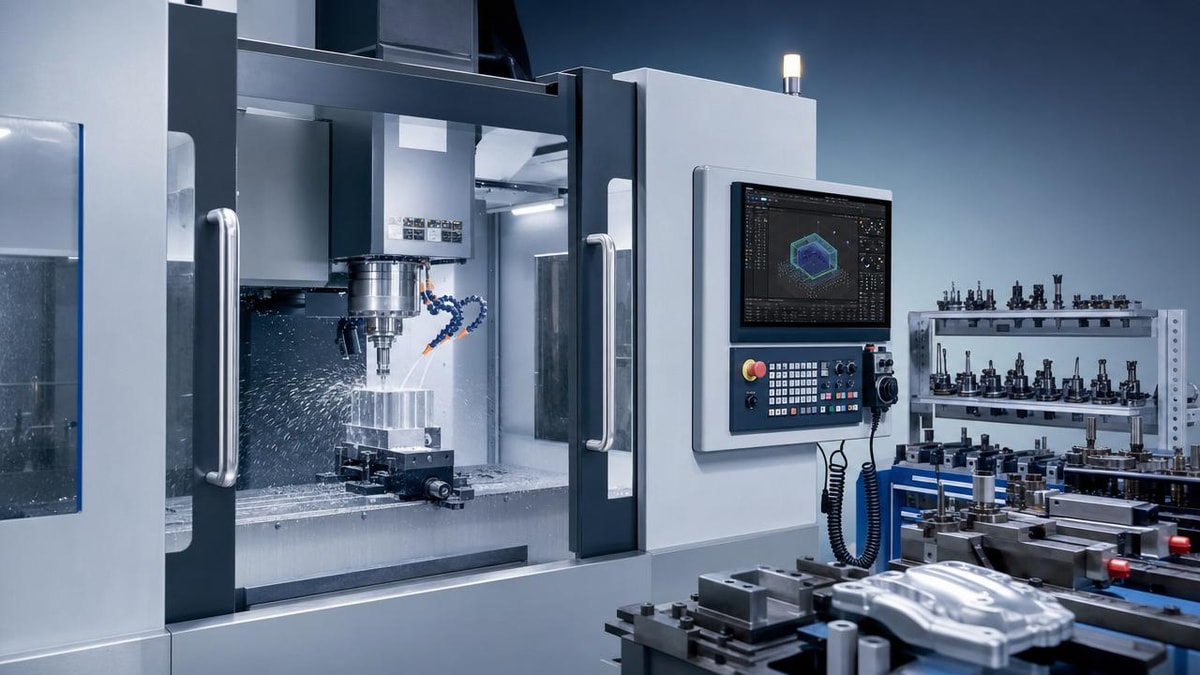
CNC Programming mistakes often seem minor, but they can quietly waste machine time, increase scrap, and slow down production every single week. For operators and shop-floor users, understanding the most common programming errors is essential to keeping CNC machines running efficiently. This article highlights practical issues that affect cycle time, accuracy, and workflow, helping you spot problems early and improve daily machining performance.
Why weekly CNC Programming losses are becoming more visible
Across modern manufacturing, the cost of lost spindle time is becoming easier to see and harder to accept. Shops serving automotive, aerospace, energy, electronics, and general precision machining are operating in an environment shaped by tighter delivery windows, higher quality expectations, and growing pressure to use automation more effectively. In that setting, CNC Programming errors are no longer just technical mistakes inside a program. They are productivity leaks that affect machine utilization, setup stability, operator confidence, and on-time output.
This change matters because CNC machine tools are now more connected to production planning, tool management, in-process inspection, and digital reporting. When a program contains inefficient moves, poor toolpath logic, wrong offsets, or avoidable dwell time, the impact spreads beyond one part. It can delay downstream processes, disrupt automated production lines, and create a chain of small interruptions that repeat every week. For users and operators, the trend is clear: better CNC Programming is no longer only about making parts correctly; it is about making time visible and protecting capacity.
Another reason these losses stand out is the wider adoption of multi-axis machining, higher spindle speeds, and unattended or semi-automated machining. As machine capability rises, hidden programming inefficiencies become more expensive. A five-second waste in one cycle may have been ignored in the past. Repeated across hundreds of parts, multiple shifts, and several machines, it becomes a measurable weekly loss.
The strongest shop-floor signals that programming waste is increasing
Operators usually notice CNC Programming waste before managers see it in reports. The first signals often appear as repeated waiting, unnecessary air cutting, frequent feed overrides, and constant small corrections during setup. These are not always dramatic failures, but they are reliable indicators that programming quality is limiting machine performance.
Common warning signs include longer-than-expected cycle times after a program release, inconsistent first-off results between shifts, tools wearing faster than expected, and machine alarms linked to avoidable approach paths or clearance errors. In many shops, another signal is the growing gap between simulation success and real cutting performance. A program may run safely in software but still waste minutes on the machine because the logic was not optimized for real production conditions.
Which CNC Programming errors waste machine time most often
The most expensive CNC Programming errors are often the least dramatic. Instead of causing a crash, they quietly consume time. One of the biggest examples is inefficient toolpath order. If a program jumps between features without considering machine position, tool changes, or fixture access, the machine spends too much time moving without cutting. This is especially common in mixed-part production and on machining centers handling complex structural parts.
Another recurring issue is excessive safe clearance. Operators value safety, but over-conservative retract heights can add major non-cutting time in every cycle. The same applies to unnecessary dwell commands, repeated optional stops, and slow approach moves that remain in the production version after proving out the first run. CNC Programming should protect the machine, but it should also evolve from trial mode to production mode once the process is stable.
Poor cutter compensation use is another source of weekly delay. If compensation strategy is inconsistent, operators must intervene more often, offsets become harder to manage, and proving out a program takes longer. Likewise, weak workholding assumptions create hidden waste. A toolpath may look efficient in CAM, but if it forces awkward clamp changes, manual checks, or limited tool access on the machine, the real production cycle becomes slower than expected.
Feeds and speeds also remain a major source of lost time. Some programs are too aggressive for actual tool condition, material variation, or machine rigidity, forcing operators to slow them down manually. Others are too conservative because they were copied from older jobs or programmed with excessive caution. In both cases, CNC Programming fails to match the machine’s current capability.
Why these errors are increasing despite better machines and software
At first glance, better CAM systems, simulation tools, and smarter CNC controls should reduce programming mistakes. In reality, the situation is more mixed. One reason is growing part complexity. Multi-axis machining, tighter tolerances, and shorter product cycles mean programmers and operators are handling more variables than before. Even advanced software cannot fully prevent poor decisions about sequence, fixturing, or production readiness.
A second driver is the speed of job turnover. Many manufacturing businesses now switch between small batches, urgent orders, and high-mix production. Under time pressure, CNC Programming may be released before optimization is complete. The result is a program that is technically usable but operationally inefficient. This is a key trend in flexible production environments: the faster the workflow, the more likely weekly time waste gets accepted as normal.
A third factor is the disconnect between programming, setup, and operation. In some shops, the person who writes the code is not the person who proves it out or runs it repeatedly. That gap creates blind spots. The operator sees small inefficiencies every day, but unless feedback loops are strong, the same CNC Programming issues remain unchanged. Over time, these repeated inefficiencies become part of standard practice.
How the impact differs across machines, operators, and production types
Not every shop experiences programming waste in the same way. On CNC lathes, the biggest losses may come from inefficient tool indexing, roughing passes that leave unstable finishing stock, or unnecessary spindle speed limits. On vertical machining centers, the most common losses are excessive rapid travel, poor tool change planning, and avoidable repositioning. On multi-axis systems, even small CNC Programming errors can create large delays because setup verification, collision checking, and part alignment are more demanding.
For experienced operators, weak CNC Programming usually shows up as frustration and extra manual intervention. For newer users, it creates uncertainty and a greater chance of mistakes during setup or restart. In automated cells and smart factory environments, the cost is even wider. A program that needs operator adjustments weakens the value of automation because the machine can no longer run predictably for long periods.
The most important trend: programming quality is becoming an operations issue
One of the biggest industry shifts is that CNC Programming is no longer being judged only by whether a part can be made. It is increasingly judged by whether the process can be repeated efficiently, scaled across shifts, and integrated into digital manufacturing systems. That is an operational change, not just a technical one.
As machine tool builders push higher precision, greater automation, and digital integration, the value of clean programming rises. Shops investing in advanced machine tools, precision fixtures, and industrial robots will not get full returns if their programs still contain weekly inefficiencies. This is why many users are paying more attention to post-process review, setup reduction, standard tool libraries, and feedback-driven program revision. In practical terms, the market is moving toward CNC Programming that supports stable throughput, not just correct geometry.
What operators and shop-floor users should focus on now
For users and operators, the best response is not to rewrite every program from zero. It is to identify recurring waste patterns and build a stronger review routine. Start by comparing programmed cycle time with actual cycle time on repeat jobs. If the gap appears every week, the problem is not random. It is a sign that CNC Programming assumptions need to be updated.
Next, record the points where operators most often intervene. These may include feed overrides, stop points before risky moves, repeated offset changes, or manual edits to entry and exit moves. Such actions are valuable signals because they reveal where the program does not fully match real cutting conditions. Instead of treating these interventions as normal operator skill, use them as process data.
It is also worth reviewing standardization. Many weekly losses come from copied code, outdated templates, or different programming habits across people and shifts. Shared standards for tool naming, datum strategy, clearance rules, and proven cutting parameters can reduce hidden variation. In high-mix environments, this consistency matters more than ever.
A practical decision framework for reducing recurring waste
Shops do not need complex transformation plans to improve CNC Programming performance. They need a repeatable way to judge where time is being lost and whether the cause is programming, setup, tooling, or machine condition. A simple weekly review can create visible gains.
What to monitor as CNC Programming continues to evolve
Going forward, several signals deserve attention. First is the growth of data-driven machining, where actual machine performance is compared against programmed intent. Second is tighter integration between CAM, tool management, and machine monitoring. Third is the rising need for programs that support unattended production, especially in regions and sectors facing labor pressure and demand volatility.
For the global CNC machining and precision manufacturing industry, these signals point in one direction: programming quality will increasingly influence competitiveness. Shops that reduce weekly waste in CNC Programming will gain more usable capacity from the same machines, improve consistency, and respond faster to customer changes. Those that ignore recurring small errors may continue buying capacity they already own but do not fully use.
Final takeaway for daily machining decisions
The most important change is not that CNC Programming errors exist. It is that their operational cost is becoming easier to track in modern manufacturing. For operators and users, that creates an opportunity. If a program causes the same delays every week, the issue is no longer minor. It is a trend inside your own process.
If your team wants to judge the impact more clearly, focus on a few questions: Where is non-cutting time repeating? Which operator interventions happen on every batch? Which tools wear faster than the program predicts? Which jobs still run in “prove-out mode” long after release? These answers will show where CNC Programming is wasting machine time and where practical improvements can deliver faster, more reliable production.
Recommended for You
![]() ANVISA New Rule: Portuguese Biocompatibility Labels for Medical CNC Machines in BrazilManufacturing Policy Research Center
ANVISA New Rule: Portuguese Biocompatibility Labels for Medical CNC Machines in BrazilManufacturing Policy Research Center![]() EMO Hannover 2027 Booth Booking Opens: China AI-Machining Pavilion LaunchesGlobal Machine Tool Trade Research Center
EMO Hannover 2027 Booth Booking Opens: China AI-Machining Pavilion LaunchesGlobal Machine Tool Trade Research Center![]() KATS Updates KC Rules: CNC Cybersecurity Modules Must Meet IEC 62443-4-2Manufacturing Policy Research Center
KATS Updates KC Rules: CNC Cybersecurity Modules Must Meet IEC 62443-4-2Manufacturing Policy Research Center![]() Shanghai Port Launches Green Clearance Channel for CNC EquipmentManufacturing Market Research Center
Shanghai Port Launches Green Clearance Channel for CNC EquipmentManufacturing Market Research Center![]() ISO 23218-3:2026 Published: CNC Digital Twin Interoperability StandardCNC Machining Technology Center
ISO 23218-3:2026 Published: CNC Digital Twin Interoperability StandardCNC Machining Technology Center![]() Vietnam Cuts CNC Equipment Import Tariff to 3.8% from June 2026Global Machine Tool Trade Research Center
Vietnam Cuts CNC Equipment Import Tariff to 3.8% from June 2026Global Machine Tool Trade Research Center


Aris Katos
Future of Carbide Coatings
15+ years in precision manufacturing systems. Specialized in high-speed milling and aerospace grade alloy processing.
▶
ISO 23218-3:2026 Published: CNC Digital Twin Interoperability StandardCNC Machining Technology Center▶
CNC Programming errors that waste machine time every weekCNC Machining Technology Center▶
What limits industrial CNC output more than spindle speedCNC Machining Technology Center▶
CNC industrial setups that cut changeover time in small shopsCNC Machining Technology Center▶
CNC Programming Issues That Cause Scrap on Repeat JobsCNC Machining Technology Center
Mastering 5-Axis Workholding Strategies
Join our technical panel on Nov 15th to learn about reducing vibrations in thin-wall components.

Providing you with integrated sanding solutions
Before-sales and after-sales services
Comprehensive technical support