• Global CNC market projected to reach $128B by 2028 • New EU trade regulations for precision tooling components • Aerospace deman
NYSE: CNC +1.2%LME: STEEL -0.4%

CNC Programming Issues That Cause Scrap on Repeat Jobs
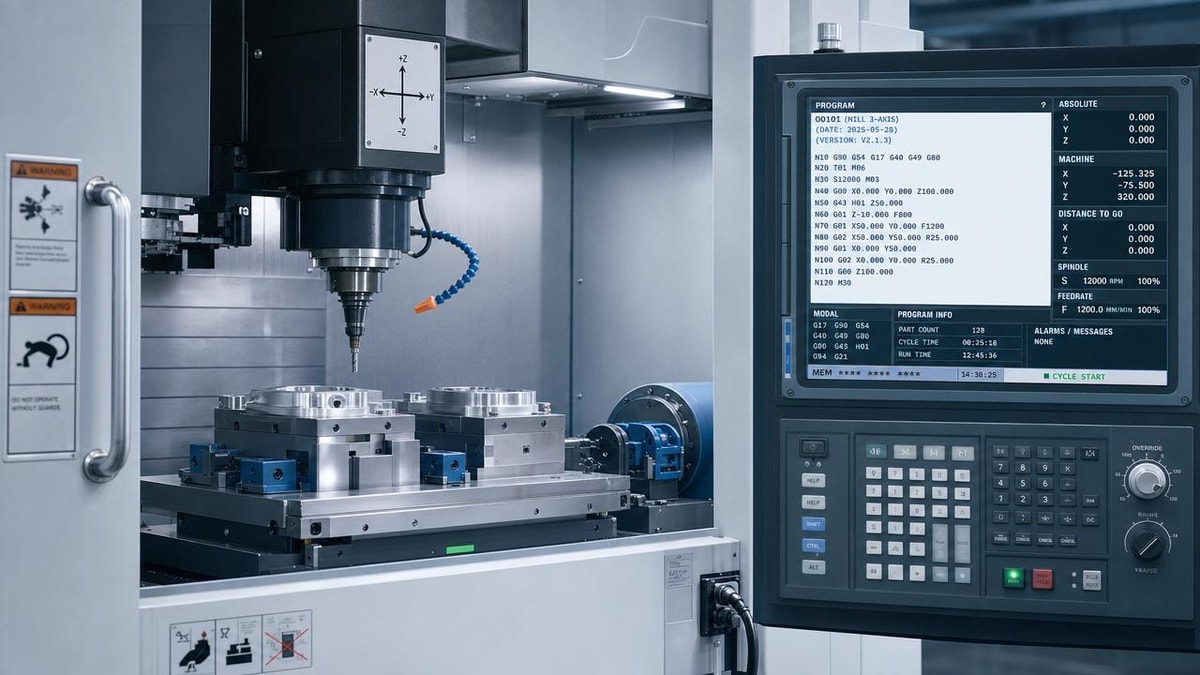
Even experienced operators can lose parts on repeat runs when small CNC Programming mistakes go unnoticed. Tool offsets, program revisions, canned cycles, and fixture references may all seem stable until scrap starts to appear. Understanding which programming issues trigger repeat-job failures helps users reduce waste, protect machine time, and maintain consistent part quality.
Why repeat-job scrap deserves a different view in real production scenarios
In one-off machining, problems are often visible quickly because the operator is watching every move closely. Repeat jobs are different. Once a part family has been proven, teams naturally trust the process more. Programs are reused, offsets are copied, and setup sheets are treated as stable. That confidence saves time, but it also creates a risk: small CNC Programming issues can survive unnoticed until they affect an entire batch.
This matters across the broader manufacturing industry, from automotive shafts and hydraulic parts to electronic enclosures and energy equipment components. In all of these environments, repeat production depends on consistency. A program that worked last month may fail today because a fixture was rebuilt, a tool length changed, a postprocessor updated, or a subprogram was edited for another machine. Scrap on repeat jobs is rarely caused by one dramatic mistake. More often, it comes from a chain of minor programming assumptions that no longer match the real setup.
For operators and users, the practical question is not simply “what is wrong with the code?” It is “in which production scenario is this programming risk most likely to appear, and what should I check first?” That scenario-based approach is the fastest way to prevent recurring waste.
Where CNC Programming issues usually appear on repeat jobs
Repeat-job failures tend to cluster in a few common shop-floor situations. Understanding these situations helps operators prioritize inspections instead of searching randomly through long programs.
- Programs moved between similar but not identical machines
- Jobs restarted after a long production gap
- Repeat runs using replacement fixtures or repaired locators
- Parts that use canned cycles, subprograms, or macro variables
- Mixed shifts where setup knowledge is passed informally
- Production with frequent engineering changes but reused file names
Each scenario changes the relationship between the NC program and the physical process. The code may still look familiar, but the reference conditions behind it are no longer the same. That is why strong CNC Programming control is not only a technical issue; it is also a workflow issue.
Scenario comparison: which programming mistakes create scrap in different operating conditions
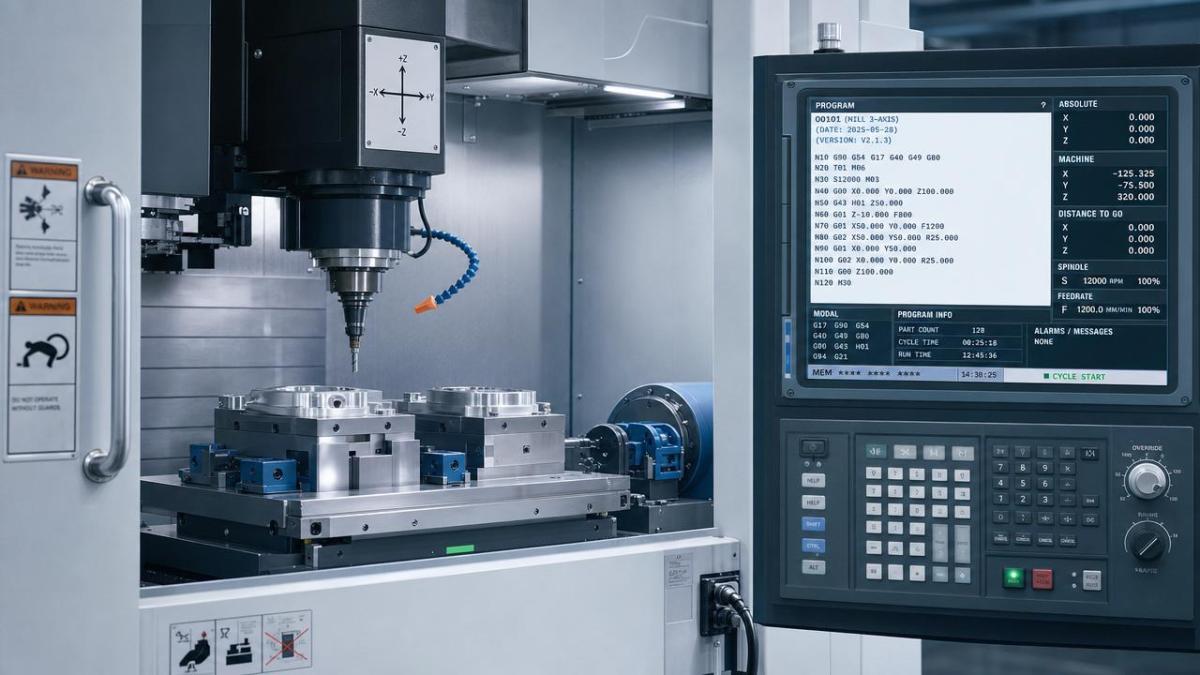
The table below helps users match repeat-job scrap symptoms with the most likely CNC Programming causes in different production scenarios.
Application scenario 1: high-volume repeat parts where hidden offset errors become expensive
In automotive, appliance, and general industrial production, large repeat batches often run with trusted programs. The danger here is scale. A single incorrect work offset or tool length value can produce dozens or hundreds of scrap parts before anyone stops the machine. In this scenario, the most common CNC Programming issue is not bad geometry creation. It is incorrect linkage between the program and live offset data.
Typical examples include calling G54 when the setup sheet was built around G55, using an old tool number after the magazine arrangement changed, or restarting from a block without restoring cutter compensation and spindle conditions. These errors are especially costly when in-process inspection happens only every few parts.
For this scenario, operators should focus on three checks before pressing cycle start: active work offset, actual tool assignment, and first-piece restart logic. Strong CNC Programming discipline means the first blocks of the program clearly define safe states rather than depending on what the previous operation left active.
What matters most in this scenario
- Visible and consistent safety line structure
- No ambiguous offset calls in copied programs
- Verified restart procedures for shift changes and alarms
- Clear separation between geometry offsets and wear offsets
Application scenario 2: small-batch repeat work where revisions create quiet scrap risks
In contract machining and mixed-model production, repeat jobs may come back every few weeks or months. The operator remembers the part, but the latest revision may not match the saved setup habits. Here, scrap is often caused by program version confusion rather than obvious machining errors. A pocket depth changed, a chamfer tool was replaced, or a drilling cycle was edited for one customer request and never fully documented.
This scenario is where file naming, revision control, and setup notes directly affect CNC Programming quality. If two programs have nearly identical names, an old file can be loaded by mistake. If a subprogram was updated but the main program still calls an older path, the machine may produce a part that looks acceptable at first glance but fails inspection later.
Users in this environment should not assume “repeat job” means “repeat process.” The best practice is to compare the current drawing revision, tooling list, and program header before setup. If the shop uses DNC or network storage, it is worth confirming that the control received the correct release version and not a local edited copy.
Application scenario 3: multi-axis and complex contour jobs where post output matters more than expected
In aerospace, energy, mold, and precision structural part production, repeat jobs often involve 4-axis or 5-axis motion, long programs, and postprocessed toolpaths. Scrap here may come from subtle CNC Programming mismatches between CAM output and the machine’s real kinematics. Even when the path is mathematically correct, a changed postprocessor setting, rotary zero point difference, or missing plane reset can shift the result.
Operators in this scenario should be especially careful with transformed coordinate systems, tool center point control, and rotary axis home references. A repeat job may fail after maintenance if machine calibration changed but the posted assumptions did not. Likewise, simulation may not show an issue if the digital model does not include the latest machine parameters.
The key advice is to treat every complex repeat run as a machine-program pair, not just a program. Strong CNC Programming for this scenario includes a proven post, stable machine data, and a first-off verification process that checks critical features early instead of waiting for final inspection.
Application scenario 4: fixture-dependent jobs where hard-coded assumptions produce repeat scrap
Many shaft parts, plates, and housings are programmed around a specific fixture. That works well until the fixture is repaired, replaced, or duplicated for a second machine. Then hard-coded coordinate values can become a hidden source of scrap. The program still runs, but hole locations, edge breaks, and datum-sensitive features no longer line up with the part in the same way.
This is common in general manufacturing because fixtures evolve over time. Operators may assume the new fixture is “the same,” while the CNC Programming still reflects old locator positions or a manually shifted origin. If a clamp position was changed, canned cycle clearances may also become unsafe, leading to marks, collisions, or broken tools that damage the part.
In this scenario, users should review whether the program references a true part datum or a fixture convenience point. Programs tied too closely to fixture geometry are harder to repeat reliably across lines, plants, or machine replacements.
Different priorities for operators, programmers, and production supervisors
Although the issue is CNC Programming, different roles should judge risk differently. Operators need fast validation points before and during the run. Programmers need reliable logic, safer defaults, and cleaner revision discipline. Supervisors need process controls that reduce dependence on memory and verbal handoff.
- Operators: confirm active offsets, compensation state, tool list, and restart line behavior.
- Programmers: avoid hidden modal dependencies, document assumptions, and simplify subprogram logic where possible.
- Supervisors: enforce revision control, first-piece approval, and change records for fixtures and tooling.
When these responsibilities are blurred, repeat-job scrap becomes more likely. Good CNC Programming results depend on shared control, not just correct code at the time of release.
Common misjudgments that make repeat jobs less repeatable
Some of the most expensive mistakes come from assumptions that sound reasonable on the shop floor. “We already ran this job.” “The fixture is basically the same.” “Only the tool changed.” “The machine is the same model.” These statements often hide the exact conditions that break repeatability.
A common misjudgment is trusting canned cycles without rechecking retract plane, feed mode, or return mode after edits. Another is restarting inside a contour section without restoring all modal commands. Users also underestimate how often local edits remain undocumented, especially when operators adjust feed moves, dwell values, or cutter compensation behavior to solve a past issue quickly.
The lesson is simple: repeat production fails when process memory replaces process verification. CNC Programming should support repeatability by making critical states explicit and easy to review.
How to adapt your CNC Programming checks to your own production scenario
A practical anti-scrap routine should match the type of work your shop runs. High-volume lines need stronger offset and restart verification. Mixed-model shops need better revision and file control. Complex machining cells need postprocessor and machine-parameter consistency. Fixture-heavy production needs tighter datum discipline.
Before the next repeat run, ask five questions: Has the setup changed? Has the program revision changed? Has the tooling changed? Has the machine or post changed? Has the restart method been tested? If any answer is yes, the job is not truly identical, and your CNC Programming review should be deeper.
For users and operators, that mindset is often the fastest path to lower scrap. Instead of reacting after defects appear, build a scenario-based checklist around the most likely programming risks in your environment. In modern precision manufacturing, reducing waste is not only about cutting better parts. It is about making every repeat job genuinely repeatable.
PREVIOUS ARTICLE
NEXT ARTICLE
Recommended for You
 CNC Milling Capacity Gaps Can Hurt Small Batch ProfitabilityManufacturing Market Research Center
 Industrial Robotics Payback Is Changing in Mid-Size PlantsManufacturing Market Research Center
 Shaft Parts Machining Problems That Show Up at Final InspectionCNC Machining Technology Center
 Production Process Delays Usually Start Before Machining BeginsCNC Machining Technology Center
 Industrial Automation Projects Often Miss This Integration StepCNC Machining Technology Center
 CNC Metal Cutting Tool Wear Is Costing More Than You ThinkCNC Machining Technology Center



Aris Katos
Future of Carbide Coatings
15+ years in precision manufacturing systems. Specialized in high-speed milling and aerospace grade alloy processing.
▶
CNC Programming Issues That Cause Scrap on Repeat JobsCNC Machining Technology Center▶
CNC Milling Surface Finish Problems and What Usually Causes ThemCNC Machining Technology Center▶
When Does CNC Industrial Make Sense for Mixed-Part Runs?CNC Machining Technology Center▶
Can space-saving CNC manufacturing still handle heavy workloads?CNC Machining Technology Center▶
CNC milling tool paths that waste cycle time without noticeCNC Machining Technology Center
Mastering 5-Axis Workholding Strategies
Join our technical panel on Nov 15th to learn about reducing vibrations in thin-wall components.

Providing you with integrated sanding solutions
Before-sales and after-sales services
Comprehensive technical support