• Global CNC market projected to reach $128B by 2028 • New EU trade regulations for precision tooling components • Aerospace deman
NYSE: CNC +1.2%LME: STEEL -0.4%

What limits industrial CNC output more than spindle speed
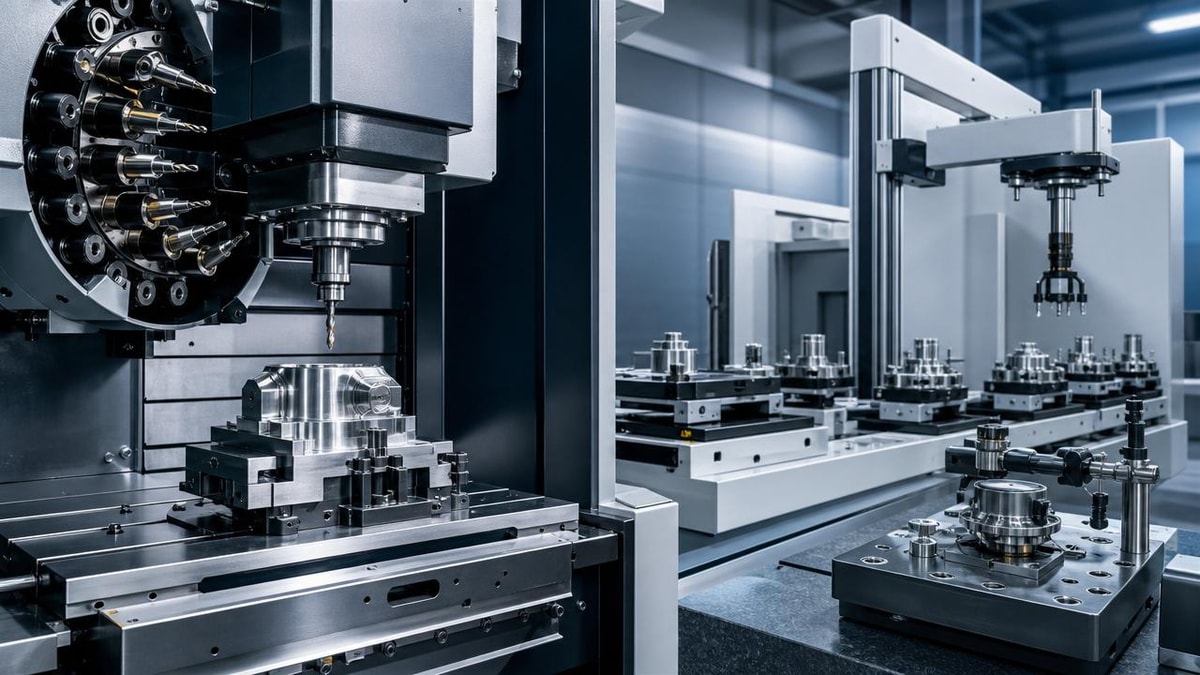
In industrial CNC production, spindle speed often gets the spotlight, but it is rarely the true bottleneck on the shop floor. For operators and production teams, output is more often limited by setup time, tool changes, programming efficiency, material handling, and machine stability. Understanding these hidden constraints is the key to improving cycle time, reducing downtime, and unlocking more consistent manufacturing performance.
Why is spindle speed not usually the main limit in industrial CNC output?
Many operators naturally look at RPM first because spindle speed is visible, easy to compare, and often highlighted in machine specifications. In real industrial CNC work, however, a machine does not make parts only while the spindle is turning. It also waits for setup, tool measurement, workpiece loading, offset confirmation, chip clearing, inspection, and program adjustments. If those non-cutting periods are long, a faster spindle will not create a meaningful increase in daily output.
This becomes especially clear in mixed production environments where batch sizes change, part geometry varies, and tolerances are tight. A high-speed spindle may reduce cutting time on one operation, yet total throughput remains flat because the operator still spends too much time touching off tools, re-clamping parts, or checking dimensions after every few pieces. In other words, spindle speed affects a portion of the cycle, while output depends on the entire process.
For industries such as automotive components, aerospace parts, energy equipment, and electronics fixtures, consistency matters as much as speed. If pushing RPM causes vibration, poor surface finish, or unstable tool life, the result can be more stoppages and more scrap. That is why the true output question in industrial CNC is not “How fast can the spindle run?” but “How much stable, repeatable production can the process sustain over a shift?”
What factors usually reduce industrial CNC throughput more than spindle speed?
On most shop floors, the biggest hidden losses come from process interruptions and avoidable waiting. These losses are often small in isolation but large when added over hundreds of parts or multiple shifts. Operators who want to raise industrial CNC output should pay close attention to where the machine is idle and why.
In practical terms, even a moderate machine can outperform a faster one if the overall process is organized well. A stable fixture, optimized toolpath, predictable tool life, and smooth part flow often deliver a bigger gain than increasing RPM. This is one reason advanced industrial CNC plants invest not only in machine tools, but also in tool management, automation, digital planning, and operator training.
How much do setup time and changeover really matter for operators?
They matter enormously, especially in high-mix, low-to-medium-volume production. If a machine requires forty minutes to prepare for a new part family, that lost time can erase any benefit gained from a faster cutting cycle. For operators, setup is often where output is won or lost because every error at this stage creates more downtime later.
A good setup process in industrial CNC work has several characteristics: standardized fixtures, clear tool lists, offline presetting when possible, organized work instructions, and reliable zero-point methods. When these elements are missing, the operator must spend extra time searching for tools, verifying dimensions, re-checking clamping, and correcting offsets under pressure. That slows the first article, delays the batch, and increases fatigue.
Operators can often improve output without new equipment by reducing setup variation. For example, using modular fixturing, preloaded tool magazines, and repeatable workholding can shorten transition time between jobs. In flexible production lines and smart factory environments, digital setup sheets and tool life monitoring help turn tribal knowledge into a repeatable system. The result is better uptime and less dependence on emergency decisions during the shift.
Are tooling and programming bigger output levers than spindle speed?
Very often, yes. Tooling and programming directly control chip load, engagement, cutting stability, air cutting time, and finish quality. A machine with average spindle specifications can still achieve excellent industrial CNC productivity if the cutting tools are matched well to the material and the program avoids wasted motion. By contrast, a very fast spindle can still underperform if the toolpath is inefficient or the cutter wears out too quickly.
From the tooling side, operators should ask whether the insert grade, coating, holder rigidity, and coolant delivery are suitable for the material. Stainless steel, aluminum, hardened steel, and superalloys each respond differently. Running a spindle faster without proper tool selection may produce heat, built-up edge, chatter, or unpredictable wear. That leads to manual intervention, offset changes, and rejected parts.
From the programming side, one of the most common productivity losses is unnecessary machine motion. Long retract distances, poor approach paths, too many tool changes, and conservative feeds carried over from older jobs can all inflate cycle time. CAM optimization, toolpath smoothing, and process consolidation can remove minutes from each cycle. In industrial CNC operations producing hundreds or thousands of parts, that is often more valuable than a small spindle speed increase.
For operators, the practical lesson is simple: do not judge machine output by spindle capacity alone. Judge it by how effectively the machine, tools, and program work together under real production conditions.
What common mistakes cause teams to overestimate the value of spindle speed?
One common mistake is focusing on cutting time while ignoring total elapsed time. If a cycle contains only thirty seconds of heavy cutting and three minutes of handling, a spindle improvement will not move the production needle very far. Another mistake is assuming that maximum spindle speed is the same as usable spindle speed. In many industrial CNC jobs, the stable operating window is lower because of tool balance, workholding limits, part geometry, or finish requirements.
A third mistake is treating all parts the same. Thin-wall parts, long shafts, interrupted cuts, and precision bores each impose different constraints. Some applications benefit from higher RPM, but others are limited by rigidity, heat, or inspection frequency. This is especially true in aerospace and energy equipment machining, where process security often matters more than raw speed.
Teams also overestimate spindle speed when they do not measure OEE, downtime categories, or first-pass yield. Without those metrics, it is easy to blame output on machine horsepower or RPM, when the actual causes are waiting for material, replacing worn tools, correcting unstable dimensions, or holding parts in queue for inspection. Data usually reveals that the largest opportunities are operational, not purely mechanical.
How can operators identify the real bottleneck in an industrial CNC process?
The most effective method is to break the cycle into segments and measure each one. Separate loading, clamping, probing, machining, tool change, deburring, inspection, unloading, and waiting time. Once those elements are visible, the largest bottleneck is usually obvious. A shop may discover that machine cutting occupies only part of the shift, while the rest disappears into setup, verification, and handling.
Operators should also compare planned cycle time with actual average cycle time. If the NC program says six minutes but the real interval between finished parts is nine minutes, the missing three minutes must be explained. That gap often contains the true output limit. In industrial CNC environments using automated cells or flexible production lines, bottlenecks may also shift between stations, so local machine speed does not guarantee line-level throughput.
Another useful approach is to track stoppages by frequency and duration. Ten short interruptions every hour may be more damaging than one major stop per shift. Frequent door openings, chip packing, sensor alarms, and manual offset corrections usually indicate a process that is running near instability. Raising spindle speed in that situation often makes performance worse instead of better.
What actions usually improve industrial CNC output fastest on the shop floor?
The fastest gains usually come from reducing non-cutting time and stabilizing the process before chasing higher speed. For operators and supervisors, that means focusing on repeatability first. A repeatable process is easier to optimize and safer to accelerate.
- Standardize setup sheets, tool lists, and fixture locations so every changeover follows the same sequence.
- Preset tools and prepare raw material before the machine becomes available.
- Review NC programs for air cutting, redundant moves, and unnecessary tool changes.
- Use tool life monitoring and keep replacement tools ready to avoid unplanned interruptions.
- Improve chip evacuation, coolant application, and holder rigidity to maintain stable cutting conditions.
- Measure actual part-to-part output, not just theoretical machining time.
In many industrial CNC workshops, these actions deliver better throughput than investing effort in a narrow spindle speed increase. They also support quality, which is critical because output is not useful if it creates rework or scrap. The best-performing production teams improve cycle time and process capability together.
How should operators think about output in automated and smart manufacturing environments?
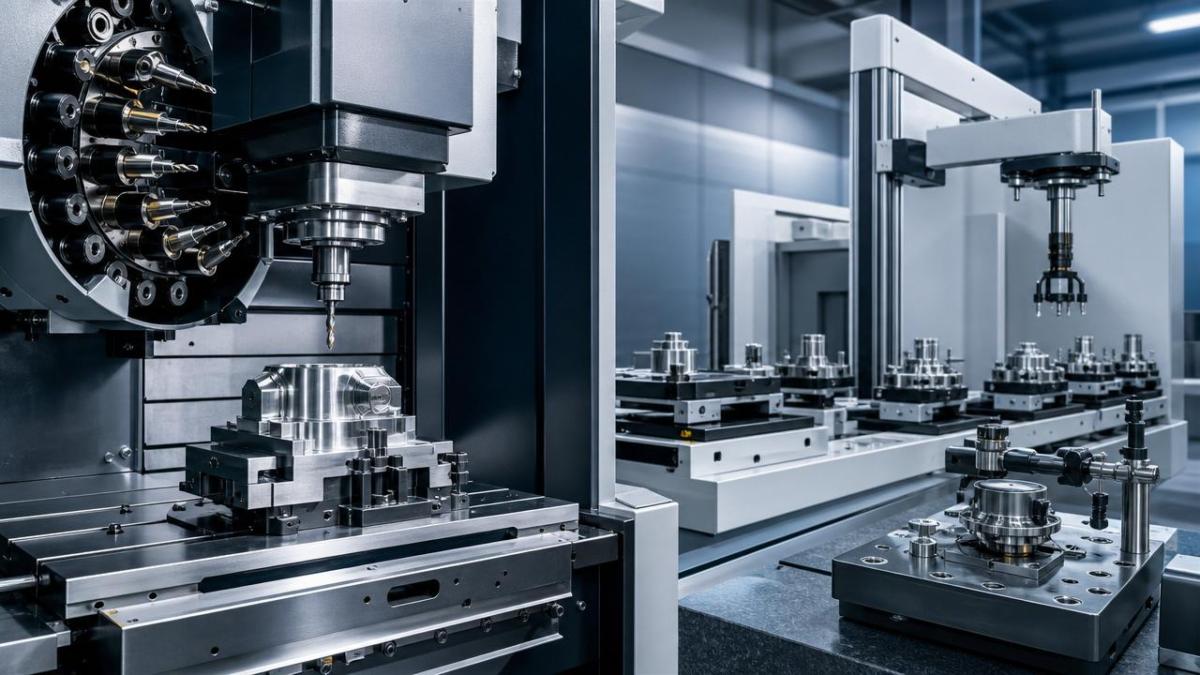
As factories adopt robotics, digital monitoring, flexible cells, and connected machine tools, industrial CNC output should be viewed as a system result rather than a single-machine result. In a smart production line, spindle speed is only one variable among many. Pallet scheduling, automatic tool data, part traceability, in-process measurement, and machine-to-machine coordination can all influence final throughput more than headline RPM.
For operators, this means output improvement increasingly depends on communication across roles. Programming, maintenance, tooling, quality, and production planning must align. If one part of the system lags, the rest cannot fully benefit. A machine tool may be technically capable of faster machining, but if the robot waits for part confirmation or the measuring station becomes overloaded, true output remains limited.
This systems view is especially relevant in global manufacturing sectors where precision, traceability, and stable delivery are essential. Whether the operation supports automotive production, aerospace structures, energy components, or electronics manufacturing, the most competitive industrial CNC processes are built on coordinated flow, not isolated speed claims.
What should you confirm first before trying to raise industrial CNC output?
Before changing parameters, confirm a few basic questions: Where is the machine really losing time? Is the process stable enough to run faster without increasing scrap? Are setup, tooling, program logic, and material flow already optimized? Is inspection integrated efficiently, or does it interrupt the cycle too often? Can the current fixture and toolholder support more aggressive cutting safely?
If these answers are unclear, the next step should not be simply raising spindle speed. It should be a structured review of the process. For operators, production engineers, or buyers evaluating industrial CNC capability, the right conversation starts with part type, batch size, tolerance level, tooling strategy, setup method, automation level, and uptime data. Once those points are understood, it becomes much easier to decide whether the bottleneck is in machining, handling, programming, or production organization.
If you need to confirm a specific solution, machine configuration, production direction, lead time, quotation basis, or cooperation model, start by discussing the real cycle breakdown, tool life expectations, setup frequency, quality targets, and material flow conditions. Those questions will reveal far more about industrial CNC output potential than spindle speed alone.
PREVIOUS ARTICLE
Recommended for You
![]() ANVISA New Rule: Portuguese Biocompatibility Labels for Medical CNC Machines in BrazilManufacturing Policy Research Center
ANVISA New Rule: Portuguese Biocompatibility Labels for Medical CNC Machines in BrazilManufacturing Policy Research Center![]() EMO Hannover 2027 Booth Booking Opens: China AI-Machining Pavilion LaunchesGlobal Machine Tool Trade Research Center
EMO Hannover 2027 Booth Booking Opens: China AI-Machining Pavilion LaunchesGlobal Machine Tool Trade Research Center![]() KATS Updates KC Rules: CNC Cybersecurity Modules Must Meet IEC 62443-4-2Manufacturing Policy Research Center
KATS Updates KC Rules: CNC Cybersecurity Modules Must Meet IEC 62443-4-2Manufacturing Policy Research Center![]() Shanghai Port Launches Green Clearance Channel for CNC EquipmentManufacturing Market Research Center
Shanghai Port Launches Green Clearance Channel for CNC EquipmentManufacturing Market Research Center![]() ISO 23218-3:2026 Published: CNC Digital Twin Interoperability StandardCNC Machining Technology Center
ISO 23218-3:2026 Published: CNC Digital Twin Interoperability StandardCNC Machining Technology Center![]() Vietnam Cuts CNC Equipment Import Tariff to 3.8% from June 2026Global Machine Tool Trade Research Center
Vietnam Cuts CNC Equipment Import Tariff to 3.8% from June 2026Global Machine Tool Trade Research Center


Aris Katos
Future of Carbide Coatings
15+ years in precision manufacturing systems. Specialized in high-speed milling and aerospace grade alloy processing.
▶
ISO 23218-3:2026 Published: CNC Digital Twin Interoperability StandardCNC Machining Technology Center▶
CNC Programming errors that waste machine time every weekCNC Machining Technology Center▶
What limits industrial CNC output more than spindle speedCNC Machining Technology Center▶
CNC industrial setups that cut changeover time in small shopsCNC Machining Technology Center▶
CNC Programming Issues That Cause Scrap on Repeat JobsCNC Machining Technology Center
Mastering 5-Axis Workholding Strategies
Join our technical panel on Nov 15th to learn about reducing vibrations in thin-wall components.

Providing you with integrated sanding solutions
Before-sales and after-sales services
Comprehensive technical support