• Global CNC market projected to reach $128B by 2028 • New EU trade regulations for precision tooling components • Aerospace deman
NYSE: CNC +1.2%LME: STEEL -0.4%
CNC industrial setups that cut changeover time in small shops
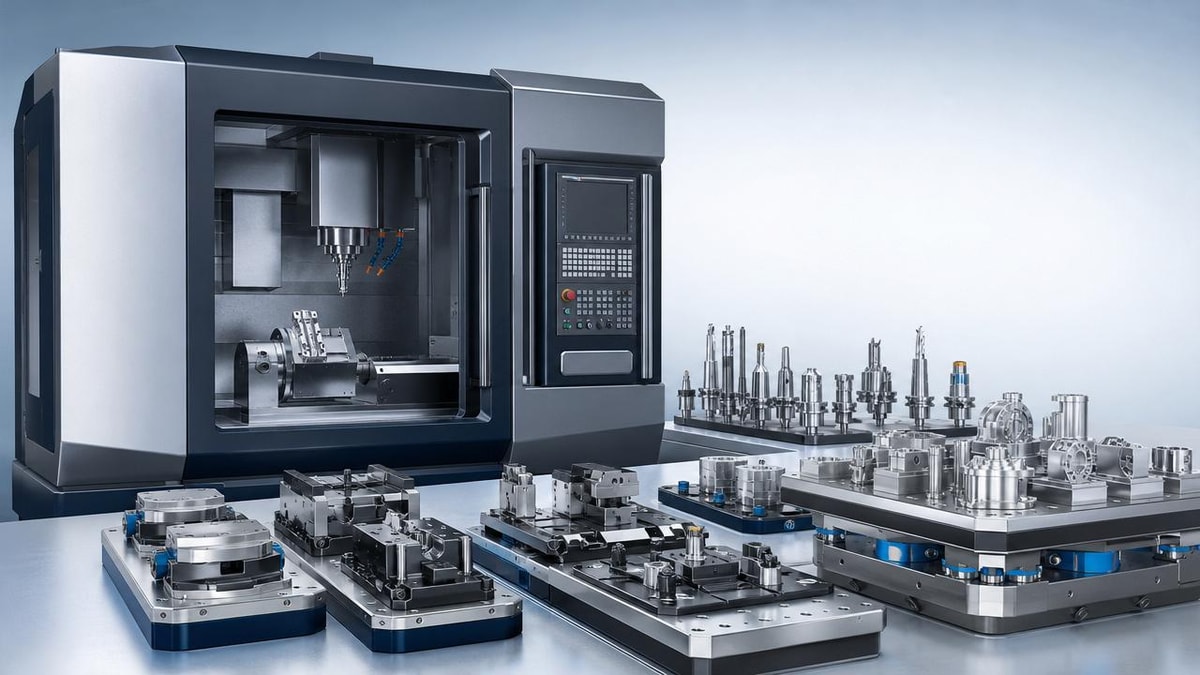
For project managers and engineering leads, reducing changeover time is one of the fastest ways to improve output without adding floor space. In today’s CNC industrial environment, the right machine setup, tooling strategy, and workflow design can turn small shops into highly responsive production units. This article explores practical setups that shorten transitions, improve scheduling flexibility, and support consistent precision.
Why changeover time matters more than spindle speed in a small CNC industrial shop
In small-batch and mixed-part production, the real bottleneck is often not metal removal. It is the time spent stopping one job, unloading fixtures, changing tools, re-touching offsets, loading programs, confirming first-off quality, and restarting the next order. For a project manager, these hidden minutes directly affect delivery promises, machine utilization, labor planning, and margin control.
This is especially true across the broader CNC industrial supply chain, where customers expect both flexibility and repeatability. Automotive suppliers may need frequent revision control. Aerospace subcontractors may run low volumes with strict traceability. Energy and electronics parts often mix precision features with urgent schedule changes. In all of these cases, faster changeover creates more available capacity without buying another machine.
A well-designed setup reduces variation as well as downtime. That matters because rushed transitions often create scrap, offset drift, tool mismatch, and first-article delays. Small shops cannot absorb repeated disruption. They need setups that are simple to standardize, easy to train, and robust under schedule pressure.
- Shorter setup windows increase effective spindle uptime and help absorb rush orders.
- Standardized changeover methods reduce operator dependence and improve schedule predictability.
- Better fixture and tooling strategy lowers the risk of first-part rejection after a job switch.
Which CNC industrial setups cut changeover time most effectively?
Not every investment produces the same benefit. In small shops, the best setup is usually the one that removes repeated manual decisions. That means reducing clamp variation, tool search time, offset editing, and program confusion. The most effective CNC industrial setups combine physical standardization with digital discipline.
1. Modular fixturing for repeatable positioning
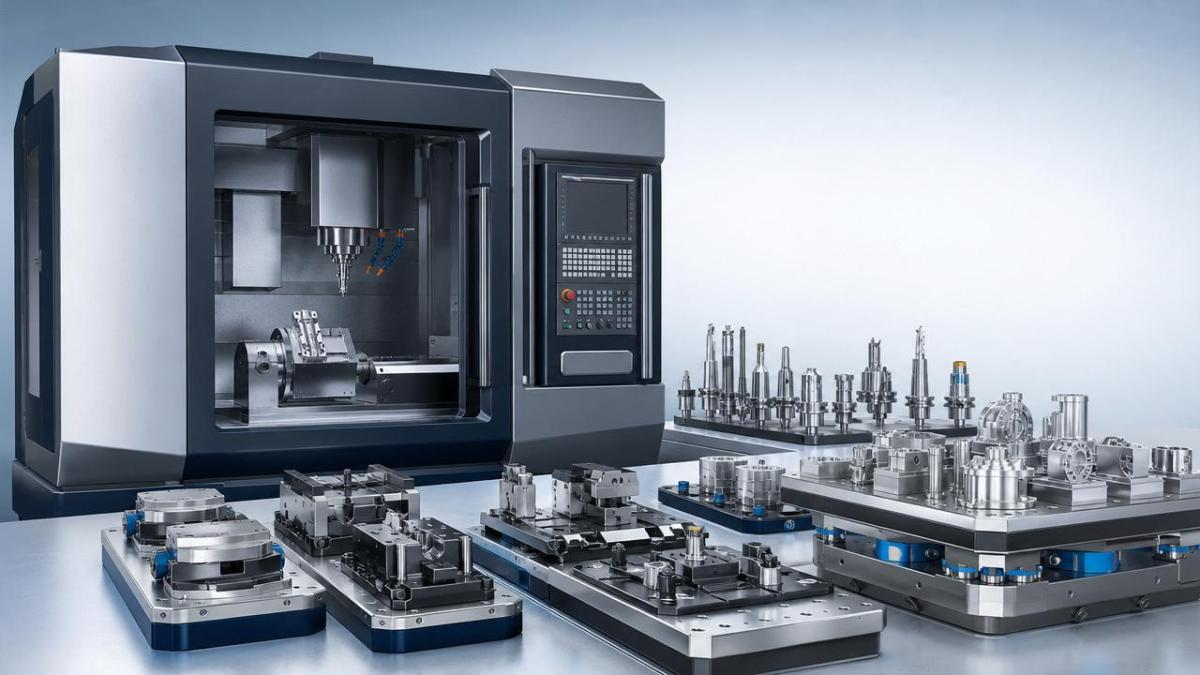
A modular fixture base allows operators to swap jaws, nests, stops, or top plates without rebuilding the entire workholding system. For part families with similar envelopes, a common base shortens alignment time and reduces the need to re-indicate every setup from zero. This is one of the most practical upgrades for high-mix shops.
2. Standardized tool assemblies and presetting
When toolholders, gauge lengths, and cutter assemblies are standardized, replacement becomes predictable. Offline presetting further cuts machine stoppage because operators can prepare the next tool package while the current job is running. In a CNC industrial workflow, that separation between preparation and machining is a major source of time savings.
3. Common zero-point systems
Zero-point clamping systems help reduce the variability of fixture mounting and machine re-referencing. They are useful when multiple jobs rotate through the same machining center or when tombstones, vises, and custom plates must be exchanged quickly. Their value is strongest when paired with disciplined fixture documentation.
4. Tool management linked to the production schedule
Tooling should not be treated as a separate storeroom activity. If project scheduling does not confirm insert availability, spare holders, and life-status tools before a job arrives, setup time expands. Fast changeover depends on planning tool readiness as part of each work order release.
The table below compares common CNC industrial setup options based on where they save time and what project managers should expect during implementation.
For many small shops, the best starting point is modular fixturing plus standardized tool assemblies. Zero-point systems and pallet strategies become more attractive when job mix is high enough to justify the capital and process discipline required.
How should project managers evaluate setup choices before buying?
A common mistake in CNC industrial purchasing is comparing only machine specifications while ignoring setup architecture. Two machines with similar travel and spindle performance may deliver very different scheduling outcomes if one supports faster fixture exchange, better tool access, and easier digital setup control.
Project managers should evaluate setup decisions with measurable criteria tied to order flow, operator skill level, and part variability. The goal is not simply to automate. It is to remove the causes of avoidable delay.
- Measure current average changeover by machine type, including fixture removal, tool setup, proving, and first article approval.
- Group parts into families by datum strategy, workholding style, material, and tool overlap.
- Identify which setup steps require manual judgment and which can be standardized or moved offline.
- Estimate whether changeover savings will improve on-time delivery, overtime load, or subcontract dependence.
The next table gives a practical procurement view for CNC industrial setup planning, especially when budget is limited and fast return is important.
This evaluation approach helps keep procurement grounded in output improvement. It also prevents over-investing in advanced options that look impressive but do not solve the actual bottleneck in the current CNC industrial workflow.
What setup strategy works best by application scenario?
Different production patterns need different changeover logic. A small shop supplying precision discs for energy equipment does not need the same setup strategy as a shop machining many aluminum housings for electronics. The best CNC industrial configuration depends on volume stability, tolerance sensitivity, and routing complexity.
High-mix, low-volume subcontract machining
Use modular fixtures, documented setup sheets, digital program control, and preset tool assemblies. The priority is flexibility. Shops in this category benefit most from reducing manual searching and machine-side preparation.
Repeat families with moderate batch sizes
Consider palletized or zero-point based setups. If parts share a common datum scheme, dedicated top plates or soft jaws can be swapped quickly while preserving location repeatability.
Tight-tolerance structural or shaft components
Prioritize thermal stability, probing routines, repeatable clamping force, and inspection-ready first-off procedures. Here, changeover speed must never come at the cost of positional accuracy or surface integrity.
- Automotive-style recurring parts often justify fixture family standardization sooner than robotic loading.
- Aerospace-related work typically demands stronger process records, setup verification, and revision traceability.
- Electronics and small precision parts may gain more from quick jaw change systems and tool access planning than from large pallet systems.
How to implement faster CNC industrial changeovers without disrupting delivery
Implementation should be phased. Many small shops fail because they try to redesign fixtures, update tooling, and change scheduling rules at the same time. That creates confusion and can temporarily increase setup errors. A better approach is to improve one machine family or one part family first.
Recommended rollout sequence
- Select one bottleneck machine with frequent job switches and collect baseline setup data for two to four weeks.
- Standardize toolholder assemblies and create a controlled tool list by recurring part family.
- Introduce modular workholding or quick-change reference hardware for the highest-runner jobs.
- Document setup sheets with fixture orientation, tool map, datum strategy, and first-article checkpoints.
- Review actual changeover reduction, scrap events, and schedule impact before expanding to other machines.
This staged method is practical because project leaders can validate savings while controlling risk. It also helps operators trust the new process. In CNC industrial environments, adoption speed often depends more on clarity and repeatability than on technology level alone.
Cost, alternatives, and the trade-offs managers should not ignore
Faster changeover is not always about buying the most advanced system. Sometimes the best return comes from simpler process fixes: common tool libraries, setup carts, fixture storage labels, digital setup photos, or dedicated pre-stage benches. These low-cost actions can recover a surprising amount of lost time.
Higher-investment options such as zero-point systems, pallet pools, bar feeders, or robot tending can be justified, but only when the job mix, utilization rate, and programming discipline support them. If programs are unstable or fixture documentation is weak, automation may simply move poor setup habits into a more expensive format.
- Low-cost alternative: standard setup kits, visual fixture references, and preloaded tool carts.
- Mid-range option: modular fixturing, probing cycles, and offline tool presetting.
- Higher-investment route: zero-point clamping, pallet handling, or integrated automation cells.
Managers should also account for training time, spare components, maintenance support, and compatibility with future machines. In the CNC industrial sector, a setup strategy with slightly lower peak speed may still be the better decision if it is easier to maintain across shifts and product revisions.
Standards, process control, and common mistakes in changeover reduction
For precision manufacturing, faster setup must still support quality and traceability. While exact requirements vary by sector, many buyers expect process control practices aligned with recognized quality systems, documented revision handling, calibrated measurement routines, and controlled inspection records. That is particularly relevant in aerospace, automotive, and energy-related supply chains.
Common mistakes to avoid
- Reducing setup checks so aggressively that first-off verification becomes weak or inconsistent.
- Buying quick-change hardware without updating setup sheets, tool maps, and storage rules.
- Assuming one fixture concept can cover every part, even when datum access and clamp direction differ.
- Ignoring operator training and expecting software or hardware alone to solve workflow gaps.
The strongest CNC industrial results come from balanced process design. Speed, quality, scheduling, and documentation should improve together. If one area is left behind, the apparent gain in changeover time may be offset by rework, missed delivery, or customer complaint risk.
FAQ: practical questions about CNC industrial changeover planning
How do I know whether a zero-point system is worth it for a small shop?
It is usually worth deeper evaluation when the same machine changes fixture types several times per week, setup alignment consumes a large share of non-cutting time, and jobs repeat often enough to capture the benefit. If volumes are very low and fixtures rarely return, modular manual systems may offer a better cost-to-flexibility ratio.
What should be standardized first: tooling or fixturing?
In many CNC industrial shops, tooling standardization comes first because it affects nearly every job and is easier to roll out. Common holders, preset lengths, and controlled tool lists reduce setup confusion immediately. Fixturing upgrades should then focus on the part families with the highest changeover burden.
Can probing reduce changeover time, or does it only add cycle time?
Probing can reduce total setup time when it replaces manual indication, supports repeatable datum capture, or confirms fixture condition before cutting. It may add seconds or minutes to the cycle, but it can save much more time by reducing proving effort and first-part uncertainty.
What is the most overlooked factor in fast changeovers?
Program and revision control. Shops often improve hardware but still lose time because operators search for the latest setup file, check old offsets, or verify uncertain tool data. Digital discipline is a core part of every successful CNC industrial setup strategy.
Why choose us for CNC industrial setup planning and sourcing support
For project managers and engineering leads, the challenge is rarely a lack of equipment options. The real issue is choosing a setup path that fits current orders, future growth, quality requirements, and budget limits. Our platform focuses on the global CNC machining and precision manufacturing industry, connecting technical insight with practical sourcing and implementation judgment.
If you are reviewing CNC industrial setups to cut changeover time, you can contact us to discuss specific decision points, including fixture approach, tooling standardization, automation readiness, expected delivery cycles, and supplier communication across international markets. We can also help you frame questions for quotation comparison and technical clarification.
- Confirm key parameters for your part family, machine type, and target changeover window.
- Compare solution routes such as modular fixturing, zero-point systems, preset tooling, or pallet-based workflows.
- Discuss delivery timing, customization scope, and whether your application needs stronger documentation or compliance support.
- Request guidance for sample evaluation, quotation communication, or supplier selection aligned with your production plan.
A faster, more flexible CNC industrial shop does not start with a slogan. It starts with the right setup decisions. If you are planning an upgrade or preparing a sourcing project, reach out with your part drawings, machine configuration, target batch pattern, and delivery expectations to begin a more focused discussion.
PREVIOUS ARTICLE
Recommended for You
![]() ANVISA New Rule: Portuguese Biocompatibility Labels for Medical CNC Machines in BrazilManufacturing Policy Research Center
ANVISA New Rule: Portuguese Biocompatibility Labels for Medical CNC Machines in BrazilManufacturing Policy Research Center![]() EMO Hannover 2027 Booth Booking Opens: China AI-Machining Pavilion LaunchesGlobal Machine Tool Trade Research Center
EMO Hannover 2027 Booth Booking Opens: China AI-Machining Pavilion LaunchesGlobal Machine Tool Trade Research Center![]() KATS Updates KC Rules: CNC Cybersecurity Modules Must Meet IEC 62443-4-2Manufacturing Policy Research Center
KATS Updates KC Rules: CNC Cybersecurity Modules Must Meet IEC 62443-4-2Manufacturing Policy Research Center![]() Shanghai Port Launches Green Clearance Channel for CNC EquipmentManufacturing Market Research Center
Shanghai Port Launches Green Clearance Channel for CNC EquipmentManufacturing Market Research Center![]() ISO 23218-3:2026 Published: CNC Digital Twin Interoperability StandardCNC Machining Technology Center
ISO 23218-3:2026 Published: CNC Digital Twin Interoperability StandardCNC Machining Technology Center![]() Vietnam Cuts CNC Equipment Import Tariff to 3.8% from June 2026Global Machine Tool Trade Research Center
Vietnam Cuts CNC Equipment Import Tariff to 3.8% from June 2026Global Machine Tool Trade Research Center


Aris Katos
Future of Carbide Coatings
15+ years in precision manufacturing systems. Specialized in high-speed milling and aerospace grade alloy processing.
▶
ISO 23218-3:2026 Published: CNC Digital Twin Interoperability StandardCNC Machining Technology Center▶
CNC Programming errors that waste machine time every weekCNC Machining Technology Center▶
What limits industrial CNC output more than spindle speedCNC Machining Technology Center▶
CNC industrial setups that cut changeover time in small shopsCNC Machining Technology Center▶
CNC Programming Issues That Cause Scrap on Repeat JobsCNC Machining Technology Center
Mastering 5-Axis Workholding Strategies
Join our technical panel on Nov 15th to learn about reducing vibrations in thin-wall components.

Providing you with integrated sanding solutions
Before-sales and after-sales services
Comprehensive technical support