• Global CNC market projected to reach $128B by 2028 • New EU trade regulations for precision tooling components • Aerospace deman
NYSE: CNC +1.2%LME: STEEL -0.4%

CNC milling finish problems that tool changes alone cannot fix
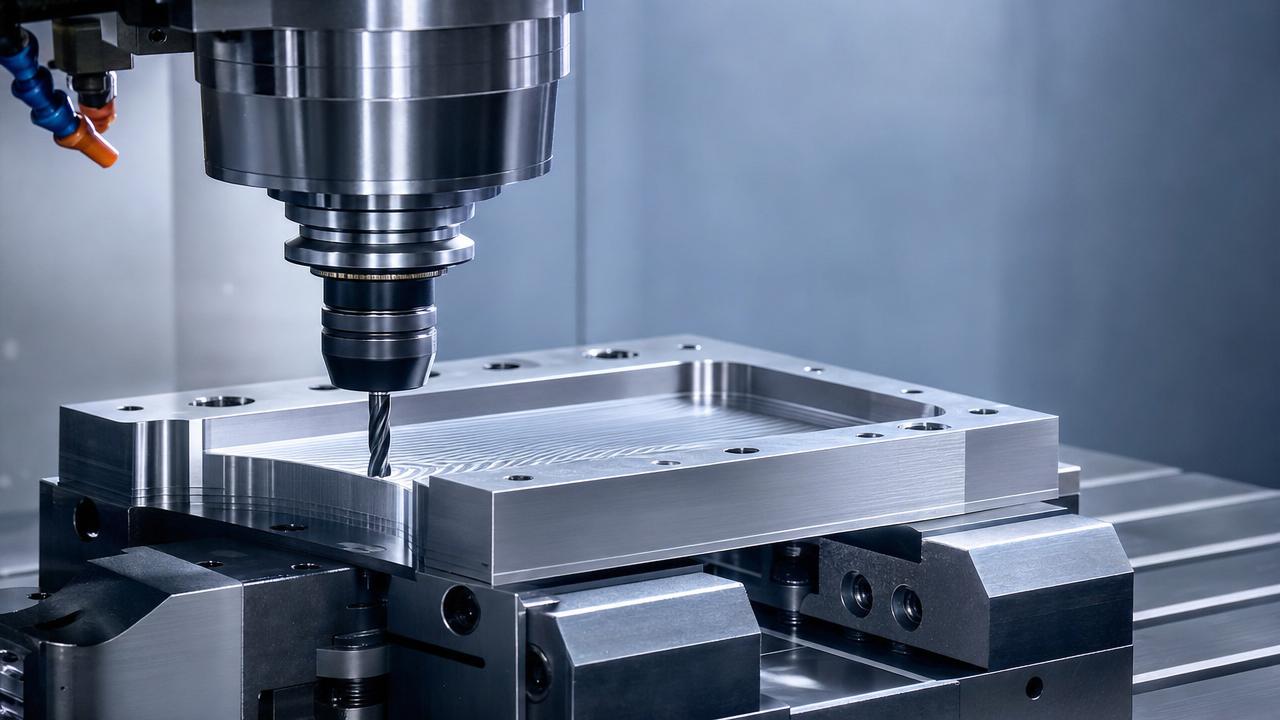
If your CNC milling surface finish still shows chatter, tearing, feed marks, or inconsistent texture after changing tools, the real problem is often not the cutter itself. Across modern manufacturing, expectations for surface quality are rising as parts move into tighter-tolerance applications in automotive, aerospace, electronics, and energy equipment. That shift means finish quality can no longer be treated as a simple tooling issue. In many cases, repeat finish defects are signals of a broader process imbalance involving machine rigidity, spindle health, fixturing, toolpath design, material behavior, and parameter stability. Understanding those interactions is becoming essential for any operation that wants more reliable CNC milling results and lower rework costs.
Why CNC milling finish problems are becoming more visible across modern production
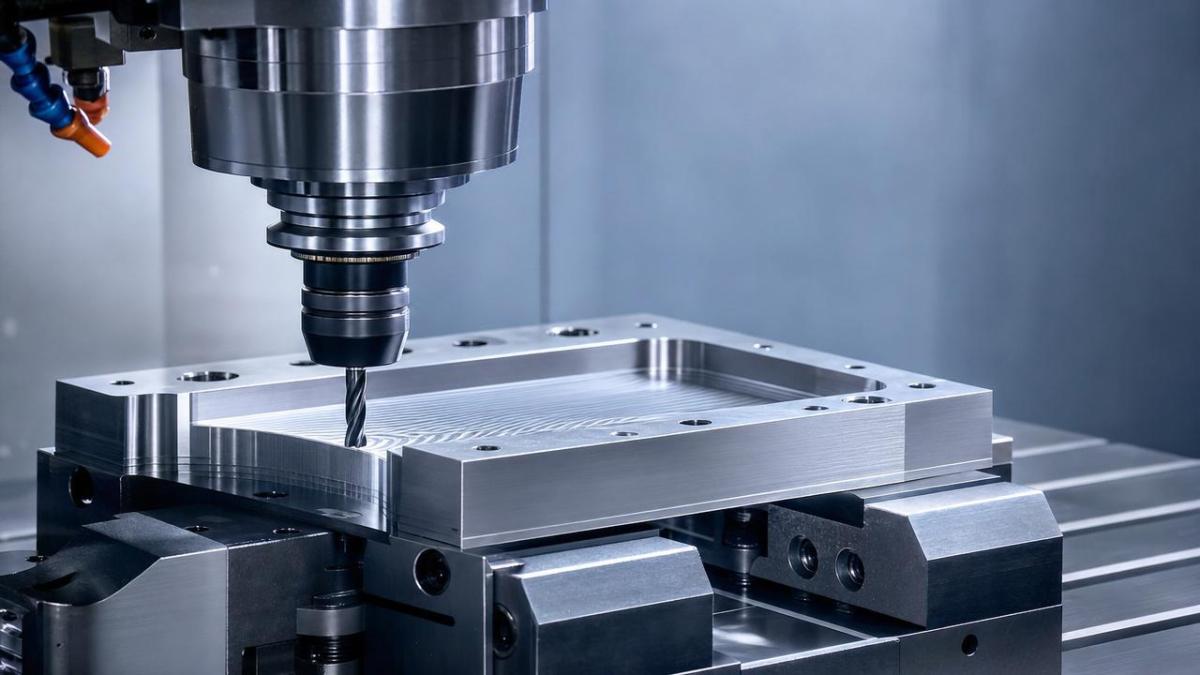
The current manufacturing environment makes finish problems easier to see and harder to ignore. Components are increasingly designed with thinner walls, harder materials, tighter geometric tolerances, and more complex multi-axis features. At the same time, production lines are expected to run faster with less manual intervention. In this setting, a weak CNC milling process may still hold dimensions, yet fail on appearance, functional surface quality, or downstream assembly performance.
Digital inspection, in-process monitoring, and customer quality requirements also expose problems that once passed unnoticed. A surface that looks acceptable under basic inspection may reveal waviness, vibration patterns, or burr-related tearing under higher magnification. This is why tool replacement alone often brings only temporary relief. It treats the symptom, not the system conditions that keep destabilizing the cut.
The strongest trend signal: finish quality in CNC milling is now a process-control issue, not a tool-only issue
A clear trend in precision manufacturing is the shift from reactive troubleshooting to process-level diagnosis. When a new end mill improves finish for one batch but the same defect returns later, the pattern usually points to variation somewhere else in the machining chain. In practical CNC milling, finish stability depends on whether the machine, setup, path, and material all support a consistent chip formation process.
This shift matters because surface finish is no longer evaluated only as cosmetic quality. It influences fatigue life, sealing performance, coating adhesion, friction behavior, and fit during assembly. For that reason, recurring CNC milling finish defects should be read as trend signals of process capability loss rather than isolated workshop annoyances.
Common hidden causes behind repeat finish defects
What is driving these CNC milling finish issues beyond tooling alone
Several industry-wide forces are increasing the frequency of difficult finish problems in CNC milling. These forces are not temporary. They reflect how machining systems are being pushed to deliver more precision, more flexibility, and more unattended output at the same time.
- More difficult materials: Stainless alloys, high-temperature alloys, hardened steels, and aluminum variants respond differently to heat and chip evacuation, making finish control more sensitive.
- Higher machine utilization: Longer operating hours accelerate spindle wear, backlash growth, and fixture fatigue, which can quietly degrade CNC milling surface quality.
- Complex geometry: Multi-face and thin-wall parts react strongly to tool pressure, making a stable finish dependent on strategy and support conditions.
- Faster programming cycles: CAM output may be efficient for throughput but not optimized for finish-critical passes, especially at transitions and corners.
- Tighter quality traceability: Better measurement systems expose process variation that was previously hidden.
How finish instability in CNC milling affects production, cost, and part performance
The impact of poor finish extends well beyond visual rejection. In high-value production, unstable CNC milling finish can trigger extra polishing, reduced tool life, scrap risk, slower cycle times, and schedule disruption. On precision surfaces, waviness or tearing may also weaken sealing faces, compromise bearing fits, or reduce fatigue resistance. This means the cost of ignoring root causes is usually much higher than the cost of proper diagnosis.
Different business stages feel the effect in different ways. During prototyping, finish issues slow validation and obscure whether the design or process is responsible. In batch production, they create variation between machines, shifts, and lots. In export-oriented or globally integrated manufacturing, inconsistent CNC milling quality can also increase customer audits and documentation pressure because repeatability becomes just as important as the nominal result.
Where to look first when tool changes do not solve CNC milling finish problems
When replacing the cutter fails to fix the issue, the next step should be structured observation rather than more trial-and-error spending. The goal is to identify which part of the process is introducing instability into the finish pass.
- Check spindle and holder condition: Measure runout at the tool shank and near the cutting edge. Even small errors can produce visible finish variation in CNC milling.
- Review fixture stiffness: Watch for part movement, jaw distortion, or unsupported thin sections. Surface defects that worsen near edges often point here.
- Compare roughing and finishing stock allowance: Uneven remaining stock can overload one area of the finish pass and underload another.
- Study toolpath engagement: Abrupt entry, full-width cornering, and inconsistent stepover can create witness marks despite a sharp tool.
- Validate feeds and speeds against actual conditions: A theoretically correct recipe may still rub or chatter if stickout, material batch, or coolant delivery differs from the original setup.
- Inspect coolant and chip evacuation: Recutting chips often causes tearing and random texture on finished surfaces.
A practical response framework for more reliable CNC milling surface finish
What deserves the most attention as CNC milling requirements continue to rise
As the industry moves toward smarter factories and tighter quality integration, the most important mindset change is to treat finish performance as measurable process capability. In CNC milling, that means combining tooling decisions with machine health checks, fixture verification, path optimization, and controlled parameter libraries. The operations that improve fastest are not always those buying the newest cutter first, but those building a clearer cause-and-effect map around finish outcomes.
- Separate finish defects by pattern: chatter, tearing, waviness, burr-related marks, and thermal smearing point to different root causes.
- Record machine, holder, program version, and material lot when finish issues appear.
- Use test cuts to isolate one variable at a time instead of changing tool, speed, and path together.
- Prioritize consistency over peak short-term speed when surface quality is function-critical.
The next practical step is to audit one repeat CNC milling job where finish complaints return despite tool changes. Review spindle runout, fixture support, stock allowance, stepover strategy, and coolant behavior in one structured pass. That single exercise often reveals whether the true limitation is machine condition, setup design, or programming logic. Once that is clear, finish quality becomes easier to stabilize, easier to scale, and far less dependent on guesswork.
PREVIOUS ARTICLE
Recommended for You
![]() Five Ministries Launch Joint Enforcement on EV Battery RecyclingManufacturing Policy Research Center
Five Ministries Launch Joint Enforcement on EV Battery RecyclingManufacturing Policy Research Center![]() Top 10 Future Industries Roadmap 2026 ReleasedManufacturing Market Research Center
Top 10 Future Industries Roadmap 2026 ReleasedManufacturing Market Research Center![]() Global Methanol-Electric Ecosystem Alliance LaunchedManufacturing Market Research Center
Global Methanol-Electric Ecosystem Alliance LaunchedManufacturing Market Research Center![]() ISO 23218-3:2026 Enters Force: CNC Digital Twin Interoperability Standard Goes GlobalCNC Machining Technology Center
ISO 23218-3:2026 Enters Force: CNC Digital Twin Interoperability Standard Goes GlobalCNC Machining Technology Center![]() ANVISA New Rule: Portuguese Biocompatibility Labels for Medical CNC EquipmentManufacturing Policy Research Center
ANVISA New Rule: Portuguese Biocompatibility Labels for Medical CNC EquipmentManufacturing Policy Research Center![]() KATS Updates KC Certification: CNC Cybersecurity Modules Must Comply with IEC 62443-4-2Manufacturing Policy Research Center
KATS Updates KC Certification: CNC Cybersecurity Modules Must Comply with IEC 62443-4-2Manufacturing Policy Research Center


Aris Katos
Future of Carbide Coatings
15+ years in precision manufacturing systems. Specialized in high-speed milling and aerospace grade alloy processing.
▶
ISO 23218-3:2026 Enters Force: CNC Digital Twin Interoperability Standard Goes GlobalCNC Machining Technology Center▶
CNC Programming errors that create repeat scrap patternsCNC Machining Technology Center▶
CNC milling finish problems that tool changes alone cannot fixCNC Machining Technology Center▶
CNC metalworking mistakes that lead to costly reworkCNC Machining Technology Center▶
Is space-saving CNC manufacturing losing service accessCNC Machining Technology Center
Mastering 5-Axis Workholding Strategies
Join our technical panel on Nov 15th to learn about reducing vibrations in thin-wall components.

Providing you with integrated sanding solutions
Before-sales and after-sales services
Comprehensive technical support