• Global CNC market projected to reach $128B by 2028 • New EU trade regulations for precision tooling components • Aerospace deman
NYSE: CNC +1.2%LME: STEEL -0.4%

Is space-saving CNC manufacturing losing service access
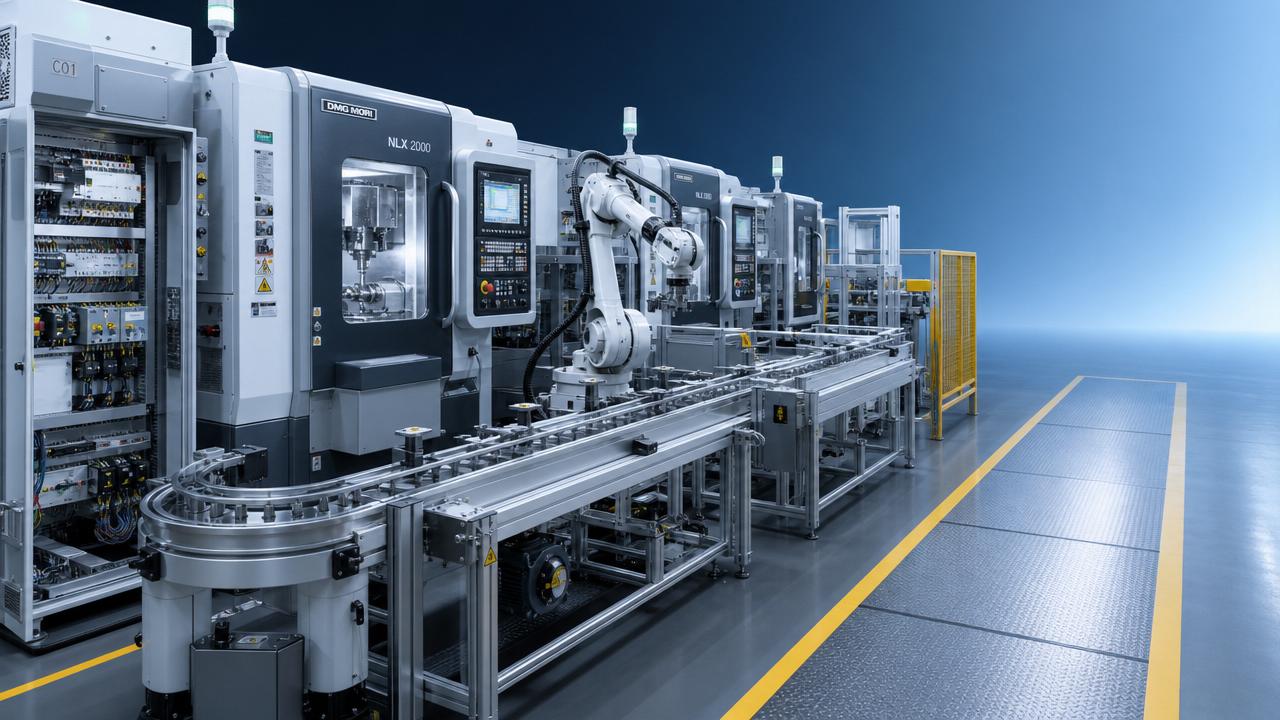
As factories pursue leaner layouts and higher output, space-saving CNC manufacturing is becoming a strategic choice for project leaders. But when machine footprints shrink, does maintenance access, safety, or upgrade flexibility suffer? This article explores how manufacturers can balance compact production design with serviceability, uptime, and long-term operational efficiency in modern CNC environments.
What does space-saving CNC manufacturing really mean in practical factory planning?
For many project managers, space-saving CNC manufacturing is not simply about buying a smaller machine. It refers to a broader production strategy that reduces floor-space consumption while preserving machining capability, operator safety, material flow, and equipment reliability. In modern plants, this can include compact CNC lathes, vertical machining centers with tighter footprints, multi-functional machines that combine several processes, and automated cells designed to minimize aisle congestion.
The reason this topic matters is clear: factory space is expensive, expansion is slow, and production targets keep rising. In sectors such as automotive components, aerospace parts, energy equipment, and electronics manufacturing, project leaders are being asked to do more within existing buildings. A compact layout can increase machine density, shorten internal transport routes, and support flexible production lines. However, the real test is whether the gain in usable space creates hidden operational losses elsewhere.
That is why service access becomes central. A machine that fits neatly into a dense layout may look efficient on a CAD drawing, yet become costly if technicians cannot quickly reach lubrication points, electrical cabinets, tool changers, chip conveyors, spindle assemblies, or coolant systems. In other words, space-saving CNC manufacturing succeeds only when compactness and maintainability are designed together.
Is reduced service access a real risk when CNC layouts become more compact?
Yes, it is a real risk, but it is not inevitable. The problem usually comes from layout decisions that prioritize installed capacity over full lifecycle operation. When machines are placed too close to walls, too close to each other, or too tightly integrated with automation, routine service tasks become slower and emergency repairs become disruptive. A ten-minute inspection can turn into a two-hour stoppage if guarding, cable routing, or robot fences block access.
Project managers should distinguish between machine footprint and service envelope. The footprint is the physical area occupied during standard operation. The service envelope includes the clearance required to open panels, remove components, change filters, inspect axes, replace tooling hardware, and safely isolate utilities. Many compact manufacturing plans fail because they estimate the first number and ignore the second.
Another issue is that service access affects more than maintenance labor. It influences mean time to repair, preventive maintenance compliance, spare parts handling, and even root-cause analysis after a breakdown. If technicians cannot see failure points clearly or reach them without moving adjacent equipment, downtime can spread across the entire cell. In high-mix or high-precision environments, that can affect delivery schedules, quality consistency, and customer confidence.
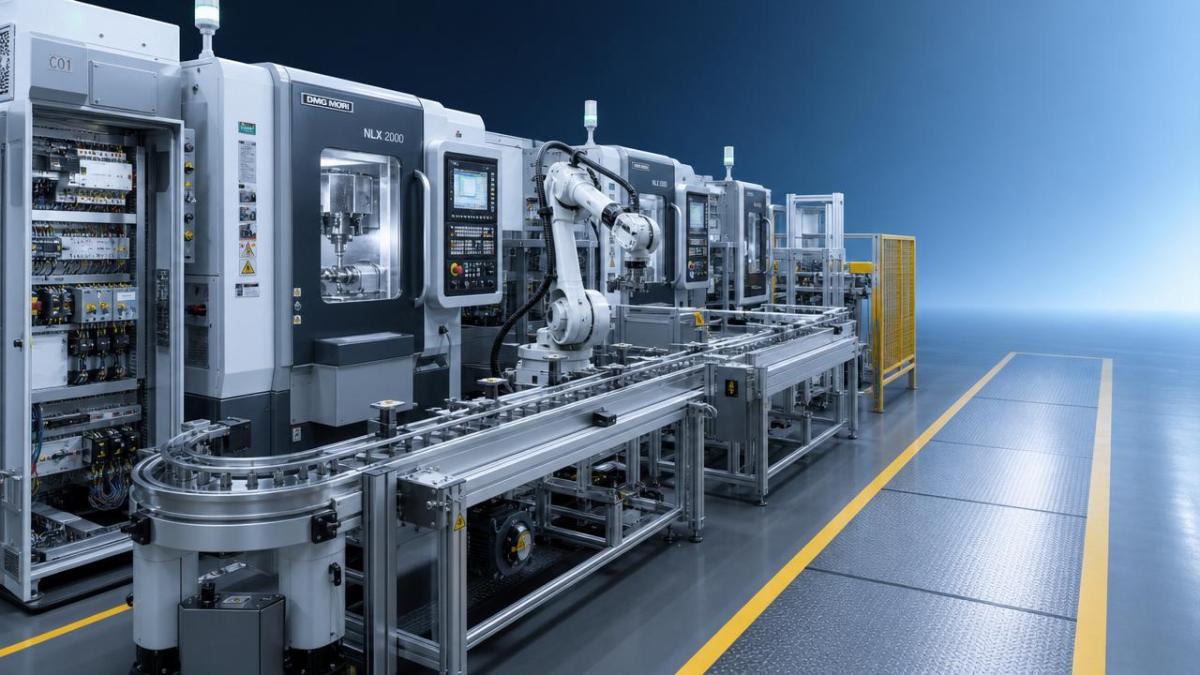
Which factories benefit most from space-saving CNC manufacturing, and where can it backfire?
Space-saving CNC manufacturing is especially attractive in facilities with rising order volume but limited expansion options. This includes suppliers operating in industrial clusters, urban manufacturing sites, export-oriented plants, and workshops where multiple machining, inspection, and assembly steps must coexist. Compact cells can be highly effective when production runs are stable, maintenance is standardized, and utilities are planned early.
It also works well in smart manufacturing projects where digital monitoring reduces unplanned inspection frequency. Machines equipped with condition monitoring, predictive maintenance tools, centralized coolant management, and modular electrical systems can support tighter layouts because fewer interventions require deep physical access. In these environments, compact design and digital integration reinforce each other.
However, space-saving CNC manufacturing can backfire in three common situations. First, in plants with frequent product changeovers, operators and technicians may need more space for setup, fixture swaps, probing adjustments, and trial runs. Second, in heavy-duty machining, chip evacuation, coolant handling, and component loading often require wider service zones than a compact plan allows. Third, in factories without disciplined preventive maintenance, any reduction in access tends to multiply downtime because small issues go unresolved until they become failures.
For project leaders, the key question is not “Can we fit more machines?” but “Can we still operate, maintain, and scale the line efficiently over five to ten years?”
How can project leaders evaluate whether a compact CNC layout is operationally safe and serviceable?
A strong evaluation process should combine engineering, maintenance, EHS, and production perspectives before final procurement or installation. This is where many layout decisions either gain resilience or create long-term friction. Instead of reviewing only machine dimensions, teams should simulate operating and service conditions.
Important evaluation points include access to electrical cabinets, spindle service areas, chip removal paths, coolant tank cleaning points, hydraulic units, lubrication systems, and robot maintenance zones. It is equally important to verify forklift paths, crane coverage if applicable, operator line of sight, and emergency stop accessibility. In compact automated cells, even sensor replacement or cable inspection can become difficult if reach distance is not checked early.
This kind of structured review helps project teams assess whether space-saving CNC manufacturing delivers real efficiency or only visual compactness. A good compact layout should shorten flow without trapping maintenance.
What are the most common mistakes companies make when pursuing space-saving CNC manufacturing?
One frequent mistake is treating machine specification sheets as layout truth. Vendor drawings usually provide installation dimensions, but they do not always reflect realistic service conditions, tooling carts, waste handling, or technician movement. A second mistake is assuming automation automatically solves access constraints. In fact, robots, guarding, and pallet systems often add another layer of service complexity.
A third mistake is separating procurement from maintenance planning. If the maintenance team is invited too late, decisions about machine orientation, utility routing, drainage, and panel access may already be fixed. This creates expensive retrofits or permanent inefficiencies. In the CNC machine tool industry, where uptime and precision directly affect profitability, this is a preventable risk.
Another common misunderstanding is to compare compact and standard layouts only by purchase price or output per square meter. Those are useful metrics, but they should be balanced with downtime cost, service labor hours, spare parts access, and upgrade flexibility. A layout that saves 10% of floor space but increases annual downtime by several days may not be an operational win.
Finally, some teams overlook utility infrastructure. Compressed air lines, coolant loops, chip conveyors, mist collection, network cables, and power cabinets all need logical routing. Poorly planned utilities can erase the advantages of space-saving CNC manufacturing by making the area harder to clean, inspect, and modify.
How can manufacturers protect uptime while still using a compact CNC production model?
The most effective approach is design for maintainability. This means choosing equipment and cell architecture based not only on cutting performance, axis travel, or automation level, but also on service logic. Machines with front-access maintenance points, modular coolant systems, easier chip management, centralized lubrication, and remote diagnostics are often better suited to compact layouts.
Standardization also helps. When factories use similar controls, spare part families, fixture concepts, and maintenance procedures across multiple compact CNC cells, technicians can work faster and training becomes easier. This reduces the penalty of reduced physical space because troubleshooting is more predictable. For project managers overseeing multi-site or phased investments, standardized compact cells can support both lean operations and scalable deployment.
Digital tools are another advantage. Condition monitoring, alarm analytics, spindle load tracking, thermal compensation status, and maintenance dashboards can identify issues before manual inspection becomes urgent. In a dense layout, preventing failure is far more valuable than reacting to failure. This is especially true for precision manufacturing environments where a small machine issue can quietly affect tolerance stability before a full breakdown occurs.
It is also wise to reserve strategic access corridors rather than trying to compress every gap. Even in a highly optimized plant, selected maintenance zones should remain open for service carts, lifting tools, and emergency intervention. Space-saving CNC manufacturing works best when compaction is selective, not absolute.
What should be confirmed before procurement, installation, or line expansion?
Before approving a compact CNC project, decision-makers should confirm a practical set of questions with suppliers, integrators, and internal teams. Ask for service-clearance drawings, not just footprint drawings. Request examples of similar installations in automotive, aerospace, electronics, or general precision manufacturing. Review maintenance task frequency and identify which activities require side, rear, or top access. Verify utility connection locations and replacement paths for major components.
It is equally important to test future-readiness. Can the layout support additional automation, in-process measurement, tool management expansion, or software upgrades? Can the machine cell adapt to new part families without forcing a full rearrangement? In global manufacturing, where product mix and customer requirements evolve quickly, compactness should not create rigidity.
For engineering and project leadership teams, the best procurement conversations usually cover six areas: actual service envelope, preventive maintenance workflow, downtime recovery method, spare part access, utility scalability, and safety compliance. When these topics are addressed upfront, space-saving CNC manufacturing becomes a controlled strategy rather than a risky compromise.
Does space-saving CNC manufacturing reduce total cost, or just shift cost elsewhere?
The answer depends on execution. If compact design improves material flow, increases usable capacity, shortens handling time, and supports stable maintenance, it can reduce total operating cost significantly. This is particularly valuable in high-rent industrial zones or facilities where building expansion would require long lead times and major capital approval.
But if service access is compromised, cost is often shifted rather than removed. The hidden costs appear in longer repairs, more difficult inspections, delayed cleaning, higher technician fatigue, awkward spare parts storage, and lower flexibility when products or volumes change. For project managers, the goal is not the smallest possible layout. The goal is the highest sustainable output per square meter over the asset lifecycle.
That is why balanced decision-making matters. In the CNC machine tool and automated production sector, floor-space efficiency is important, but reliable uptime, safe serviceability, and upgrade resilience are what protect long-term value.
What is the practical takeaway for project managers and engineering leaders?
Space-saving CNC manufacturing is not inherently losing service access, but it can do so when layout pressure overrides lifecycle thinking. The best compact CNC strategies combine smaller footprints with maintainable machine orientation, smart utility routing, realistic service clearance, digital monitoring, and room for future change. In other words, compact production should be engineered as an operational system, not just arranged as a space exercise.
If you need to confirm a specific solution, machine selection path, project schedule, budget framework, or supplier cooperation model, start by discussing a few practical points: what maintenance tasks are most frequent, how much service clearance is truly needed, which uptime risks are unacceptable, what expansion options may be required later, and how the proposed compact layout will perform under real production conditions rather than only in a design drawing.
PREVIOUS ARTICLE
NEXT ARTICLE
Recommended for You
![]() Five Ministries Launch Joint Enforcement on EV Battery RecyclingManufacturing Policy Research Center
Five Ministries Launch Joint Enforcement on EV Battery RecyclingManufacturing Policy Research Center![]() Top 10 Future Industries Roadmap 2026 ReleasedManufacturing Market Research Center
Top 10 Future Industries Roadmap 2026 ReleasedManufacturing Market Research Center![]() Global Methanol-Electric Ecosystem Alliance LaunchedManufacturing Market Research Center
Global Methanol-Electric Ecosystem Alliance LaunchedManufacturing Market Research Center![]() ISO 23218-3:2026 Enters Force: CNC Digital Twin Interoperability Standard Goes GlobalCNC Machining Technology Center
ISO 23218-3:2026 Enters Force: CNC Digital Twin Interoperability Standard Goes GlobalCNC Machining Technology Center![]() ANVISA New Rule: Portuguese Biocompatibility Labels for Medical CNC EquipmentManufacturing Policy Research Center
ANVISA New Rule: Portuguese Biocompatibility Labels for Medical CNC EquipmentManufacturing Policy Research Center![]() KATS Updates KC Certification: CNC Cybersecurity Modules Must Comply with IEC 62443-4-2Manufacturing Policy Research Center
KATS Updates KC Certification: CNC Cybersecurity Modules Must Comply with IEC 62443-4-2Manufacturing Policy Research Center


Aris Katos
Future of Carbide Coatings
15+ years in precision manufacturing systems. Specialized in high-speed milling and aerospace grade alloy processing.
▶
ISO 23218-3:2026 Enters Force: CNC Digital Twin Interoperability Standard Goes GlobalCNC Machining Technology Center▶
CNC Programming errors that create repeat scrap patternsCNC Machining Technology Center▶
CNC milling finish problems that tool changes alone cannot fixCNC Machining Technology Center▶
CNC metalworking mistakes that lead to costly reworkCNC Machining Technology Center▶
Is space-saving CNC manufacturing losing service accessCNC Machining Technology Center
Mastering 5-Axis Workholding Strategies
Join our technical panel on Nov 15th to learn about reducing vibrations in thin-wall components.

Providing you with integrated sanding solutions
Before-sales and after-sales services
Comprehensive technical support