• Global CNC market projected to reach $128B by 2028 • New EU trade regulations for precision tooling components • Aerospace deman
NYSE: CNC +1.2%LME: STEEL -0.4%

Is space-saving CNC manufacturing worth the trade-offs?
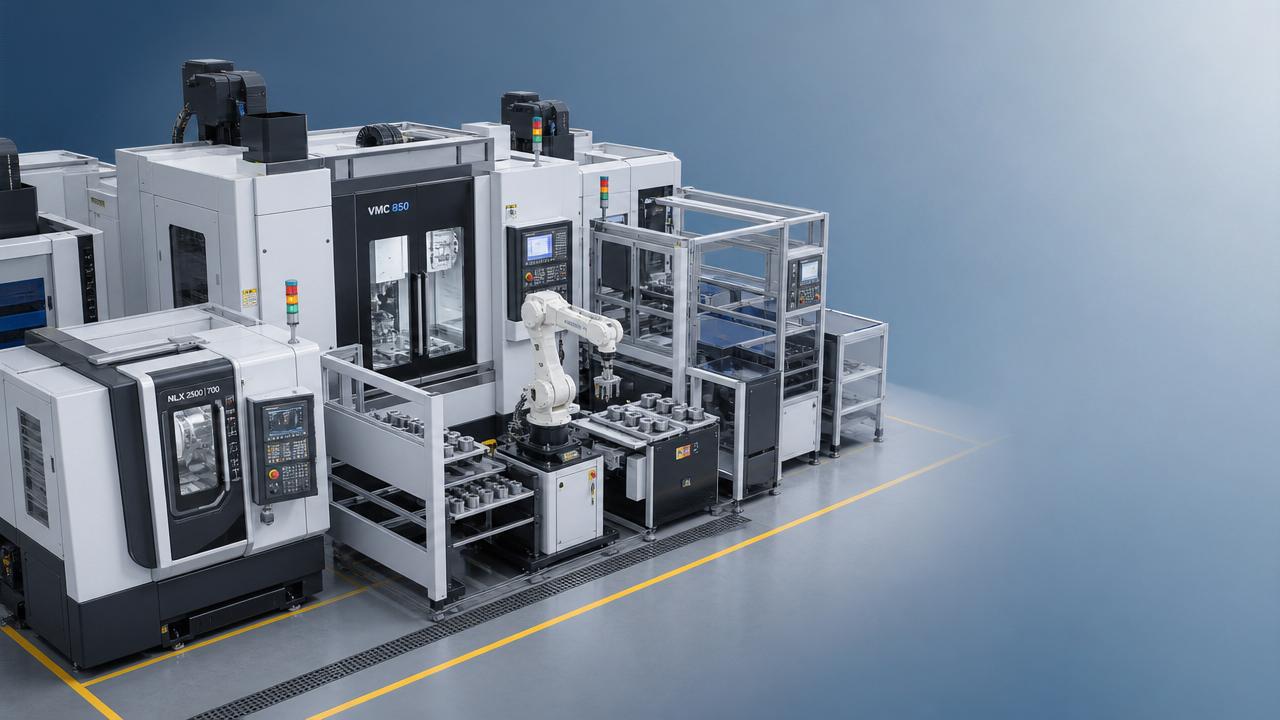
For manufacturers facing rising floor-space costs and pressure to increase output, space-saving CNC manufacturing can seem like a smart strategic move. But is the reduced footprint worth potential trade-offs in flexibility, maintenance access, scalability, or upfront investment? This article explores how business decision-makers can weigh efficiency gains against operational risks before committing to compact CNC solutions.
What does space-saving CNC manufacturing actually mean?
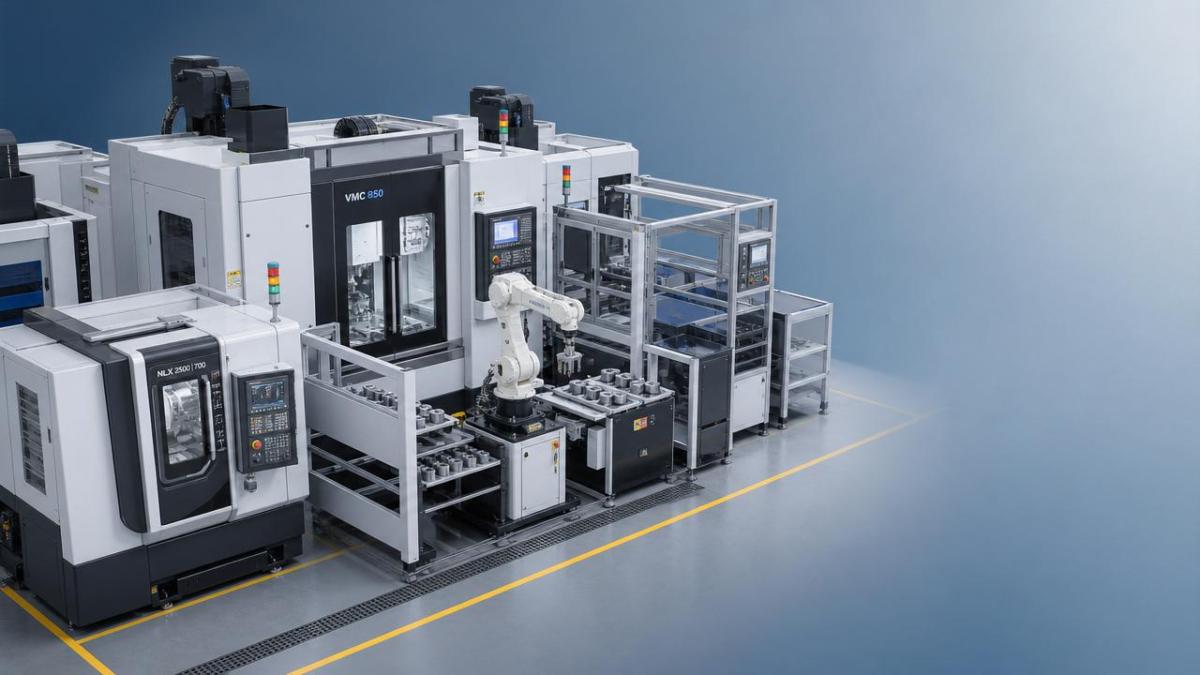
Space-saving CNC manufacturing refers to machine layouts, equipment designs, and production cells that reduce floor-space use without sacrificing essential machining capability.
It often includes compact CNC lathes, vertical machining centers, multi-function machines, and automated loading systems built for tighter production environments.
The idea is simple: produce more value per square meter. In expensive industrial zones, that can directly influence profit and expansion planning.
However, space-saving CNC manufacturing is not only about machine size. It also involves aisle planning, chip handling, tool storage, operator access, and digital workflow integration.
A compact footprint can look efficient on paper. Yet true performance depends on throughput, uptime, ergonomics, serviceability, and future production changes.
Why is space-saving CNC manufacturing gaining attention now?
Several market forces are pushing compact production strategies into the spotlight across the broader manufacturing sector.
Industrial rents have increased in many regions. Expanding a plant is often slower and costlier than improving space utilization inside an existing facility.
At the same time, demand for flexible automation is rising. Production lines now need to support shorter batches, product variation, and faster changeovers.
Space-saving CNC manufacturing aligns with smart factory goals. Smaller cells can integrate robots, in-process measurement, pallet systems, and digital monitoring in controlled footprints.
Energy and utility planning also matter. Compact layouts may reduce cable runs, air piping lengths, and material travel distances between process steps.
In industries like automotive parts, electronics, aerospace subcomponents, and energy equipment, every square meter affects workflow efficiency and production economics.
What are the biggest advantages of space-saving CNC manufacturing?
The strongest benefit is higher production density. More spindles or more process capability can fit into the same plant area.
That can delay building expansion, lower real-estate pressure, and improve capital efficiency for facilities operating near capacity.
Another advantage is shorter material flow. Compact cells reduce walking distance, transfer time, and work-in-progress accumulation between adjacent operations.
Space-saving CNC manufacturing can also support automation adoption. A well-designed compact cell may simplify robot loading and centralized process supervision.
For high-mix environments, combining turning, milling, drilling, and inspection within one smaller system may reduce setups and handling errors.
Common advantages include:
- better use of limited factory space
- reduced internal logistics time
- potentially lower labor movement
- easier cell-based production planning
- improved automation feasibility
These gains are especially attractive when product demand is stable and parts fit the machine envelope well.
What trade-offs can make space-saving CNC manufacturing less attractive?
The main trade-off is reduced flexibility. A compact machine or dense layout may limit part size, fixturing options, tool magazine capacity, or future process expansion.
Maintenance access is another concern. Tighter installations can make service slower, less safe, and more disruptive during repairs.
Chip evacuation, coolant management, and heat control become more critical in compressed machine environments. Poor handling can affect accuracy and uptime.
Space-saving CNC manufacturing may also require higher upfront engineering. Layout optimization, automation interfaces, and utility planning must be more precise.
In some cases, a compact all-in-one machine reduces footprints but increases single-point failure risk. If one machine stops, several operations stop together.
Watch for these hidden limitations:
- harder operator access around doors and panels
- restricted crane or forklift movement
- reduced scalability for larger future parts
- longer maintenance downtime in dense cells
- higher complexity in integrated automation
When is space-saving CNC manufacturing worth the trade-offs?
Space-saving CNC manufacturing is usually worth it when floor space is expensive, product dimensions are moderate, and process flow can be standardized.
It works well for repeatable parts, predictable volumes, and environments where automation can increase spindle utilization.
It is less compelling when product mix changes frequently, oversized parts appear often, or manual intervention remains high.
The best decision comes from comparing footprint savings against output gain, downtime risk, service access, and process resilience.
Quick decision checklist
- Is floor-space cost a measurable constraint?
- Do most parts fit a compact machine envelope?
- Can maintenance still be performed safely?
- Will automation improve output enough to justify change?
- Is future product expansion already considered?
If most answers are yes, the trade-off profile is often favorable.
How should companies compare compact CNC solutions with standard layouts?
A direct price comparison is not enough. Space-saving CNC manufacturing should be evaluated through total operational impact.
That means looking at machine cost, installation time, utility changes, production density, labor movement, maintenance burden, and future adaptability.
This comparison helps convert a design preference into a business case supported by measurable criteria.
What common mistakes happen with space-saving CNC manufacturing?
One common mistake is optimizing only for machine footprint while ignoring operator paths, maintenance zones, and chip disposal areas.
Another mistake is assuming all compact systems are equally productive. Some smaller machines achieve density but compromise rigidity or tool capacity.
Many projects also underestimate installation details. Electrical routing, coolant tanks, automation fencing, and service clearances can consume unexpected space.
Space-saving CNC manufacturing fails most often when layout decisions are made before reviewing real part mix and maintenance workflows.
Practical safeguards
- Map current and future part sizes.
- Reserve service clearance around critical components.
- Simulate operator, robot, and material movement.
- Test downtime impact for combined operations.
- Review utility, chip, and coolant infrastructure early.
How can a business evaluate ROI before adopting space-saving CNC manufacturing?
Start with total cost of ownership, not sticker price. Include installation, training, tooling, automation, maintenance access, and possible downtime costs.
Then estimate financial upside from released floor space, higher throughput, lower handling time, and improved process consistency.
A strong ROI case usually combines several gains rather than relying on footprint reduction alone.
If ROI remains positive after including realistic downtime and service assumptions, the investment case becomes much stronger.
In conclusion, space-saving CNC manufacturing can be worth the trade-offs when compact design improves output, supports automation, and fits long-term production needs. The decision should balance floor-space efficiency with maintainability, flexibility, and resilience. Before moving forward, compare layout scenarios, validate service access, and build an ROI model based on actual workflows. That approach turns space-saving CNC manufacturing from a trend into a disciplined operational choice.
PREVIOUS ARTICLE
NEXT ARTICLE
Recommended for You
![]() China's CSF Harmonic Drives Pass ISO 9409-1:2023, Open Import-Substitution Window
China's CSF Harmonic Drives Pass ISO 9409-1:2023, Open Import-Substitution Window![]() Weimait CNC Achieves IATF 16949:2024 Certification
Weimait CNC Achieves IATF 16949:2024 Certification![]() New MIIT Rule: CNC Export Equipment Must Include Multilingual Remote Diagnostics from May 2026
New MIIT Rule: CNC Export Equipment Must Include Multilingual Remote Diagnostics from May 2026![]() CCMT 2026 Concludes in Shanghai: Surge in Five-Axis CNC Export Orders, Lead Times Extend to 14 Weeks
CCMT 2026 Concludes in Shanghai: Surge in Five-Axis CNC Export Orders, Lead Times Extend to 14 Weeks![]() CIMES 2026 Opens in Beijing: Global Buyers Prioritize Smart Production Lines and Export Compliance
CIMES 2026 Opens in Beijing: Global Buyers Prioritize Smart Production Lines and Export Compliance A weak Production Process can raise costs without warningCNC Machining Technology Center



Aris Katos
Future of Carbide Coatings
15+ years in precision manufacturing systems. Specialized in high-speed milling and aerospace grade alloy processing.
▶
Is space-saving CNC manufacturing worth the trade-offs?CNC Machining Technology Center▶
Why space-saving CNC manufacturing matters in small factoriesCNC Machining Technology Center▶
Is space-saving CNC manufacturing worth it for small factories?CNC Machining Technology Center▶
UL Tightens AI Failure Testing for CNC Systems Starting May 22, 2026CNC Machining Technology Center▶
How CNC Programming errors lead to scrap and reworkCNC Machining Technology Center
Mastering 5-Axis Workholding Strategies
Join our technical panel on Nov 15th to learn about reducing vibrations in thin-wall components.

Providing you with integrated sanding solutions
Before-sales and after-sales services
Comprehensive technical support