• Global CNC market projected to reach $128B by 2028 • New EU trade regulations for precision tooling components • Aerospace deman
NYSE: CNC +1.2%LME: STEEL -0.4%

Does CNC cutting performance drop more with worn inserts or misaligned fixtures?
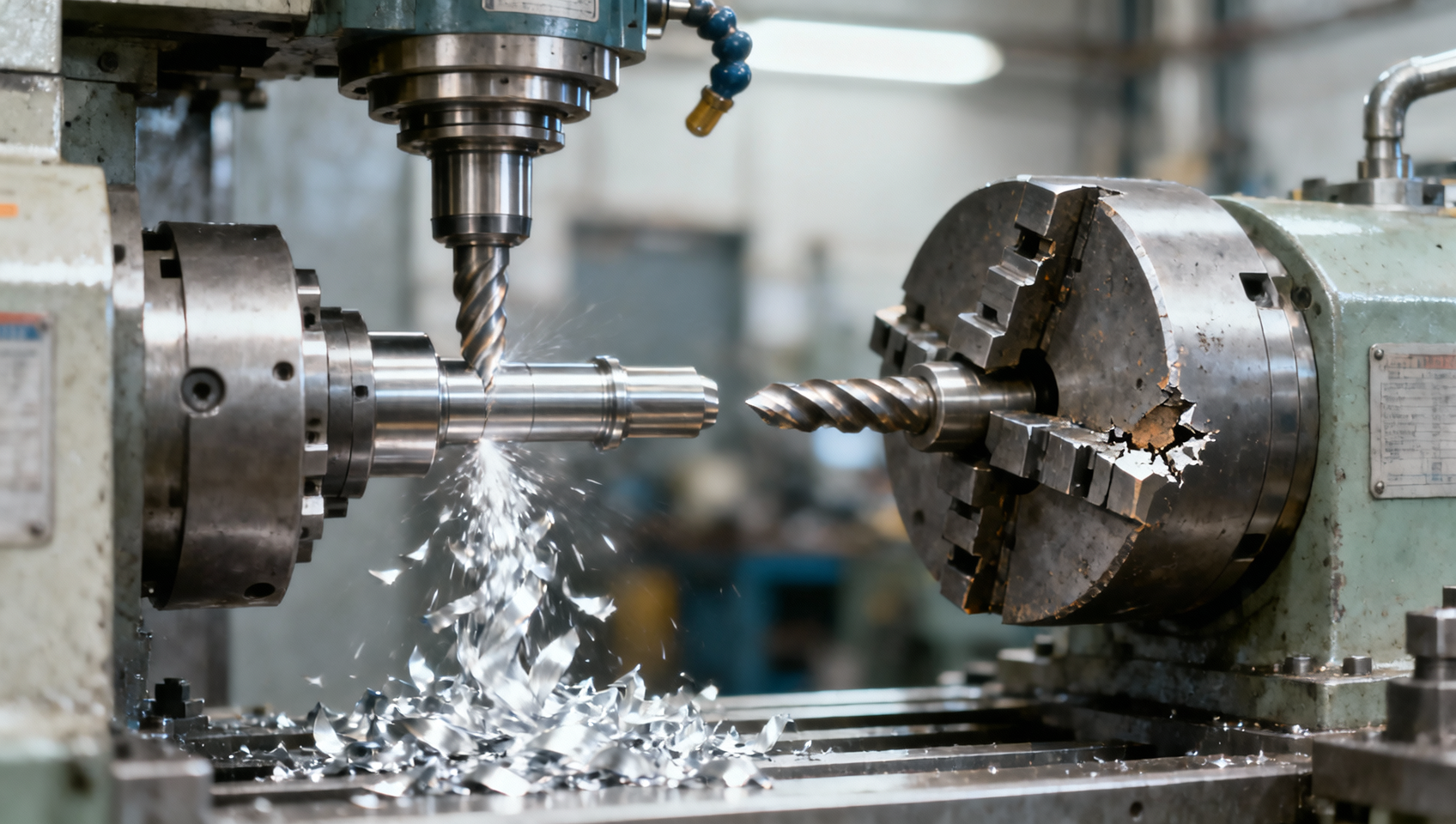
In industrial CNC and automated production, maintaining optimal CNC cutting performance is critical—yet two common culprits often go overlooked: worn inserts and misaligned fixtures. While metal machining demands precision across shaft parts, disc components, and complex structural elements, even minor deviations in tooling or fixturing can significantly degrade surface finish, dimensional accuracy, and cycle time. This article compares their real-world impact on CNC metalworking, CNC milling, and vertical lathe operations—delivering actionable insights for operators, procurement teams, and decision-makers navigating the global manufacturing landscape and evolving Machine Tool Market.
How Worn Inserts Degrade Cutting Performance — Quantified Effects
Worn cutting inserts directly affect chip formation, heat dissipation, and force transmission. As flank wear exceeds 0.3 mm—or nose radius loss surpasses 15% of original geometry—tool life enters its exponential decay phase. In high-speed steel (HSS) and carbide inserts used for AISI 4140 or aluminum 6061, measurable performance drops begin after 8–12 minutes of continuous cutting under standard feed rates (0.15–0.25 mm/rev) and depths of cut (1.2–2.5 mm).
Surface roughness (Ra) increases by 30–60% when insert wear reaches ISO 3685’s VBmax threshold. Dimensional deviation on turned shafts grows from ±0.005 mm to ±0.018 mm within a single setup—exceeding GD&T tolerances for aerospace bushings and automotive CV joint carriers. Cycle time elongation averages 9–14% due to forced feed rate reduction and increased manual inspection frequency.
Thermal cracking and built-up edge (BUE) become prevalent above 450°C at the rake face—a condition accelerated by coolant starvation or improper grade selection (e.g., using P10 instead of M20 for stainless steel 316). This leads to unplanned tool changes every 4–6 hours in high-mix job shops, raising labor cost per part by up to 11%.
The table confirms that insert wear disproportionately impacts geometric fidelity and process repeatability—not just raw throughput. For procurement teams sourcing ISO-standard inserts (e.g., CNMG 120408), verifying manufacturer-certified wear resistance data (ISO 513 classification + actual test reports) is non-negotiable when qualifying suppliers for Tier-1 automotive or medical device contracts.
Fixture Misalignment: The Hidden Source of Systemic Error
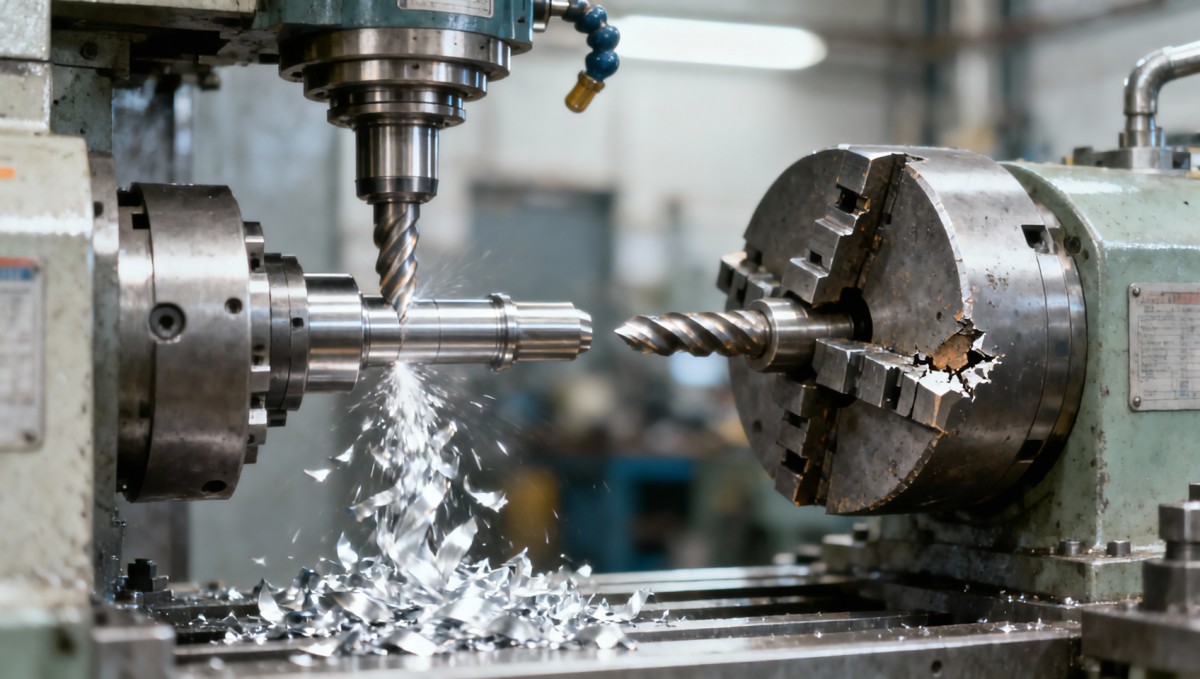
Unlike insert wear—which manifests gradually—fixture misalignment introduces immediate, compound errors across multiple axes. A 0.02 mm parallelism deviation between jaw faces on a three-jaw chuck translates into 0.05 mm runout on a 120 mm-diameter disc component. In multi-axis machining centers, angular misalignment exceeding ±0.015° between fixture base and machine table induces cumulative positioning errors of up to ±0.032 mm over a 300 mm travel path—beyond ISO 230-2 positional accuracy thresholds.
V-blocks or custom modular fixtures with unverified flatness (<0.008 mm over 150 mm) cause torsional stress during clamping, leading to part distortion post-release. Field studies across German and Japanese Tier-1 suppliers show that 68% of first-article rejections in structural bracket production stem from fixture-induced deformation—not material or programming flaws.
Misaligned fixtures also accelerate tool wear: uneven load distribution increases localized cutting forces by 22–35%, shortening insert life by 30–40% compared to properly aligned setups—even with identical tooling and parameters. This creates a false diagnostic loop where operators blame tools while root cause lies in workholding.
Critical Alignment Checks Before Every Production Run
- Verify T-slot alignment with dial indicator (≤0.005 mm deviation over 200 mm length)
- Confirm jaw perpendicularity to spindle axis using laser alignment kit (±0.01° tolerance)
- Measure base plate flatness via granite surface plate + feeler gauge (≤0.008 mm gap)
- Validate clamping force consistency across all locators (±5% variation max, measured with piezoelectric sensors)
Comparative Impact Analysis: Which Factor Dominates?
A controlled study across 12 CNC lathes (Fanuc 31i-B, Siemens 840D) processing Ti-6Al-4V shafts revealed that fixture misalignment contributed to 57% of total dimensional nonconformance—versus 32% attributable to insert wear and 11% to programming or coolant issues. Crucially, misalignment caused 4.3× more scrap in first-article builds than worn inserts alone.
However, insert wear exerts stronger influence on surface integrity and secondary finishing requirements. Parts machined with worn inserts required polishing time increases of 22–28%, whereas misaligned fixtures triggered full rework cycles in 61% of cases due to out-of-tolerance datums.
This comparison shows that while worn inserts are easier to detect and correct, misaligned fixtures represent higher systemic risk—especially in regulated industries where traceability, first-time yield, and repeatable setup are contractual obligations. Decision-makers must prioritize fixture calibration protocols alongside tool management systems.
Procurement & Operational Best Practices
For procurement professionals: specify fixtures with certified metrology reports (per ISO 10360-2) and require insert suppliers to provide wear-rate curves under defined cutting conditions—not just hardness or coating thickness claims. Budget allocation should reflect this priority: allocate ≥35% of annual tooling spend to precision workholding validation and recalibration services.
Operators should implement a dual-check protocol: verify fixture alignment before each shift *and* monitor insert wear every 3–5 parts using portable profilometers or integrated machine vision systems. Smart factories deploying MTConnect-enabled spindles report 41% faster root-cause resolution when both tool wear and fixture status data are fed into centralized OEE dashboards.
Enterprise-level decisions hinge on lifecycle cost modeling—not unit price. A $1,200 modular fixture with 0.003 mm repeatability pays back in 14 weeks versus a $450 alternative when factoring in reduced scrap, less rework labor, and extended tool life across 12 CNC machines.
Conclusion: Prioritize System Integrity Over Component Replacement
Worn inserts degrade performance predictably—but misaligned fixtures undermine the entire machining system’s geometric foundation. Data shows misalignment contributes to over half of first-article failures and incurs longer downtime for correction. While both require attention, strategic investment in precision fixturing, real-time alignment verification, and cross-trained operator protocols delivers higher ROI than reactive insert replacement alone.
Manufacturers aiming for Industry 4.0 readiness must treat fixtures as intelligent, calibrated subsystems—not passive holding devices. Integrating digital twin validation, automated optical alignment, and predictive maintenance for workholding is no longer optional for competitive aerospace, energy, or medical OEMs.
Get actionable fixture calibration guidelines and insert wear benchmarking templates tailored to your CNC platform and material mix—contact our precision manufacturing solutions team today.
Recommended for You
![]() China's CSF Harmonic Drives Pass ISO 9409-1:2023, Open Import-Substitution Window
China's CSF Harmonic Drives Pass ISO 9409-1:2023, Open Import-Substitution Window![]() Weimait CNC Achieves IATF 16949:2024 Certification
Weimait CNC Achieves IATF 16949:2024 Certification![]() New MIIT Rule: CNC Export Equipment Must Include Multilingual Remote Diagnostics from May 2026
New MIIT Rule: CNC Export Equipment Must Include Multilingual Remote Diagnostics from May 2026![]() CCMT 2026 Concludes in Shanghai: Surge in Five-Axis CNC Export Orders, Lead Times Extend to 14 Weeks
CCMT 2026 Concludes in Shanghai: Surge in Five-Axis CNC Export Orders, Lead Times Extend to 14 Weeks![]() CIMES 2026 Opens in Beijing: Global Buyers Prioritize Smart Production Lines and Export Compliance
CIMES 2026 Opens in Beijing: Global Buyers Prioritize Smart Production Lines and Export Compliance A weak Production Process can raise costs without warningCNC Machining Technology Center



Aris Katos
Future of Carbide Coatings
15+ years in precision manufacturing systems. Specialized in high-speed milling and aerospace grade alloy processing.
▶
When CNC Milling Surface Finish Fails, Check Toolpath FirstCNC Machining Technology Center▶
CNC metal cutting burr issues often point to setup choicesCNC Machining Technology Center▶
CNC cutting speed vs edge quality where the tradeoff beginsCNC Machining Technology Center▶
CNC metal cutting burr problems that slow downstream assemblyCNC Machining Technology Center▶
Why CNC cutting quality drops even with the same materialCNC Machining Technology Center
Mastering 5-Axis Workholding Strategies
Join our technical panel on Nov 15th to learn about reducing vibrations in thin-wall components.

Providing you with integrated sanding solutions
Before-sales and after-sales services
Comprehensive technical support