• Global CNC market projected to reach $128B by 2028 • New EU trade regulations for precision tooling components • Aerospace deman
NYSE: CNC +1.2%LME: STEEL -0.4%

CNC cutting coolant choices can affect more than tool life
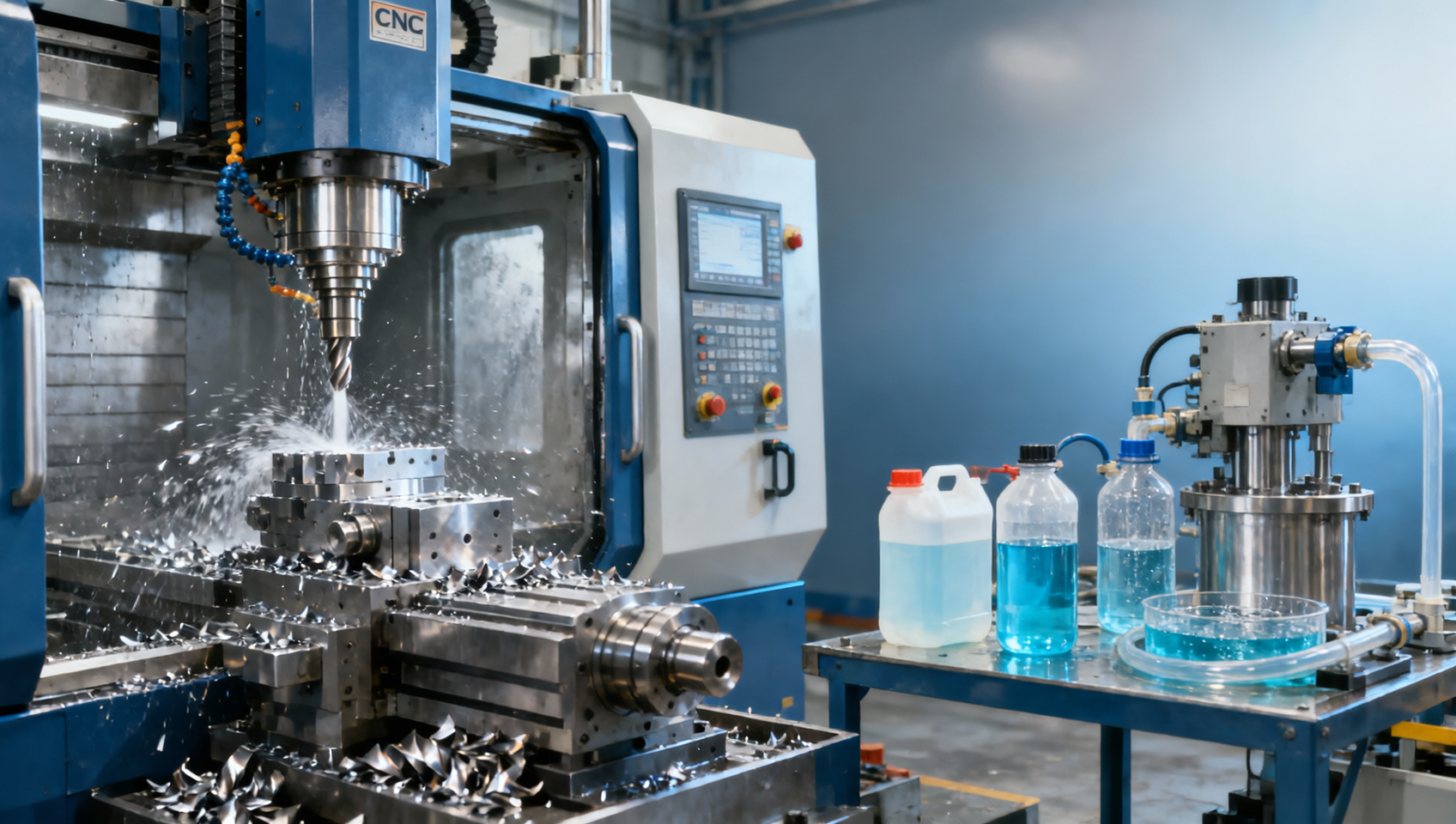
In metal machining, coolant selection influences far more than tool wear. Across industrial CNC, CNC cutting, and CNC milling operations, the right fluid can improve surface finish, stabilize the production process, reduce downtime, and support automated production goals. For manufacturers in the Global Manufacturing landscape, understanding coolant choices is essential to boosting CNC production efficiency and long-term machine tool performance.
For operators, coolant affects chip evacuation, visibility, odor, and machine cleanliness during every shift. For buyers and plant managers, it shapes total cost through sump life, maintenance labor, coolant consumption, wastewater handling, and scrap rates. For decision-makers planning automated cells or lights-out production, coolant reliability can directly influence spindle uptime and process consistency over 8-hour, 16-hour, or 24/7 production cycles.
In modern CNC machine tool environments, coolant is no longer just a consumable. It is part of the process strategy, linked to tooling, workpiece material, machine configuration, filtration, and environmental management. Choosing between soluble oils, semi-synthetics, synthetics, or straight oils requires a practical understanding of machining conditions, not a one-size-fits-all rule.
Why coolant choice matters beyond tool life
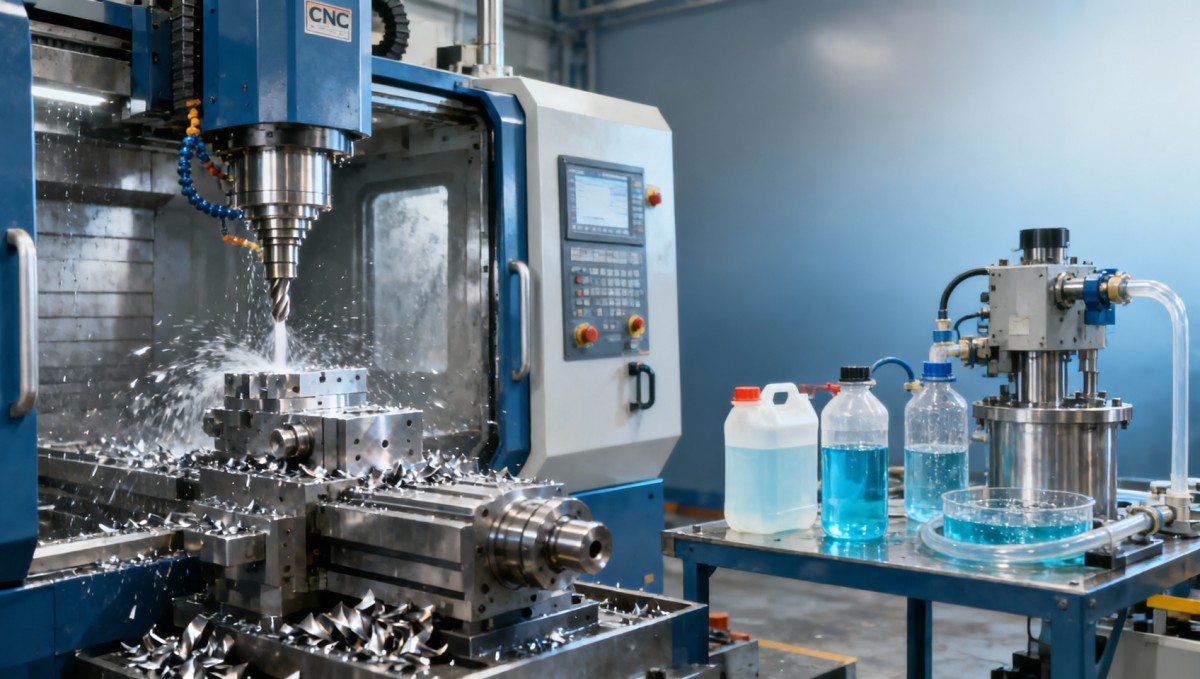
A common mistake in CNC cutting is to evaluate coolant only by how many extra parts a tool can produce. Tool life is important, but it is only one metric in a chain of production outcomes. In high-volume machining, a 10% reduction in unplanned downtime may generate more value than a small increase in insert life, especially on machining centers running 2 or 3 shifts per day.
Coolant directly affects heat control. In milling, drilling, and turning, excess heat changes dimensional stability, promotes built-up edge, and can increase burr formation. On precision parts with tolerance bands such as ±0.01 mm to ±0.05 mm, unstable thermal conditions can create part variation even when the toolpath and machine accuracy are unchanged.
Surface finish is another critical area. In aerospace, automotive, and electronics components, Ra targets may fall in the 0.8–3.2 μm range depending on function. Inadequate lubrication can cause tearing, smearing, or micro-welding, while poor flushing can leave chips in the cut, damaging both finish and edge condition. This becomes more visible in deep-pocket milling, tapping, and high-speed drilling.
Coolant also influences machine health. Fluids with poor tramp oil rejection or weak corrosion protection can shorten sump life, contaminate hydraulic areas, stain workpieces, and increase cleaning frequency. In plants with 20, 50, or 100 CNC machines, even an extra 15 minutes of maintenance per machine per week translates into a substantial labor burden over a quarter.
For automated production, coolant consistency matters even more. Robot-loaded machine tending and unattended night shifts need predictable foam behavior, stable concentration, low mist generation, and reliable chip transport. If coolant foams at high pump pressure or loses concentration quickly, alarms, overflow, and process interruptions can undermine the full value of automation investments.
Key performance areas influenced by coolant
- Heat removal in continuous cuts, interrupted cuts, and high-speed operations.
- Lubricity for tapping, threading, broaching-like features, and difficult alloys.
- Chip evacuation in blind holes, deep cavities, and multi-axis milling paths.
- Corrosion protection for cast iron, carbon steel, aluminum alloys, and machine internals.
- Operator environment, including odor, skin compatibility, mist level, and cleaning workload.
Main coolant types and where they fit in CNC machining
The most widely used coolant categories in metalworking are soluble oils, semi-synthetic fluids, synthetic fluids, and straight oils. Each has a different balance of cooling, lubrication, cleanliness, and maintenance behavior. The best choice depends on workpiece material, cutting speed, machine type, filtration setup, and production objectives rather than on price per drum alone.
Soluble oils usually provide strong lubricity and are often selected for mixed-material workshops, general machining, and applications where tool protection is a priority. Semi-synthetics aim to combine cleaner operation with balanced lubrication. Synthetics are often preferred where cooling, low residue, and fine filtration are important. Straight oils are used in specific heavy-duty operations but are less common in general enclosed CNC machining due to smoke, mist, and cleaning concerns.
In a practical B2B setting, the decision should account for at least 4 factors: material family, operation type, machine pressure, and fluid management capability. For example, a shop machining aluminum housings at high spindle speed may prioritize low staining and strong flushing, while a supplier machining alloy steel with extensive tapping may prioritize boundary lubrication and anti-weld performance.
The table below compares common coolant options in a way that is useful for process engineers, purchasing teams, and operations leaders evaluating production impact rather than only initial cost.
The main conclusion is that no coolant type is universally superior. Semi-synthetics often work well for modern CNC production because they balance sump life, cleanliness, and machining performance. However, when machining heat-sensitive aluminum, sticky stainless steel, or hard alloy steel, the final decision should be verified by controlled shop-floor testing over at least 2 to 4 weeks.
Material and operation match-up
Aluminum and non-ferrous parts
For aluminum, fluid cleanliness, anti-stain behavior, and chip flushing are often more important than maximum lubricity. Low-residue formulas help maintain cleaner machine enclosures and improve downstream washing results.
Steel and alloy steel
Steel machining often benefits from stronger lubricity and corrosion control, especially in tapping, drilling, and interrupted cuts. Concentration ranges are commonly controlled around 6%–10%, depending on supplier guidance and process severity.
Stainless steel and difficult materials
Stainless steel generates heat and can encourage built-up edge. In these cases, cooling and boundary lubrication must work together. Shops often test 2 or 3 candidate fluids side by side before standardizing plant-wide.
How coolant affects quality, uptime, and total production cost
When procurement teams compare coolant only by purchase price per liter, they often miss the larger cost structure. A fluid that costs 8% more upfront may lower scrap, reduce sump change frequency, and extend maintenance intervals enough to produce a lower total cost per part. This is especially relevant in operations where cycle time ranges from 2 minutes to 20 minutes and machine availability is tightly scheduled.
Quality loss linked to coolant problems usually appears in repeatable ways: variable surface finish, thermal drift, poor bore quality, tap breakage, staining, corrosion, or residue that complicates coating and assembly. In precision manufacturing, one unstable fluid can affect several downstream steps, including washing, inspection, packaging, and customer acceptance.
Uptime is equally sensitive. Foam at high-pressure coolant systems, poor chip settling, or tramp oil contamination can trigger alarms and force manual intervention. In automated cells, one unattended failure during a 6-hour night window can eliminate the labor-saving advantage of robot-assisted loading.
A useful way to evaluate coolant is to measure cost against 5 operational indicators: tool life, scrap rate, machine stoppages, sump life, and maintenance labor. This broader view gives operations managers and buyers a more realistic basis for standardizing coolant across multiple CNC lathes, machining centers, and transfer lines.
Operational cost factors to compare
The following table shows how coolant selection influences practical production indicators commonly monitored in machining plants.
For most manufacturers, the decision should be tied to cost per acceptable part, not coolant cost per container. This approach aligns technical performance with purchasing logic and gives management a measurable framework for cross-site standardization.
Common hidden costs
- Extra washer chemistry or longer cleaning cycles because of sticky residue.
- Higher mist extraction load in enclosed machining cells.
- Operator time spent skimming tramp oil or correcting concentration drift 3 to 5 times per week.
- Rejected parts from corrosion after 24–72 hours of storage before final assembly.
Selection criteria for operators, buyers, and plant decision-makers
A reliable coolant selection process starts with application mapping. Shops should identify at least 6 inputs before comparing products: workpiece material, operation type, cutting speed, pressure level, filtration setup, and downstream requirements such as washing, coating, or assembly. This avoids choosing a fluid that performs well in one department but causes issues in another.
Operators often focus on practical signs first: foam, odor, visibility, residue, skin comfort, and chip movement. These indicators are valuable because they reveal how the fluid behaves under real production conditions. Procurement teams add commercial criteria such as supply stability, drum or tote format, local technical support, and compatibility with current machine inventory.
For managers overseeing multiple lines, standardization can reduce complexity, but over-standardization also creates risk. A single fluid may cover 70%–80% of machining needs, yet specialty materials such as stainless steel, titanium-related work, or fine-feature aluminum components may still require separate optimization.
The best practice is to use a structured trial process. Run a pilot on 1 to 3 representative machines, compare current and proposed coolant over 10 to 20 production days, and record measurable outcomes. Without a controlled comparison, many coolant changes are judged by opinion rather than process data.
A practical 5-step evaluation workflow
- Define critical parts and operations, such as deep-hole drilling, tapping, finishing passes, or high-speed roughing.
- Set baseline metrics including tool life, scrap level, sump condition, and machine stoppages.
- Confirm target concentration ranges, often 5%–10% for water-miscible fluids depending on application severity.
- Track performance over a fixed period, ideally at least 2 weeks with the same tooling and material lot when possible.
- Review technical and commercial outcomes together before rolling out plant-wide.
Questions buyers should ask suppliers
- How does the coolant perform with mixed materials such as cast iron, carbon steel, and aluminum in one workshop?
- What concentration window is recommended for milling versus tapping or drilling?
- What fluid life is commonly achievable with proper maintenance, such as 4 weeks, 8 weeks, or longer?
- How does the product behave in high-pressure systems above 20 bar or in central systems with multiple machines?
- What support is available for startup, concentration control, and troubleshooting?
These questions help distinguish between a commodity purchase and a process-support purchase. In modern machining, that difference can strongly influence production stability.
Implementation, maintenance, and common mistakes in coolant management
Even a well-chosen coolant will underperform if implementation is weak. Many issues start during changeover: dirty sumps, contaminated lines, poor mix-water quality, or incorrect make-up concentration. A proper conversion normally includes system cleaning, inspection of skimmers and filters, and controlled mixing rather than simply topping off an old fluid with a new one.
Water quality deserves special attention. Hardness, chlorides, and microbial load can all affect coolant stability. In many facilities, the use of treated water improves consistency, especially when local water hardness varies seasonally. Concentration should also be checked routinely, often daily on critical lines and at least 2 to 3 times per week on general-purpose machines.
Another frequent mistake is ignoring tramp oil and chip fines. Tramp oil promotes bacterial growth and odor, while suspended fines can increase abrasion, clog nozzles, and degrade finish quality. A combination of skimming, filtration, and sump housekeeping often extends coolant life more effectively than frequent full replacement.
For plants moving toward smart manufacturing, coolant management should be treated as part of machine data and preventive maintenance. Recording concentration, pH trend, foam events, and sump change intervals creates a practical database for process improvement. Over 3 to 6 months, these records can reveal patterns linked to certain materials, shifts, or machine groups.
Common mistakes to avoid
- Choosing coolant only by liter price without measuring total production cost.
- Running one concentration for every operation, even when tapping and finishing need different control levels.
- Skipping sump cleaning during fluid changeovers.
- Adding water and concentrate inconsistently, which causes concentration drift and unstable performance.
- Ignoring foam, odor, staining, or corrosion until customer quality issues appear.
Basic maintenance checkpoint table
A simple maintenance routine can improve coolant performance without major capital investment. The table below outlines a practical monitoring schedule for many CNC workshops.
The key takeaway is that coolant performance depends on both chemistry and discipline. A structured maintenance plan often delivers measurable gains in machine tool performance, fluid life, and shop-floor consistency.
FAQ for coolant selection in industrial CNC environments
How do I know when my current coolant is limiting production performance?
Typical warning signs include frequent foam, unstable surface finish, rising tool consumption, sticky machine interiors, odor within a few weeks of sump fill, or corrosion after storage. If two or more of these issues appear together, the coolant strategy should be reviewed along with maintenance practice.
Are higher concentration levels always better for tool life?
No. Excess concentration can increase residue, cost, and in some cases foaming or cleaning difficulty. The correct level depends on the fluid and operation. Many water-miscible CNC applications operate within a 5%–10% band, while severe tapping or demanding alloys may need the higher end of the recommended range.
Can one coolant work across all machines in a factory?
Sometimes, but not always. A single product may cover a large share of standard machining, especially in shops focused on steel and aluminum. However, specialized processes such as deep-hole drilling, heavy tapping, or difficult stainless work may justify a second fluid to protect quality and uptime.
What is a reasonable trial period before changing coolant plant-wide?
A meaningful pilot usually runs for 10 to 20 production days, or long enough to capture at least one full tool replacement cycle, sump behavior, and repeat part quality. Shorter trials can miss important variables such as contamination build-up or concentration drift.
Coolant choices in CNC machining affect far more than tool life. They influence surface finish, thermal stability, chip evacuation, machine cleanliness, operator conditions, automation reliability, and total cost per acceptable part. For manufacturers working across CNC lathes, machining centers, and multi-axis production lines, a disciplined coolant strategy supports both short-term productivity and long-term machine tool value.
If you are evaluating coolant options for CNC cutting, CNC milling, or automated production cells, now is the right time to compare fluids using real process metrics rather than unit price alone. Contact us to discuss your machining conditions, request a tailored selection approach, or learn more solutions for improving CNC production efficiency and machine performance.
Recommended for You
![]() Iranian LNG Vessels Breach U.S. Strait Blockade; Shanghai Crude Surges 4%Manufacturing Market Research Center
Iranian LNG Vessels Breach U.S. Strait Blockade; Shanghai Crude Surges 4%Manufacturing Market Research Center![]() Pakistan Launches CNC Localization Tender for CPEC II Smart Manufacturing ParkGlobal Machine Tool Trade Research Center
Pakistan Launches CNC Localization Tender for CPEC II Smart Manufacturing ParkGlobal Machine Tool Trade Research Center![]() NVIDIA Joins $1T Club; AI-Driven CNC Digital Twin Gains Global TractionCNC Machining Technology Center
NVIDIA Joins $1T Club; AI-Driven CNC Digital Twin Gains Global TractionCNC Machining Technology Center![]() World's First 5-Axis Middle-Grade Wire EDM Machine Enters Mass ProductionMachine Tool Industry Editorial Team
World's First 5-Axis Middle-Grade Wire EDM Machine Enters Mass ProductionMachine Tool Industry Editorial Team![]() China’s CNC Machine Tool Export Prices Up 11.3% in Q1 2026Global Machine Tool Trade Research Center
China’s CNC Machine Tool Export Prices Up 11.3% in Q1 2026Global Machine Tool Trade Research Center![]() Saudi Energy Security Boosts CNC Import Efficiency in Middle EastGlobal Machine Tool Trade Research Center
Saudi Energy Security Boosts CNC Import Efficiency in Middle EastGlobal Machine Tool Trade Research Center


Aris Katos
Future of Carbide Coatings
15+ years in precision manufacturing systems. Specialized in high-speed milling and aerospace grade alloy processing.
▶
Domestic PLM Systems Drive Green Transition in Coatings & CNC Tool CoatingCNC Machining Technology Center▶
High Temperature Alloy Cutting Tools Wear Out for Hidden ReasonsCNC Machining Technology Center▶
CNC Cutting Gas Choice Affects More Than Edge FinishCNC Machining Technology Center▶
CNC Cutting Edge Wear Patterns That Change Part AccuracyCNC Machining Technology Center▶
Metal Machining Costs Rise Fast With Poor Chip ControlCNC Machining Technology Center
Mastering 5-Axis Workholding Strategies
Join our technical panel on Nov 15th to learn about reducing vibrations in thin-wall components.

Providing you with integrated sanding solutions
Before-sales and after-sales services
Comprehensive technical support