• Global CNC market projected to reach $128B by 2028 • New EU trade regulations for precision tooling components • Aerospace deman
NYSE: CNC +1.2%LME: STEEL -0.4%

Why CNC Cutting Quality Drops on Thin Metal Sheets
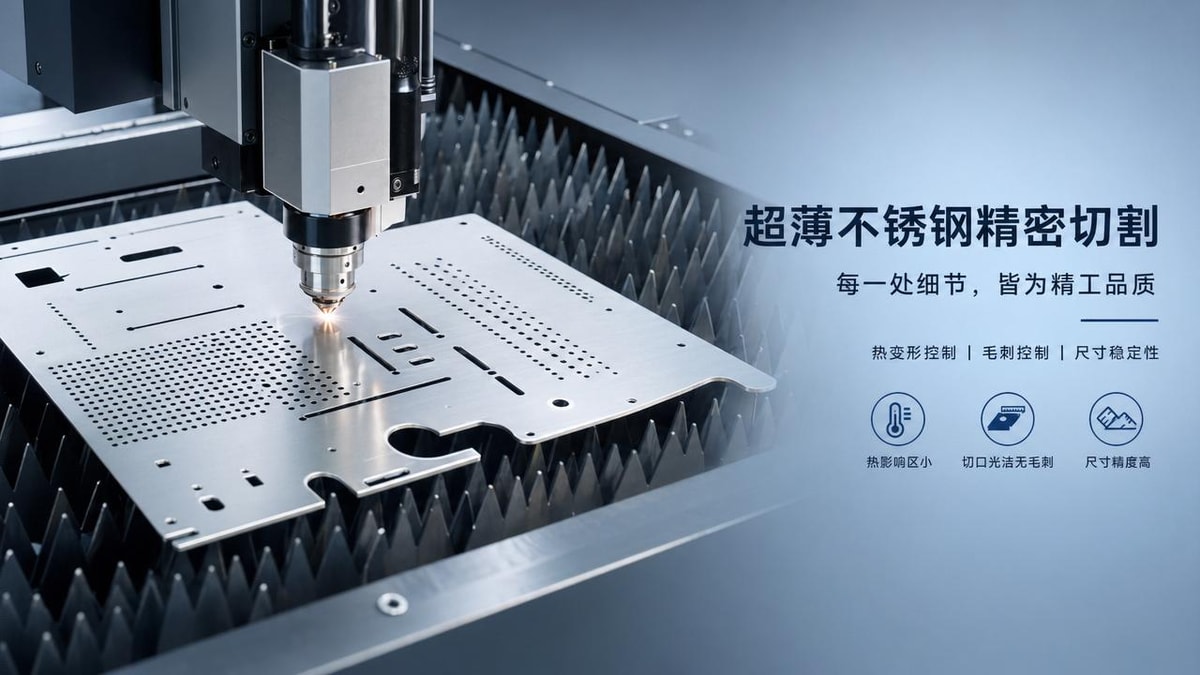
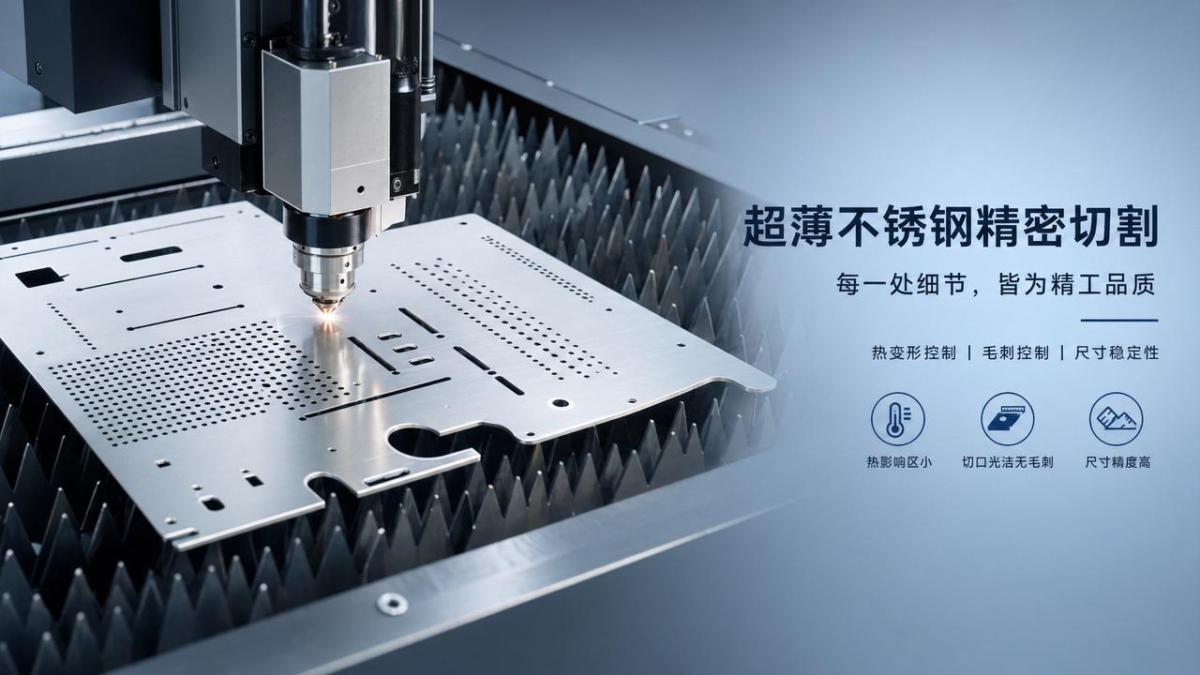
When thin metal sheets enter the workflow, CNC cutting quality can decline faster than many evaluators expect. Issues such as vibration, heat distortion, burr formation, and unstable edge accuracy often stem from material behavior, machine settings, and tooling mismatch. For technical assessment teams, understanding these causes is essential to improving process stability, part consistency, and overall manufacturing efficiency.
Why scenario differences matter when evaluating CNC cutting on thin sheet metal
In the CNC machine tool industry, thin sheet applications are rarely judged by one universal quality standard. A part used in electronics shielding, for example, is assessed differently from a structural panel for equipment enclosures or a lightweight aerospace bracket. The same CNC cutting process may deliver acceptable results in one scenario and fail in another because the risk tolerance for burrs, flatness, edge taper, heat-affected zones, and secondary finishing is not the same.
For technical evaluators, this is the key reason CNC cutting quality on thin metal sheets must be reviewed in context. Material thickness, alloy type, nesting density, fixture strategy, production volume, and downstream operations all change what “good quality” really means. A stable process for 3 mm carbon steel may become unreliable at 0.6 mm stainless steel, especially when speed targets are aggressive or part geometry is narrow and open.
In practical assessment work, quality drops usually appear first as inconsistent edge condition, chatter marks, local warping, micro-burrs, poor hole roundness, or dimensional drift across batches. These are not isolated defects. They often indicate a deeper mismatch between the CNC cutting method and the specific application scenario.
Where CNC cutting quality problems most often appear
Thin sheet challenges are common across integrated manufacturing environments, but they become more visible in high-mix and precision-sensitive production. Technical review teams typically encounter quality declines in several recurring scenarios.
Electronics and electrical enclosure parts
This scenario often involves galvanized steel, aluminum, or stainless sheet with many small holes, slots, and ventilation patterns. CNC cutting quality tends to drop because thin material lacks rigidity, and dense feature spacing concentrates heat or cutting stress. Evaluators should focus on hole deformation, edge burrs, coating damage, and whether the sheet remains flat enough for bending and assembly.
Automotive brackets and lightweight panels
In automotive-related production, thin sheet parts are often cost-sensitive and produced in larger volumes. Here, CNC cutting is judged not only by geometry but also by cycle time and repeatability. A process that creates minor edge roughness may still be acceptable if downstream forming removes it. However, unstable dimensions, thermal distortion, and poor nesting efficiency can quickly undermine production economics.
Aerospace and precision fabrication components
These applications usually impose tighter tolerances and stricter traceability. Thin titanium, stainless steel, or specialty alloys can react strongly to heat input and clamping pressure. Technical evaluators should check not only visible cut quality but also metallurgical impact, microcracking risk, and post-cut dimensional stability during later machining or fastening steps.
General industrial covers, cabinets, and support parts
This is a broad but important scenario in the machine tool and equipment sector. The parts may not demand ultra-fine cosmetic edges, yet poor CNC cutting can still reduce throughput by increasing deburring, rework, and assembly adjustment. In these cases, process consistency matters more than achieving the best possible cut edge on a single sample.
Scenario comparison: what quality indicators change from one use case to another
The table below helps technical assessment teams compare how CNC cutting quality should be judged across common thin sheet applications.
Why CNC cutting quality drops as sheets get thinner
From an application standpoint, thin sheets behave differently because they absorb and release cutting energy with less structural resistance. This creates several process-sensitive failure mechanisms.
Low stiffness amplifies vibration
Thin metal sheets are easier to excite during CNC cutting. If support spacing is too wide or vacuum and mechanical clamping are insufficient, the sheet can flutter. This leads to waviness, edge inconsistency, and noisy dimensional results. In parts with narrow bridges or complex contours, the risk rises further as the remaining material loses support during the cut path.
Heat input causes distortion faster
Laser-based CNC cutting and other thermal methods often struggle when heat cannot dissipate evenly. Thin sheets expand and contract quickly, which can create local bowing, corner pull, or shifting dimensions. Evaluators should pay close attention when the nesting layout places many small parts close together, since heat accumulation becomes harder to control.
Tooling mismatch increases burr formation
In mechanical CNC cutting processes, improper tool geometry, dull edges, or incorrect clearance can produce tearing rather than clean shearing. In thermal cutting, the wrong nozzle condition, assist gas setting, or focus position can leave dross and burrs. Thin material is less forgiving, so a setup that seems acceptable on thicker stock can fail abruptly when thickness decreases.
Programming strategy becomes more critical
Lead-in points, cut sequence, bridge location, and path direction all have a stronger impact on thin sheet quality. Poor sequence planning may release internal stress too early or allow parts to tip, shift, or resonate. For technical review teams, CNC cutting quality should therefore be evaluated at both machine and program level, not only through final part inspection.
What different evaluators should check in different business situations
Not every organization reviews thin sheet CNC cutting with the same objective. The decision criteria change depending on project stage and business role.
For supplier qualification teams
Look beyond sample parts. Ask whether the supplier can maintain CNC cutting quality across alloy changes, mixed thickness orders, and long production runs. Review machine condition, preventive maintenance, nozzle and tool management, fixture capability, and process traceability. A supplier that delivers one good prototype may still be weak in batch stability.
For process engineers and technical assessors
Focus on process window width. If good parts are only achieved within a very narrow speed, gas, or feed range, the operation may be fragile in production. Strong CNC cutting performance on thin sheet should tolerate reasonable variation without immediate quality collapse.
For procurement and cost control teams
Do not compare vendors by cutting price alone. Thin sheet quality problems often create hidden costs through deburring, flattening, sorting, coating rejection, and assembly delays. A slightly higher direct CNC cutting cost can be justified if it reduces post-processing and scrap rates.
Practical adaptation strategies for thin sheet CNC cutting
The most effective response is not a generic parameter change but a scenario-matched adjustment plan. In real manufacturing, the best results come from aligning material, machine, tooling, and part design with the intended application.
Match the cutting method to the end-use requirement
If the part demands cosmetic edges, precise small features, and minimal mechanical load, one CNC cutting method may outperform another. If thermal effects are unacceptable, a cold cutting approach may be preferable despite a slower cycle. Evaluators should begin with end-use constraints, not with machine availability alone.
Improve support and fixturing for unstable geometries
Thin sheets with cutouts, long slots, or narrow tabs need better support planning. Additional hold points, optimized slat condition, or revised nesting patterns can reduce movement during CNC cutting. This is especially relevant in flexible production lines where part mix changes frequently.
Control consumables and wear more tightly
Thin materials reveal nozzle wear, tool edge degradation, and alignment issues earlier than thick plate. A process that appears stable at startup can drift after several production hours. For this reason, evaluation plans should include time-based stability checks, not just first-off inspection.
Common misjudgments in thin sheet CNC cutting assessments
Several mistakes repeatedly distort technical decisions. One is assuming that acceptable results on thicker material can be directly transferred to thinner stock. Another is evaluating CNC cutting quality only by visual edge appearance while ignoring flatness, residual stress, and fit-up behavior in the next process. A third is overlooking the interaction between part geometry and sequence logic.
It is also common to overvalue high machine specification and undervalue application discipline. Advanced CNC equipment can still produce poor thin sheet results if the program path, consumable management, and operator response standards are weak. For technical evaluation personnel, process control maturity is often a better predictor than brochure performance.
FAQ for technical assessment teams
Is burr formation always a machine problem?
No. Burrs in CNC cutting can result from machine condition, tooling wear, assist gas quality, poor focus, incorrect clearance, or material surface variation. In thin sheets, even small deviations can trigger visible burrs.
Why do sample parts pass while production batches fail?
Because thin sheet CNC cutting is highly sensitive to cumulative heat, consumable wear, fixture repeatability, and sheet support changes over time. Batch validation must include sustained-run testing.
What is the first signal that a process is not suited to a thin sheet application?
Usually, the first warning sign is inconsistency rather than absolute failure: varying edge quality, unstable small holes, random warping, or different results between nested positions on the same sheet.
How to move from diagnosis to a better-fit CNC cutting solution
For organizations working across the global precision manufacturing sector, the most reliable way to improve thin sheet CNC cutting quality is to evaluate the process through real application scenarios. Start by grouping parts by thickness, alloy, geometry complexity, cosmetic requirement, and downstream process sensitivity. Then verify whether machine capability, fixture strategy, tool or nozzle condition, and programming logic are suitable for each group.
A high-quality decision is not simply choosing faster CNC cutting or tighter tolerance targets. It is choosing a process window that fits the actual use case, remains stable across batches, and supports the wider manufacturing system. For technical assessment teams, that scenario-based approach is the clearest path to lower rework, stronger consistency, and better long-term production performance.
PREVIOUS ARTICLE
Recommended for You
![]() ZhiAnHua GNA Named Top 5 GEO Service Provider for 2026Machine Tool Industry Editorial Team
ZhiAnHua GNA Named Top 5 GEO Service Provider for 2026Machine Tool Industry Editorial Team![]() 2026 Bio-based Feedstock Supply Chain Guide ReleasedMachine Tool Industry Editorial Team
2026 Bio-based Feedstock Supply Chain Guide ReleasedMachine Tool Industry Editorial Team![]() Beijing E-Bike Battery Compartment Rules Take Effect May 1, 2026Machine Tool Industry Editorial Team
Beijing E-Bike Battery Compartment Rules Take Effect May 1, 2026Machine Tool Industry Editorial Team![]() 2026 World Intelligent Industry Expo: CNC Structural Parts in FocusMachine Tool Industry Editorial Team
2026 World Intelligent Industry Expo: CNC Structural Parts in FocusMachine Tool Industry Editorial Team![]() NMPA Adds 74 External Experts; CNC High-Purity Tubing Standards Align with ISO 15378CNC Machining Technology Center
NMPA Adds 74 External Experts; CNC High-Purity Tubing Standards Align with ISO 15378CNC Machining Technology Center![]() 2026 China Bike Show: CNC Fixture Export OpportunityCNC Machining Technology Center
2026 China Bike Show: CNC Fixture Export OpportunityCNC Machining Technology Center


Aris Katos
Future of Carbide Coatings
15+ years in precision manufacturing systems. Specialized in high-speed milling and aerospace grade alloy processing.
▶
CNC Metal Cutting Edge Quality Depends on More Than SpeedCNC Machining Technology Center▶
Why CNC Cutting Quality Drops on Thin Metal SheetsCNC Machining Technology Center▶
How Machine Tools for Electronics Manufacturing Reduce WasteCNC Machining Technology Center▶
How CNC Cutting Affects Part Cost and Lead TimeCNC Machining Technology Center▶
CNC Cutting Errors That Damage Surface FinishCNC Machining Technology Center
Mastering 5-Axis Workholding Strategies
Join our technical panel on Nov 15th to learn about reducing vibrations in thin-wall components.

Providing you with integrated sanding solutions
Before-sales and after-sales services
Comprehensive technical support