• Global CNC market projected to reach $128B by 2028 • New EU trade regulations for precision tooling components • Aerospace deman
NYSE: CNC +1.2%LME: STEEL -0.4%

What slows a Production Process more than expected
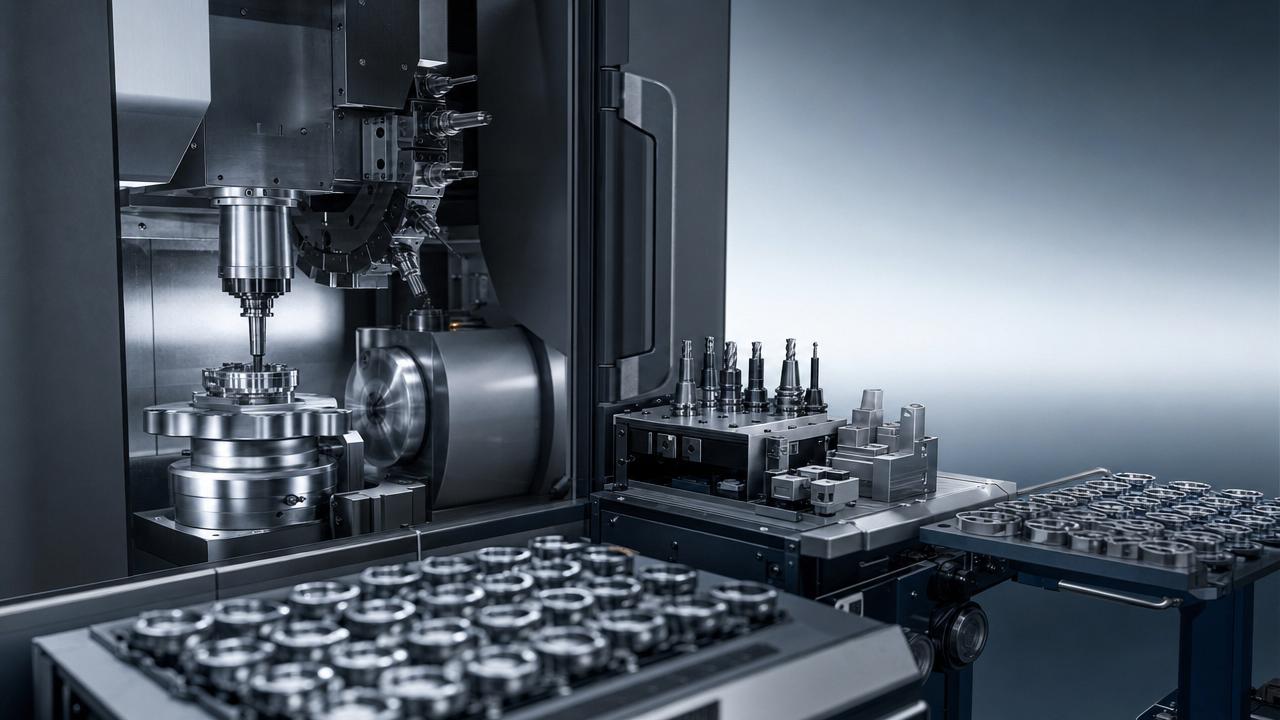
Even a carefully designed Production Process can lose speed without a major breakdown. In modern CNC machining, delays often come from small mismatches that build quietly over time.
A spindle may be available, yet tooling changes take longer. A program may be optimized, yet material flow remains unstable. These hidden gaps reduce output more than expected.
In precision manufacturing, the Production Process depends on machine utilization, setup discipline, automation timing, and shop-floor coordination. When one element drifts, lead time, delivery confidence, and cost all suffer.
The sections below answer common questions about why a Production Process slows unexpectedly and how to diagnose the real cause before performance drops further.
What hidden bottlenecks slow a Production Process more than obvious machine failure?
Most slowdowns are not caused by a stopped machine. They come from micro-delays between cutting cycles, inspection steps, loading actions, and approval points.
In a CNC-based Production Process, one minute lost across many cycles becomes a major weekly output gap. This is common in machining centers, turning cells, and flexible production lines.
Typical hidden bottlenecks include:
- Tool presetting delays before the next job starts
- Fixture changes that require repeated verification
- Program revisions waiting for operator confirmation
- Part movement between machines and inspection stations
- Material shortages that interrupt sequence planning
Obvious breakdowns are easier to report and fix. Hidden inefficiencies are harder because they appear normal inside daily routines.
A healthy Production Process should be measured by flow consistency, not only machine uptime. A machine can run all day and still produce less than expected.
How do machine utilization and setup losses affect the Production Process?
High machine utilization looks positive, but it does not always mean high productivity. If setup consumes too much time, the Production Process becomes busy without becoming efficient.
This issue appears often in mixed-batch machining. Shops handling shafts, discs, housings, and structural parts must switch tools, fixtures, and programs frequently.
Common setup-related losses include offline preparation gaps, poor fixture standardization, and repeated first-piece checks. These reduce the actual cutting window available per shift.
Why utilization can be misleading
A machine may show 85% utilization, yet much of that time includes waiting, adjustment, or low-value handling. That weakens the entire Production Process.
True performance depends on the ratio between cutting time and total occupied time. This distinction matters in CNC lathes, machining centers, and automated cells.
How to reduce setup drag
- Standardize fixture bases and tool libraries
- Move presetting and kitting outside active machine time
- Use digital setup sheets with version control
- Separate first-article validation from regular cycle flow when possible
When setup discipline improves, the Production Process becomes more predictable. Predictability is often more valuable than occasional peak speed.
Can tooling instability quietly damage a Production Process?
Yes. Tool wear, inconsistent insert life, and unstable cutting parameters are major causes of hidden delay in precision manufacturing.
A Production Process slows when operators must pause for tool checks, compensate offsets more frequently, or repeat finishing passes to recover dimensional accuracy.
This is especially critical in aerospace parts, automotive shafts, and energy equipment components. Tight tolerances amplify the impact of minor tooling changes.
Warning signs of tooling-related slowdown
- Unexpected surface finish variation
- Rising scrap or rework after long cutting sequences
- Frequent manual offset corrections
- Cycle time drift across identical part numbers
Tooling instability also affects automation. A robotized Production Process needs repeatable tool behavior. Otherwise, the line stops for checks that should not exist.
The best response combines tool life monitoring, stable cutting data, and part-family analysis. It is not enough to replace inserts faster without understanding the pattern.
Why does workflow coordination often limit the Production Process?
Many delays begin outside the machine. A Production Process can be technically capable, yet still slowed by poor sequencing, communication gaps, or unbalanced work distribution.
For example, machining may finish on time, but inspection capacity falls behind. Assembly may be ready, yet finished parts wait for labeling, cleaning, or internal transfer.
In smart manufacturing, digital systems improve visibility. Still, software alone cannot fix weak handoffs between planning, machining, quality, and logistics.
Coordination gaps that reduce throughput
- Production scheduling ignores actual inspection or fixture availability.
- Material arrives in the wrong sequence for the planned batch order.
- Engineering changes are released without full downstream alignment.
- Automation cells run faster than support processes can absorb.
A robust Production Process needs synchronized pacing. The slowest stable handoff usually sets the real output limit.
Does automation always speed up a Production Process?
Not always. Automation can improve a Production Process, but only when upstream and downstream conditions are mature enough to support it.
An automated loading system may reduce labor motion. However, if part orientation, chip control, or tool reliability remains unstable, stoppages can increase instead of decreasing.
This is a common mistake in factories upgrading toward digital integration. Equipment is added before process variation is controlled.
When automation helps
- Part geometry is consistent
- Clamping and referencing are repeatable
- Tool life is predictable
- Alarm response logic is clear
When automation creates new delays
- Changeovers become more complex
- Troubleshooting requires multiple teams
- Small faults stop the whole cell
- Data collection exists, but no one acts on it
The lesson is simple. Automation improves the Production Process only after process basics are stable and measurable.
How can delays in a Production Process be identified before delivery risk grows?
Early detection depends on tracking flow indicators, not just output totals. By the time delivery slips, the Production Process has usually been weakening for days.
Useful signals include cycle time variation, setup time drift, queue growth between operations, tool change frequency, and first-pass yield.
A practical review should compare planned time, occupied time, and value-added cutting time. This quickly reveals whether the delay comes from machining, handling, or coordination.
Short weekly reviews help keep the Production Process under control. Long monthly reviews often arrive too late to protect schedule performance.
What is the best way to strengthen a Production Process for long-term efficiency?
The strongest Production Process is built through repeatability. That means stable tooling, standard setups, balanced workflow, and useful digital feedback.
Improvement should begin with the largest recurring source of lost time. In many CNC environments, that is not spindle speed. It is handoff friction.
A practical action plan can include:
- Map actual process flow from raw material to final inspection
- Measure setup, queue, and intervention time separately
- Stabilize tools and fixtures before expanding automation
- Review bottlenecks by part family, not only by machine
- Use digital dashboards that support action, not just reporting
When these steps are applied consistently, the Production Process becomes easier to scale across automotive, aerospace, electronics, and energy equipment production.
Unexpected slowdown is rarely random. It usually reflects a pattern that can be measured, understood, and corrected. Start with the smallest repeat loss, and overall throughput will improve faster than expected.
PREVIOUS ARTICLE
NEXT ARTICLE
Recommended for You
![]() China's Energy Storage Sector Faces 'Advanced Shortage, Outdated Surplus'Machine Tool Industry Editorial Team
China's Energy Storage Sector Faces 'Advanced Shortage, Outdated Surplus'Machine Tool Industry Editorial Team![]() Top 50 Cosmetics Brands’ Retail Sales Up 11.56%, Boosting Demand for High-Precision CNC EquipmentManufacturing Market Research Center
Top 50 Cosmetics Brands’ Retail Sales Up 11.56%, Boosting Demand for High-Precision CNC EquipmentManufacturing Market Research Center![]() Home Service Skills Hub Launches, Boosting Robot Export TrainingMachine Tool Industry Editorial Team
Home Service Skills Hub Launches, Boosting Robot Export TrainingMachine Tool Industry Editorial Team![]() Steel Structure Mezzanine Tech Moves Beyond 'Adequate'CNC Machining Technology Center
Steel Structure Mezzanine Tech Moves Beyond 'Adequate'CNC Machining Technology Center![]() Fireproof Cable Tray Industry Shifts to High-Performance CompositesManufacturing Policy Research Center
Fireproof Cable Tray Industry Shifts to High-Performance CompositesManufacturing Policy Research Center![]() Foil Winding Machines Shift to Digital Servo DrivesMachine Tool Industry Editorial Team
Foil Winding Machines Shift to Digital Servo DrivesMachine Tool Industry Editorial Team


Aris Katos
Future of Carbide Coatings
15+ years in precision manufacturing systems. Specialized in high-speed milling and aerospace grade alloy processing.
▶
What slows a Production Process more than expectedCNC Machining Technology Center▶
Where the Production Process Slows Down in Mixed-Batch OrdersCNC Machining Technology Center▶
Production Process Gaps That Lead to Unstable Product QualityCNC Machining Technology Center▶
Where the Production Process Hides More Scrap Than ExpectedCNC Machining Technology Center▶
Production Process bottlenecks that do not show up in basic KPIsCNC Machining Technology Center
Mastering 5-Axis Workholding Strategies
Join our technical panel on Nov 15th to learn about reducing vibrations in thin-wall components.

Providing you with integrated sanding solutions
Before-sales and after-sales services
Comprehensive technical support