• Global CNC market projected to reach $128B by 2028 • New EU trade regulations for precision tooling components • Aerospace deman
NYSE: CNC +1.2%LME: STEEL -0.4%

Which Production Process best fits high-mix low-volume work
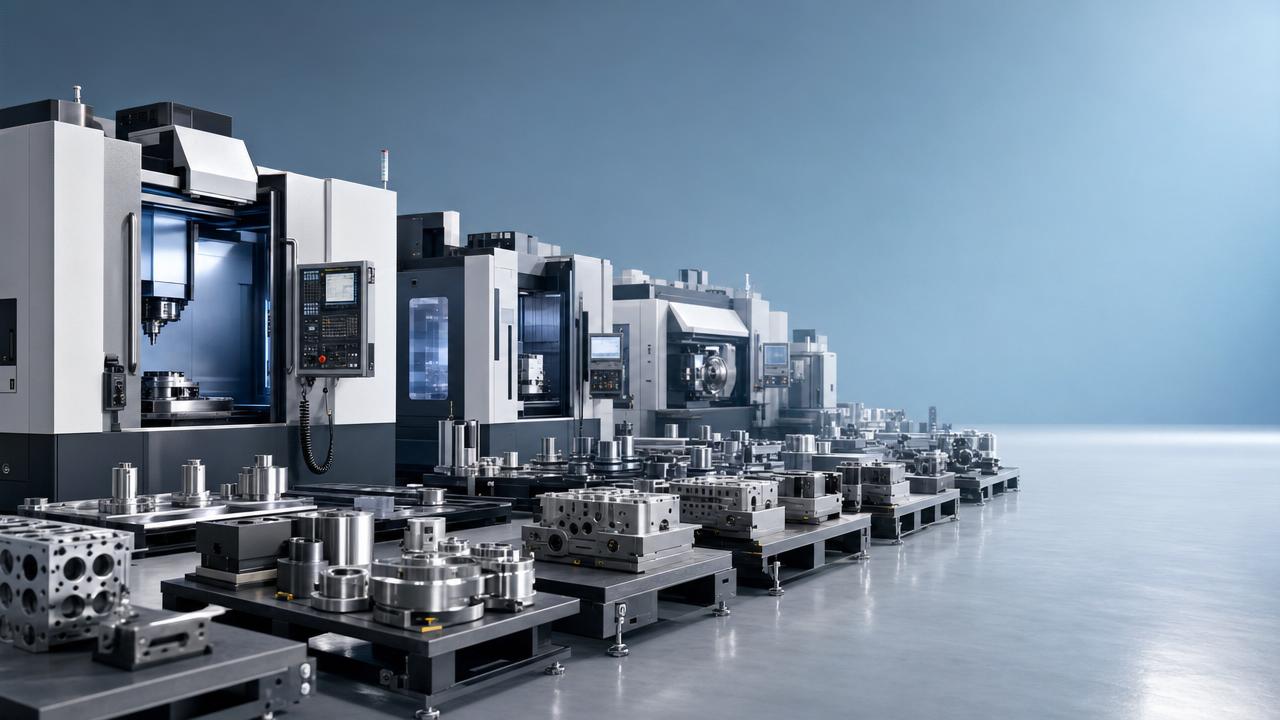
Choosing the right Production Process is critical for high-mix low-volume manufacturing, where flexibility, precision, and cost control must work together. For technical evaluators in CNC machining and precision manufacturing, understanding which process best supports frequent changeovers, complex parts, and stable quality can directly improve production efficiency and investment decisions.
What makes a Production Process suitable for high-mix low-volume work?
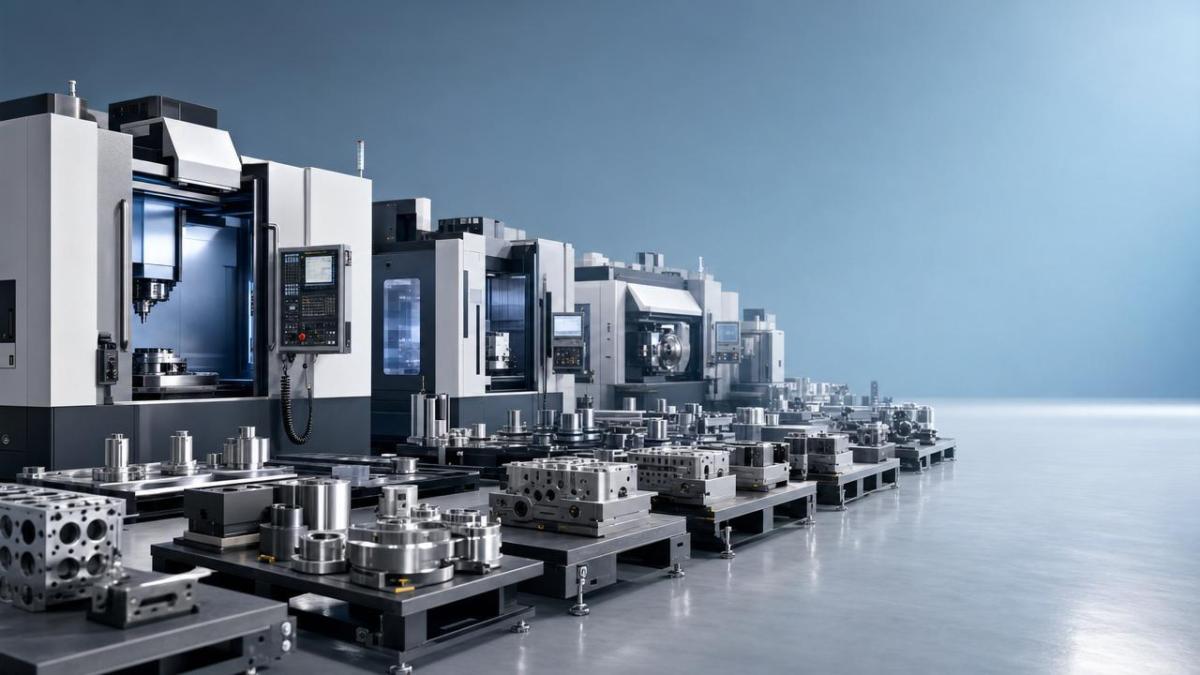
High-mix low-volume manufacturing is defined by frequent part changes, small batch sizes, variable tolerances, and unstable demand. In this environment, the best Production Process is rarely the one with the highest theoretical output. It is the one that can absorb change without driving scrap, setup time, tooling cost, or lead time out of control.
For technical evaluators in the CNC machine tool sector, the decision usually sits between flexibility and dedicated efficiency. A rigid transfer line may perform well in repeat mass production, but it often becomes inefficient when work orders include multiple materials, different geometries, and short customer delivery windows.
This is why flexible CNC-based machining cells, machining centers, turn-mill platforms, and digitally supported job-shop models are often favored. They align better with modern precision manufacturing, especially in aerospace, energy equipment, electronics, and specialized automotive parts where part diversity is high and lot sizes are low.
- The process must reduce setup losses when switching between part numbers.
- It must maintain dimensional stability across short runs without excessive inspection burden.
- It should support multiple materials, including alloy steels, aluminum, stainless steel, and engineering plastics.
- It needs digital traceability to support quality review, quotation accuracy, and future repeat orders.
Why the decision is harder than it looks
Many factories evaluate a Production Process by cycle time alone. That is a common mistake in high-mix low-volume work. The real cost structure also includes programming time, fixture changeover, first-piece approval, operator skill dependence, inspection time, and scheduling disruption. A process that cuts ten seconds from machining may still lose overall if setup takes two hours for every batch.
In modern CNC environments, flexible capacity matters more than peak capacity. Technical teams increasingly prioritize machine utilization under mixed orders, compatibility with standardized tool libraries, and readiness for automation modules such as pallet systems, probing, and robotic loading.
Which Production Process options are usually compared?
Before selecting the best Production Process, evaluators should compare the main manufacturing models used in precision machining. The table below outlines how common process routes perform under high-mix low-volume conditions, especially where complex part geometry and short lead times are important.
For most technical evaluations, a flexible CNC-based Production Process offers the strongest balance. It does not always produce the shortest single-part cycle time, but it usually lowers the total cost per delivered batch once setup frequency, tooling reuse, and quality stability are included.
The practical winner: flexible CNC machining cells
In high-mix low-volume work, the most effective Production Process is often a flexible cell built around CNC lathes, vertical or horizontal machining centers, multi-axis systems, probing, modular fixtures, and offline programming. This model supports both complexity and responsiveness.
A flexible cell is especially valuable when parts share some process logic. Examples include families of shafts, housings, precision discs, valve bodies, brackets, and aerospace structural components. Standardized tooling and fixtures allow fast switching without rebuilding the entire line.
How should technical evaluators compare Production Process performance?
Technical assessment should move beyond machine catalog data. The right Production Process must be measured using operational indicators that reflect mixed manufacturing conditions. The next table provides a practical evaluation structure for engineering, sourcing, and plant teams.
This comparison method helps evaluators avoid overvaluing one metric. In high-mix low-volume work, the best Production Process is the one that performs consistently across setup, machining, quality, and change management rather than excelling in one isolated area.
Key technical features that improve process fit
- Multi-axis machining reduces repositioning and lowers fixture complexity for intricate parts.
- In-machine probing shortens first-piece approval and supports closed-loop correction.
- Tool management systems improve repeatability when many small batches share the same machine pool.
- Palletization and modular automation increase unattended production without committing to a rigid line.
- Digital work instructions reduce dependence on tribal knowledge and help standardize recurring mixed jobs.
Which application scenarios favor each Production Process?
Not every factory faces the same mix profile. A Production Process should match the part family, annual demand, tolerance level, and revision frequency. The following scenarios show where flexible CNC systems outperform dedicated approaches and where alternatives may still be reasonable.
Aerospace and energy equipment
These sectors often require difficult materials, traceability, tight tolerances, and low order quantities. A flexible CNC Production Process with strong quality documentation is usually the preferred route. Dedicated lines are rarely justified unless a part has stable annual demand and limited design change.
Automotive service parts and specialty programs
Mainstream automotive mass production often relies on specialized equipment, but service parts, pilot builds, and niche variants are different. Here, a flexible machining cell or agile job-shop structure handles intermittent batches better, especially when part life cycles are uncertain.
Electronics equipment and precision assemblies
These applications often combine small precision parts, frequent revisions, and short commercialization windows. A Production Process built around fast programming, compact fixtures, and precise repeatability gives technical teams more control over launch risk.
How to select a Production Process without overspending
Budget pressure is a major pain point for technical evaluators. The challenge is not simply to lower machine price. It is to avoid paying for dedicated capacity that will be underused, while also preventing hidden costs from inefficient short-run manufacturing.
A practical selection path usually starts with volume segmentation. Separate stable repeat parts from volatile custom parts. Then determine whether one flexible Production Process can serve multiple part families with shared tooling, probing, and fixture architecture.
- Map part families by geometry, material, tolerance, and annual order frequency.
- Measure actual setup time, not estimated setup time, on representative jobs.
- Check whether modular fixturing can replace dedicated fixtures for at least part of the mix.
- Review CAM standardization and postprocessor readiness before expanding machine platforms.
- Evaluate automation as a flexible layer, not as a fixed line commitment.
Cost and alternative routes
If capital is limited, a full flexible manufacturing cell may not be the first step. A staged Production Process upgrade can still deliver value. For example, a shop may begin with standardized tooling, zero-point clamping, offline programming, and in-process probing before investing in pallet pools or robotic loading.
Alternative routes also depend on part complexity. Some low-volume parts may be better served by CNC machining plus selective secondary operations, while others justify 5-axis machining to eliminate multiple setups. The best answer comes from total process economics, not from machine prestige.
What standards, quality controls, and risks should be reviewed?
A Production Process for precision manufacturing must also support quality assurance and compliance. While exact standards depend on industry and customer requirements, technical evaluators commonly review dimensional control methods, calibration practices, traceability, and process documentation.
- Confirm that measurement systems can verify the required tolerances at low batch quantities without slowing delivery excessively.
- Check revision control for CNC programs, setup sheets, and inspection plans to avoid mixed-version production.
- Review material traceability and process records when serving aerospace, energy, or export-driven industrial projects.
- Assess thermal control, tool wear monitoring, and first-article approval discipline for short-run repeatability.
Common evaluation mistakes
One mistake is assuming that a high-end machine automatically creates the right Production Process. Without fixture strategy, programming discipline, and shop-floor data control, even advanced equipment can struggle in mixed manufacturing.
Another mistake is treating low-volume work as if formal process engineering is unnecessary. In reality, high-mix environments need stronger standardization because variation is constant. Standard tool libraries, setup templates, and quality checkpoints create the repeatability that mixed production often lacks.
FAQ: practical questions about Production Process selection
Is a flexible CNC cell always the best Production Process for high-mix low-volume work?
Not always. It is often the strongest option when parts have recurring but variable demand, moderate to high complexity, and meaningful setup frequency. However, for very simple parts with extremely low annual volume, a lighter job-shop model may be enough. For stable high-volume parts, dedicated lines can still be more economical.
What is the most important metric when comparing a Production Process?
Setup time is often the hidden priority, but it should be reviewed together with process capability and programming efficiency. In mixed manufacturing, the best process is usually the one with the lowest total batch cost, not the lowest spindle-time cost.
How can a factory improve its current Production Process without replacing all machines?
Start with standardization. Modular fixtures, offline CAM workflows, tool presetting, probing cycles, and program revision control often improve high-mix low-volume performance before any major equipment purchase. These changes shorten changeovers and reduce quality escapes.
When should automation be added to a high-mix low-volume Production Process?
Automation makes sense when recurring part families exist, setup logic is already standardized, and machine uptime is being constrained by loading, pallet exchange, or unmanned shift limitations. Flexible automation layers usually work better than fixed automation in mixed environments.
Why choose us for Production Process evaluation and project support?
In the CNC machining and precision manufacturing field, technical decisions are rarely isolated. Process fit depends on machine capability, tooling strategy, fixture logic, quality control, and realistic delivery planning. Our platform focuses on the global machine tool and precision manufacturing industry, helping professionals assess technologies, compare process routes, and follow international market and trade developments that influence equipment decisions.
If you are evaluating a Production Process for high-mix low-volume work, you can contact us for targeted support on parameter confirmation, process route comparison, machine and fixture selection logic, expected delivery cycle considerations, customization strategy, quality documentation needs, sample feasibility, and quotation communication priorities.
This is especially useful when your team must balance precision, flexibility, investment control, and future scalability across CNC lathes, machining centers, multi-axis systems, and flexible production solutions. A structured evaluation now can prevent costly misalignment later.
PREVIOUS ARTICLE
NEXT ARTICLE
Recommended for You
![]() ISO/TR 24122:2026 CNC Machine Carbon Footprint Guide PublishedManufacturing Policy Research Center
ISO/TR 24122:2026 CNC Machine Carbon Footprint Guide PublishedManufacturing Policy Research Center![]() Shenwei CNC Dual-Spindle Transfer Machine Passes TÜV Rheinland Production-Line Integration CertificationMachine Tool Industry Editorial Team
Shenwei CNC Dual-Spindle Transfer Machine Passes TÜV Rheinland Production-Line Integration CertificationMachine Tool Industry Editorial Team![]() China's CNC Machine Tool Penetration Rate Exceeds 51%Manufacturing Market Research Center
China's CNC Machine Tool Penetration Rate Exceeds 51%Manufacturing Market Research Center![]() VDMA-TÜV South Germany Releases 2026 CNC Green Procurement GuideManufacturing Policy Research Center
VDMA-TÜV South Germany Releases 2026 CNC Green Procurement GuideManufacturing Policy Research Center![]() Brazil INMETRO Enforcement: 37 CNC Lathes Rejected Over IoT ModuleManufacturing Policy Research Center
Brazil INMETRO Enforcement: 37 CNC Lathes Rejected Over IoT ModuleManufacturing Policy Research Center![]() Red Sea Crisis Escalates: Maersk Suspends CNC Equipment Bookings on Asia-Europe RoutesGlobal Machine Tool Trade Research Center
Red Sea Crisis Escalates: Maersk Suspends CNC Equipment Bookings on Asia-Europe RoutesGlobal Machine Tool Trade Research Center


Aris Katos
Future of Carbide Coatings
15+ years in precision manufacturing systems. Specialized in high-speed milling and aerospace grade alloy processing.
▶
Which Production Process best fits high-mix low-volume workCNC Machining Technology Center▶
Why does Production Process planning decide delivery speed?CNC Machining Technology Center▶
Where the Production Process slows down and how to fix itCNC Machining Technology Center▶
A stable Production Process starts with fewer handoffsCNC Machining Technology Center▶
A weak Production Process often hides in these 5 signalsCNC Machining Technology Center
Mastering 5-Axis Workholding Strategies
Join our technical panel on Nov 15th to learn about reducing vibrations in thin-wall components.

Providing you with integrated sanding solutions
Before-sales and after-sales services
Comprehensive technical support