• Global CNC market projected to reach $128B by 2028 • New EU trade regulations for precision tooling components • Aerospace deman
NYSE: CNC +1.2%LME: STEEL -0.4%

Which Production Process reduces cost without losing quality?
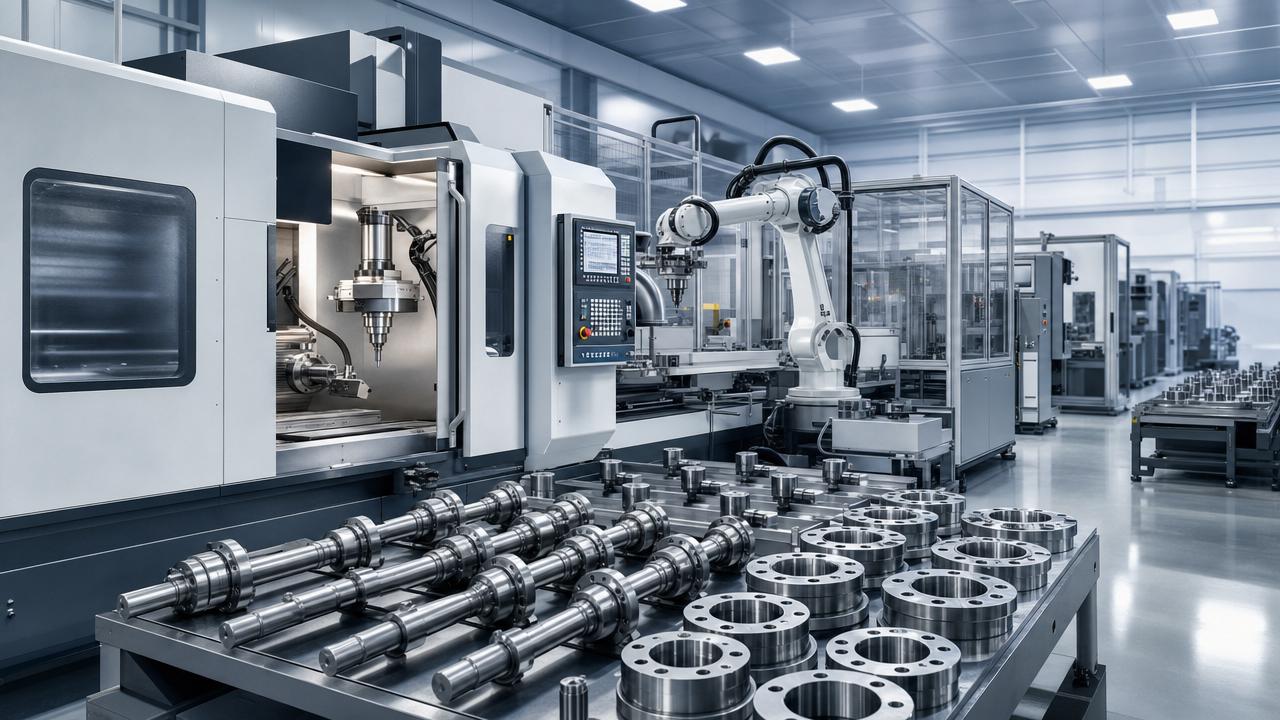
For financial decision-makers in CNC and precision manufacturing, choosing the right Production Process is not just an operational issue—it directly affects margins, output stability, and long-term competitiveness. The key is finding methods that lower unit cost while preserving machining accuracy, material consistency, and delivery reliability, especially in high-demand sectors such as automotive, aerospace, and electronics.
In practice, cost reduction rarely comes from one dramatic change. It usually comes from a better Production Process design: fewer setups, lower scrap, shorter cycle time, more stable tolerances, and smarter use of labor and machine capacity.
For finance teams, the real question is not whether a process looks efficient on paper. It is whether that process can protect gross margin across 6 to 24 months of production, while keeping rework, downtime, and late delivery under control.
What kind of Production Process reduces cost most effectively in CNC manufacturing?
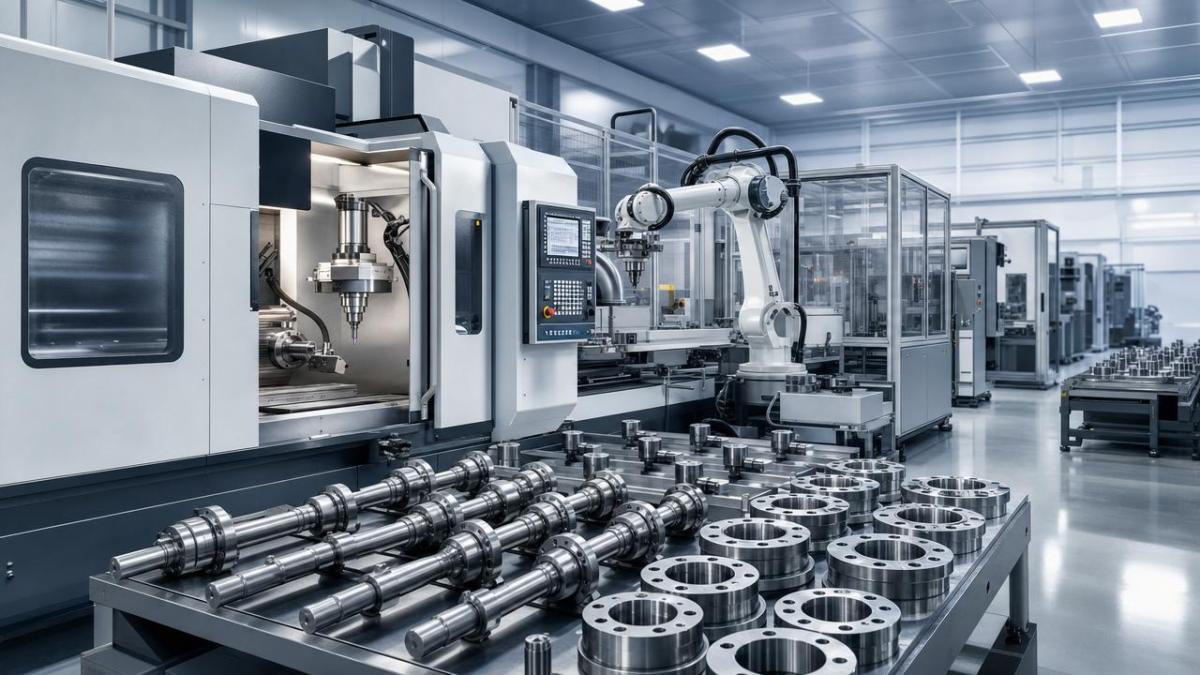
The most effective Production Process is usually not the cheapest machine route or the fastest single operation. It is a process structure that balances four variables at the same time: machining time, quality consistency, material utilization, and changeover efficiency.
In CNC and precision manufacturing, three process models often deliver the best financial outcome: process integration, standardization of repeatable operations, and automation of high-volume handling or inspection steps. Each can reduce unit cost by 5% to 20% depending on batch size, part geometry, and tolerance demands.
1. Process integration cuts setup hours and handling cost
When multiple operations are completed in one clamping or on one multi-axis platform, the Production Process becomes shorter and more stable. A part that previously needed turning, secondary milling, and manual repositioning may be finished in 1 integrated cycle instead of 3 separate stages.
For finance reviewers, this matters because every additional setup adds hidden cost: operator time, fixture movement, in-process inspection, dimensional risk, and queue delay between machines. Reducing setups from 4 to 2 can often lower indirect labor hours by 15% to 30%.
Typical gains from integrated machining
- Fewer fixture changes and lower clamping error accumulation
- Shorter internal transfer time between operations
- Better dimensional repeatability for tolerances such as ±0.01 mm to ±0.02 mm
- Lower work-in-process inventory in batches above 200 to 500 pieces
2. Standardized workflows reduce variation across shifts
A standardized Production Process means cutting parameters, tool life rules, inspection frequency, and fixture references are defined before volume production starts. This prevents quality drift between day and night shifts, or between two machines running the same component.
In many workshops, cost leakage does not come from machine price. It comes from inconsistency. If scrap moves from 1.5% to 4%, or if unplanned tool changes happen twice as often as expected, the planned margin disappears quickly.
3. Targeted automation works best in repeatable, high-volume lines
Automation does not need to mean a fully unmanned factory. In many CNC plants, adding automatic loading, probing, chip evacuation, or in-line gauging creates a more economical Production Process without large capital risk.
For example, on a stable family of shaft or disc parts running 2 shifts per day, automated loading may reduce handling time by 8 to 20 seconds per cycle. On a 90-second cycle across 10,000 parts, the savings are financially meaningful.
The table below compares common Production Process approaches from a financial and operational perspective.
The key takeaway is simple: the best Production Process depends on volume, complexity, and quality risk. For most financial decision-makers, the most reliable gains come from process integration and standardization first, then automation where utilization is already high.
How finance teams should evaluate Production Process choices
A Production Process should never be approved only on quoted piece price. Financial evaluation works better when it includes at least 4 dimensions: direct machining cost, quality cost, capacity effect, and working capital impact.
A process that saves 6% on cycle cost but increases scrap by 3%, adds 2 extra days of queue time, and raises tooling replacement frequency may be a poor decision over a 12-month contract.
Core metrics to review before approval
- Cycle time per part, including loading and inspection time
- First-pass yield and expected scrap range, such as 1% to 3%
- Tooling consumption per 1,000 parts
- Setup time per batch, especially under 100-piece and 500-piece scenarios
- Machine utilization rate across 1 shift, 2 shifts, or 24/7 operations
- Lead time effect on customer delivery and cash conversion
Hidden costs that often distort the decision
Many procurement and finance reviews underestimate non-cutting time. Tool presetting, workpiece transfer, fixture cleaning, inspection delay, and re-clamping can represent 20% to 40% of total production time on precision parts.
Another common blind spot is inventory buffering. A fragmented Production Process often needs more semi-finished stock between operations. That raises capital tied up in work-in-process, especially when lead times run 2 to 4 weeks.
A practical finance review model
- Compare unit cost under low, medium, and peak production loads
- Stress-test quality stability under tolerance-critical conditions
- Estimate payback period for process upgrades, typically 9 to 24 months
- Include downtime, scrap, and delay exposure in the total cost model
Which Production Process fits different CNC part categories?
Different parts require different process economics. A cost-efficient Production Process for a simple flange is not the same as the best route for a multi-face aluminum housing or a hardened steel shaft with concentricity requirements.
This is why process selection should be tied to part family characteristics, not just machine availability. Geometry, tolerance stack-up, annual volume, and material removal rate all change the answer.
Recommended process logic by part type
The following table helps finance and operations teams map Production Process priorities to actual CNC component categories.
For most high-value parts, the Production Process should be selected around quality-sensitive dimensions first, then optimized for labor and cycle efficiency. This sequence protects both customer acceptance and contribution margin.
When low-cost processes become expensive
A cheaper process often becomes expensive when tolerance risk is high. If a component requires repeated correction, sorting, or extra inspection every 25 to 50 parts, the apparent savings disappear fast.
This is especially true in aerospace, electronics, and automotive subcomponents where dimensional stability, traceability, and delivery discipline matter as much as unit price.
How to implement a lower-cost Production Process without sacrificing quality
Implementation should be phased. A rushed process change may create temporary savings in labor while causing losses in scrap, customer complaints, or line instability. A disciplined rollout usually works better over 3 stages.
Stage 1: Baseline the current process
Measure actual cycle time, non-cutting time, scrap rate, setup duration, and machine occupancy. Use at least 2 to 4 weeks of real production data instead of relying only on engineering assumptions.
Stage 2: Pilot the revised Production Process
Pilot on one part family or one line before scaling. A sample run of 100 to 300 parts is often enough to validate tool wear, process capability, and inspection burden under normal conditions.
Stage 3: Lock standards and monitor variance
Once the new Production Process proves stable, fix setup sheets, inspection intervals, tool change thresholds, and maintenance rules. Review output variance weekly for the first 6 to 8 weeks to prevent drift.
Common implementation mistakes
- Approving automation before confirming stable part demand
- Compressing setup time targets without redesigning fixtures
- Reducing inspection frequency too early in ramp-up
- Ignoring tool life variation across material batches
Questions financial approvers should ask suppliers and internal teams
Before approving a new Production Process, finance leaders should ask focused questions that expose risk. This improves both sourcing quality and internal capital discipline.
Checklist for process approval
- How many setups are required from raw material to final inspection?
- What is the expected scrap range during ramp-up and steady production?
- Which dimensions are most sensitive to reclamping or heat variation?
- What batch size is needed to achieve target unit economics?
- What is the payback period if fixtures, automation, or software are added?
- How will lead time change under volume growth of 20% to 30%?
Why this matters in cross-border manufacturing
In global CNC supply chains, process quality affects more than factory cost. It also influences logistics planning, inventory buffers, and customer service exposure. A stable Production Process reduces emergency shipments, re-qualification delays, and claim handling cost.
For companies sourcing from industrial clusters in China, Germany, Japan, or South Korea, the strongest suppliers are often not those offering the lowest initial quote, but those showing process discipline, machine compatibility, and measurable control of tolerance-critical production.
The Production Process that reduces cost without losing quality is usually one that removes unnecessary setups, standardizes repeat work, and automates only where volume and stability justify it. For CNC and precision manufacturing, that approach protects margins more reliably than chasing the lowest visible machining price.
If you are evaluating process upgrades, new suppliers, or cost-down projects in precision machining, focus on total cost, yield stability, and lead-time resilience together. To get a more practical view of suitable process options for your part family, contact us to obtain a tailored solution, discuss production details, and explore more CNC manufacturing strategies.
PREVIOUS ARTICLE
Recommended for You
![]() China's CSF Harmonic Drives Pass ISO 9409-1:2023, Open Import-Substitution Window
China's CSF Harmonic Drives Pass ISO 9409-1:2023, Open Import-Substitution Window![]() Weimait CNC Achieves IATF 16949:2024 Certification
Weimait CNC Achieves IATF 16949:2024 Certification![]() New MIIT Rule: CNC Export Equipment Must Include Multilingual Remote Diagnostics from May 2026
New MIIT Rule: CNC Export Equipment Must Include Multilingual Remote Diagnostics from May 2026![]() CCMT 2026 Concludes in Shanghai: Surge in Five-Axis CNC Export Orders, Lead Times Extend to 14 Weeks
CCMT 2026 Concludes in Shanghai: Surge in Five-Axis CNC Export Orders, Lead Times Extend to 14 Weeks![]() CIMES 2026 Opens in Beijing: Global Buyers Prioritize Smart Production Lines and Export Compliance
CIMES 2026 Opens in Beijing: Global Buyers Prioritize Smart Production Lines and Export Compliance A weak Production Process can raise costs without warningCNC Machining Technology Center


Aris Katos
Future of Carbide Coatings
15+ years in precision manufacturing systems. Specialized in high-speed milling and aerospace grade alloy processing.
▶
A weak Production Process can raise costs without warningCNC Machining Technology Center▶
Which Production Process reduces cost without losing quality?CNC Machining Technology Center▶
A weak Production Process often hides in plain sightCNC Machining Technology Center▶
Which Production Process best fits high-mix low-volume workCNC Machining Technology Center▶
Why does Production Process planning decide delivery speed?CNC Machining Technology Center
Mastering 5-Axis Workholding Strategies
Join our technical panel on Nov 15th to learn about reducing vibrations in thin-wall components.

Providing you with integrated sanding solutions
Before-sales and after-sales services
Comprehensive technical support