• Global CNC market projected to reach $128B by 2028 • New EU trade regulations for precision tooling components • Aerospace deman
NYSE: CNC +1.2%LME: STEEL -0.4%

A weak Production Process often hides in plain sight
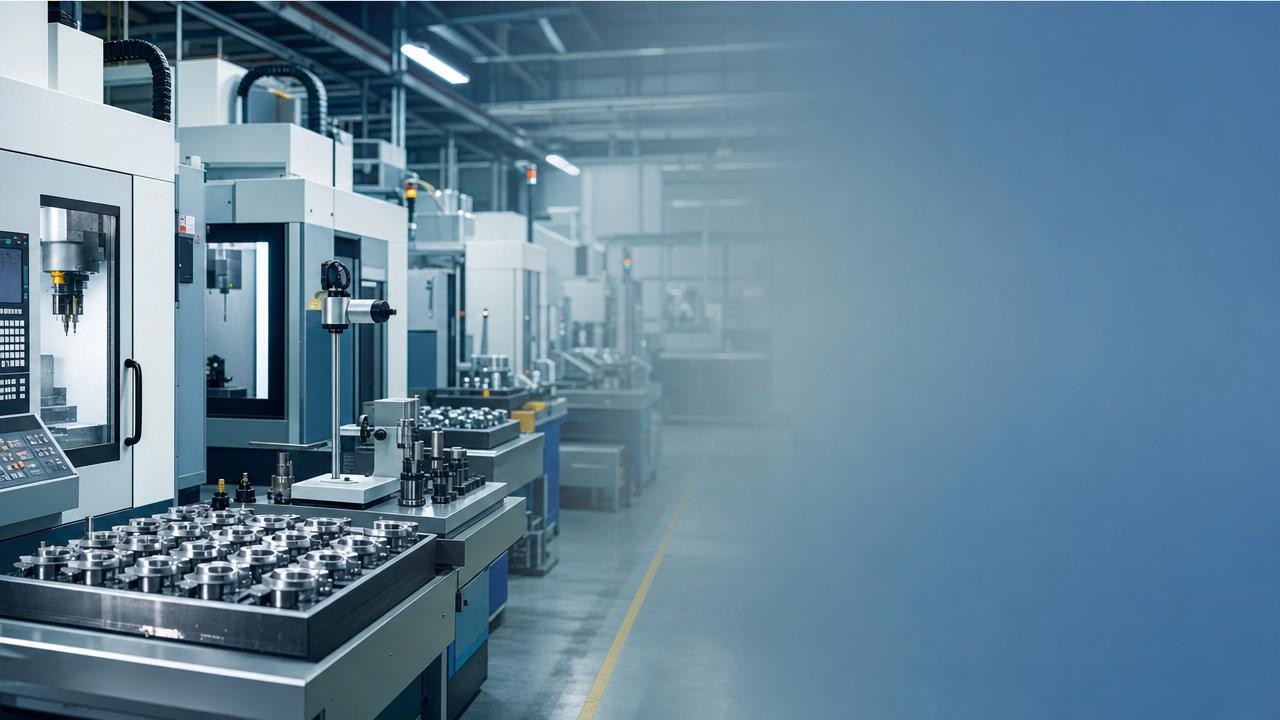
A weak Production Process often stays invisible when daily output still looks acceptable. Parts ship, schedules move, and teams adapt through experience. Yet hidden instability keeps building beneath the surface.
In CNC machining and precision manufacturing, that weak Production Process usually appears first as small variation. Tool wear seems normal, setup changes feel manageable, and rework looks isolated rather than systemic.
The risk grows when delayed feedback hides real causes. Scrap may be reported late. Machine downtime may be coded incorrectly. Quality escapes may be discovered only after assembly or shipment.
This article breaks the issue into practical scenarios. It shows where a weak Production Process hides, how needs differ by production context, and what actions improve reliability, throughput, and execution.
When stable output masks a weak Production Process
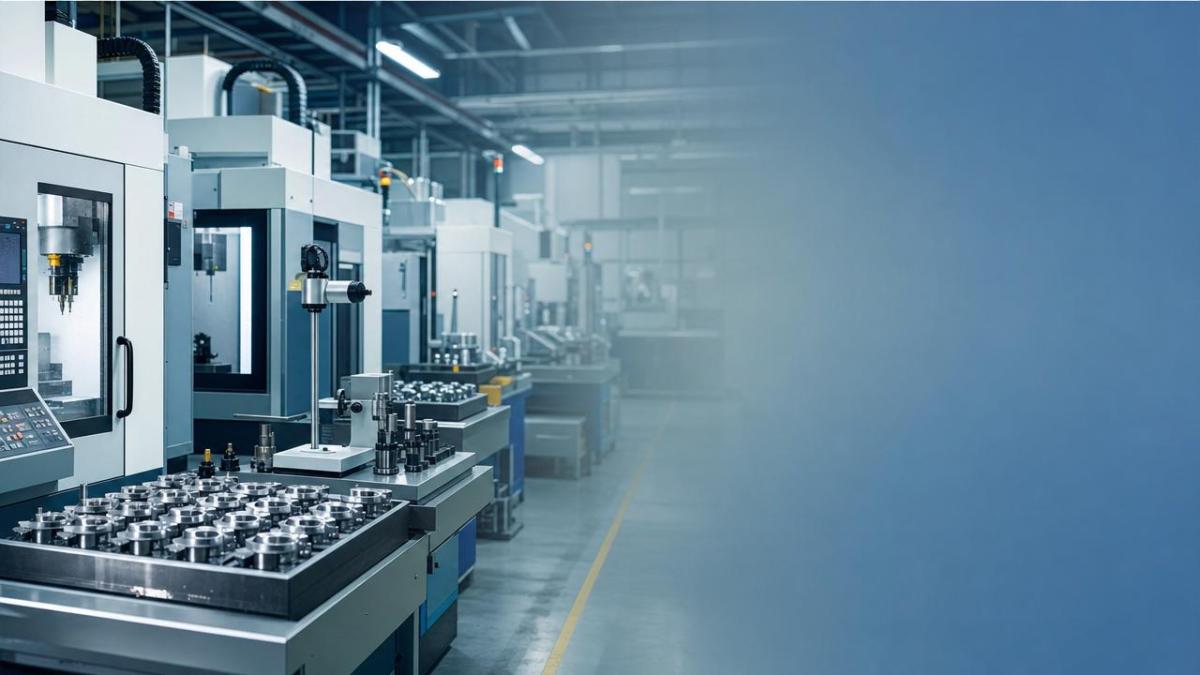
Not every weak Production Process causes immediate failure. In many factories, experienced operators compensate for poor documentation, inconsistent setups, or unclear handoffs. Output survives because people fill the gaps.
This is especially common in CNC environments with mixed product types. A machining center may run acceptable parts, while process capability quietly drops during tool changes, material variation, or shift transitions.
The warning signs are often indirect:
- Cycle times vary without formal explanation.
- First-pass yield depends on specific operators.
- Programming changes are not fully documented.
- Inspection catches issues after value has already been added.
- Urgent jobs repeatedly interrupt planned flow.
A weak Production Process is not only a quality issue. It is also a planning issue, a data issue, and a coordination issue across machining, tooling, inspection, maintenance, and scheduling.
Scenario: High-mix, low-volume production hides process weakness differently
In high-mix, low-volume work, a weak Production Process often hides behind complexity. Teams expect variation, so process loss gets accepted as part of the business rather than treated as controllable waste.
This is common in aerospace parts, custom fixtures, energy components, and prototype runs. Frequent changeovers make undocumented setups, tribal knowledge, and revision confusion especially dangerous.
What to look for in this scenario
- Setup sheets differ from actual machine conditions.
- CAM revisions are not linked to released drawings.
- Inspection plans vary by shift or operator judgment.
- Tool libraries are incomplete or outdated.
In this scenario, the Production Process needs control through standardization, revision discipline, and visible setup verification. Flexibility matters, but repeatability still defines performance.
Scenario: High-volume automated lines expose weakness through small losses
In high-volume production, a weak Production Process rarely appears as dramatic failure at first. Instead, it shows up as minor stoppages, extra seconds per cycle, tool life instability, and rising inspection workload.
Automotive parts, electronics housings, and standardized precision discs often run under tightly planned takt conditions. Here, even small process variation scales into significant cost and delivery impact.
Core judgment points in automated production
- Do alarms predict failures, or only report them afterward?
- Does tool wear follow a stable trend across machines?
- Are part deviations linked to lot, machine, or fixture position?
- Can scheduling absorb downtime without hidden backlog?
A strong Production Process in automation depends on real-time visibility. Data from CNC controls, probes, sensors, and maintenance systems must connect to decisions, not sit unused in separate dashboards.
Scenario: Cross-border supply chains make the Production Process harder to trust
Global precision manufacturing adds another layer of difficulty. A weak Production Process may stay hidden because suppliers use different standards, reporting habits, control plans, and escalation thresholds.
This matters when sourcing machined shafts, structural parts, cast-and-machined assemblies, or multi-step subcomponents across regions such as China, Germany, Japan, and South Korea.
Signals that trust in the process is overstated
- Capability reports look strong, but delivery performance declines.
- Corrective actions close quickly without evidence of recurrence control.
- Inspection data is shared, but traceability is incomplete.
- Engineering changes reach production at uneven speed.
In global operations, the Production Process must be auditable across communication boundaries. Shared definitions for deviation, containment, approval, and release are essential for reliable execution.
How scenario needs differ across production environments
The same keyword, Production Process, means different priorities in different settings. The table below highlights where judgment criteria and improvement focus should change.
This comparison helps avoid generic improvement plans. A weak Production Process cannot be fixed well if the operating scenario is misunderstood from the beginning.
Practical recommendations for matching the Production Process to the scenario
Improvement should follow the realities of part complexity, automation level, and organizational structure. The most useful actions are often simple, visible, and enforced consistently.
- Map where decisions are made manually during machining, setup, inspection, and release.
- Separate routine variation from special-cause variation using machine and quality data.
- Standardize setup confirmation with photos, offsets, tooling, and fixture checkpoints.
- Link process revisions directly to drawings, programs, and inspection plans.
- Track first-pass yield, schedule adherence, and rework by product family.
- Create escalation rules for drift before nonconformance becomes visible downstream.
For digital factories, connect CNC data, MES records, and quality results into one view. For mixed environments, begin with visual controls and disciplined process ownership before expanding automation.
Common misjudgments that let a weak Production Process continue
One frequent mistake is assuming acceptable output proves a healthy Production Process. Output alone says little about hidden overtime, informal expertise, inspection burden, or material waste.
Another mistake is treating rework as operational flexibility. In precision manufacturing, repeated rework often signals process design weakness, not resilience.
A third misjudgment is overvaluing software without process discipline. Digital tools help only when naming conventions, ownership, escalation paths, and data definitions are already clear.
- Do not confuse operator skill with process capability.
- Do not treat late inspection as effective control.
- Do not assume one corrective action fits every production scenario.
Next steps to strengthen the Production Process with measurable impact
Begin with one product family, one line, or one recurring quality issue. A focused review will reveal whether the Production Process is truly robust or only supported by routine workarounds.
Audit setup consistency, revision control, response time to variation, and traceability of process changes. Then compare those findings against the actual production scenario, not an idealized one.
In modern CNC and precision manufacturing, a stronger Production Process creates more than better parts. It improves delivery confidence, reduces hidden cost, supports automation, and makes global execution more dependable.
When hidden weakness is identified early, improvement becomes practical. When it is ignored, quality issues, missed deadlines, and cost pressure will eventually reveal what the process was already saying.
PREVIOUS ARTICLE
NEXT ARTICLE
Recommended for You
![]() CCMT2026签约汇总:桂林鸿程精机斩获四川振中机电2800万元立车订单
CCMT2026签约汇总:桂林鸿程精机斩获四川振中机电2800万元立车订单![]() 申威数控双主轴对接机床通过德国莱茵TÜV产线集成认证
申威数控双主轴对接机床通过德国莱茵TÜV产线集成认证![]() China's CNC System Export Prices Rise 8.3% in Q1; High-Value Share Hits 42%
China's CNC System Export Prices Rise 8.3% in Q1; High-Value Share Hits 42%![]() First ISO Carbon Footprint Guide for CNC Machine Tools Launched, Accepted Equivalently by China, EU and US
First ISO Carbon Footprint Guide for CNC Machine Tools Launched, Accepted Equivalently by China, EU and US![]() Brazil’s INMETRO IoT Requirement Takes Effect: 37 CNC Lathes Rejected at Santos Port
Brazil’s INMETRO IoT Requirement Takes Effect: 37 CNC Lathes Rejected at Santos Port![]() 红海危机升级致亚欧线舱位冻结:马士基暂停CNC设备订舱,中东买家转向本地化组装
红海危机升级致亚欧线舱位冻结:马士基暂停CNC设备订舱,中东买家转向本地化组装


Aris Katos
Future of Carbide Coatings
15+ years in precision manufacturing systems. Specialized in high-speed milling and aerospace grade alloy processing.
▶
A weak Production Process often hides in plain sightCNC Machining Technology Center▶
Which Production Process best fits high-mix low-volume workCNC Machining Technology Center▶
Why does Production Process planning decide delivery speed?CNC Machining Technology Center▶
Where the Production Process slows down and how to fix itCNC Machining Technology Center▶
A stable Production Process starts with fewer handoffsCNC Machining Technology Center
Mastering 5-Axis Workholding Strategies
Join our technical panel on Nov 15th to learn about reducing vibrations in thin-wall components.

Providing you with integrated sanding solutions
Before-sales and after-sales services
Comprehensive technical support