• Global CNC market projected to reach $128B by 2028 • New EU trade regulations for precision tooling components • Aerospace deman
NYSE: CNC +1.2%LME: STEEL -0.4%

CNC metal lathe accuracy issues that often trace back to fixturing
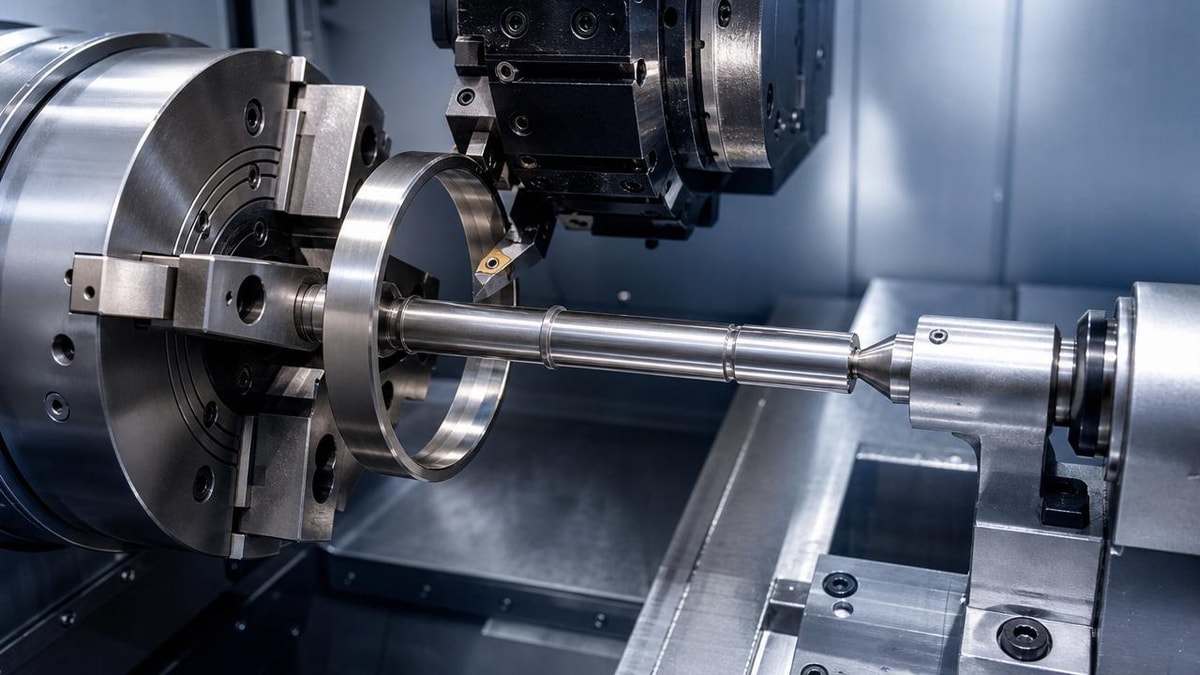
When a CNC metal lathe delivers inconsistent dimensions, poor roundness, or unstable surface finish, the root cause is often not the spindle or control system but the fixturing setup. For technical evaluators, understanding how clamping force, workholding alignment, and fixture rigidity influence machining accuracy is essential to identifying hidden performance limits and preventing repeated quality issues.
In practical evaluation work, fixturing is often underestimated because machine specifications usually emphasize spindle speed, repeatability, controller capability, and axis travel. However, a CNC metal lathe can only perform to its rated accuracy when the workpiece is held with repeatable positioning, stable force distribution, and adequate support against cutting loads, thermal growth, and vibration.
This matters across automotive, aerospace, energy equipment, and electronics manufacturing, where shaft parts, rings, hubs, discs, and thin-wall components frequently require tolerances in the range of ±0.01 mm to ±0.05 mm. For technical assessment teams comparing equipment, processes, or suppliers, fixturing should be treated as a core variable in machining capability, not a secondary accessory.
Why fixturing is a primary accuracy variable on a CNC metal lathe
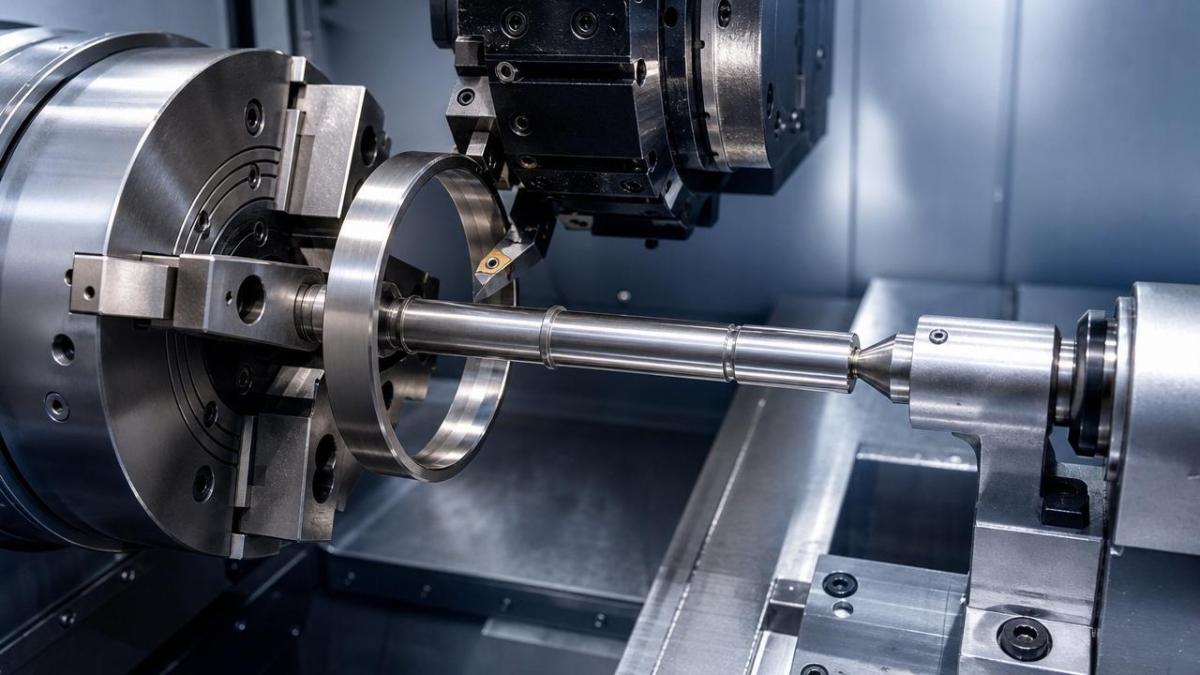
A CNC metal lathe removes material under rotating conditions that amplify even small setup errors. A workholding deviation of 0.02 mm at the chuck can become a larger dimensional issue after roughing, semi-finishing, and finishing passes, especially on parts with 3:1 to 8:1 length-to-diameter ratios. In technical evaluations, the machine may appear capable in static tests but underperform in real cutting conditions because fixturing behavior changes with load.
The three fixturing effects evaluators should check first
Most recurring accuracy problems can be grouped into 3 categories: distortion from excessive clamping force, positioning error from poor alignment, and vibration from insufficient rigidity. These issues do not always appear during no-load spindle checks. They become visible during actual machining, often after 10 to 30 parts when heat, tool wear, and cycle variation start to interact with the fixture.
- Clamping force that is too high can deform thin-wall parts, soft materials, and long shafts.
- Misalignment between chuck, collet, soft jaws, tailstock, and part datum can create runout and taper.
- Low rigidity in jaws, mandrels, supports, or sub-spindle transfer can trigger chatter and finish instability.
Clamping force is not just a holding issue
Many shops increase clamping force to prevent slippage, but on a CNC metal lathe this can create a new source of dimensional error. For a thin ring, sleeve, or hollow shaft, jaw pressure can ovalize the part before the tool even touches it. After release, a bore that measured round in the clamped state may spring out by 0.01 mm to 0.04 mm, enough to fail fit or bearing requirements.
Alignment errors accumulate across the process chain
A 2-jaw, 3-jaw, or collet setup that is not matched to the part geometry can introduce radial or axial bias. If tailstock pressure is also too high or the center condition is poor, the result may be taper along the length, inconsistent concentricity between diameters, or face runout on secondary features. These are common evaluation findings when parts are machined in 2 setups or transferred between main spindle and sub-spindle.
Rigidity determines whether theoretical accuracy becomes usable accuracy
Machine tool brochures may state positioning accuracy and repeatability, but usable process accuracy depends on the stiffness of the complete system: spindle, turret, toolholder, workpiece, and fixture. On a CNC metal lathe cutting steel at 0.2 mm/rev to 0.4 mm/rev or taking interrupted cuts, weak support can produce chatter marks, waviness, or diameter drift that no control parameter can fully compensate for.
The table below summarizes how common fixturing conditions affect measurable quality results during technical evaluation and trial machining.
For evaluators, the key conclusion is that a CNC metal lathe should not be judged only by open-loop machine metrics. Real process capability must include fixture condition, force control method, jaw preparation quality, and support configuration under representative cutting loads.
Common accuracy issues that often trace back to workholding
When a turning process shows unstable quality, the symptom often points directly to a specific fixturing weakness. A disciplined diagnosis can reduce troubleshooting time from several days to a few production cycles. In many plants, this is the difference between replacing tools unnecessarily and solving the true root cause.
Inconsistent diameter across a batch
If the first 5 parts are in tolerance and the next 20 drift by 0.02 mm to 0.05 mm, jaw seating, chuck actuation stability, or thermal shift in the fixture may be involved. Soft jaws that were bored without matching the actual clamping stroke can lose repeatability quickly. This is especially common when a CNC metal lathe is switched between part families with different diameters during short-run production.
Poor roundness on thin-wall or hollow parts
Roundness errors are frequently blamed on spindle bearings, but fixturing is often the larger factor. On tubes, bearing races, and sleeves with wall thickness below 3 mm to 5 mm, clamping force can temporarily reshape the part. Inspection after unclamping then shows lobing or ovality. In such cases, changing from standard jaws to profiled soft jaws, collets, or mandrel support may improve results more than any control adjustment.
Surface finish that changes without tool replacement
A surface roughness shift from Ra 1.6 to Ra 3.2 without a clear tool wear pattern often indicates vibration, micro-movement, or support instability. Long shafts, for example, may require a tailstock, steady rest, or follow rest once the unsupported length exceeds roughly 4 to 6 times the diameter, depending on material and depth of cut. If support is late, loose, or misaligned, finish becomes inconsistent even with a sharp insert.
Runout after secondary operations
Components machined in 2 or more operations are highly sensitive to datum transfer. If the first setup establishes a critical bore or journal and the second setup references a less stable surface, total runout may exceed 0.03 mm even though each operation individually appears acceptable. Technical evaluators should examine whether the fixturing concept preserves the true functional datum through the full sequence.
- Check part geometry and wall thickness before changing cutting parameters.
- Verify jaw contact pattern, jaw bore accuracy, and chuck repeatability.
- Measure runout at the clamped state and after unclamping.
- Review tailstock or steady rest pressure and contact condition.
- Compare first-piece results with data after 10, 20, and 50 cycles.
This 5-step review is often more effective than focusing only on tool offsets or servo tuning, especially when the same CNC metal lathe shows different performance across part types rather than the same defect on every job.
How technical evaluators should assess fixturing during machine selection or process approval
For B2B procurement and process validation, the fixturing question should be built into the acceptance plan. A machine that performs well on a short demo bar may not hold tolerance on an actual customer part with interrupted cuts, thin walls, or long unsupported features. Evaluation should therefore include both machine capability and workholding suitability.
Key technical checkpoints before approval
At minimum, assessment should cover 6 items: chuck or collet repeatability, jaw preparation method, clamping force adjustment range, support options for long parts, datum strategy for second operations, and maintenance accessibility. These factors directly affect whether a CNC metal lathe can be deployed for stable mass production rather than limited sample success.
The following matrix can be used during supplier comparison, factory acceptance, or internal line upgrade planning.
This type of review helps technical teams separate machine limitations from fixturing limitations. It also makes supplier discussions more objective because acceptance is tied to measurable workholding behavior instead of general performance claims.
Questions worth asking equipment suppliers or integrators
When reviewing a CNC metal lathe for a new line or process upgrade, technical evaluators should ask how the proposed workholding handles part families, changeover frequency, and tolerance sensitivity. If the supplier cannot explain force control, jaw preparation, support options, and maintenance intervals, the risk of future instability is higher.
- What fixture types are recommended for thin-wall, long-shaft, and interrupted-cut parts?
- How is clamping force adjusted and verified for different materials such as aluminum, alloy steel, or stainless steel?
- What is the expected service interval for jaws, collets, or locating elements under normal production?
- Can trial parts be measured in both clamped and free states to confirm deformation behavior?
- What is the setup repeatability after multiple changeovers in one shift?
Practical improvement strategies for stable turning accuracy
Once fixturing has been identified as the root cause, improvement does not always require major capital investment. In many applications, 4 targeted changes can significantly improve part consistency: optimize jaw geometry, reduce unnecessary force, add support at the correct stage, and standardize setup verification. These actions are especially valuable in mixed-model manufacturing and export-oriented production where part changes are frequent.
Match the fixture to the part family, not just to the machine
A general-purpose chuck may be acceptable for roughing, but precision finishing often needs more specific workholding. Collets can improve concentricity for smaller diameters, soft jaws can increase contact area for delicate parts, and expanding mandrels can reduce external distortion on ring-shaped components. For high-mix production, quick-change workholding can reduce setup variation while keeping changeover within 10 to 20 minutes.
Control force by requirement, not by habit
Clamping force should be set according to material, diameter, wall thickness, and cutting load. In practice, shops often use one pressure level across many jobs, which creates instability. A more reliable method is to define pressure windows by part family and validate them during trial runs. Even a reduction of 10% to 20% in jaw force can lower distortion without causing slip if contact geometry is improved.
Use in-process checks that reveal fixture-related drift
Instead of inspecting only the final dimension, evaluators should track three checkpoints: clamped runout, post-cut dimension, and free-state geometry after release. This method makes fixture deformation visible. For critical components, checking every first piece and then every 10th or 20th part can detect drift early enough to avoid large batch rejection.
Standardize maintenance of workholding elements
Accuracy on a CNC metal lathe degrades gradually when jaw serrations wear, chips accumulate in clamping interfaces, or hydraulic response becomes inconsistent. A basic maintenance plan should include cleaning at each shift, visual inspection daily, and repeatability checks at planned intervals such as weekly or every 500 to 1,000 clamp cycles, depending on duty level.
Typical warning signs that maintenance is overdue
- More offset corrections are needed than in the previous 1 to 2 weeks.
- Surface finish changes even though insert life remains stable.
- Part-to-part runout variation increases after changeover.
- Clamping marks become uneven or deeper on one side.
For technical evaluators, the main takeaway is clear: a CNC metal lathe should be judged as a process system, not as an isolated machine. Fixturing affects dimensional stability, roundness, runout, surface finish, and batch repeatability more directly than many teams expect. By reviewing clamping force, alignment method, support rigidity, and maintenance discipline together, decision-makers can identify hidden constraints before they become recurring production losses.
If you are assessing turning equipment, comparing suppliers, or troubleshooting unstable machining results, a structured fixturing review can shorten qualification time and improve process confidence. Contact us to discuss your CNC metal lathe application, get a tailored evaluation checklist, or learn more solutions for precision workholding in modern manufacturing.
PREVIOUS ARTICLE
NEXT ARTICLE
Recommended for You
![]() Beijing’s New E-Bike Lock Regulation Spurs CNC Housing DemandGlobal Machine Tool Trade Research Center
Beijing’s New E-Bike Lock Regulation Spurs CNC Housing DemandGlobal Machine Tool Trade Research Center![]() New Drone Standard GB/T 44723–2026 Takes Effect May 2026Manufacturing Policy Research Center
New Drone Standard GB/T 44723–2026 Takes Effect May 2026Manufacturing Policy Research Center![]() New Maritime Code Takes Effect May 1, 2026: CNC Equipment Shipping Rules UpdatedManufacturing Market Research Center
New Maritime Code Takes Effect May 1, 2026: CNC Equipment Shipping Rules UpdatedManufacturing Market Research Center![]() 2026 China Cycle Shanghai: CNC E-Bike Frame Capacity Draws ODM FocusManufacturing Market Research Center
2026 China Cycle Shanghai: CNC E-Bike Frame Capacity Draws ODM FocusManufacturing Market Research Center![]() 2026 Foshan Tanzhou Auto Expo: EV Parts Sourcing FocusGlobal Machine Tool Trade Research Center
2026 Foshan Tanzhou Auto Expo: EV Parts Sourcing FocusGlobal Machine Tool Trade Research Center![]() New Hazardous Chemicals Safety Law Takes Effect May 2026Manufacturing Policy Research Center
New Hazardous Chemicals Safety Law Takes Effect May 2026Manufacturing Policy Research Center


Aris Katos
Future of Carbide Coatings
15+ years in precision manufacturing systems. Specialized in high-speed milling and aerospace grade alloy processing.
▶
CNC metal lathe accuracy issues that often trace back to fixturingCNC Machining Technology Center▶
2026 China Bike Show: CNC Fixture Export OpportunityCNC Machining Technology Center▶
How Quick-Change Fixture Design Cuts CNC Turning Setup TimeCNC Machining Technology Center▶
How Fixture Design Improves CNC Cutting StabilityCNC Machining Technology Center▶
Cost-effective Fixture Design for Mass Production Starts HereCNC Machining Technology Center
Mastering 5-Axis Workholding Strategies
Join our technical panel on Nov 15th to learn about reducing vibrations in thin-wall components.

Providing you with integrated sanding solutions
Before-sales and after-sales services
Comprehensive technical support