• Global CNC market projected to reach $128B by 2028 • New EU trade regulations for precision tooling components • Aerospace deman
NYSE: CNC +1.2%LME: STEEL -0.4%

Cost-effective Fixture Design for Mass Production Starts Here
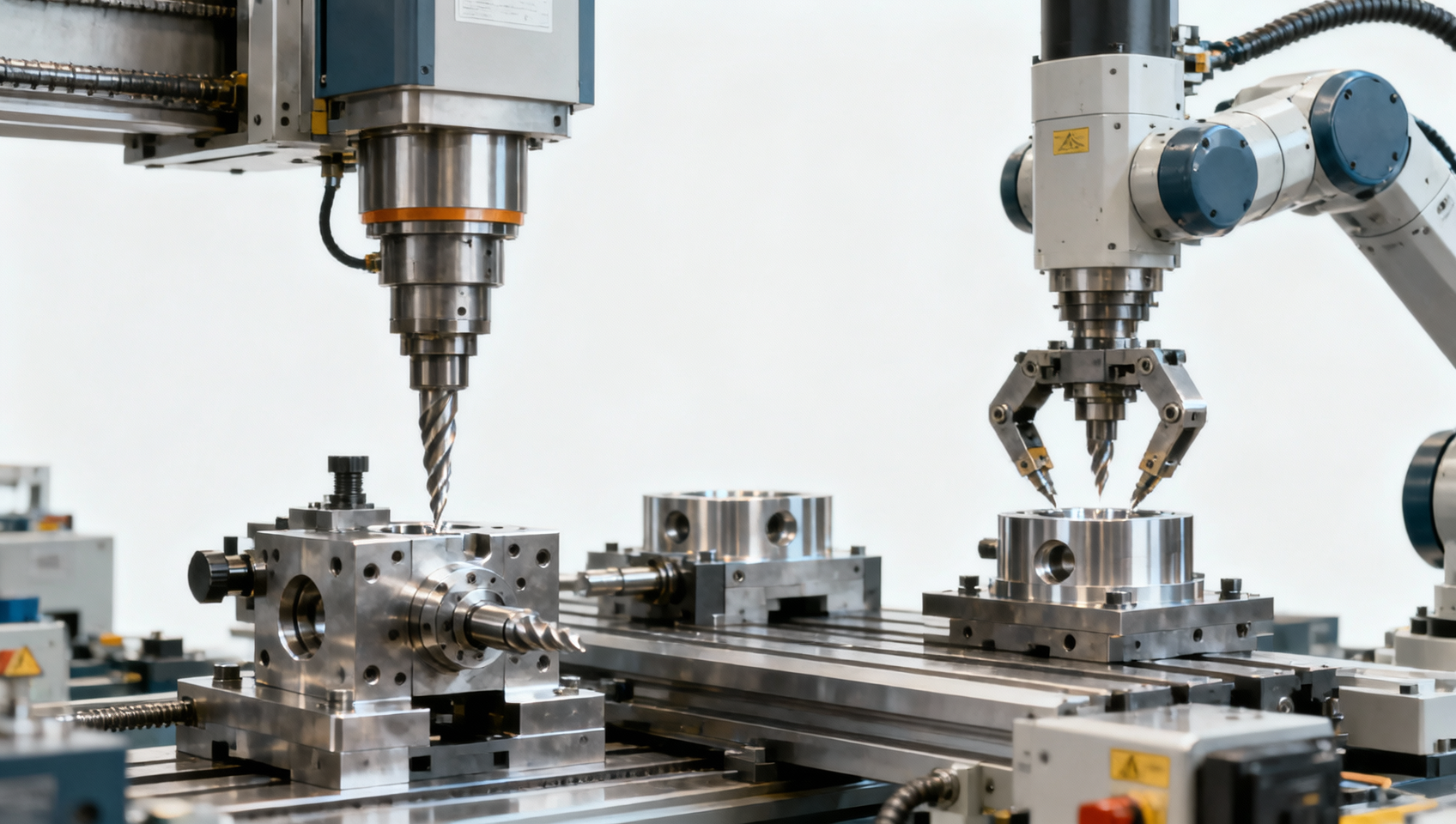
Looking to improve output without overspending? This guide explores Cost-effective Fixture Design for mass production and shows how it supports Custom Fixture Design for CNC milling, Industrial Automation integration for production line, and a more Eco-friendly Production Process for sustainable manufacturing. Whether you manage sourcing, operations, or process planning, you will find practical insights to reduce cycle time, improve accuracy, and build a smarter, more scalable production system.
Why cost-effective fixture design matters in mass production
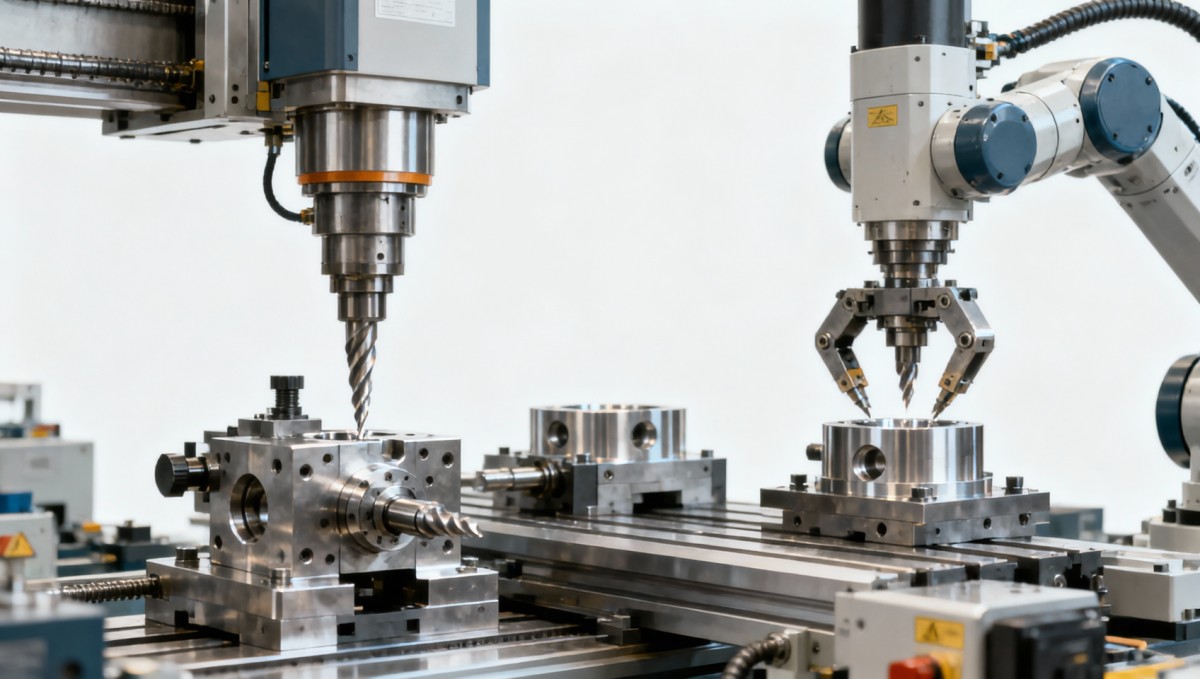
In CNC machining and precision manufacturing, fixture design is not only a tooling issue. It directly affects cycle time, repeatability, operator workload, scrap risk, and line balance. For mass production, even a small reduction of 5–10 seconds per part can create a meaningful output gain over a 2-shift or 3-shift schedule. That is why cost-effective fixture design is often treated as a productivity lever rather than a simple engineering accessory.
Many companies assume lower fixture cost means better project economics. In practice, the real target is lower total manufacturing cost. A fixture with a modestly higher initial build cost may still be the better choice if it reduces setup time from 30 minutes to 10 minutes, stabilizes tolerance control within the required range, and lowers rework frequency over a 6–12 month production cycle.
For information researchers and technical evaluators, the key question is simple: how does fixture design support throughput and consistency at scale? For operators, the issue is ease of loading, chip evacuation, and safe clamping. For procurement teams, it is lead time, tooling life, and maintenance burden. For decision-makers, the focus shifts to return on investment, ramp-up speed, and compatibility with automation plans.
This becomes even more important in sectors such as automotive components, aerospace structures, energy equipment, and electronics production, where CNC lathes, machining centers, and multi-axis systems run mixed programs under tight tolerance expectations. A well-designed fixture helps convert machine capability into stable output. A weak fixture turns a capable machine into an unstable process.
- It improves repeatability by controlling locating points, clamping force, and part orientation across hundreds or thousands of cycles.
- It shortens non-cutting time by simplifying loading, unloading, and datum verification for each shift.
- It supports industrial automation by enabling robotic handling, sensor checks, and fixture status feedback.
- It contributes to an eco-friendly production process by reducing scrap, compressed air waste, and unnecessary material handling.
What “cost-effective” really means in fixture design
In a mass production environment, cost-effective fixture design usually balances 4 core dimensions: fixture build cost, cycle-time influence, maintenance frequency, and process stability. If one of these areas is ignored, the apparent savings often disappear after the first few production batches. This is especially common when low-cost fixtures are built without considering tool access, part variation, or cleaning intervals.
A practical benchmark is to evaluate fixture performance over 3 stages: pilot run, ramp-up, and stable mass production. The fixture should work not only during initial sample approval, but also after repeated clamping, chip exposure, coolant contact, and operator changeover. In many factories, the true weaknesses of fixture design become visible only after 2–4 weeks of continuous use.
For CNC milling applications, custom fixture design should also consider workpiece family strategy. One dedicated fixture may be ideal for very high volume, but modular or semi-modular concepts can offer better economics when part families share similar datums and only a few locating elements need replacement.
Which fixture design choices have the biggest impact on cost and output?
The most influential fixture decisions are usually made early, before machining trials begin. These include locating method, clamping approach, material selection for fixture bodies and wear elements, allowance for chip flow, and compatibility with automation. A fixture that looks simple on paper may become expensive in operation if it causes frequent stoppages, difficult cleaning, or uneven clamping deformation.
For mass production, engineers often compare dedicated fixtures, modular fixtures, and hybrid fixture systems. Each option has different trade-offs in lead time, flexibility, and long-term cost. The right answer depends on annual volume, part complexity, tolerance band, and change frequency. A production line running one stable part number for 12 months has very different needs from a flexible line handling 6–10 similar variants.
The table below summarizes common fixture approaches used in CNC machining and automated production lines. It helps procurement teams and process engineers compare not just purchase price, but broader suitability for volume production, custom fixture design for CNC milling, and future automation expansion.
PREVIOUS ARTICLE
NEXT ARTICLE
Recommended for You
 What Slows Down an Automation Line in Textile Production?Machine Tool Industry Editorial Team
 High Temperature Alloy Cutting Tools Wear Out for Hidden ReasonsCNC Machining Technology Center
 Automated Production Lines in Auto Manufacturing: Key BottlenecksMachine Tool Industry Editorial Team
 What Makes a 5 Axis Machining Center Fit Aerospace Parts?Machine Tool Industry Editorial Team
 Medical Equipment Machining Centers Need Accuracy Beyond SpecsMachine Tool Industry Editorial Team
 How to Compare CNC Tooling System Suppliers in GermanyGlobal Machine Tool Trade Research Center

Aris Katos
Future of Carbide Coatings
15+ years in precision manufacturing systems. Specialized in high-speed milling and aerospace grade alloy processing.
▶
Cost-effective Fixture Design for Mass Production Starts HereCNC Machining Technology Center▶
Custom Fixture Design Mistakes That Ruin CNC Milling AccuracyCNC Machining Technology Center▶
Quick-change Fixture Design for CNC turning: Why clamping force consistency drops after 200 cyclesCNC Machining Technology Center▶
Quick setup CNC manufacturing: Is ‘fast changeover’ really delivering ROI on the shop floor?CNC Machining Technology Center▶
Shaft Parts Need Different Clamping Than Many Shops ExpectCNC Machining Technology Center
Mastering 5-Axis Workholding Strategies
Join our technical panel on Nov 15th to learn about reducing vibrations in thin-wall components.

Providing you with integrated sanding solutions
Before-sales and after-sales services
Comprehensive technical support