• Global CNC market projected to reach $128B by 2028 • New EU trade regulations for precision tooling components • Aerospace deman
NYSE: CNC +1.2%LME: STEEL -0.4%

How Quick-Change Fixture Design Cuts CNC Turning Setup Time
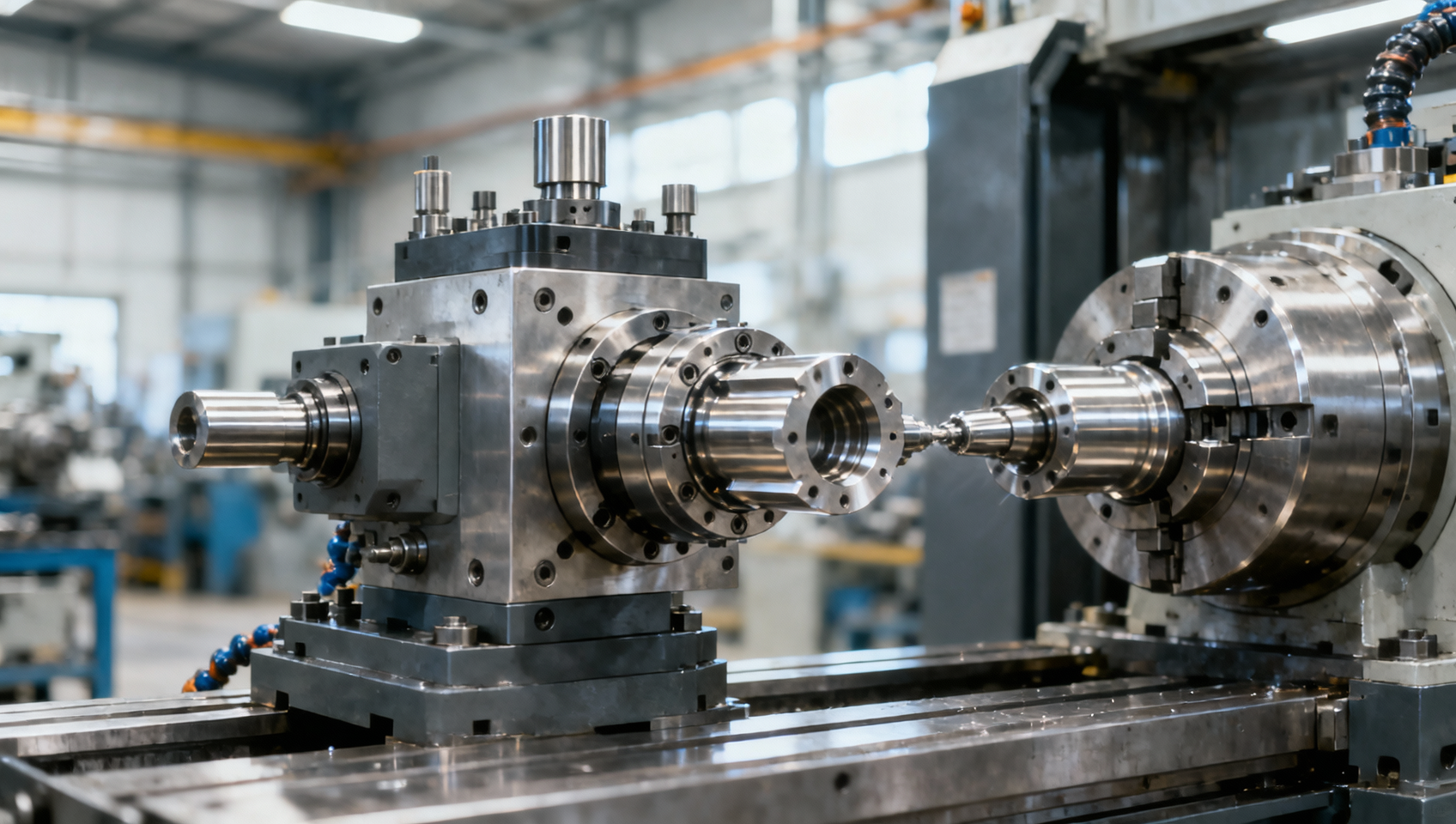
Quick-change Fixture Design for CNC turning is becoming a key strategy for manufacturers seeking quick setup CNC manufacturing, higher throughput, and stable quality. In precision CNC manufacturing, reducing setup time helps CNC manufacturing factory operators, buyers, and decision-makers improve efficiency, lower labor costs, and support automated CNC manufacturing across automotive, aerospace, and electronics production.
In many turning shops, setup time still consumes 15% to 35% of planned machine availability. That lost time directly affects spindle utilization, delivery reliability, and unit cost, especially in mixed-batch production where part changeovers happen several times per shift. For companies running CNC lathes, twin-spindle systems, or flexible turning cells, fixture strategy is no longer a secondary tooling issue. It is a production management issue.
This article explains how quick-change fixture design cuts CNC turning setup time, what design elements matter most, where buyers should focus during evaluation, and how manufacturers can implement these systems without compromising accuracy. The discussion is relevant to production engineers, machine operators, sourcing teams, and business leaders comparing productivity upgrades in the global CNC machining industry.
Why Setup Time Is a Critical Cost Driver in CNC Turning
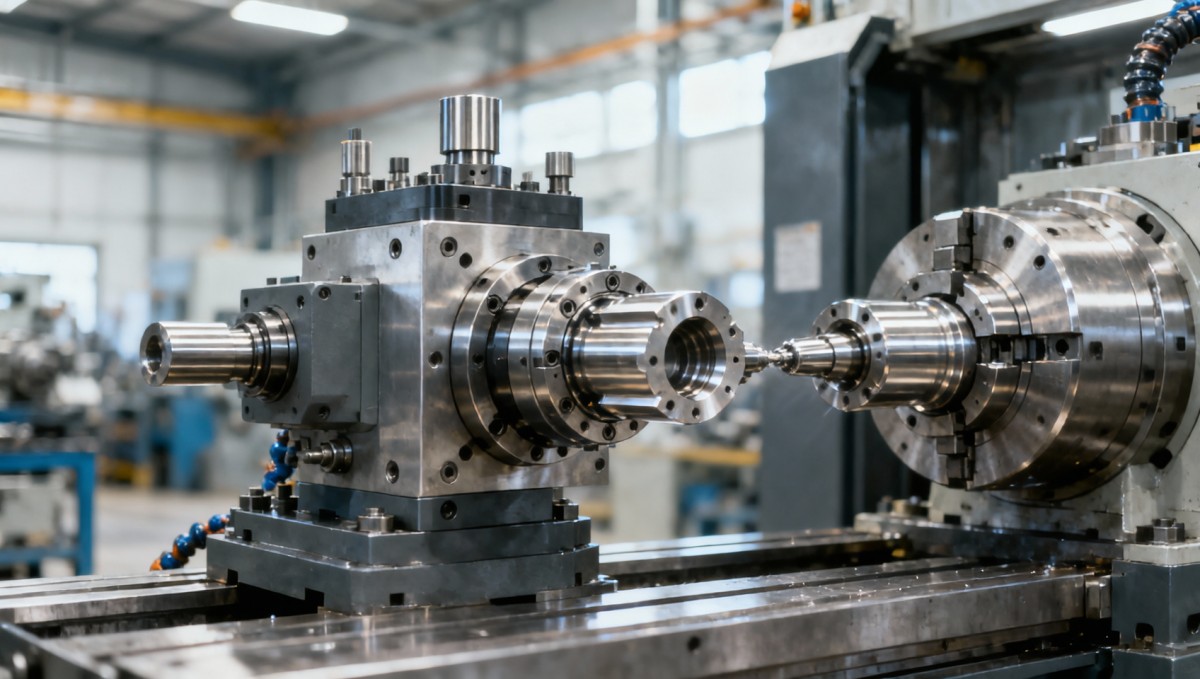
In CNC turning, setup time includes chuck or fixture replacement, locating adjustment, jaw boring, tool offset verification, first-piece inspection, and process confirmation. On high-mix production lines, one changeover may take 20 to 90 minutes depending on part family complexity. If a shop performs 4 to 8 changeovers per day on each machine, total lost cutting time becomes significant.
The economic impact is broader than labor alone. A 45-minute setup on a machine billed internally at $50 to $150 per hour raises overhead quickly. It also creates scheduling gaps, increases WIP inventory, and may delay downstream operations such as grinding, washing, assembly, or CMM inspection. For suppliers serving automotive, aerospace, and electronics sectors, these delays can disrupt fixed delivery windows.
Traditional fixture design often prioritizes holding force and geometric access but overlooks repeatable changeover. As a result, operators spend time re-centering parts, checking runout, or manually aligning soft jaws. In many cases, the fixture works technically, but not operationally. That distinction matters when lot sizes fall below 500 pieces or when multiple SKUs share the same turning platform.
Common sources of avoidable setup loss
The most frequent setup bottlenecks are not always machine-related. They are often linked to fixture architecture, standardization gaps, and inconsistent operator methods. A review of shop-floor practice usually reveals the same patterns.
- Manual fixture alignment requiring dial indicator adjustment every changeover
- Different mounting interfaces across machines, making fixture sharing difficult
- Soft jaw replacement that demands re-boring for each part family
- Lack of preset locating datums, causing repeat offset confirmation
- Poor access for cleaning chips and coolant residue, increasing reset time by 5 to 10 minutes
When these issues accumulate, the actual setup can take 2 to 3 times longer than the theoretical changeover plan. That is why quick-change fixture design has become a practical lever for lean CNC turning rather than just a tooling upgrade.
Comparison of traditional and quick-change approaches
The table below shows how a conventional fixture approach differs from a quick-change fixture system in day-to-day turning operations.
The key takeaway is not that every process can reach a 5-minute setup, but that a properly engineered quick-change system consistently compresses non-cutting time. Even a reduction from 45 minutes to 15 minutes can release several hours of additional machine capacity each week.
Core Design Principles Behind Quick-Change CNC Turning Fixtures
A quick-change fixture for CNC turning must do three things at the same time: position the workpiece repeatably, lock it securely under cutting loads, and minimize steps during fixture or jaw replacement. If one of these three functions is weak, setup savings may come at the cost of scrap, chatter, or unstable cycle performance.
The most effective designs use modular interfaces. These may include quick-mount base plates, serrated jaw systems, zero-point locating units, wedge-actuated clamping modules, or standardized chuck adapters. In practical terms, the operator should be able to remove one fixture module and install the next in 3 to 10 minutes with limited manual adjustment.
Repeatability is central. In precision CNC manufacturing, remounted fixture position often needs to stay within ±0.01 mm to ±0.02 mm depending on tolerance chain and finishing strategy. If the interface cannot hold this level, operators must re-indicate and re-touch offsets, which eliminates much of the expected quick setup benefit.
Essential fixture design elements
When evaluating or developing quick-change fixture design for CNC turning, the following elements usually have the highest operational impact.
- Standardized machine interface so one fixture family can move across similar lathes or sub-spindles.
- Preset locating surfaces that reduce centering and indicate-on-machine steps.
- Fast clamping mechanisms such as cam-lock, pull-stud, wedge, or hydraulic assist systems.
- Jaw or nest modules that can be exchanged without complete fixture teardown.
- Chip evacuation features that prevent debris from lifting contact surfaces by even 0.02 mm to 0.05 mm.
These design points matter across sectors. Automotive shaft production may focus on rapid family changeover, aerospace turning may prioritize concentricity and traceable repeatability, while electronics component turning may require small-part handling with minimal adjustment force.
Balancing speed and rigidity
A common misconception is that faster changeover always means lighter or weaker workholding. In reality, good fixture engineering separates changeover mechanics from load-bearing structure. A modular top section can be changed quickly while the base interface remains rigid enough for roughing cuts, interrupted cuts, or high-speed finishing.
For example, if a turning process removes 2 to 4 mm of stock on alloy steel, clamping stiffness and anti-pullout design remain critical. Quick-change systems for such applications often use hardened location faces, double-register positioning, and torque-controlled locking to maintain stability over hundreds of cycles.
The best results come when fixture design is integrated with part family planning. Instead of creating a unique fixture for every SKU, manufacturers group parts by diameter range, datum logic, and gripping length. This can reduce tooling variety by 20% to 40% and simplify training for new operators.
Where Quick-Change Fixtures Deliver the Highest Return
Not every CNC turning operation benefits equally from quick-change fixture design. The strongest return usually appears in high-mix, medium-volume environments, automated cells with strict uptime targets, and plants where setup is still performed manually by experienced technicians. In these cases, removing 20 to 40 minutes per changeover has a direct production value.
Shops producing shafts, sleeves, flanges, bearing seats, threaded connectors, and precision discs often deal with recurring families of parts rather than one single geometry. That makes modular quick setup CNC manufacturing especially effective. The fixture base can remain constant while jaws, locators, and support elements are switched according to diameter or gripping pattern.
Automotive and electronics production lines gain from shorter batch transitions and less operator dependency. Aerospace and energy equipment suppliers may benefit more from repeatability and reduced first-article verification time. The business case changes by segment, but the principle remains the same: less time spent resetting means more time spent cutting qualified parts.
Typical application scenarios
The table below outlines where quick-change fixture systems usually create measurable value in CNC turning operations.
For procurement teams, the message is clear: quick-change fixtures are most valuable where production variation is high or machine time is expensive. In low-mix dedicated lines running one part for weeks, the savings may be smaller, though maintenance and standardization can still improve.
Operational indicators to monitor
Before investing, factories should measure a baseline. Useful indicators include average setup minutes per part family, number of changeovers per week, first-piece approval time, scrap generated during setup, and overall spindle utilization. Even 5 core indicators tracked for 4 to 8 weeks can reveal whether fixture redesign will deliver a practical return.
In many workshops, the first gain comes from process consistency rather than raw speed. If setup time variation drops from 50 minutes ±20 minutes to 18 minutes ±5 minutes, planning becomes more reliable. This is especially valuable for decision-makers managing customer delivery commitments or balancing several CNC production cells.
How Buyers and Engineers Should Evaluate a Quick-Change Fixture System
A good buying decision requires more than comparing fixture price. The real question is how the system will perform across machine compatibility, repeatability, maintenance burden, operator training, and future part expansion. A low-cost fixture that saves only 5 minutes but requires frequent readjustment may be less economical than a higher-value system with standardized modules.
For sourcing teams, it helps to evaluate the fixture as part of a production package. That includes chuck interface, jaw inventory, clamping actuation method, inspection plan, and spare parts availability. In global manufacturing, especially where lines run across China, Germany, Japan, South Korea, and other industrial hubs, interoperability and service response can influence the total cost of ownership over 2 to 5 years.
Operators and process engineers should also test the human factor. If a fixture looks advanced but requires 12 manual actions for every swap, it may not support quick setup CNC manufacturing in real conditions. The best systems simplify the sequence, reduce error opportunities, and make correct installation obvious.
Key evaluation criteria
The following checklist can help both technical and commercial teams assess quick-change fixture options during RFQ or internal design review.
- Repeat positioning accuracy after changeover, ideally defined in measurable tolerance terms such as ±0.01 mm or ±0.02 mm.
- Average exchange time for jaws, locators, or fixture modules under actual operator conditions.
- Compatibility with existing CNC lathes, bar feeders, robots, and in-machine probing routines.
- Cleaning accessibility and resistance to chips, coolant contamination, and wear on datum faces.
- Availability of replacement parts, documentation, and training support within reasonable lead times such as 7 to 21 days.
A buyer should also ask whether the fixture design supports future part families. A modular solution that handles diameters from 20 mm to 80 mm with interchangeable elements may reduce later reinvestment. That flexibility matters for contract manufacturers and suppliers serving multiple OEM programs.
Decision matrix for selection
The table below offers a practical decision framework for comparing quick-change fixture proposals.
This matrix helps procurement avoid a narrow unit-price comparison. In most CNC turning environments, the better fixture is the one that improves productive hours, lowers setup errors, and supports repeatable execution across shifts.
Implementation, Risks, and Best Practices for Long-Term Results
Successful implementation usually happens in 3 stages: baseline analysis, pilot deployment, and plant-level standardization. The first stage defines current setup losses and part family requirements. The second tests one or two machines over a controlled period, often 2 to 6 weeks. The third stage expands the system once repeatability, cycle stability, and operator adoption are confirmed.
One frequent mistake is to install a quick-change fixture without updating work instructions, offset procedures, and cleaning rules. Even the best mechanical design loses value if chips remain on datum surfaces or if operators apply inconsistent clamping torque. Standard work, visual guidance, and basic audit checks are essential for repeatable gains.
Another risk is over-customization. Some manufacturers design a unique fixture set for every product variation. That can shorten one setup but create a large spare inventory and long replacement lead times. A better approach is modular standardization: keep the base platform common, and only customize the contact elements that must change with part geometry.
Practical rollout steps
- Measure current changeover time, first-piece approval time, and setup scrap for at least 10 to 20 changeovers.
- Select one part family with recurring production and clear downtime pain points.
- Define required repeatability, such as axial location control and TIR limits.
- Run a pilot with operator training, cleaning standards, and documented fixture exchange steps.
- Review results after 2 to 4 weeks, then expand only if the gain is stable across shifts.
In many cases, the pilot reveals secondary improvements. Operators spend less time searching for hardware, quality teams inspect fewer unstable first pieces, and schedulers gain more confidence in short-run planning. These indirect benefits often strengthen the business case beyond the initial setup reduction target.
FAQ: common questions from users and buyers
How much setup reduction is realistic? In typical turning applications, a 30% to 70% reduction is practical when the old process involved manual indication and jaw adjustment. Actual savings depend on part family complexity and operator standardization.
Are quick-change fixtures suitable for tight-tolerance work? Yes, if the locating interface is engineered for repeatability and maintained correctly. The fixture should be verified against the process tolerance stack, especially when remount accuracy needs to stay within ±0.01 mm to ±0.02 mm.
What is the usual lead time? For standard modular elements, lead time may be 1 to 3 weeks. For customized top tooling or special workholding geometry, 3 to 8 weeks is more common depending on design approval and machining load.
What should maintenance teams inspect regularly? Focus on locating faces, clamping wear points, seal condition, torque consistency, and chip contamination. A simple weekly check plus a deeper monthly inspection is often sufficient for stable operation.
Quick-change fixture design is one of the most practical ways to cut CNC turning setup time without changing the entire machine platform. For operators, it simplifies changeovers and reduces variability. For buyers, it improves machine utilization and lowers hidden setup costs. For decision-makers, it supports flexible production, better delivery performance, and stronger readiness for automated CNC manufacturing.
If your production line handles multiple part families, short runs, or frequent schedule changes, a well-planned quick-change fixture system can create measurable gains in 4 key areas: setup speed, repeatability, labor efficiency, and scheduling flexibility. To evaluate the right approach for your turning process, contact us to discuss your application, request a customized solution, or learn more about fixture options for precision CNC manufacturing.
PREVIOUS ARTICLE
NEXT ARTICLE
Recommended for You
 How to Choose a Heavy-Duty Machining Center for Mold MakingMachine Tool Industry Editorial Team
 How Quick-Change Fixture Design Cuts CNC Turning Setup TimeCNC Machining Technology Center
 Why 5 Axis Machining Is Ideal for Impeller ManufacturingCNC Machining Technology Center
 How to Start Lean Production Without Disrupting OutputManufacturing Market Research Center
 When a Modular Tooling System Improves Flexible ManufacturingMachine Tool Industry Editorial Team
 How CNC Machine Control Systems Improve Automation StabilityMachine Tool Industry Editorial Team

Aris Katos
Future of Carbide Coatings
15+ years in precision manufacturing systems. Specialized in high-speed milling and aerospace grade alloy processing.
▶
How Quick-Change Fixture Design Cuts CNC Turning Setup TimeCNC Machining Technology Center▶
How Fixture Design Improves CNC Cutting StabilityCNC Machining Technology Center▶
Cost-effective Fixture Design for Mass Production Starts HereCNC Machining Technology Center▶
Custom Fixture Design Mistakes That Ruin CNC Milling AccuracyCNC Machining Technology Center▶
Quick-change Fixture Design for CNC turning: Why clamping force consistency drops after 200 cyclesCNC Machining Technology Center
Mastering 5-Axis Workholding Strategies
Join our technical panel on Nov 15th to learn about reducing vibrations in thin-wall components.

Providing you with integrated sanding solutions
Before-sales and after-sales services
Comprehensive technical support