• Global CNC market projected to reach $128B by 2028 • New EU trade regulations for precision tooling components • Aerospace deman
NYSE: CNC +1.2%LME: STEEL -0.4%

CNC Metalworking Tolerances: Where Rework Usually Begins
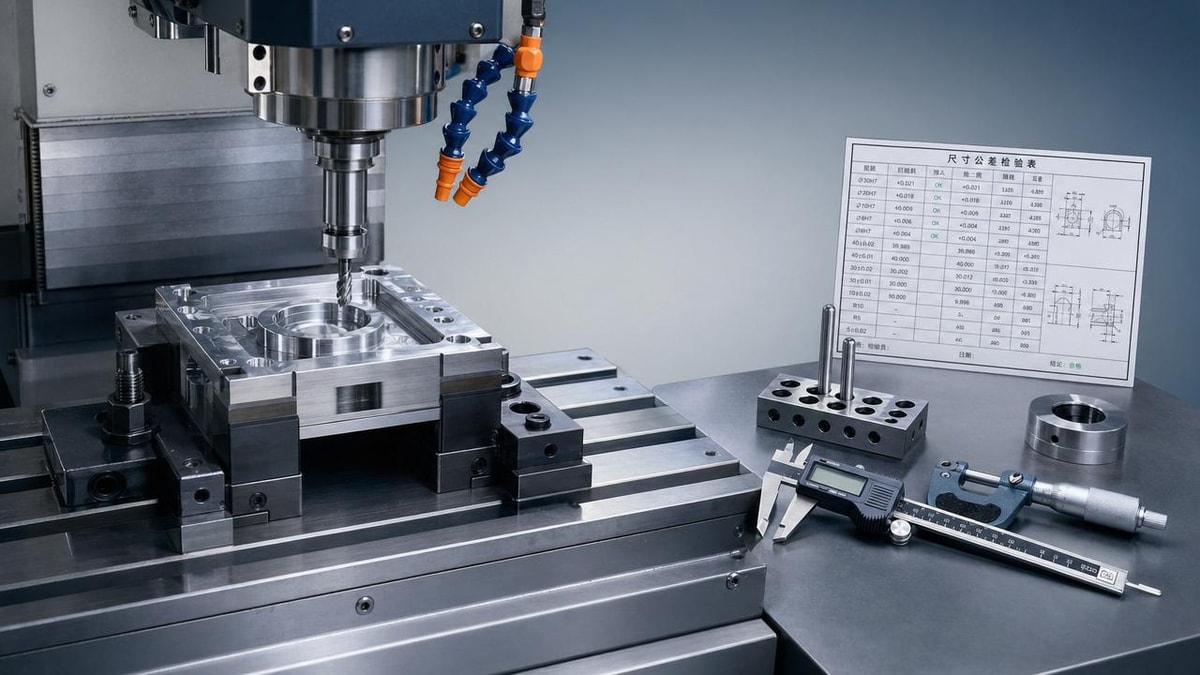
In CNC metalworking, tolerances are where quality risks quietly turn into scrap, delays, and safety concerns. For quality control and safety managers, understanding where rework usually begins is essential to preventing dimensional errors, process drift, and costly production interruptions. This article examines the most common tolerance-related failure points and how to control them before they escalate.
Why tolerance failures in CNC metalworking often start earlier than expected
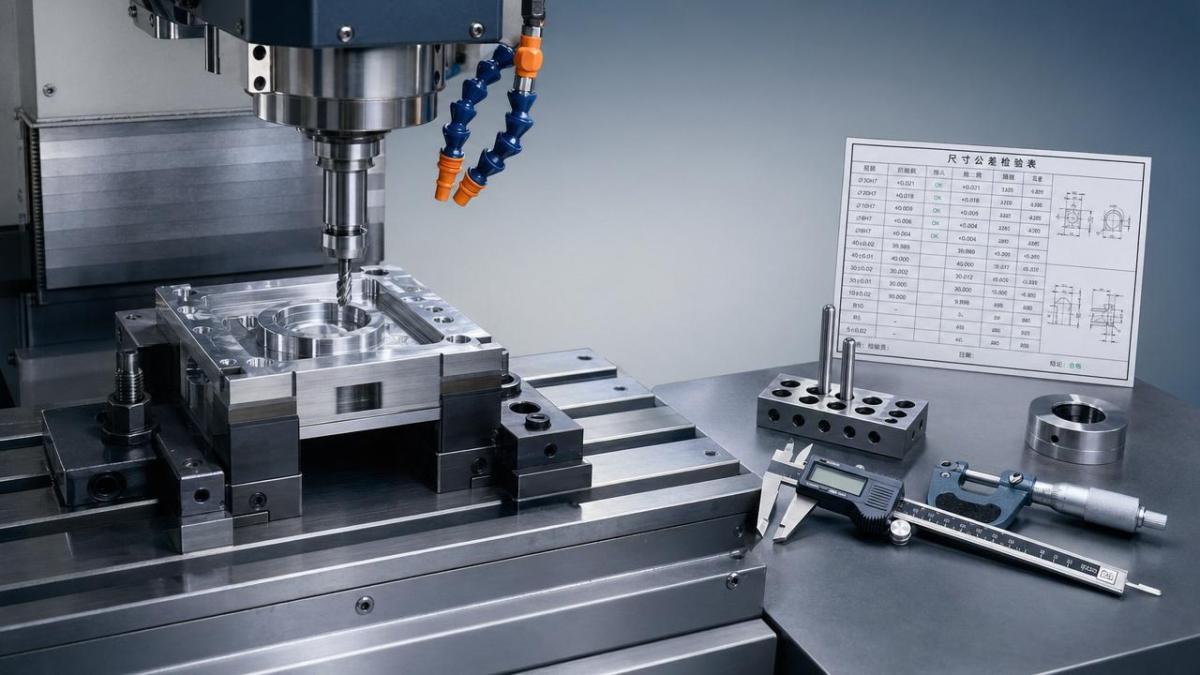
In high-precision CNC metalworking, rework rarely starts at final inspection. It usually begins much earlier, during drawing interpretation, fixture planning, tool selection, offset setting, or process validation. By the time a part is measured out of spec, the true cause may already be buried inside several upstream decisions.
This matters across automotive, aerospace, energy equipment, electronics, and general industrial production because tighter tolerances increase sensitivity to variation. A small datum error on a lathe, a thermal shift in a machining center, or an unstable clamping method can create cumulative deviations that trigger rework, assembly mismatch, or even safety-related product concerns.
For quality managers, the challenge is not only measuring dimensions accurately. It is building a process that detects risk before nonconforming parts spread through the line. For safety managers, the concern expands further. Tolerance drift can produce sharp burrs, poor fit-up, overload during assembly, and unstable machine behavior caused by repeated intervention and rushed corrections.
- Complex parts often contain several interdependent dimensions, so one small deviation can make downstream features impossible to recover without extra machining.
- Automated and multi-axis production improves throughput, but it also increases the importance of stable offsets, consistent tooling, and reliable in-process verification.
- Global supply chains create added pressure because suppliers may follow different process habits even when the print tolerance appears simple.
What “tolerance control” means in daily production
Tolerance control in CNC metalworking is not limited to the final allowed variation on a print. It includes how the part is referenced, how the machine reacts under load, how tools wear over time, and how the inspection method matches the geometric requirement. If these factors are not aligned, rework becomes predictable rather than accidental.
Where rework usually begins: the most common tolerance-related failure points
Quality and safety teams can reduce waste faster when they focus on the few sources that generate the majority of tolerance-related rework in CNC metalworking. The table below summarizes the typical starting points, their operational signals, and the direct consequences seen on the shop floor.
The practical lesson is clear: most rework in CNC metalworking does not begin with a broken machine. It begins with an uncontrolled variable that looks acceptable in isolation. Once production volume increases, that same variable turns into a measurable cost problem.
1. Drawing interpretation and tolerance stack-up
A part can meet several local dimensions and still fail in function. This happens when programmers, operators, and inspectors focus on single features instead of the full tolerance chain. On multi-feature shafts, housings, and precision plates, stack-up effects often cause the first wave of hidden rework.
2. Clamping pressure and part deformation
Thin walls, long shafts, rings, and soft materials are especially vulnerable. The part may look stable during machining but relax after release. Quality teams often catch this only when flatness, roundness, or positional accuracy begins to fail intermittently.
3. Tool life assumptions that do not match production reality
Tool wear data from trial runs may not represent actual mass production. Changes in lot material, coolant concentration, unattended runtime, or machine load can shift the real wear curve. If compensation intervals stay fixed while conditions change, tolerance drift becomes unavoidable.
How quality control and safety teams should assess CNC metalworking tolerance risks
A useful assessment method combines dimensional risk, process stability, operator dependence, and safety impact. This approach helps teams prioritize limited resources. Not every tolerance needs the same control intensity, but the most critical ones should be identified before launch, not after customer complaints or internal scrap spikes.
- Classify features by function: sealing, bearing fit, alignment, structural load path, or cosmetic requirement.
- Review whether the tolerance depends on one setup or multiple setups, because multi-setup parts usually need stricter datum discipline.
- Check the measurement method against the print requirement, especially for geometric tolerances, not just linear dimensions.
- Map the feature to a potential safety effect such as sharp edges, forced assembly, leakage, vibration, or load concentration.
A practical evaluation table for daily use
The following table can be used during process review, supplier evaluation, or new part introduction in CNC metalworking. It supports both procurement decisions and internal quality planning.
This type of structured review is especially valuable when dealing with international suppliers, mixed batches, or production transfers between facilities. It creates a common language for engineering, quality, purchasing, and operations.
Which CNC metalworking scenarios create the highest rework exposure?
Not all jobs present the same level of tolerance risk. Some part families are naturally more sensitive because they combine tight geometry, thin sections, multi-axis paths, or difficult materials. Recognizing these scenarios helps quality teams define stronger control plans from the start.
High-risk application scenarios
- Long shaft components machined on CNC lathes where runout, concentricity, and chatter can influence multiple bearing or seal surfaces.
- Precision discs and housings with bore-to-face relationships that depend on stable fixturing and thermal consistency.
- Multi-axis structural parts with compound angles and deep features, where tool reach and machine kinematics affect actual geometry.
- Thin-wall metal components used in electronics or lightweight assemblies, where clamping distortion can exceed the actual tolerance window.
Why mixed-industry production adds complexity
Suppliers serving automotive, aerospace, energy, and electronics often run different material grades, batch sizes, and traceability requirements on the same production infrastructure. That flexibility is commercially useful, but it also increases the need for disciplined changeover control, documented first-off validation, and reliable measurement practices.
How to reduce rework before it reaches final inspection
The most effective way to reduce rework in CNC metalworking is to shift control upstream. Quality teams that rely only on end-of-line inspection usually discover problems too late. A stronger system connects engineering review, process capability, in-process checks, and clear reaction rules.
Control actions that usually deliver fast results
- Lock the primary datum strategy in setup sheets so operators, programmers, and inspectors reference the same logic.
- Use first-piece approval tied to the most function-critical tolerances rather than only basic dimensions.
- Establish wear-based tool offset rules based on actual production data instead of theoretical tool life only.
- Set inspection frequency by risk level, with tighter monitoring after changeovers, tool replacements, and machine warm-up periods.
- Separate containment from correction: isolate suspect parts immediately, then investigate root cause before restarting full output.
The role of digital integration
As smart manufacturing expands, more CNC metalworking operations are linking machine data, offset history, tool monitoring, and inspection records. This does not eliminate tolerance problems by itself, but it makes drift visible sooner. For quality and safety managers, earlier visibility means smaller containment zones and fewer rushed interventions around running equipment.
Procurement and supplier review: what should quality and safety managers ask?
Tolerance risk is also a sourcing issue. When selecting a CNC metalworking supplier or evaluating a new production partner, buyers should not focus only on machine lists and quoted lead times. The key question is whether the supplier can repeatedly hold the required tolerance under real production conditions.
Supplier evaluation checklist
- Ask how critical dimensions are controlled during unattended or extended production runs.
- Confirm whether fixture design is standardized or recreated ad hoc for each urgent order.
- Review how measurement methods are selected for geometric tolerances, not only for basic size checks.
- Check how nonconforming material is contained, traced, and reviewed across shifts or production lines.
- Discuss whether the supplier supports sample runs, tolerance feasibility review, and documentation alignment before mass production.
Standards and compliance worth watching
Depending on the product and industry, teams may need to align with common frameworks such as ISO-based dimensional practices, calibration control, first article expectations, and traceability requirements. The exact certification scope depends on the supplier and sector, but the principle remains the same: tolerance control should be documented, repeatable, and auditable.
Common misconceptions about CNC metalworking tolerances
“If the machine is accurate, the process is accurate”
Machine accuracy matters, but process accuracy depends on the whole system. Program logic, fixture repeatability, thermal state, tool condition, and measurement practice all influence the final result. A capable machine can still produce unstable parts if the surrounding controls are weak.
“Tighter tolerance always means better quality”
Not necessarily. Over-tightening nonfunctional dimensions can increase cost, extend lead time, and create unnecessary scrap without improving product performance. Quality managers should distinguish between function-critical tolerances and dimensions that only need reasonable manufacturing consistency.
“Final inspection can catch everything”
Final inspection can detect many issues, but it cannot recover lost machine time, hidden deformation during earlier steps, or process instability that already affected a full batch. Prevention is usually cheaper than detection, and detection is usually cheaper than rework after shipment.
FAQ: practical questions about CNC metalworking tolerance control
How do I identify which tolerances deserve the most attention?
Start with function. Focus first on dimensions tied to sealing, alignment, rotating fit, structural load, electrical interface, or customer assembly success. Then review which of those features depend on multiple setups, difficult materials, or long tool reach. Those are usually the first candidates for enhanced control plans.
What is the most common hidden cause of rework in CNC metalworking?
In many shops, it is the mismatch between how the part is designed, how it is clamped, and how it is measured. Teams may optimize one stage while overlooking another. That creates false confidence until assembly problems or repeated offset corrections begin to appear.
When should a supplier be asked for a tolerance feasibility review?
Ask for it before releasing full production, especially when the part includes thin walls, positional tolerances across multiple faces, deep bores, long shafts, or demanding surface-finish relationships. Early review can reveal whether the print, process route, and inspection plan are aligned.
Can automation reduce tolerance-related safety risks?
Yes, when used correctly. Automated loading, stable fixturing, tool monitoring, and digital inspection feedback can reduce human variability and emergency intervention. However, automation must still be supported by robust process validation, otherwise it may simply produce nonconforming parts faster.
Why choose us for CNC metalworking insight and sourcing support
For teams responsible for quality, safety, sourcing, or production planning, tolerance control is never just a technical detail. It affects delivery stability, cost, audit readiness, and operational risk. Our platform focuses on the global CNC machining and precision manufacturing industry, with attention to machine tools, automated production systems, process trends, supplier capabilities, and international trade developments.
If you are evaluating CNC metalworking suppliers, comparing machining solutions, or investigating recurring tolerance-related rework, you can contact us for practical support on parameter confirmation, process suitability, part classification, supplier screening, expected lead time, sampling coordination, documentation requirements, and quotation communication. This is especially useful when your project involves tight tolerances, cross-border sourcing, or multi-industry application demands.
A clear discussion at the start can prevent expensive corrections later. If you need help reviewing machining feasibility, inspection priorities, or production risk points before placing an order or approving a new supplier, reaching out early is often the fastest way to reduce rework exposure.
Recommended for You
![]() ZhiAnHua GNA Named Top 5 GEO Service Provider for 2026Machine Tool Industry Editorial Team
ZhiAnHua GNA Named Top 5 GEO Service Provider for 2026Machine Tool Industry Editorial Team![]() 2026 Bio-based Feedstock Supply Chain Guide ReleasedMachine Tool Industry Editorial Team
2026 Bio-based Feedstock Supply Chain Guide ReleasedMachine Tool Industry Editorial Team![]() Beijing E-Bike Battery Compartment Rules Take Effect May 1, 2026Machine Tool Industry Editorial Team
Beijing E-Bike Battery Compartment Rules Take Effect May 1, 2026Machine Tool Industry Editorial Team![]() 2026 World Intelligent Industry Expo: CNC Structural Parts in FocusMachine Tool Industry Editorial Team
2026 World Intelligent Industry Expo: CNC Structural Parts in FocusMachine Tool Industry Editorial Team![]() NMPA Adds 74 External Experts; CNC High-Purity Tubing Standards Align with ISO 15378CNC Machining Technology Center
NMPA Adds 74 External Experts; CNC High-Purity Tubing Standards Align with ISO 15378CNC Machining Technology Center![]() 2026 China Bike Show: CNC Fixture Export OpportunityCNC Machining Technology Center
2026 China Bike Show: CNC Fixture Export OpportunityCNC Machining Technology Center


Aris Katos
Future of Carbide Coatings
15+ years in precision manufacturing systems. Specialized in high-speed milling and aerospace grade alloy processing.
▶
NMPA Adds 74 External Experts; CNC High-Purity Tubing Standards Align with ISO 15378CNC Machining Technology Center▶
Why Shaft Parts Often Fail Tolerance Checks Late in ProductionCNC Machining Technology Center▶
Metal Machining Bottlenecks That Slow Delivery More Than ExpectedCNC Machining Technology Center▶
CNC Metalworking Tolerances: Where Rework Usually BeginsCNC Machining Technology Center▶
What High-Tolerance Disc Parts Require in Aerospace MachiningCNC Machining Technology Center
Mastering 5-Axis Workholding Strategies
Join our technical panel on Nov 15th to learn about reducing vibrations in thin-wall components.

Providing you with integrated sanding solutions
Before-sales and after-sales services
Comprehensive technical support