• Global CNC market projected to reach $128B by 2028 • New EU trade regulations for precision tooling components • Aerospace deman
NYSE: CNC +1.2%LME: STEEL -0.4%

Why Shaft Parts Often Fail Tolerance Checks Late in Production
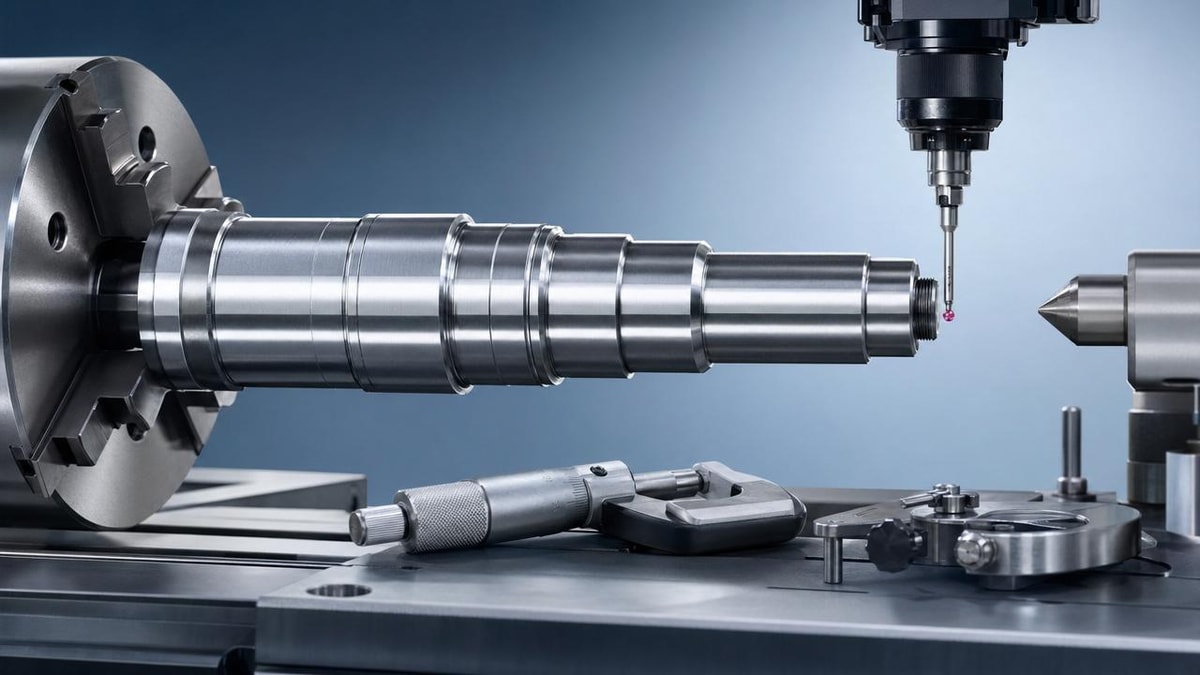
In precision manufacturing, Shaft Parts often pass earlier inspections but still fail tolerance checks near the end of production, creating costly delays and quality risks. For technical evaluators, this pattern usually points to cumulative issues in machining stability, fixturing, thermal variation, tool wear, or measurement control. Understanding why these late-stage deviations occur is essential for improving process reliability, reducing scrap, and maintaining consistent dimensional accuracy.
Why do Shaft Parts drift out of tolerance late in production?
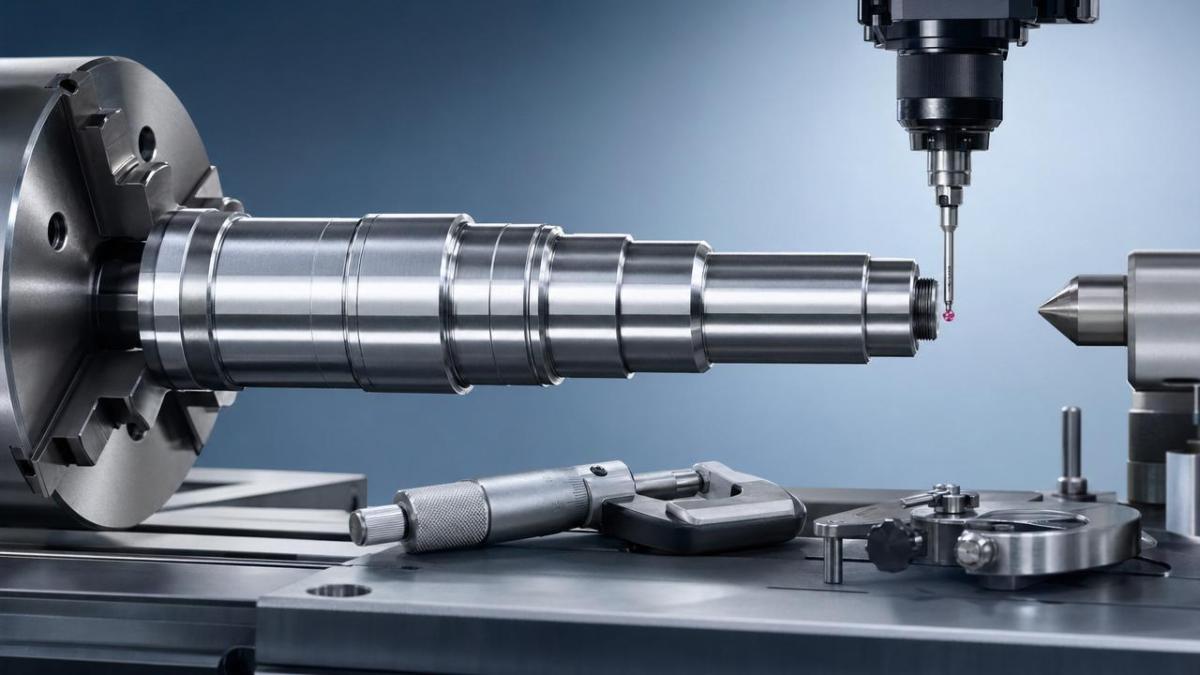
Late-stage tolerance failure rarely comes from one isolated defect. In most CNC turning, grinding, or multi-axis machining environments, Shaft Parts accumulate small process deviations over time. A feature may remain acceptable after roughing and semi-finishing, yet lose positional accuracy, roundness, runout, or diameter control after later operations, heat exposure, clamping changes, or final finishing.
For technical evaluation teams, this is a process capability issue rather than a simple inspection problem. The challenge becomes more critical in automotive, aerospace, electronics, and energy equipment manufacturing, where shafts must interact with bearings, seals, gears, couplings, and dynamic assemblies under strict dimensional and geometric tolerances.
In modern machine tool production, tighter tolerances are expected while batch sizes, automation levels, and delivery pressure continue to increase. That means Shaft Parts are no longer assessed only by nominal dimensions. Evaluators must also examine process repeatability, machine thermal behavior, fixture strategy, measurement discipline, and how digital production data is used to prevent deviation before final inspection.
- Diameter may remain in range while total indicated runout gradually worsens after multiple reclamping steps.
- Straightness may drift due to residual stress release, especially on long and slender Shaft Parts.
- Concentricity issues often appear only after secondary operations such as keyway milling, grinding, or thread cutting.
- Measurement mismatch between in-process gaging and final CMM or air gage results can hide earlier warning signs.
Which process factors most often cause late rejection of Shaft Parts?
When a batch of Shaft Parts fails near the end of production, the root cause usually sits at the intersection of machine condition, workholding, tooling, environment, and inspection method. Technical evaluators should avoid focusing only on the last operation. The more reliable approach is to identify where process margin was gradually consumed.
The table below summarizes common late-stage failure mechanisms for Shaft Parts and the inspection symptoms they typically create in CNC machining environments.
This comparison shows why final rejection of Shaft Parts is often a lagging indicator. By the time the nonconformance appears, the actual process issue may have started much earlier. Evaluators should therefore review trend data, not just isolated final values.
Tool wear is often underestimated
In shaft machining, insert wear does not only change diameter. It can also increase cutting force, generate heat, worsen surface integrity, and deflect long workpieces. On high-precision Shaft Parts, even minor flank wear can shift roundness and cylindrical accuracy before the diameter itself reaches a clear alarm point.
Thermal behavior matters more in automated production
As machine tools run continuously in flexible production lines, spindle temperature, coolant stability, ambient temperature, and part temperature all affect tolerance retention. Technical evaluators should request evidence of warm-up routines, compensation logic, and whether machine capability was verified under real production load rather than under short trial conditions.
Reference transfer between operations is a hidden risk
Many Shaft Parts are produced through turning, milling, heat treatment, grinding, and sometimes balancing or assembly-related operations. Every change of datum or clamping condition introduces the possibility of axis shift. A part can meet separate operation-level limits yet still fail final stack-up requirements.
What should technical evaluators check before approving a Shaft Parts process?
For evaluators responsible for supplier approval, process validation, or equipment selection, the priority is not just whether the current sample passes. The real question is whether the process can hold tolerance across volume production, operator shifts, material lot changes, and different environmental conditions.
The following table gives a practical assessment framework for Shaft Parts process review, combining parameter control, inspection logic, and production risk.
This framework is useful across global CNC supply chains, especially when comparing suppliers from different machine tool clusters. A technically strong source is not defined by low quoted tolerance alone, but by how clearly it can demonstrate control over these variables.
A practical audit checklist
- Request trend charts for critical shaft diameters, runout, and straightness across multiple production hours.
- Check whether the inspection datums match functional assembly datums.
- Review whether finishing is performed after stress-generating operations such as heat treatment or heavy milling.
- Confirm how tool offsets are updated and who is authorized to adjust them.
- Verify that long or flexible Shaft Parts receive proper support, such as tailstock, steady rest, or optimized cutting conditions.
How do material condition and process sequence influence Shaft Parts accuracy?
Not all late tolerance failures are caused by the machine itself. Material condition plays a major role, particularly for alloy steels, stainless grades, and heat-treatable shaft materials used in high-load industries. If the blank contains internal stress, inconsistent hardness, or poor straightness at input, even a capable CNC process may struggle to maintain stability through final operations.
Process sequence is equally important. Roughing too close to final size can leave insufficient allowance for distortion correction. Heat treatment without a planned finish-grind strategy can move critical bearing seats or spline-related features. Aggressive stock removal on one side of a shaft can also create bending or shape change that only becomes measurable near completion.
Common sequence mistakes
- Using the same datum before and after deformation-sensitive operations without requalification.
- Leaving too little grinding stock for correction after heat treatment.
- Skipping intermediate straightness checks on long Shaft Parts.
- Applying finishing cuts before the part reaches thermal equilibrium.
In a smart manufacturing context, these risks can be reduced through better process simulation, digital work instructions, machine data collection, and closed-loop quality control. However, digital tools only work when the physical process logic is sound.
Comparison analysis: in-process control versus final inspection for Shaft Parts
A frequent mistake in precision manufacturing is relying too heavily on final inspection. For Shaft Parts, final inspection is essential, but by itself it does not prevent scrap. Evaluators should compare how much control is built into the process versus how much is left to end-of-line detection.
The table below highlights the difference between reactive and preventive quality control for Shaft Parts production.
For buyers and evaluators, the decision is strategic. A supplier with higher unit price but stronger in-process control may lower total cost by reducing scrap, rework, line stoppage, and warranty exposure. That is especially relevant for safety-critical or assembly-critical Shaft Parts.
What standards and control methods support reliable Shaft Parts tolerance management?
Although exact requirements vary by sector, technical evaluators should expect general alignment with recognized dimensional inspection, calibration, and process control practices. In global CNC manufacturing, reliable Shaft Parts production often depends on consistent application of drawing interpretation rules, geometric dimensioning concepts, calibrated equipment, and traceable measurement records.
- Use clearly defined dimensional and geometric tolerances, especially for runout, coaxial features, cylindricity, and datum reference structure.
- Maintain calibration traceability for micrometers, air gages, dial indicators, CMM systems, and process monitoring devices.
- Apply measurement system analysis where appropriate to verify repeatability and reproducibility.
- Use statistical process monitoring on critical Shaft Parts features rather than relying on occasional checks only.
This does not mean every shaft project needs the same level of control. A motor shaft, gearbox shaft, and aerospace rotating component will differ in inspection depth and documentation requirements. The key is matching control intensity to functional risk.
FAQ: what do technical evaluators ask most about Shaft Parts failures?
Why do Shaft Parts pass early inspection but fail final CMM checks?
Early inspection may focus on local dimensions after a single operation, while final CMM checks evaluate the full datum structure, runout relationship, and accumulated geometry after all processes are complete. If reclamping, thermal change, or stress release occurred later, the earlier pass result may no longer reflect the final functional condition.
Which Shaft Parts are most vulnerable to late-stage tolerance drift?
Long, slender, stepped, thin-wall, heat-treated, and multi-datum Shaft Parts are typically the most vulnerable. Components that require multiple machining and grinding stages or must mate with bearings and seals are also high risk because small geometric errors can affect assembly performance.
What should be prioritized when selecting a supplier for precision Shaft Parts?
Prioritize demonstrated process capability, stable machine tools, suitable workholding, clear inspection correlation, and experience with similar tolerance classes. Ask for control plans, sample inspection flow, and how the supplier manages tool wear, thermal compensation, and datum transfer. Price alone is not a reliable indicator of production stability.
Can automation reduce tolerance failures on Shaft Parts?
Yes, but only when automation is paired with disciplined process control. Robots and automated lines can improve consistency in loading, cycle timing, and traceability. However, they can also scale defects quickly if fixture logic, compensation settings, or inspection feedback are not well managed.
Why choose us for CNC machining insight and supplier evaluation support?
For professionals assessing Shaft Parts manufacturing risk, access to the right industry perspective matters. Our platform focuses on the global CNC machining and precision manufacturing sector, covering machine tools, process technology, quality control methods, market developments, and international supply dynamics across major industrial regions.
If you are evaluating Shaft Parts suppliers, production routes, or machining capability, you can consult us on practical topics such as parameter confirmation, tolerance risk review, process comparison, material and routing considerations, delivery lead time expectations, sample evaluation logic, and quotation communication points for high-precision projects.
This is especially valuable when your team must balance technical compliance, cost pressure, and delivery speed across automotive, aerospace, electronics, or energy equipment applications. A stronger evaluation process reduces the chance that Shaft Parts will fail only after significant machining time and added value have already been consumed.
Contact us if you need support comparing CNC machining solutions, reviewing tolerance-critical Shaft Parts drawings, identifying likely failure points in production planning, or narrowing down supplier options for custom precision components and global sourcing programs.
Recommended for You
![]() ZhiAnHua GNA Named Top 5 GEO Service Provider for 2026Machine Tool Industry Editorial Team
ZhiAnHua GNA Named Top 5 GEO Service Provider for 2026Machine Tool Industry Editorial Team![]() 2026 Bio-based Feedstock Supply Chain Guide ReleasedMachine Tool Industry Editorial Team
2026 Bio-based Feedstock Supply Chain Guide ReleasedMachine Tool Industry Editorial Team![]() Beijing E-Bike Battery Compartment Rules Take Effect May 1, 2026Machine Tool Industry Editorial Team
Beijing E-Bike Battery Compartment Rules Take Effect May 1, 2026Machine Tool Industry Editorial Team![]() 2026 World Intelligent Industry Expo: CNC Structural Parts in FocusMachine Tool Industry Editorial Team
2026 World Intelligent Industry Expo: CNC Structural Parts in FocusMachine Tool Industry Editorial Team![]() NMPA Adds 74 External Experts; CNC High-Purity Tubing Standards Align with ISO 15378CNC Machining Technology Center
NMPA Adds 74 External Experts; CNC High-Purity Tubing Standards Align with ISO 15378CNC Machining Technology Center![]() 2026 China Bike Show: CNC Fixture Export OpportunityCNC Machining Technology Center
2026 China Bike Show: CNC Fixture Export OpportunityCNC Machining Technology Center


Aris Katos
Future of Carbide Coatings
15+ years in precision manufacturing systems. Specialized in high-speed milling and aerospace grade alloy processing.
▶
NMPA Adds 74 External Experts; CNC High-Purity Tubing Standards Align with ISO 15378CNC Machining Technology Center▶
Why Shaft Parts Often Fail Tolerance Checks Late in ProductionCNC Machining Technology Center▶
Metal Machining Bottlenecks That Slow Delivery More Than ExpectedCNC Machining Technology Center▶
CNC Metalworking Tolerances: Where Rework Usually BeginsCNC Machining Technology Center▶
What High-Tolerance Disc Parts Require in Aerospace MachiningCNC Machining Technology Center
Mastering 5-Axis Workholding Strategies
Join our technical panel on Nov 15th to learn about reducing vibrations in thin-wall components.

Providing you with integrated sanding solutions
Before-sales and after-sales services
Comprehensive technical support