• Global CNC market projected to reach $128B by 2028 • New EU trade regulations for precision tooling components • Aerospace deman
NYSE: CNC +1.2%LME: STEEL -0.4%

How to judge Shaft Parts quality before bulk ordering
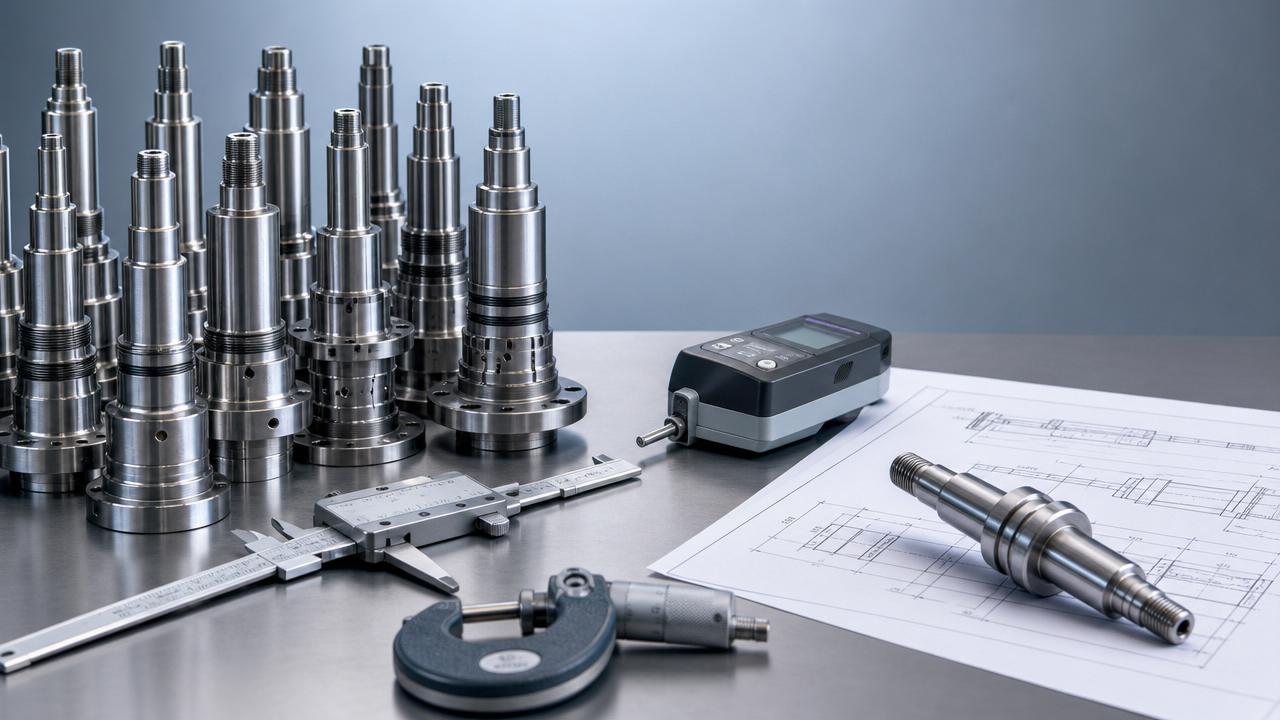
Before placing a bulk order, buyers need a clear way to evaluate Shaft Parts quality beyond price alone. From material consistency and dimensional accuracy to surface finish and production capability, each factor affects long-term performance and supply reliability. This guide outlines practical checkpoints to help procurement teams reduce risk, compare suppliers more effectively, and make confident sourcing decisions.
What should buyers check first when evaluating Shaft Parts quality?
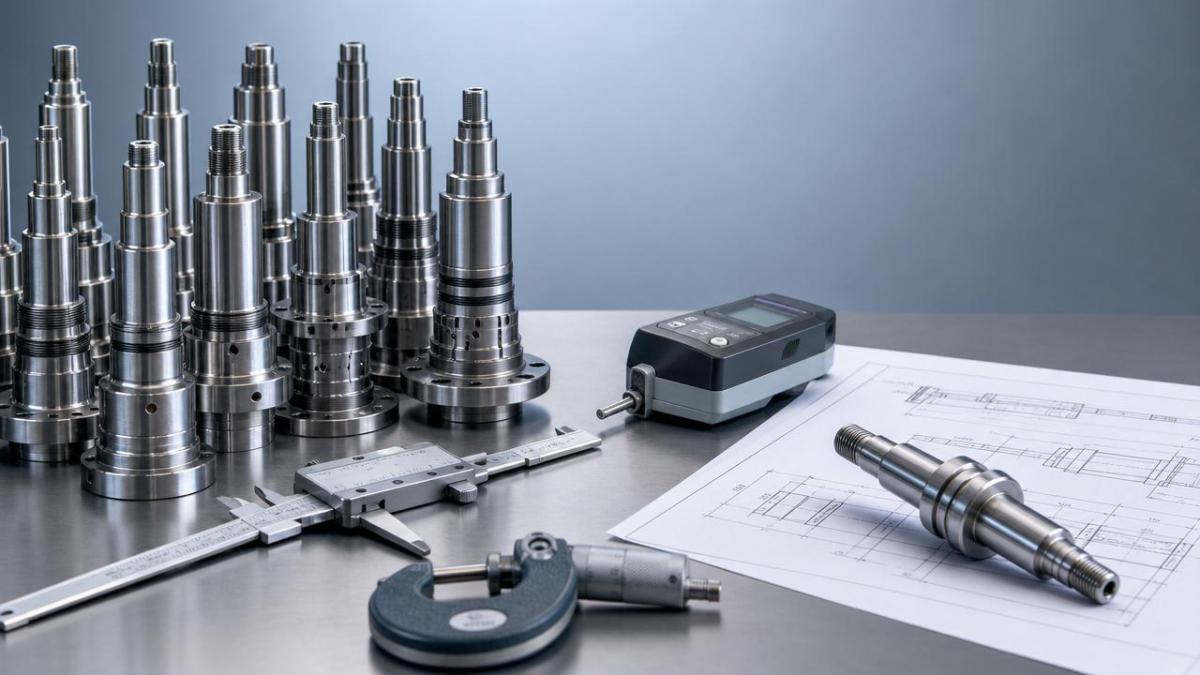
In CNC machining and precision manufacturing, Shaft Parts are often functional components rather than simple turned pieces. They may transfer torque, support rotation, maintain concentricity, or connect moving assemblies in automotive systems, industrial equipment, energy machinery, and electronics production lines.
For procurement teams, the real question is not whether a supplier can make Shaft Parts, but whether the supplier can repeatedly deliver parts that match drawings, material requirements, process capability, and delivery commitments at production scale.
A practical first review should focus on five areas:
- Material traceability, including grade verification, heat treatment records, and batch consistency.
- Dimensional control, especially diameters, lengths, runout, concentricity, and tolerance stability.
- Surface integrity, including roughness, burr control, edge condition, and plating or coating quality if required.
- Process capability, such as CNC turning, grinding, milling, drilling, balancing, or secondary assembly support.
- Production reliability, covering inspection methods, packaging standards, lead time discipline, and response to nonconforming parts.
Many sourcing issues start when buyers approve a sample based only on appearance. A good-looking sample does not prove stable process control. Bulk ordering decisions should always connect sample approval with measurable manufacturing capability.
Which technical indicators matter most for Shaft Parts in bulk procurement?
The most important indicators depend on the end use, but several technical factors appear in almost every qualified Shaft Parts review. Buyers should map these indicators directly to assembly performance, operating load, and product life instead of treating them as isolated inspection items.
Core dimensions and geometric tolerances
Diameter tolerance is often the first control point because it affects fit with bearings, bushings, seals, gears, or housings. But diameter alone is not enough. Straightness, roundness, cylindricity, concentricity, and total runout can determine whether a shaft runs smoothly under speed and load.
Material and heat treatment consistency
The same nominal material grade can perform differently if the raw material source changes or heat treatment control is weak. For Shaft Parts used in drive systems or high-wear positions, hardness range, case depth, core toughness, and microstructure stability may be more important than unit price.
Surface finish and defect control
Poor surface finish can shorten seal life, increase friction, and create premature wear. Burrs around cross holes, keyways, threads, and shoulders can also cause assembly damage. Buyers should define roughness targets and visual defect criteria clearly before quotation comparison.
The table below helps procurement teams connect common Shaft Parts indicators with sourcing risk and inspection focus.
This comparison shows why technical approval should be feature-based. A supplier may meet general dimensions yet still fail on rotational accuracy or surface integrity, which creates hidden field risk after bulk delivery.
How to compare Shaft Parts suppliers beyond unit price
Buyers in the CNC machine tool and precision manufacturing supply chain often receive similar quotations from multiple factories. The challenge is that unit price rarely reflects total procurement cost. Rework, line stoppage, delayed shipments, and sorting labor can easily exceed an initial price difference.
Questions that reveal supplier maturity
- Can the supplier explain the critical-to-quality features of your Shaft Parts without being prompted?
- Do they control production with first article inspection, in-process checks, and final inspection records?
- Can they support secondary processes such as grinding, thread rolling, induction hardening, plating, or assembly?
- Do they understand export packaging, corrosion prevention, and barcode or lot identification requirements?
- How do they handle deviations, urgent resupply, and engineering changes during mass production?
A capable supplier should answer these questions with process evidence, not broad promises. In modern CNC production, stable results come from machine capability, fixture design, operator discipline, inspection systems, and traceable documentation working together.
The table below provides a practical comparison model for evaluating Shaft Parts suppliers during RFQ and sample approval.
This kind of matrix helps buyers rank suppliers by total risk. In many cases, the best Shaft Parts source is not the cheapest quote but the one with the clearest quality logic and the least ambiguity.
How do application scenarios change the Shaft Parts quality standard?
Not all Shaft Parts require the same control level. Procurement teams should align requirements with operating conditions. Over-specifying every feature increases cost, while under-specifying critical features can cause warranty claims or assembly failures.
Common scenario differences
In automotive or e-mobility applications, rotational balance, fatigue resistance, and surface finish may be highly sensitive. In industrial automation, repeatable fit and fast assembly can matter more. For energy equipment, corrosion resistance, strength, and traceable material records may carry greater weight.
Use this simple selection logic when defining Shaft Parts requirements:
- Identify the function: rotation, positioning, transmission, support, or sealing contact.
- Define the load: static, cyclic, impact, or high-speed continuous operation.
- Clarify the environment: dry, lubricated, humid, corrosive, or high-temperature service.
- Set inspection levels according to risk: routine dimensions only, full layout, or batch traceability plus special testing.
This approach is especially useful when sourcing across countries. Global suppliers may work with different raw material channels and process routines, so requirement clarity becomes the buyer’s strongest tool for quality control.
What documents and standards should procurement teams request?
Documents do not replace physical quality, but they make quality visible. In cross-border CNC machining projects, documentation reduces misunderstanding, supports traceability, and speeds up problem resolution when shipments scale up.
Useful documentation for Shaft Parts orders
- Approved drawing with revision control and marked critical dimensions.
- Material certificate or mill test report for specified grades.
- Heat treatment record when hardness or case properties are required.
- First article inspection report or sample dimensional layout.
- Final inspection report for key features, especially on bulk shipments.
- Packing specification covering rust prevention, separation, labeling, and transport protection.
Depending on the project, buyers may also refer to common manufacturing and quality frameworks such as ISO-based quality management practices, GD&T interpretation, or customer-specific inspection plans. The goal is not paperwork volume. The goal is consistent control of the features that matter most.
Common mistakes buyers make when approving Shaft Parts samples
Sample approval is a critical stage because it often sets the quality baseline for the full order. Yet many procurement teams still approve Shaft Parts too quickly when timelines are tight. That creates avoidable risk later.
Frequent approval errors
- Checking only external dimensions while ignoring runout, concentricity, or thread quality.
- Approving polished samples without confirming whether the same finish process is stable in mass production.
- Skipping assembly trials with mating components, especially for tolerance-sensitive fits.
- Failing to define acceptable defect limits for burrs, chamfers, marks, and protective coatings.
- Not locking the approved process route after sample confirmation, which allows uncontrolled production changes.
A strong sample review combines dimensional data, functional checks, and process understanding. Buyers should ask how the sample was made, whether it used production tooling, and whether the same machine route will be used for the order quantity.
FAQ: practical sourcing questions about Shaft Parts
How should I judge whether a low-priced Shaft Parts quote is realistic?
Look at process coverage first. If the quote does not clearly state raw material grade, machining scope, heat treatment, grinding, surface treatment, inspection, and packaging, the price may exclude critical steps. A realistic quote shows assumptions and tolerances rather than only a final number.
What is the minimum quality evidence I should request before a bulk order?
At minimum, request a sample report tied to the latest drawing revision, key dimension measurements, material confirmation, and a description of the production process. For higher-risk Shaft Parts, add hardness data, runout checks, and trial assembly feedback.
Are tighter tolerances always better for Shaft Parts?
No. Tighter tolerances increase machining time, inspection burden, and scrap exposure. Buyers should tighten only the features that affect function, safety, or assembly yield. Correct tolerance allocation often lowers total cost without reducing performance.
How can I reduce quality risk when sourcing from overseas suppliers?
Use a controlled approval path: RFQ technical review, sample validation, documented inspection plan, pilot batch, and then full release. Clear drawings, critical feature marking, packaging requirements, and batch traceability are especially important in international Shaft Parts procurement.
Why choose us for Shaft Parts sourcing support
In the global CNC machining and precision manufacturing market, procurement success depends on more than finding a machine shop. It requires technical communication, supplier comparison logic, and a realistic understanding of how Shaft Parts perform in automated production, industrial equipment, and precision assemblies.
We support buyers with practical sourcing communication around Shaft Parts, including parameter confirmation, tolerance review, process matching, sample evaluation, lead time discussion, and packaging expectations for international shipments. This helps procurement teams compare suppliers on facts instead of assumptions.
If you are preparing a bulk order, you can contact us to discuss drawing review, material options, surface finish requirements, inspection checkpoints, sample support, certification-related questions, production capacity, and quotation communication. A clearer technical brief at the start usually leads to better quality stability and fewer supply surprises later.
PREVIOUS ARTICLE
NEXT ARTICLE
Recommended for You
![]() Vietnam Suspends CNC Equipment Import Licenses Amid New Tech RulesManufacturing Policy Research Center
Vietnam Suspends CNC Equipment Import Licenses Amid New Tech RulesManufacturing Policy Research Center![]() First Global CNC Machine Carbon Footprint Guide ReleasedManufacturing Policy Research Center
First Global CNC Machine Carbon Footprint Guide ReleasedManufacturing Policy Research Center![]() Japan METI Launches CNC Green Upgrade SubsidyManufacturing Market Research Center
Japan METI Launches CNC Green Upgrade SubsidyManufacturing Market Research Center![]() Brazil INMETRO Mandates IoT Modules for CNC Lathes from July 2026Manufacturing Policy Research Center
Brazil INMETRO Mandates IoT Modules for CNC Lathes from July 2026Manufacturing Policy Research Center![]() EU Launches Anti-Subsidy Investigation on Chinese Laser Cutting Heads and High-Power Fiber LasersManufacturing Policy Research Center
EU Launches Anti-Subsidy Investigation on Chinese Laser Cutting Heads and High-Power Fiber LasersManufacturing Policy Research Center![]() Red Sea Crisis Deepens: Suez Canal CNC Ship Delays Hit 11.4 DaysGlobal Machine Tool Trade Research Center
Red Sea Crisis Deepens: Suez Canal CNC Ship Delays Hit 11.4 DaysGlobal Machine Tool Trade Research Center


Aris Katos
Future of Carbide Coatings
15+ years in precision manufacturing systems. Specialized in high-speed milling and aerospace grade alloy processing.
▶
Why do Shaft Parts fail inspection more often than expected?CNC Machining Technology Center▶
What makes Shaft Parts fail earlier than expected?CNC Machining Technology Center▶
How to judge Shaft Parts quality before bulk orderingCNC Machining Technology Center▶
Why Shaft Parts fail inspection more often than expectedCNC Machining Technology Center▶
What buyers miss when sourcing Shaft PartsCNC Machining Technology Center
Mastering 5-Axis Workholding Strategies
Join our technical panel on Nov 15th to learn about reducing vibrations in thin-wall components.

Providing you with integrated sanding solutions
Before-sales and after-sales services
Comprehensive technical support