• Global CNC market projected to reach $128B by 2028 • New EU trade regulations for precision tooling components • Aerospace deman
NYSE: CNC +1.2%LME: STEEL -0.4%

What makes Shaft Parts fail earlier than expected?
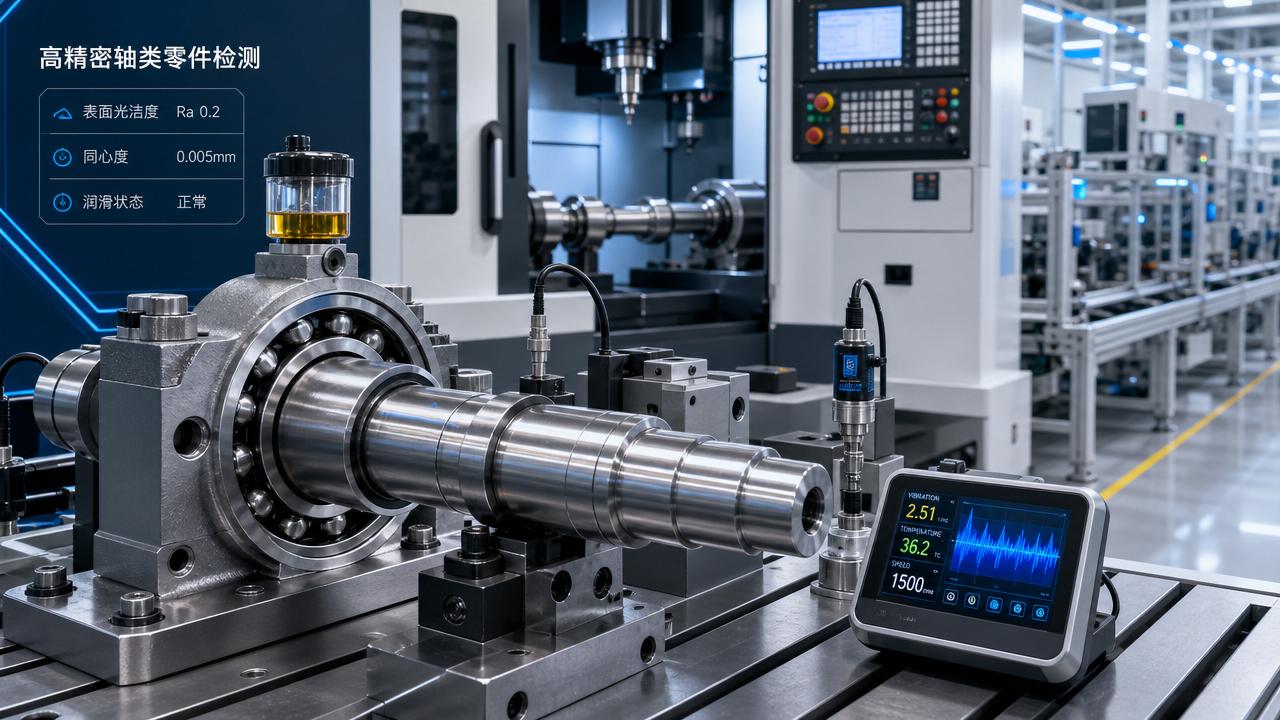
Shaft Parts often fail earlier than expected not because of a single defect, but due to a chain of issues involving material selection, machining accuracy, heat treatment, lubrication, and operating loads. For quality control and safety management professionals, identifying these hidden risk factors early is essential to prevent downtime, reduce hazards, and improve equipment reliability across CNC-driven manufacturing environments.
In modern CNC machining, shaft components are used in spindles, drive systems, gear assemblies, pumps, motors, conveyors, and automated transfer units. When Shaft Parts fail, the result is rarely limited to one damaged part. It can trigger line stoppages, dimensional drift, bearing damage, operator risk, and unplanned maintenance that affects output targets.
For QC teams and safety managers, the practical question is not only why a shaft breaks, bends, or wears out, but how to detect the warning signs 2 to 6 weeks earlier. In precision manufacturing, early failure usually leaves evidence in inspection reports, surface finish data, runout values, hardness records, lubrication logs, and load history.
This article explains the main causes of premature Shaft Parts failure, the inspection points that matter most, and the control measures that help reduce risk across CNC-driven production lines.
Why Shaft Parts Fail Earlier Than Expected in CNC Manufacturing
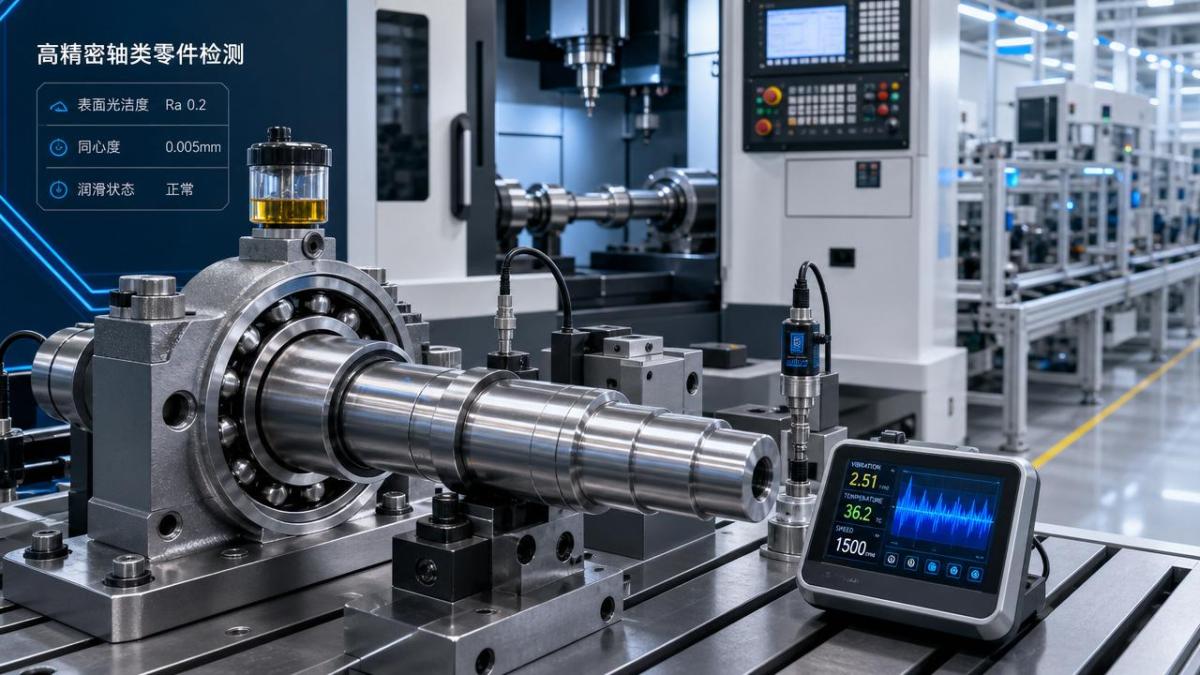
Early failure in Shaft Parts is usually the outcome of 5 linked factors rather than one isolated defect. A shaft may pass incoming inspection but still fail after 300 to 800 operating hours if material properties, machining tolerances, surface integrity, heat treatment, and lubrication are not controlled as one system.
In CNC environments, the problem is amplified by higher spindle speeds, tighter tolerance stacks, and continuous duty cycles. A shaft used in a low-speed manual system may survive for years, while a similar part in an automated machining cell running 16 to 20 hours per day may show fatigue damage much earlier.
1. Material Selection Does Not Match the Real Load Profile
One common cause is choosing material based only on nominal strength instead of actual service conditions. Shaft Parts may face combined torsion, bending, vibration, thermal cycling, and intermittent shock loads. If the selected steel grade has insufficient toughness, poor fatigue resistance, or inconsistent cleanliness, crack initiation can start at stress concentrations long before visible deformation appears.
For example, shafts operating above 2,000 rpm with alternating loads typically need better balance between hardness and core toughness than shafts used in low-speed positioning systems. QC teams should compare design intent with service conditions, not just with the purchase specification.
Typical material-related warning signs
- Hardness variation greater than 3 to 5 HRC within one batch
- Unexpected microcracks after grinding or induction hardening
- Inclusion-related fracture origins found near high-stress shoulders
- Poor impact resistance in shafts used under start-stop conditions
2. Machining Accuracy Errors Create Stress Concentration
Dimensional conformance alone is not enough. Shaft Parts can meet diameter tolerance and still fail because of runout, taper, shoulder geometry, poor concentricity, or rough transition radii. A shoulder fillet that is too sharp can significantly increase local stress under cyclic loading.
In high-precision assemblies, total indicated runout often needs to stay within 0.01 mm to 0.03 mm, depending on speed, bearing arrangement, and mating accuracy. Even a small deviation can increase bearing preload, generate heat, and accelerate wear on connected components.
3. Heat Treatment Problems Reduce Fatigue Life
Improper heat treatment is a major source of premature failure in Shaft Parts. If quenching depth is too shallow, the surface may wear rapidly. If the shaft is too hard, brittleness can rise and shock resistance can drop. Distortion after hardening can also force rework that damages surface integrity.
For many industrial shaft applications, the challenge is not achieving maximum hardness but keeping hardness uniform while preserving a stable core. A difference of only a few HRC points may be acceptable, but large hardness gradients near keyways or spline areas often lead to early cracking.
4. Surface Damage and Lubrication Failure Accelerate Wear
Surface finish strongly affects the life of Shaft Parts. Grinding burn, chatter marks, scoring, and embedded contamination can all become initiation points for fatigue or abrasive wear. In rotating systems, roughness values such as Ra 0.4 to 1.6 μm may be required depending on seal contact, bearing seat, or sliding interface.
Lubrication is equally critical. Incorrect viscosity, contaminated oil, delayed relubrication, or misaligned grease delivery can increase friction and local temperature within days. Once the shaft surface starts to score, the damage often spreads to seals, bearings, and couplings in a short maintenance cycle.
5. Real Operating Loads Exceed Design Assumptions
Shaft Parts often fail because field conditions differ from design assumptions. Common examples include overload during startup, abrupt braking, off-axis loading, poor coupling alignment, tool chatter in machining centers, or repeated emergency stops on automated lines.
A shaft designed for steady torque can fail early when exposed to frequent load reversal or vibration between 20 Hz and 200 Hz. Safety managers should pay attention to process changes, because even a new fixture, heavier workpiece, or altered cycle time can raise shaft stress beyond the original safety margin.
The table below shows how common failure drivers in Shaft Parts translate into practical inspection concerns for manufacturing teams.
For most plants, the key lesson is that Shaft Parts failure is a process issue, not only a part issue. The earlier these checkpoints are built into incoming inspection, process validation, and preventive maintenance, the lower the risk of unplanned shutdowns.
How QC and Safety Teams Can Detect Failure Risk Earlier
A practical control plan for Shaft Parts should begin before the part reaches the machine and continue through machining, assembly, commissioning, and routine operation. In many facilities, 4 control stages are enough to identify most hidden risks before they become field failures.
Incoming Inspection: Focus on Risk, Not Just Acceptance
Incoming checks should go beyond visual inspection and basic dimensions. For Shaft Parts used in critical equipment, QC teams should verify material certificates, hardness range, key dimensions, surface defects, and traceability marks. If the application involves high speed, high torque, or safety-critical motion, random NDT sampling may also be justified.
A useful approach is to separate shafts into 3 categories: general duty, precision duty, and safety-critical duty. Each category can then have a different inspection depth, reducing unnecessary cost while keeping high-risk parts under tighter control.
Recommended incoming inspection checklist
- Confirm material grade and heat treatment record
- Measure critical diameters, shoulders, keyways, and length stack
- Check runout, concentricity, and surface roughness where required
- Inspect for nicks, burrs, grinding marks, corrosion, or handling damage
- Review packaging and rust protection if storage exceeds 30 to 60 days
In-Process Monitoring: Catch Variation Before Assembly
During CNC turning, grinding, or multi-axis machining, process drift can shorten the life of Shaft Parts even when final dimensions still appear acceptable. Tool wear, thermal growth, unstable clamping, and poor coolant condition may affect roundness, surface finish, or residual stress.
For repetitive production, teams should define control frequency such as every 20 pieces, every 2 hours, or at each tool change, depending on part complexity and process capability. Safety managers benefit when these controls are linked to machine alarms and maintenance triggers.
Assembly and Commissioning: Alignment Matters More Than Many Expect
Many Shaft Parts that appear to fail in service are actually damaged during assembly. Press fitting, excessive hammering, incorrect bearing installation, coupling misalignment, or over-torqued locking elements can introduce hidden stress from day one.
As a practical rule, alignment checks should be repeated after initial installation and again after the first 24 to 72 operating hours. This is especially useful in automated production lines where thermal settling and base movement can change shaft behavior after startup.
The table below outlines a simple 4-stage control plan that helps reduce the premature failure rate of Shaft Parts across machining and assembly operations.
This staged method is effective because it distributes responsibility across procurement, QC, production, and maintenance. It also gives safety teams measurable checkpoints instead of relying on failure investigation after damage has already occurred.
Operational Monitoring: Small Changes Usually Come First
Premature failure in Shaft Parts rarely arrives without warning. Common early signals include a 10% to 20% increase in vibration trend, localized temperature rise, recurring lubrication discoloration, metal particles in oil, or gradual dimensional drift in the output process.
When these symptoms appear together, the shaft should not be treated as an isolated spare part issue. The entire transmission path, including bearings, couplings, gears, fixtures, and load balance, should be checked to avoid repeat failure after replacement.
How to Reduce Premature Shaft Parts Failure Through Better Design, Sourcing, and Maintenance
Reducing failure risk requires more than stricter inspection. Quality outcomes improve when design, sourcing, machining, and maintenance use the same acceptance logic. For many manufacturers, the biggest gains come from 3 areas: fit-for-purpose specifications, supplier process control, and maintenance discipline.
Build Specifications Around the Application
The purchasing specification for Shaft Parts should reflect actual duty conditions. Instead of listing only nominal dimensions, it should define critical features such as tolerance zone, surface roughness, runout limit, hardness range, transition geometry, and inspection method.
For example, a shaft for a precision spindle and a shaft for a conveyor drive may have similar diameters but very different control needs. One may require tight roundness and balance, while the other may need stronger shock resistance and corrosion control.
Specification points that often prevent early failure
- Define critical diameters with realistic tolerance bands
- Specify fillet radius and edge break requirements
- Set hardness range and, where needed, case depth expectations
- Identify surfaces that require roughness control such as Ra 0.8 μm or better
- Request traceability for high-risk batches and outsourced heat treatment
Evaluate Suppliers by Process Stability, Not Price Alone
For procurement and supplier quality teams, a low unit price can become expensive if Shaft Parts cause repeat downtime. Supplier evaluation should include machining capability, inspection discipline, heat treatment control, packaging method, and response speed for nonconformance.
A useful supplier review can be built around 4 questions: Can the supplier control concentricity consistently? Can they provide stable heat treatment records? Do they protect surfaces during transport? Can they support corrective action within 24 to 72 hours if defects are found?
Strengthen Preventive Maintenance and Failure Feedback
Maintenance plans should treat Shaft Parts as monitored assets, not passive hardware. Relubrication intervals, alignment checks, vibration review, and seal condition should all be linked to operating hours and actual load. In medium-duty systems, a 250-hour to 500-hour review interval may be practical, while high-speed systems often need closer attention.
Just as important, every failed shaft should feed data back into purchasing and process engineering. Fracture location, wear pattern, hardness result, and operating history provide clues that can improve the next sourcing decision and reduce recurrence.
Common mistakes that shorten shaft life
- Replacing only the shaft while ignoring worn bearings or misalignment
- Accepting dimensional compliance without checking runout or roughness
- Using the same material grade across low-load and high-load applications
- Skipping first-run monitoring after process or tooling changes
- Assuming lubrication quantity matters more than lubricant cleanliness
FAQ for QC and Safety Managers
How early can Shaft Parts show failure risk?
In demanding CNC applications, warning signs can appear within the first 50 to 200 operating hours, especially when misalignment, poor lubrication, or grinding damage is present. Trend monitoring is more useful than waiting for visible breakage.
Which inspection result is most often overlooked?
Runout and surface condition are often underestimated. A shaft can pass diameter checks but still create vibration, seal wear, and bearing overload if concentricity or surface integrity is poor.
Should all Shaft Parts receive the same inspection level?
No. Inspection depth should match application risk. Safety-critical, high-speed, and high-load shafts deserve more detailed control than general-duty parts. A graded inspection system usually delivers better cost-to-risk balance.
Premature failure in Shaft Parts is usually preventable when teams connect specification quality, machining accuracy, heat treatment stability, lubrication control, and real operating load into one decision framework. For quality control and safety management professionals, the priority is to find failure mechanisms before they reach the production floor, not after a breakdown disrupts output.
If you are reviewing shaft reliability in CNC machining, automated production lines, or precision equipment assemblies, now is the right time to refine your inspection criteria, supplier controls, and maintenance checkpoints. Contact us to discuss your application, get a more tailored evaluation approach, or learn more solutions for reducing Shaft Parts failure risk in modern manufacturing.
PREVIOUS ARTICLE
Recommended for You
![]() Vietnam Suspends CNC Equipment Import Licenses Amid New Tech RulesManufacturing Policy Research Center
Vietnam Suspends CNC Equipment Import Licenses Amid New Tech RulesManufacturing Policy Research Center![]() First Global CNC Machine Carbon Footprint Guide ReleasedManufacturing Policy Research Center
First Global CNC Machine Carbon Footprint Guide ReleasedManufacturing Policy Research Center![]() Japan METI Launches CNC Green Upgrade SubsidyManufacturing Market Research Center
Japan METI Launches CNC Green Upgrade SubsidyManufacturing Market Research Center![]() Brazil INMETRO Mandates IoT Modules for CNC Lathes from July 2026Manufacturing Policy Research Center
Brazil INMETRO Mandates IoT Modules for CNC Lathes from July 2026Manufacturing Policy Research Center![]() EU Launches Anti-Subsidy Investigation on Chinese Laser Cutting Heads and High-Power Fiber LasersManufacturing Policy Research Center
EU Launches Anti-Subsidy Investigation on Chinese Laser Cutting Heads and High-Power Fiber LasersManufacturing Policy Research Center![]() Red Sea Crisis Deepens: Suez Canal CNC Ship Delays Hit 11.4 DaysGlobal Machine Tool Trade Research Center
Red Sea Crisis Deepens: Suez Canal CNC Ship Delays Hit 11.4 DaysGlobal Machine Tool Trade Research Center


Aris Katos
Future of Carbide Coatings
15+ years in precision manufacturing systems. Specialized in high-speed milling and aerospace grade alloy processing.
▶
Why do Shaft Parts fail inspection more often than expected?CNC Machining Technology Center▶
What makes Shaft Parts fail earlier than expected?CNC Machining Technology Center▶
How to judge Shaft Parts quality before bulk orderingCNC Machining Technology Center▶
Why Shaft Parts fail inspection more often than expectedCNC Machining Technology Center▶
What buyers miss when sourcing Shaft PartsCNC Machining Technology Center
Mastering 5-Axis Workholding Strategies
Join our technical panel on Nov 15th to learn about reducing vibrations in thin-wall components.

Providing you with integrated sanding solutions
Before-sales and after-sales services
Comprehensive technical support