• Global CNC market projected to reach $128B by 2028 • New EU trade regulations for precision tooling components • Aerospace deman
NYSE: CNC +1.2%LME: STEEL -0.4%

Why Shaft Parts fail inspection more often than expected
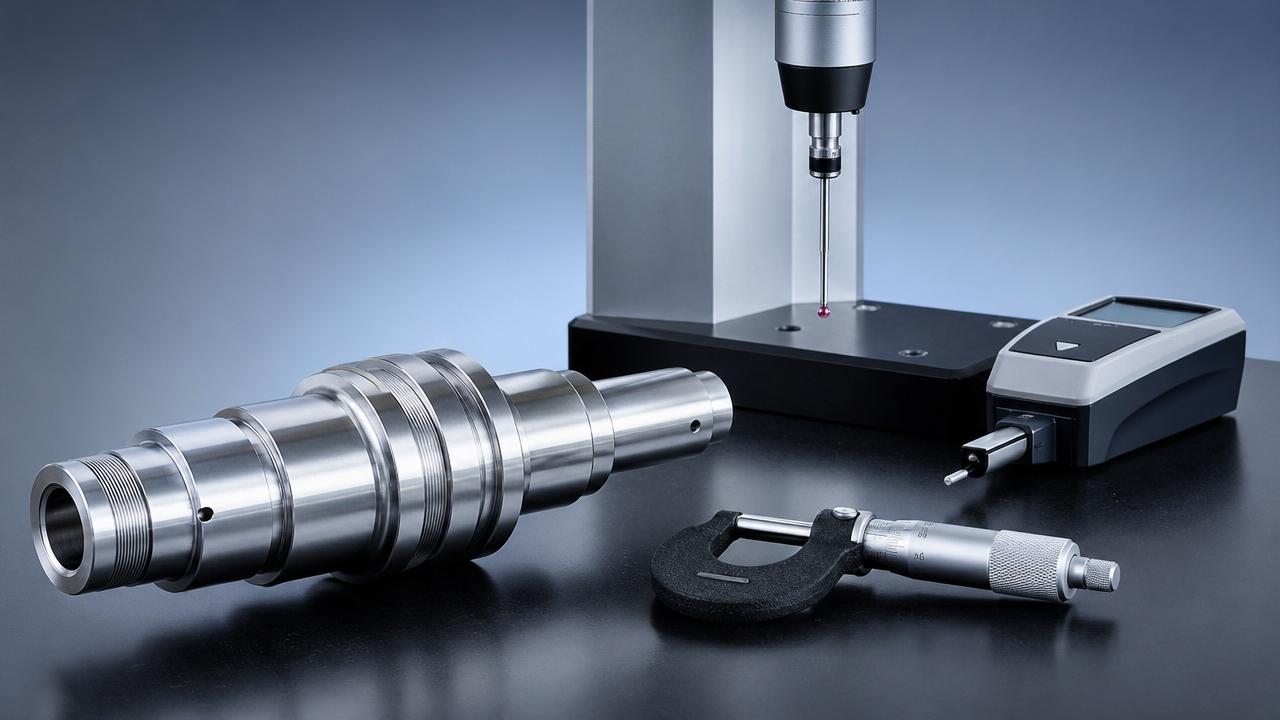
Shaft Parts often fail inspection more frequently than expected in precision manufacturing. The reason is rarely a single defect. Most failures result from interacting dimensional, material, and process issues.
In CNC machining, even a small deviation can affect assembly, balance, noise, wear, and service life. This makes Shaft Parts a critical quality focus across automotive, aerospace, energy, and electronics production.
Inspection failure also has wider business consequences. It can delay shipments, increase scrap, trigger rework, and weaken traceability. Understanding the root patterns helps improve consistency and reduce hidden manufacturing risk.
What Shaft Parts inspection failure usually means
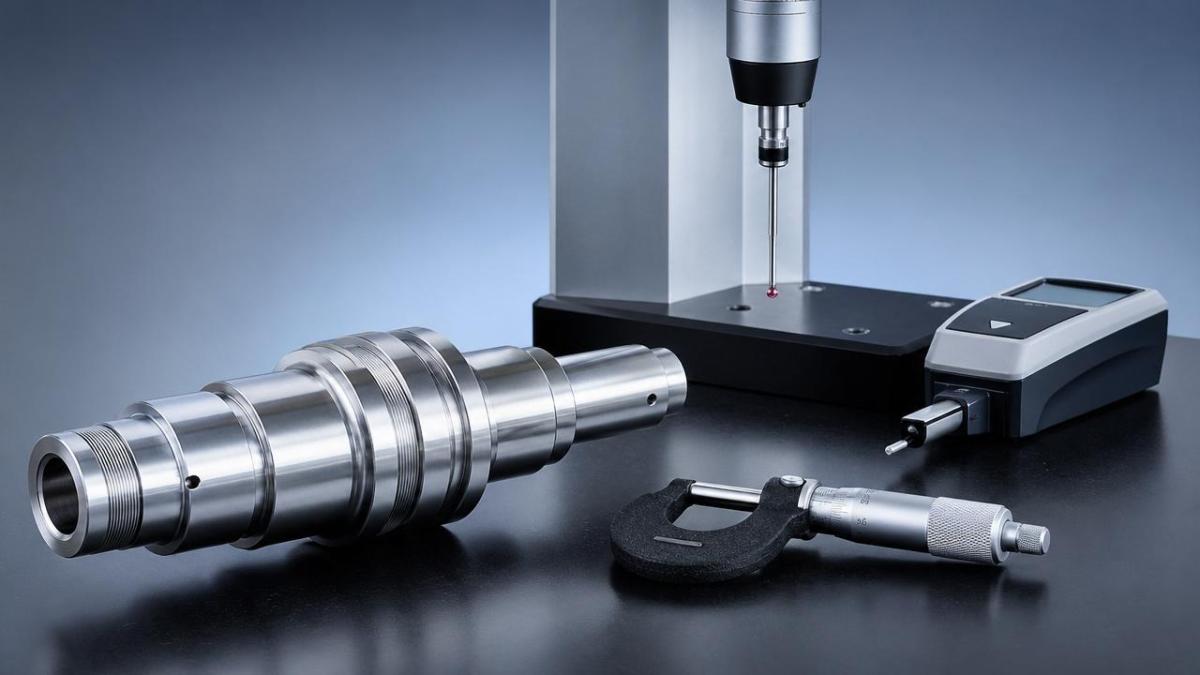
Shaft Parts are rotational components designed to transmit motion, torque, or positional accuracy. They often include journals, shoulders, threads, splines, grooves, and bearing interfaces.
Inspection failure does not always mean the part is visibly damaged. It often means the part no longer meets drawing requirements, process capability targets, or final functional expectations.
Common failure categories include dimensional out-of-tolerance conditions, geometric deviation, rough surface finish, hardness inconsistency, burrs, and contamination. These issues may appear alone or in combination.
Because Shaft Parts interact with bearings, seals, gears, and couplings, minor errors can spread into larger assembly problems. A marginal diameter may still machine correctly but fail in operation.
Key inspection points
- Outer diameter, inner diameter, and length tolerance
- Roundness, cylindricity, concentricity, and runout
- Surface roughness and edge condition
- Heat treatment depth and hardness stability
- Material integrity and microstructural consistency
Why the industry is paying closer attention
The global CNC machine tool industry is moving toward tighter tolerances, automated production, and digital quality control. This trend increases the importance of reliable inspection for Shaft Parts.
Multi-axis machining, high-speed turning, robotic loading, and in-line measurement improve efficiency. However, they also make process variation harder to detect when data interpretation is weak.
Shaft Parts are especially sensitive because they connect machining accuracy with mechanical performance. In advanced applications, a small geometric error can influence vibration, sealing, thermal behavior, or fatigue life.
Recent production pressure has also changed failure patterns. Shorter lead times, batch switching, and mixed-material orders increase setup risks, tool wear variability, and documentation gaps.
Current quality signals in precision manufacturing
The most frequent causes behind Shaft Parts rejection
Tolerance drift is one of the most common causes. Tool wear, thermal expansion, machine condition, and fixture repeatability gradually shift dimensions beyond the allowed range.
Geometric errors are often underestimated. A diameter may pass size inspection, yet fail because of runout, taper, or poor concentricity between critical features.
Surface finish problems also create frequent failures. Excessive roughness affects bearing contact, lubrication behavior, sealing performance, and fatigue resistance in rotating Shaft Parts.
Material inconsistency is another hidden factor. Variations in hardness, grain flow, inclusions, or heat treatment response can produce distortion after machining or performance failure after assembly.
Process sequencing matters as well. If roughing, stress relief, finish turning, grinding, and inspection are poorly coordinated, Shaft Parts may pass one step and fail later.
Typical root causes in production
- Improper clamping that bends slender sections during machining
- Tool wear not linked to compensation updates
- Coolant instability causing heat buildup and size shift
- Grinding burn or chatter marks on functional surfaces
- Heat treatment distortion after semi-finished machining
- Measurement system variation or poor gauge calibration
Business value of understanding Shaft Parts failure patterns
Better failure analysis improves more than inspection yield. It supports stable throughput, lower scrap cost, stronger delivery performance, and more credible quality records.
For precision manufacturing operations, Shaft Parts often sit on critical paths. One rejected batch can interrupt downstream grinding, balancing, coating, or automated assembly.
Clear root-cause visibility also strengthens digital manufacturing systems. Inspection data becomes useful only when linked to machine settings, tool history, material lots, and operator actions.
This matters in global production networks. Companies working across China, Germany, Japan, South Korea, and other industrial regions need consistent quality language for Shaft Parts.
Practical gains from stronger control
- Lower rework and scrap rates
- Faster response to nonconforming batches
- More reliable audit and traceability records
- Improved fit with bearings, gears, and sealing systems
- Reduced risk of field failure and warranty exposure
Common Shaft Parts scenarios and failure-sensitive features
Not all Shaft Parts fail for the same reasons. Failure patterns depend on geometry, load condition, material, machining route, and final application environment.
Long and slender Shaft Parts often struggle with deflection and vibration during turning. Short, stepped parts more commonly show shoulder geometry errors or burr formation near transitions.
Practical methods to reduce inspection failure
Start with process capability, not only final inspection. If Shaft Parts rely on end-of-line sorting, instability remains hidden until scrap and delays become expensive.
Control the machining environment carefully. Stable temperature, calibrated tooling, verified fixtures, and scheduled compensation updates reduce preventable dimensional variation.
Use inspection methods that match the feature risk. High-precision Shaft Parts may require roundness measurement, profilometry, hardness mapping, and lot-level material verification.
Digital traceability should connect material certificates, machine parameters, tool life, heat treatment records, and inspection results. This shortens root-cause analysis when rejection occurs.
Recommended control actions
- Define critical-to-function features early in the routing
- Separate roughing and finishing after stress-sensitive operations
- Monitor tool wear trends instead of reacting after failure
- Validate gauges with measurement system analysis
- Review rejected Shaft Parts by defect family, not only by batch
A clear next step for improving Shaft Parts quality
A practical starting point is to map the top five rejection modes for Shaft Parts across machining, heat treatment, grinding, and final inspection. This reveals where variation truly begins.
Then compare those modes against drawing tolerances, machine capability, and measurement reliability. Many recurring failures come from mismatch between design intent and process reality.
When Shaft Parts quality is managed as a connected system, rejection rates become easier to predict and reduce. Stronger control creates better output, stronger traceability, and more dependable production flow.
For operations involved in CNC machining and precision manufacturing, consistent review of Shaft Parts data is no longer optional. It is a practical foundation for stable quality and competitive performance.
PREVIOUS ARTICLE
Recommended for You
![]() Vietnam Suspends CNC Equipment Import Licenses Amid New Tech RulesManufacturing Policy Research Center
Vietnam Suspends CNC Equipment Import Licenses Amid New Tech RulesManufacturing Policy Research Center![]() First Global CNC Machine Carbon Footprint Guide ReleasedManufacturing Policy Research Center
First Global CNC Machine Carbon Footprint Guide ReleasedManufacturing Policy Research Center![]() Japan METI Launches CNC Green Upgrade SubsidyManufacturing Market Research Center
Japan METI Launches CNC Green Upgrade SubsidyManufacturing Market Research Center![]() Brazil INMETRO Mandates IoT Modules for CNC Lathes from July 2026Manufacturing Policy Research Center
Brazil INMETRO Mandates IoT Modules for CNC Lathes from July 2026Manufacturing Policy Research Center![]() EU Launches Anti-Subsidy Investigation on Chinese Laser Cutting Heads and High-Power Fiber LasersManufacturing Policy Research Center
EU Launches Anti-Subsidy Investigation on Chinese Laser Cutting Heads and High-Power Fiber LasersManufacturing Policy Research Center![]() Red Sea Crisis Deepens: Suez Canal CNC Ship Delays Hit 11.4 DaysGlobal Machine Tool Trade Research Center
Red Sea Crisis Deepens: Suez Canal CNC Ship Delays Hit 11.4 DaysGlobal Machine Tool Trade Research Center


Aris Katos
Future of Carbide Coatings
15+ years in precision manufacturing systems. Specialized in high-speed milling and aerospace grade alloy processing.
▶
Why do Shaft Parts fail inspection more often than expected?CNC Machining Technology Center▶
What makes Shaft Parts fail earlier than expected?CNC Machining Technology Center▶
How to judge Shaft Parts quality before bulk orderingCNC Machining Technology Center▶
Why Shaft Parts fail inspection more often than expectedCNC Machining Technology Center▶
What buyers miss when sourcing Shaft PartsCNC Machining Technology Center
Mastering 5-Axis Workholding Strategies
Join our technical panel on Nov 15th to learn about reducing vibrations in thin-wall components.

Providing you with integrated sanding solutions
Before-sales and after-sales services
Comprehensive technical support