• Global CNC market projected to reach $128B by 2028 • New EU trade regulations for precision tooling components • Aerospace deman
NYSE: CNC +1.2%LME: STEEL -0.4%

Why do Shaft Parts fail inspection more often than expected?
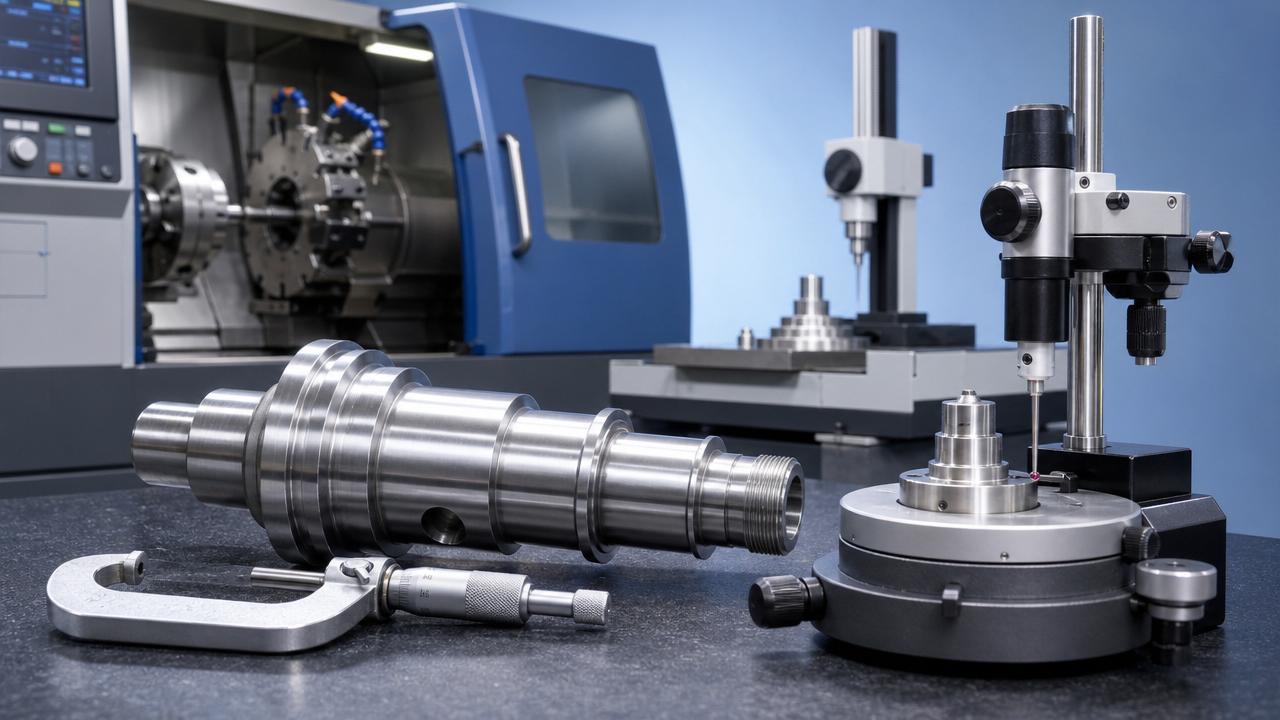
Why do Shaft Parts fail inspection more often than expected, even in advanced CNC production? The answer is rarely a single defect.
Inspection failures usually come from stacked variation. Material, tooling, clamping, thermal drift, programming, and measurement methods can all shift final results.
In the broader manufacturing industry, Shaft Parts are used in motors, pumps, gearboxes, transport systems, aerospace assemblies, and energy equipment.
That wide use means tolerances, surface demands, and functional risks vary greatly. A shaft that looks acceptable may still fail fit, balance, or fatigue checks.
Understanding why Shaft Parts fail inspection helps reduce scrap, stabilize output, and improve compliance across CNC machining and precision manufacturing operations.
What does an inspection failure really mean for Shaft Parts?
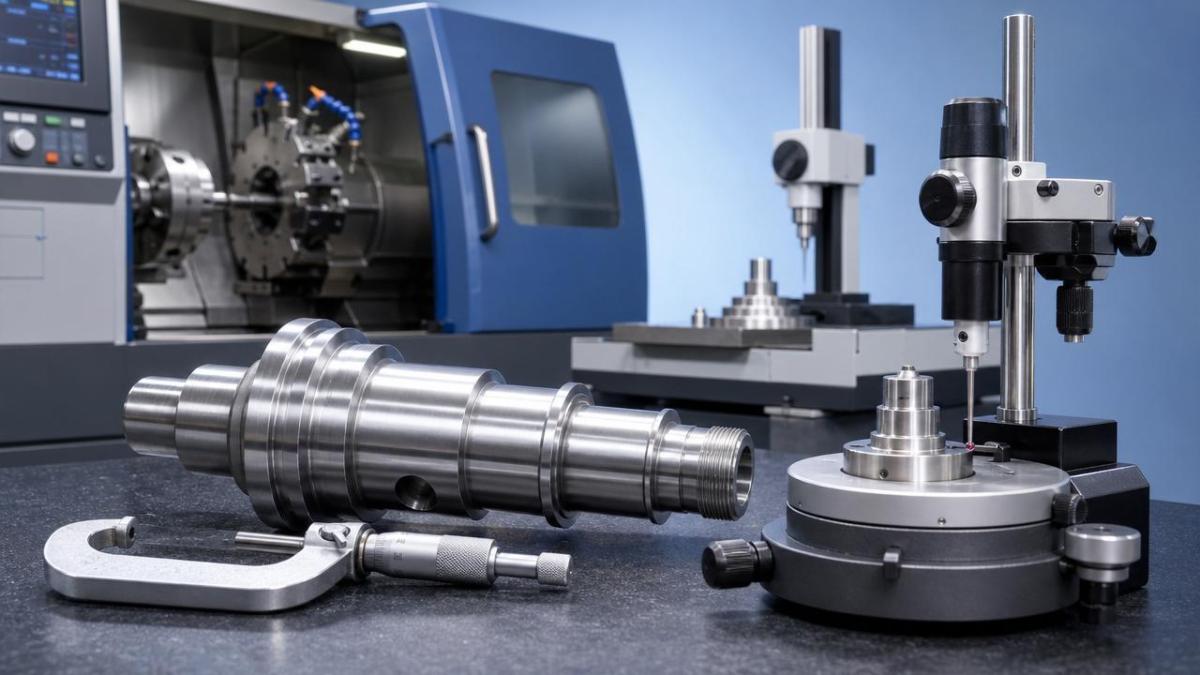
An inspection failure does not always mean the Shaft Parts were badly machined. It means the finished result did not meet a defined requirement.
That requirement may involve diameter, roundness, cylindricity, runout, concentricity, surface roughness, hardness, straightness, or dimensional location.
Some Shaft Parts pass basic dimensional checks but fail functional inspection. For example, bearing seats may fit poorly because form error exceeds tolerance.
Other Shaft Parts fail due to documentation gaps. Heat treatment records, traceability, calibration evidence, or process control records may be incomplete.
This distinction matters. Corrective action for process capability is different from corrective action for quality system control or inspection method mismatch.
Common failure categories
- Dimensional out-of-tolerance features
- Geometric deviation affecting rotation or assembly
- Surface finish defects from chatter or tool wear
- Material or hardness inconsistency
- Burrs, edge damage, or contamination
- Inspection method or gauge disagreement
Why do machining and setup errors cause repeated Shaft Parts rejection?
Shaft Parts are sensitive to setup quality because many features depend on rotational accuracy. Small alignment errors can multiply across the full shaft length.
Improper chuck pressure can deform thin or long Shaft Parts. Excessive clamping leaves temporary distortion that becomes visible after release.
Tailstock misalignment also creates taper, runout, and centerline deviation. These defects are often missed early if in-process checks are too limited.
Tool wear is another major factor. A worn insert changes cutting forces, diameter control, and surface quality long before catastrophic tool failure appears.
Programming strategy matters too. Roughing stress, finishing allowance, toolpath direction, and dwell behavior can all affect final Shaft Parts quality.
Typical process weak points
- Unstable workholding for slender geometries
- Incorrect center support or rest usage
- Finishing with a near-end-of-life tool
- Ignoring thermal growth during long cycles
- Poor chip evacuation damaging surfaces
When these issues repeat, inspection rejects become more frequent, even if the CNC machine itself is modern and highly automated.
How much do material quality and heat treatment affect Shaft Parts inspection?
Material variation is a hidden reason many Shaft Parts fail inspection. Two bars with the same grade can still behave differently during machining.
Internal stress, hardness range, microstructure, and straightness of raw stock influence cutting stability and final dimensional consistency.
Heat treatment creates another risk. Shaft Parts may distort after quenching, tempering, induction hardening, or nitriding if process controls are uneven.
Post-treatment grinding can recover some geometry, but not every defect. Residual stress may continue to shift dimensions during later finishing.
In high-precision sectors, hardness depth and transition zones are inspection items, not just final surface hardness values.
Warning signs linked to material issues
- Unexpected chatter on known stable programs
- Different spring-back after finishing passes
- Shape change after heat treatment or storage
- Inconsistent hardness across batches
- Cracking or burn marks during grinding
Can inspection methods themselves cause Shaft Parts to fail?
Yes. Some Shaft Parts fail because the inspection method is not aligned with the design intent, datum strategy, or actual function.
For example, measuring diameter at one location may miss lobing elsewhere. A caliper can never replace a suitable roundness or runout check.
Gauge calibration, measurement force, fixture alignment, and temperature all influence results. Even clean-looking Shaft Parts can read differently across stations.
Inspection timing matters too. Measuring immediately after machining may capture thermal expansion rather than stable room-temperature geometry.
Another common issue is unclear drawing interpretation. If the team uses different datums or acceptance criteria, repeated disputes become inevitable.
Quick comparison table for common inspection risks
Which Shaft Parts applications face the highest inspection risk?
Not all Shaft Parts carry the same inspection difficulty. Risk rises when parts are long, thin, hardened, multi-stepped, or assembly-critical.
Automotive transmission shafts require controlled journals and spline relationships. Aerospace Shaft Parts often demand strict traceability and geometric precision.
Energy equipment uses Shaft Parts exposed to load, heat, and vibration. Here, fatigue resistance and concentricity are just as important as diameter.
Electronic production equipment may use smaller Shaft Parts, but miniature tolerances make measurement and handling more difficult.
Multi-process parts also carry higher risk. Turning, milling, heat treatment, grinding, and coating can each add cumulative variation.
High-risk traits to monitor
- Long length-to-diameter ratios
- Tight bearing seat tolerances
- Multiple datum-dependent features
- Heat-treated or ground surfaces
- Critical dynamic balance requirements
How can inspection failures of Shaft Parts be reduced in a practical way?
Start with process mapping. Identify where Shaft Parts gain value and where they gain variation, from raw stock receiving to final inspection.
Then separate special characteristics. Not every dimension needs the same control level, but critical Shaft Parts features need stronger monitoring frequency.
Use first-piece validation, in-process checks, and post-process verification together. One checkpoint alone rarely catches developing instability soon enough.
Tool life management is essential. Replace tools by controlled wear criteria, not only after visible defects appear on Shaft Parts surfaces.
For recurring failures, compare machine data, operator records, batch material certificates, and inspection history before making adjustments.
A practical prevention checklist
- Verify raw material straightness and certificate consistency
- Standardize workholding and support methods
- Control machine warm-up and thermal stability
- Set preventive tool replacement intervals
- Align inspection datums with functional design
- Review capability for critical Shaft Parts dimensions
FAQ summary: what should be checked first when Shaft Parts keep failing?
Frequent inspection failure of Shaft Parts usually reflects a system problem, not a random defect. The strongest improvements come from linking machining, material, and measurement decisions.
Review the highest-risk dimensions first, confirm how they are measured, and trace variation back through setup, tooling, material, and thermal history.
When Shaft Parts are controlled with consistent datums, stable processes, and function-based inspection, rejection rates drop and production reliability improves.
The next practical step is simple: build a failure map for recent Shaft Parts rejects, then rank causes by frequency, impact, and ease of correction.
PREVIOUS ARTICLE
NEXT ARTICLE
Recommended for You
![]() Vietnam Suspends CNC Equipment Import Licenses Amid New Tech RulesManufacturing Policy Research Center
Vietnam Suspends CNC Equipment Import Licenses Amid New Tech RulesManufacturing Policy Research Center![]() First Global CNC Machine Carbon Footprint Guide ReleasedManufacturing Policy Research Center
First Global CNC Machine Carbon Footprint Guide ReleasedManufacturing Policy Research Center![]() Japan METI Launches CNC Green Upgrade SubsidyManufacturing Market Research Center
Japan METI Launches CNC Green Upgrade SubsidyManufacturing Market Research Center![]() Brazil INMETRO Mandates IoT Modules for CNC Lathes from July 2026Manufacturing Policy Research Center
Brazil INMETRO Mandates IoT Modules for CNC Lathes from July 2026Manufacturing Policy Research Center![]() EU Launches Anti-Subsidy Investigation on Chinese Laser Cutting Heads and High-Power Fiber LasersManufacturing Policy Research Center
EU Launches Anti-Subsidy Investigation on Chinese Laser Cutting Heads and High-Power Fiber LasersManufacturing Policy Research Center![]() Red Sea Crisis Deepens: Suez Canal CNC Ship Delays Hit 11.4 DaysGlobal Machine Tool Trade Research Center
Red Sea Crisis Deepens: Suez Canal CNC Ship Delays Hit 11.4 DaysGlobal Machine Tool Trade Research Center


Aris Katos
Future of Carbide Coatings
15+ years in precision manufacturing systems. Specialized in high-speed milling and aerospace grade alloy processing.
▶
Why do Shaft Parts fail inspection more often than expected?CNC Machining Technology Center▶
What makes Shaft Parts fail earlier than expected?CNC Machining Technology Center▶
How to judge Shaft Parts quality before bulk orderingCNC Machining Technology Center▶
Why Shaft Parts fail inspection more often than expectedCNC Machining Technology Center▶
What buyers miss when sourcing Shaft PartsCNC Machining Technology Center
Mastering 5-Axis Workholding Strategies
Join our technical panel on Nov 15th to learn about reducing vibrations in thin-wall components.

Providing you with integrated sanding solutions
Before-sales and after-sales services
Comprehensive technical support