• Global CNC market projected to reach $128B by 2028 • New EU trade regulations for precision tooling components • Aerospace deman
NYSE: CNC +1.2%LME: STEEL -0.4%

Is CNC metalworking still cost-effective for small-batch shaft parts in 2026?
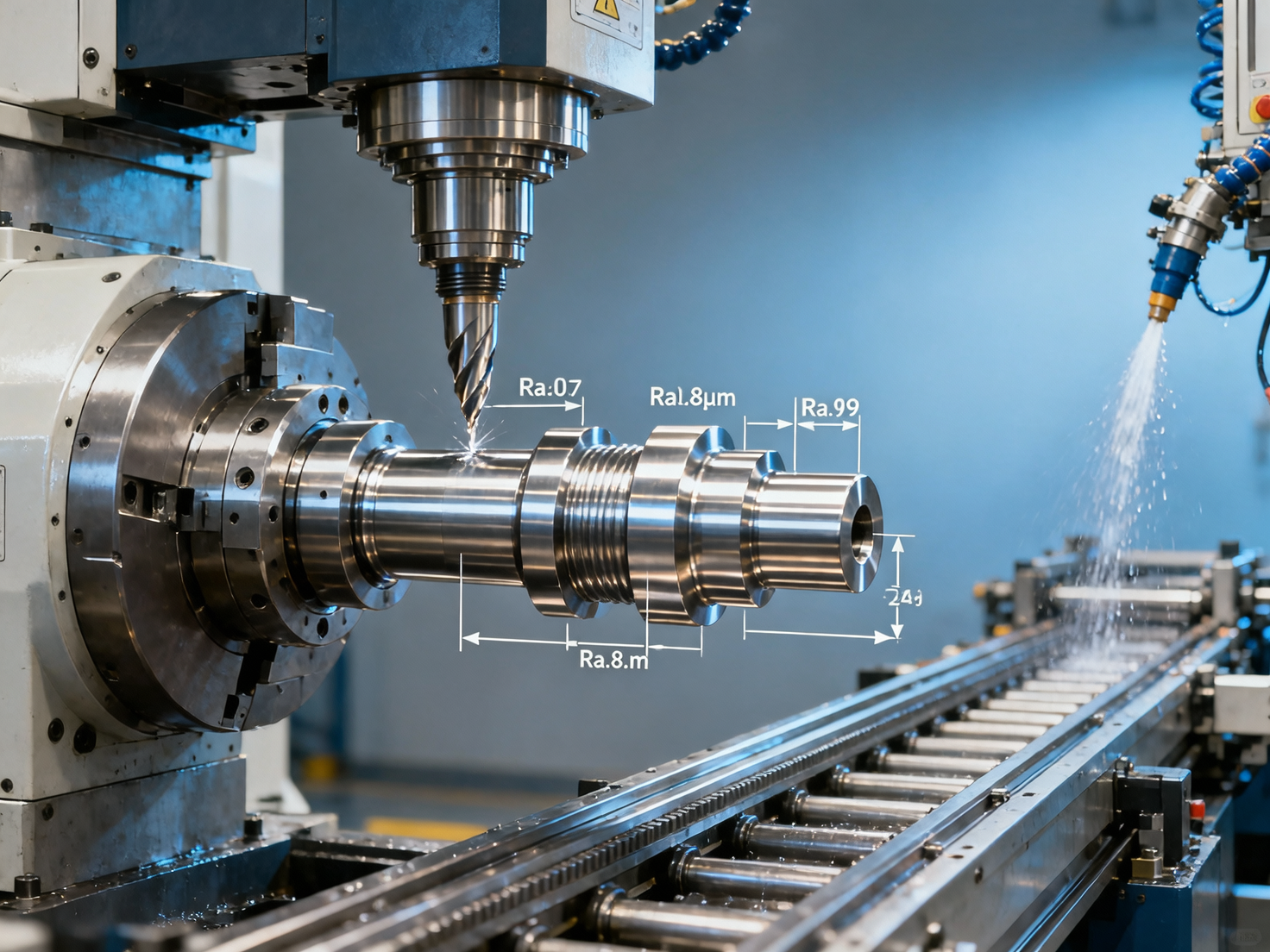
As global manufacturing shifts toward smarter, more flexible production in 2026, many engineers, procurement professionals, and plant managers are re-evaluating whether CNC metalworking remains cost-effective for small-batch shaft parts. With advances in industrial CNC, automated lathe capabilities, and CNC programming efficiency—paired with rising demand for precision metal machining and rapid-turnaround industrial robotics integration—the economics of low-volume CNC production are evolving. This article examines real-world cost drivers across the CNC production, automated production line, and metal lathe ecosystems, benchmarking against alternatives like additive manufacturing and hybrid machining—while addressing key concerns from users, buyers, and decision-makers in the Machine Tool Market and Global Manufacturing landscape.
Why Small-Batch Shaft Production Still Favors CNC in 2026
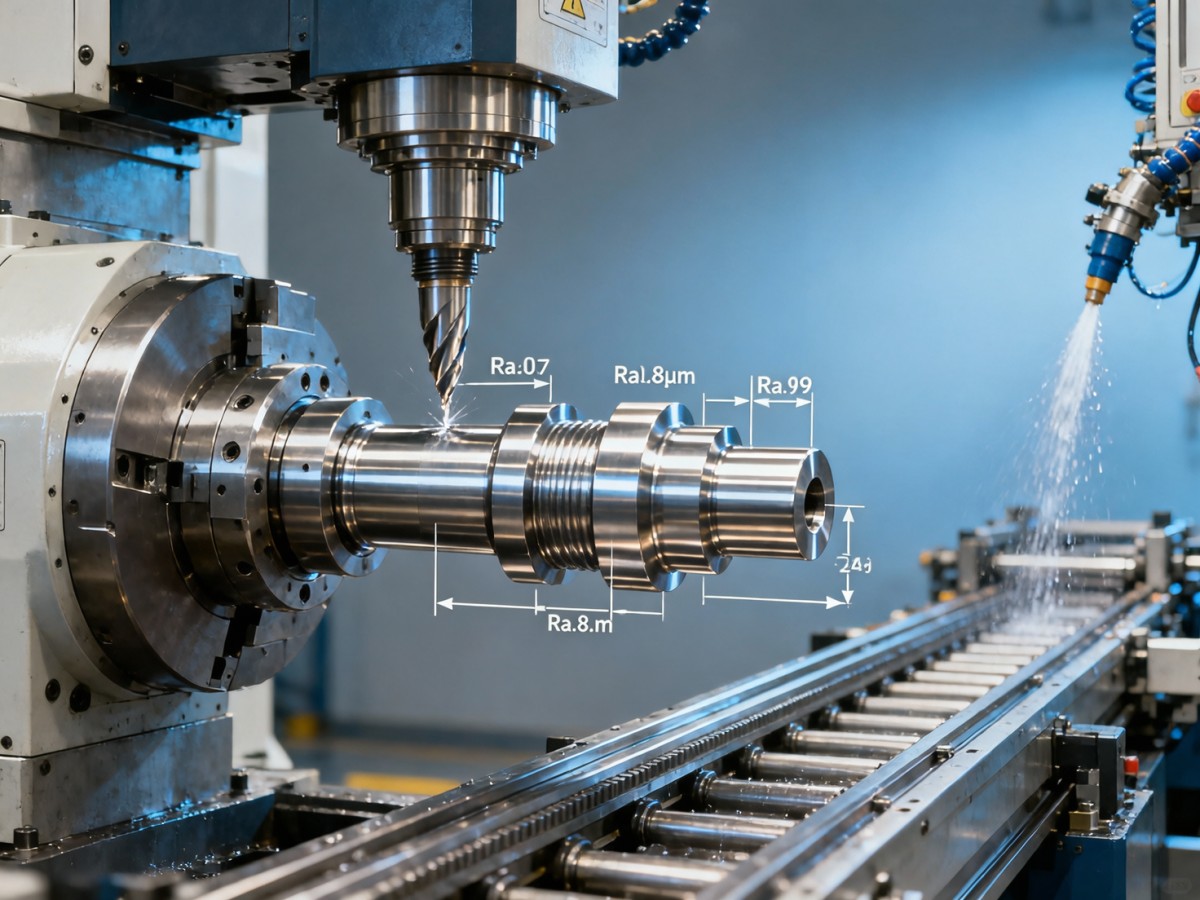
CNC metalworking remains the dominant choice for shaft parts requiring tight tolerances (±0.005 mm), surface finishes under Ra 0.8 µm, and material integrity across alloy steels, stainless grades, and titanium. Unlike additive manufacturing—which struggles with internal stress control and post-process straightness verification—CNC lathes deliver repeatable roundness (≤0.003 mm) and concentricity (≤0.008 mm) out-of-the-box, even for batches as low as 5–20 units.
Modern multi-axis CNC lathes (e.g., 5-axis turning centers with Y-axis and live tooling) now achieve cycle times under 4.2 minutes per M30×1.5 threaded shaft (L=120 mm, Ø35 mm), including part-off and deburring. This is 37% faster than comparable 2020-era machines due to improved servo response, adaptive feed control, and integrated coolant-through-tool systems. For procurement teams evaluating ROI, this translates directly into lower labor cost per part—especially when factoring in reduced operator intervention and higher first-pass yield rates (92–96% vs. 78–84% for legacy setups).
Moreover, digital twin integration allows offline NC program validation and collision checking—cutting setup time by 2.5–4 hours per new job. That’s critical when managing frequent changeovers across aerospace spindles, medical drive shafts, or robotic joint components where batch sizes average 12–35 pieces per order.
Cost Drivers: What Actually Moves the Needle in Low-Volume CNC
True cost-effectiveness hinges not on machine hourly rate alone—but on total landed cost per qualified part. Key variables include raw material utilization, fixture amortization, programming overhead, inspection burden, and scrap recovery. A comparative analysis across three common scenarios reveals how scale impacts unit economics:
The data shows that automation pays off rapidly once batch size exceeds 12 units—reducing per-part cost by up to 56%. Conversely, hybrid AM+CNC only breaks even for highly complex geometries (e.g., internal splines + axial cooling channels) where traditional turning would require 5+ setups. For standard cylindrical or stepped shafts, CNC remains both faster and more predictable.
Critical Procurement Criteria for 2026-Ready CNC Systems
When sourcing equipment or contract services for small-batch shaft work, decision-makers should prioritize four measurable criteria—not just headline specs:
- Tool Change Time ≤ 1.2 seconds: Critical for minimizing non-cutting time in multi-operation jobs (e.g., turning → grooving → threading → facing).
- Thermal Stability Index ≤ ±1.5 µm over 8-hour run: Ensures dimensional consistency without recalibration—verified via ISO 230-3 testing reports.
- On-Machine Probing Cycle ≤ 28 seconds: Enables automatic in-process diameter compensation, reducing metrology bottlenecks.
- Post-Processing Integration Readiness: Native support for MTConnect or OPC UA enables seamless handoff to robotic deburring, vision inspection, or packaging cells.
Suppliers offering factory-integrated training (≥16 hours), predictive maintenance dashboards, and documented MTBF ≥ 12,000 hours demonstrate operational maturity aligned with smart manufacturing KPIs.
When to Consider Alternatives—and When Not To
Additive manufacturing gains traction for prototyping or ultra-low-volume functional test parts (<5 pcs), especially where topology optimization reduces weight by 22–38%. However, for shafts requiring fatigue life validation (e.g., >10⁶ cycles at 250 MPa stress), ASTM F3122-18 mandates full-process qualification—including heat treatment, HIP, and ultrasonic volumetric inspection—adding 11–17 days lead time and 40–65% cost premium versus CNC.
Similarly, while electrochemical machining (ECM) excels at burr-free slotting in hardened alloys, it cannot produce bearing journals or sealing surfaces meeting ISO 1302 surface texture callouts. CNC remains the only process delivering full geometric and metallurgical compliance in a single workflow.
Common Misconceptions to Avoid
- “All CNC shops charge the same for small lots.” Reality: Shops with bar-fed automation and digital work instructions quote 23–31% lower for 10–25 pc orders than those relying on manual loading.
- “Newer machines always cut costs.” Reality: Retrofitting older lathes with modern controls, probing, and coolant filtration often delivers 68% of the ROI of full replacement—at 29% of the capital cost.
- “Tolerances define cost.” Reality: Surface integrity (residual stress, microhardness gradient) drives 44% of rejection in high-speed shaft applications—requiring controlled cutting parameters, not just tighter GD&T.
Actionable Next Steps for Your Shop or Sourcing Team
Start with a production audit: Track actual setup-to-setup time, tool wear variance per material grade, and first-article inspection pass rate across your last 10 shaft orders. Benchmark against industry medians—e.g., top-quartile shops achieve ≤1.4 hrs average setup and ≥94.7% first-pass yield.
Then evaluate two paths: (1) Optimize existing infrastructure via predictive tool life analytics and modular fixturing, or (2) pilot a dedicated small-batch cell using a compact 4-axis turning center with integrated barcode scanning and MES-ready data ports. Both approaches show payback within 7–14 months for shops running ≥8 shaft SKUs/month.
For procurement professionals, request supplier documentation on five key metrics: thermal drift validation report, probe repeatability certification (ISO 10360-5), MTBF logs, average delivery time for rush orders (<72 hrs), and percentage of jobs completed within ±0.5% of quoted cost.
CNC metalworking isn’t just surviving in 2026—it’s accelerating its value proposition for precision shaft manufacturing through intelligence, integration, and industrial-grade reliability. The question isn’t whether CNC is cost-effective for small batches anymore. It’s how quickly your operation can leverage its full potential.
Get a free small-batch shaft production assessment—including cycle time simulation, cost breakdown modeling, and automation readiness scoring—by contacting our technical sales team today.
Recommended for You
![]() Fuxing EMU Trainset Procurement Reaches ¥4.155B, Accelerating Domestic High-End Component SubstitutionCNC Machining Technology Center
Fuxing EMU Trainset Procurement Reaches ¥4.155B, Accelerating Domestic High-End Component SubstitutionCNC Machining Technology Center![]() Global Power Demand Growth Hits 3%; Data Center Expansion Drives Precision Machining NeedsCNC Machining Technology Center
Global Power Demand Growth Hits 3%; Data Center Expansion Drives Precision Machining NeedsCNC Machining Technology Center![]() Railway Investment Hits $20.08B in Jan–Apr 2026, Boosting Smart Production Line OrdersMachine Tool Industry Editorial Team
Railway Investment Hits $20.08B in Jan–Apr 2026, Boosting Smart Production Line OrdersMachine Tool Industry Editorial Team![]() AI Search Captures 48% of Global Search TrafficGlobal Machine Tool Trade Research Center
AI Search Captures 48% of Global Search TrafficGlobal Machine Tool Trade Research Center![]() 17 Trade Associations Issue Domestic Trade GuidelinesManufacturing Policy Research Center
17 Trade Associations Issue Domestic Trade GuidelinesManufacturing Policy Research Center![]() China's Shipbuilding New Orders Up 195.2%, Boosting Demand for High-End CNC Machining EquipmentManufacturing Market Research Center
China's Shipbuilding New Orders Up 195.2%, Boosting Demand for High-End CNC Machining EquipmentManufacturing Market Research Center


Aris Katos
Future of Carbide Coatings
15+ years in precision manufacturing systems. Specialized in high-speed milling and aerospace grade alloy processing.
▶
Global Power Demand Growth Hits 3%; Data Center Expansion Drives Precision Machining NeedsCNC Machining Technology Center▶
When CNC Milling Beats Other Methods for Thin-Wall PartsCNC Machining Technology Center▶
Shaft Parts Quality Issues Often Linked to Hidden Runout ErrorsCNC Machining Technology Center▶
Are Shaft Parts Failing Due to Material Choice or MachiningCNC Machining Technology Center▶
Production Process Delays That Quietly Raise Unit CostCNC Machining Technology Center
Mastering 5-Axis Workholding Strategies
Join our technical panel on Nov 15th to learn about reducing vibrations in thin-wall components.

Providing you with integrated sanding solutions
Before-sales and after-sales services
Comprehensive technical support