• Global CNC market projected to reach $128B by 2028 • New EU trade regulations for precision tooling components • Aerospace deman
NYSE: CNC +1.2%LME: STEEL -0.4%

Why shaft parts machined on automated lathes show higher runout after heat treatment
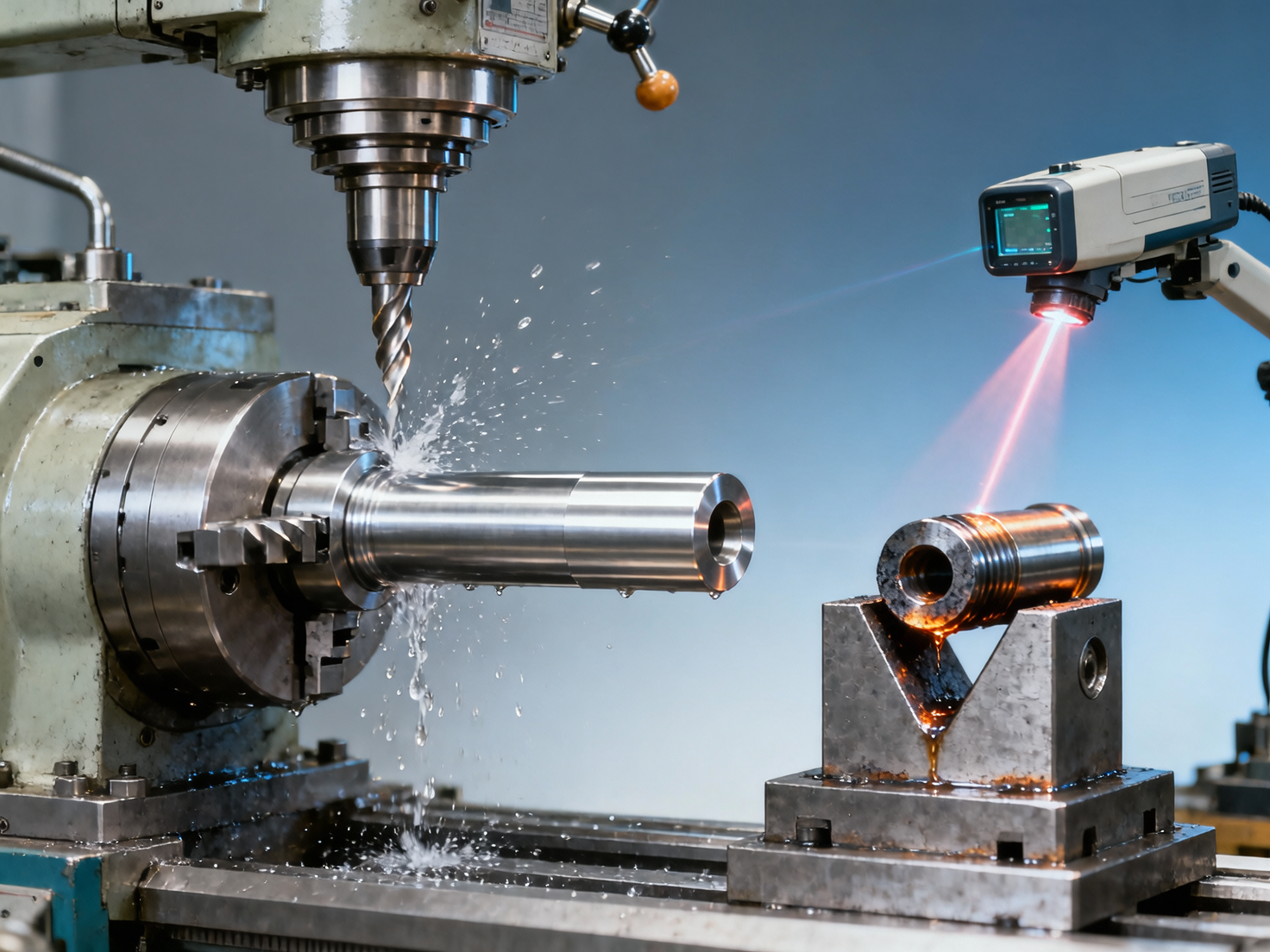
Shaft parts machined on automated lathes often exhibit increased runout after heat treatment—a critical issue impacting precision in CNC metalworking and industrial CNC applications. This phenomenon challenges quality control across Global Manufacturing, especially in automotive, aerospace, and energy equipment sectors relying on tight-tolerance shaft parts. Root causes span material behavior, residual stress redistribution, fixture-induced distortion, and thermal processing parameters. For users, procurement teams, and decision-makers in the Machine Tool Market, understanding this interplay between automated production, CNC cutting, and post-machining metallurgy is essential to optimize the full production process—from CNC programming to industrial lathe operation and automated production line integration.
Material Behavior and Microstructural Transformation
Heat treatment induces phase transformations—such as austenitization, quenching, and tempering—that alter grain structure and internal lattice strain. In high-carbon steels (e.g., AISI 4140 or 1045), martensitic formation introduces volumetric expansion of up to 3–4% locally, triggering non-uniform dimensional shifts. Automated lathes produce parts with tightly controlled pre-heat-treatment geometry—but microstructural heterogeneity (e.g., prior cold-worked zones or segregated carbides) leads to anisotropic shrinkage during cooling. This results in radial deviation exceeding ±0.015 mm in shafts longer than 300 mm, even when initial machining runout was held within ±0.005 mm.
Alloy composition plays a decisive role: chromium-molybdenum steels show 20–30% higher thermal distortion sensitivity compared to low-alloy equivalents under identical quenching rates. Moreover, surface-to-core cooling gradients exceed 150°C/s in oil-quenched components, amplifying differential contraction. Without pre-heat-treatment stress relief (e.g., 600–650°C for 2 hours), residual tensile stresses from turning operations become “locked in” and reorient during transformation—directly contributing to final runout.
For procurement professionals evaluating supplier capability, verifying documented stress-relief protocols—and not just final hardness—is critical. Suppliers reporting >95% compliance with ASTM E837 (hole-drilling strain gage method) demonstrate measurable control over pre-heat-treatment stress states.
Fixture-Induced Distortion and Clamping Strategy
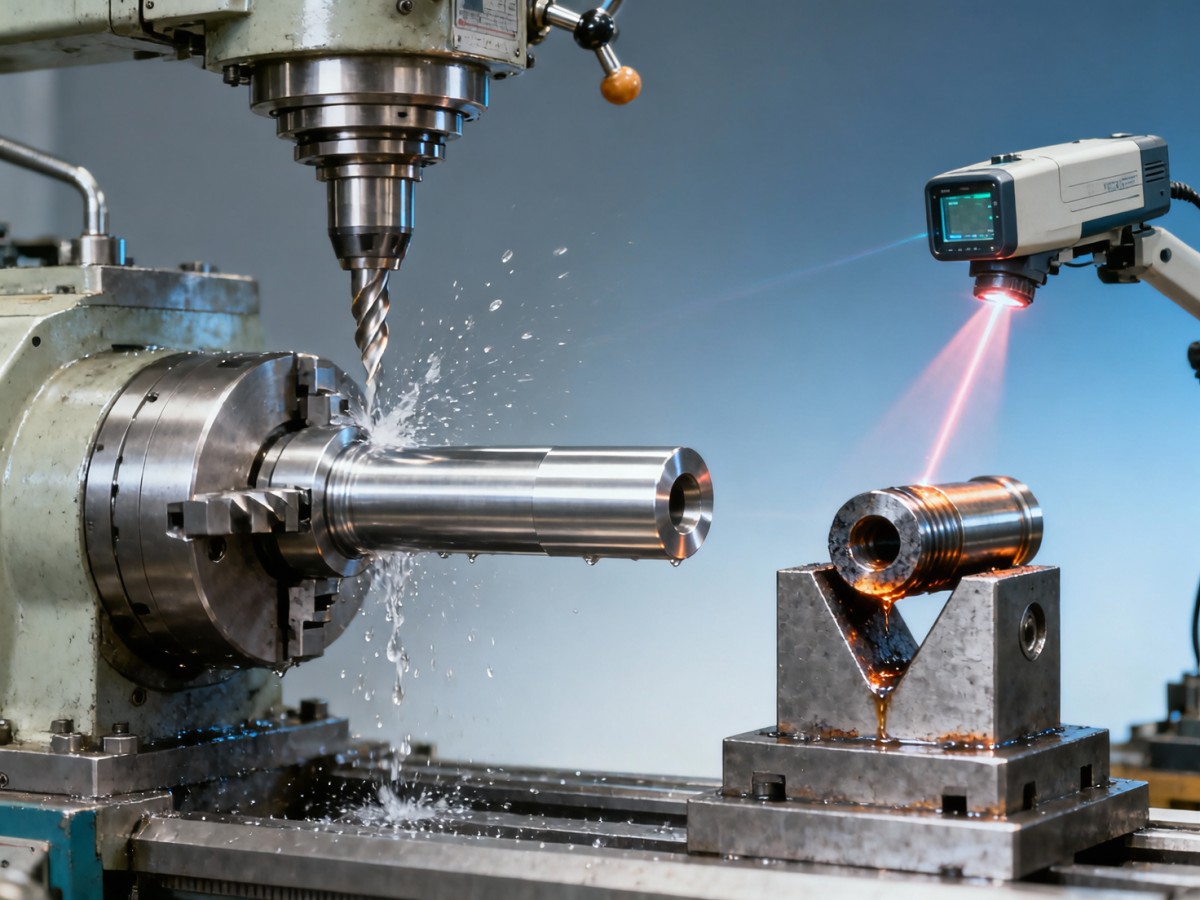
Automated lathes rely on hydraulic chucks, collets, or custom soft-jaw fixtures to hold shaft blanks during roughing and finishing. However, clamping forces exceeding 8–12 kN can induce elastic-plastic deformation—especially in thin-walled or long-overhang geometries (>L/D ratio of 12). When released before heat treatment, parts partially recover; but upon reheating, the “memory effect” of localized yield re-emerges during phase change, distorting the centerline.
A comparative study across 17 Tier-1 automotive suppliers found that shafts fixtured using segmented hydraulic chucks showed 42% higher post-heat-treatment runout versus those held in balanced three-jaw chucks with ≤3 kN clamping torque. The root cause? Non-uniform contact pressure distribution creates asymmetric thermal boundary conditions during heating—leading to uneven expansion and subsequent warpage.
Operators must prioritize fixture design validation: finite element analysis (FEA) simulations should confirm maximum contact pressure stays below 120 MPa for alloy steel shafts. Real-time monitoring of chuck pressure via integrated load cells (±2% accuracy) is now standard on Class I CNC lathes per ISO 230-2:2023.
This table highlights how clamping methodology directly correlates with geometric stability. Procurement teams should require fixture validation reports—including FEA outputs and actual runout test data across ≥5 consecutive lots—before approving new suppliers. Decision-makers must treat fixture strategy as a process parameter—not just an operational detail.
Thermal Process Parameters and Quenching Dynamics
Quench severity—quantified by Grossmann H-value—dictates cooling rate uniformity. In automated lines, batch quenching in agitated oil (H = 0.3–0.5) yields lower runout than salt bath (H = 0.7–1.0) for shafts with diameters >50 mm. Why? Higher H-values accelerate surface contraction before core transformation completes, generating compressive hoop stress at the periphery and tensile stress internally—distorting the axis by up to 0.025 mm over 400 mm length.
Temperature uniformity during austenitizing is equally vital: ±5°C deviation across furnace zones increases runout variability by 35%, per data from 12 European heat-treat facilities audited under EN 1993-1-8. Modern furnaces with zone-controlled thermocouples (≤±1.5°C accuracy) reduce this risk significantly—but only if paired with real-time part temperature monitoring via embedded thermocouples (Type K, ±0.5°C).
For users operating in-house heat-treat lines, implementing a 3-point verification protocol is recommended: (1) furnace uniformity mapping every 6 months, (2) load thermocouple sampling per ASME BPE-2022, and (3) post-quench distortion screening using laser scanning (≤0.003 mm resolution) on 100% of critical shafts.
Integrated Process Optimization Framework
Solving runout requires cross-functional alignment—not isolated fixes. A proven 5-phase optimization framework includes: (1) Material lot traceability (ASTM E527), (2) Pre-machining stress relief per SAE AMS2750E, (3) Fixture FEA and pressure calibration, (4) Heat-treat cycle validation with in-situ thermography, and (5) Post-process correction grinding with adaptive CNC compensation (±0.002 mm resolution).
Decision-makers investing in next-gen automated lathes should prioritize machines supporting closed-loop metrology integration—such as Siemens Sinumerik ONE with integrated Renishaw Equator 300 feedback. These systems enable real-time runout compensation during finish turning, reducing post-heat-treatment correction needs by 60–75% in pilot deployments across German and Japanese OEMs.
This ROI-focused roadmap enables procurement and engineering leaders to prioritize investments based on urgency, budget, and technical readiness. Each lever delivers measurable, auditable improvement—not theoretical gains.
Actionable Next Steps for Stakeholders
For operators: Log clamping force, spindle RPM, and coolant flow rate for every shaft batch—then correlate with post-heat-treatment CMM reports. Start with one product family and expand.
For procurement teams: Require suppliers to submit quarterly runout trend charts (X-bar R charts) with Cp/Cpk ≥1.33 for all shaft families. Reject vendors without SPC-certified personnel (ASQ CQE level).
For enterprise decision-makers: Initiate a cross-departmental process audit covering CNC programming → fixture selection → heat-treat scheduling → final inspection. Allocate budget for at least two of the three optimization levers outlined above within Q3.
Understanding why shaft parts machined on automated lathes show higher runout after heat treatment isn’t just about metallurgy—it’s about system-level integration, data discipline, and proactive specification management. The most competitive manufacturers treat runout not as a defect, but as a diagnostic metric revealing gaps across the entire value chain.
Get your customized runout mitigation plan—validated against ISO 2768, ASME Y14.5, and customer-specific GD&T requirements. Contact our precision manufacturing engineers today to align your CNC lathe operations, heat-treat protocols, and quality assurance systems.
Recommended for You
![]() Fuxing EMU Trainset Procurement Reaches ¥4.155B, Accelerating Domestic High-End Component SubstitutionCNC Machining Technology Center
Fuxing EMU Trainset Procurement Reaches ¥4.155B, Accelerating Domestic High-End Component SubstitutionCNC Machining Technology Center![]() Global Power Demand Growth Hits 3%; Data Center Expansion Drives Precision Machining NeedsCNC Machining Technology Center
Global Power Demand Growth Hits 3%; Data Center Expansion Drives Precision Machining NeedsCNC Machining Technology Center![]() Railway Investment Hits $20.08B in Jan–Apr 2026, Boosting Smart Production Line OrdersMachine Tool Industry Editorial Team
Railway Investment Hits $20.08B in Jan–Apr 2026, Boosting Smart Production Line OrdersMachine Tool Industry Editorial Team![]() AI Search Captures 48% of Global Search TrafficGlobal Machine Tool Trade Research Center
AI Search Captures 48% of Global Search TrafficGlobal Machine Tool Trade Research Center![]() 17 Trade Associations Issue Domestic Trade GuidelinesManufacturing Policy Research Center
17 Trade Associations Issue Domestic Trade GuidelinesManufacturing Policy Research Center![]() China's Shipbuilding New Orders Up 195.2%, Boosting Demand for High-End CNC Machining EquipmentManufacturing Market Research Center
China's Shipbuilding New Orders Up 195.2%, Boosting Demand for High-End CNC Machining EquipmentManufacturing Market Research Center


Aris Katos
Future of Carbide Coatings
15+ years in precision manufacturing systems. Specialized in high-speed milling and aerospace grade alloy processing.
▶
Global Power Demand Growth Hits 3%; Data Center Expansion Drives Precision Machining NeedsCNC Machining Technology Center▶
When CNC Milling Beats Other Methods for Thin-Wall PartsCNC Machining Technology Center▶
Shaft Parts Quality Issues Often Linked to Hidden Runout ErrorsCNC Machining Technology Center▶
Are Shaft Parts Failing Due to Material Choice or MachiningCNC Machining Technology Center▶
Production Process Delays That Quietly Raise Unit CostCNC Machining Technology Center
Mastering 5-Axis Workholding Strategies
Join our technical panel on Nov 15th to learn about reducing vibrations in thin-wall components.

Providing you with integrated sanding solutions
Before-sales and after-sales services
Comprehensive technical support