• Global CNC market projected to reach $128B by 2028 • New EU trade regulations for precision tooling components • Aerospace deman
NYSE: CNC +1.2%LME: STEEL -0.4%

Why Shaft Parts fail early and how to prevent it
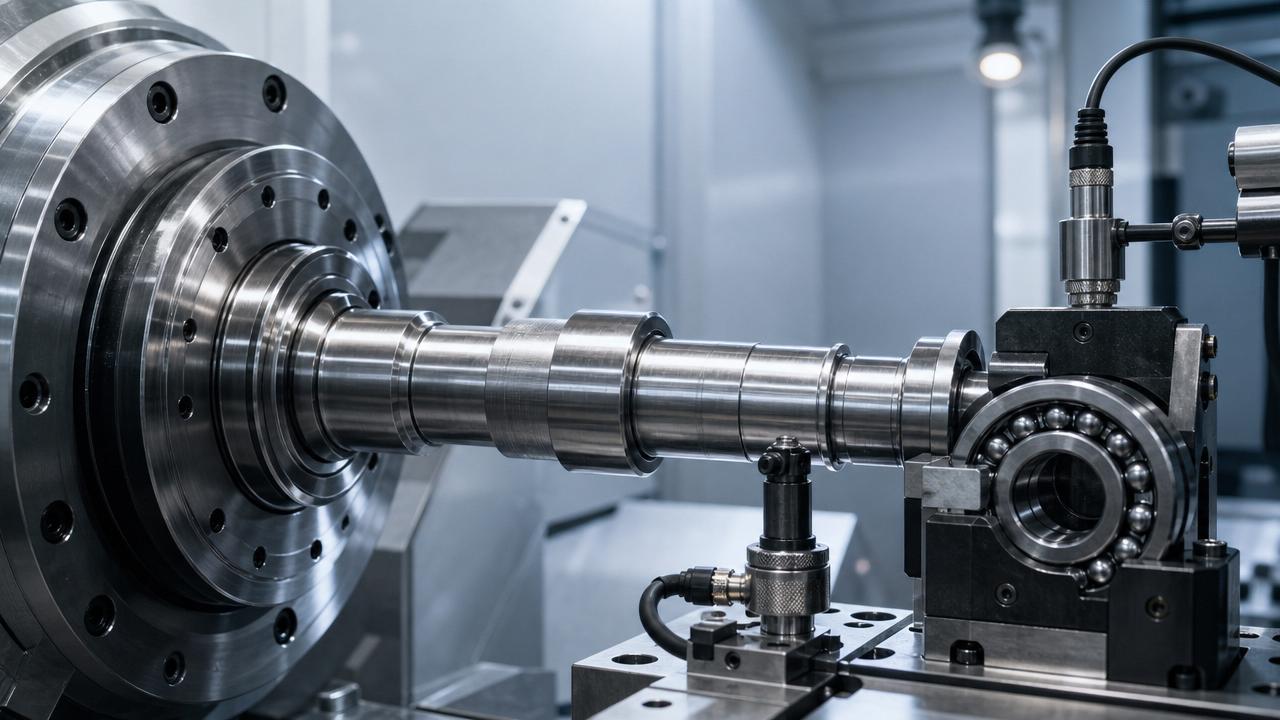
Early failure in Shaft Parts is becoming a bigger concern as CNC machining, automation, and smart production lines demand tighter tolerances and higher uptime. When a shaft fails too soon, the damage spreads fast.
It can cause dimensional drift, vibration, rejected batches, safety incidents, and costly maintenance interruptions. In precision manufacturing, even minor weakness in Shaft Parts can reduce system reliability across the entire process chain.
This issue matters across automotive, aerospace, energy equipment, and electronics production. As machine tools run faster and longer, understanding why Shaft Parts fail early helps improve quality control, compliance, and operational stability.
Failure patterns in Shaft Parts are changing with modern production demands
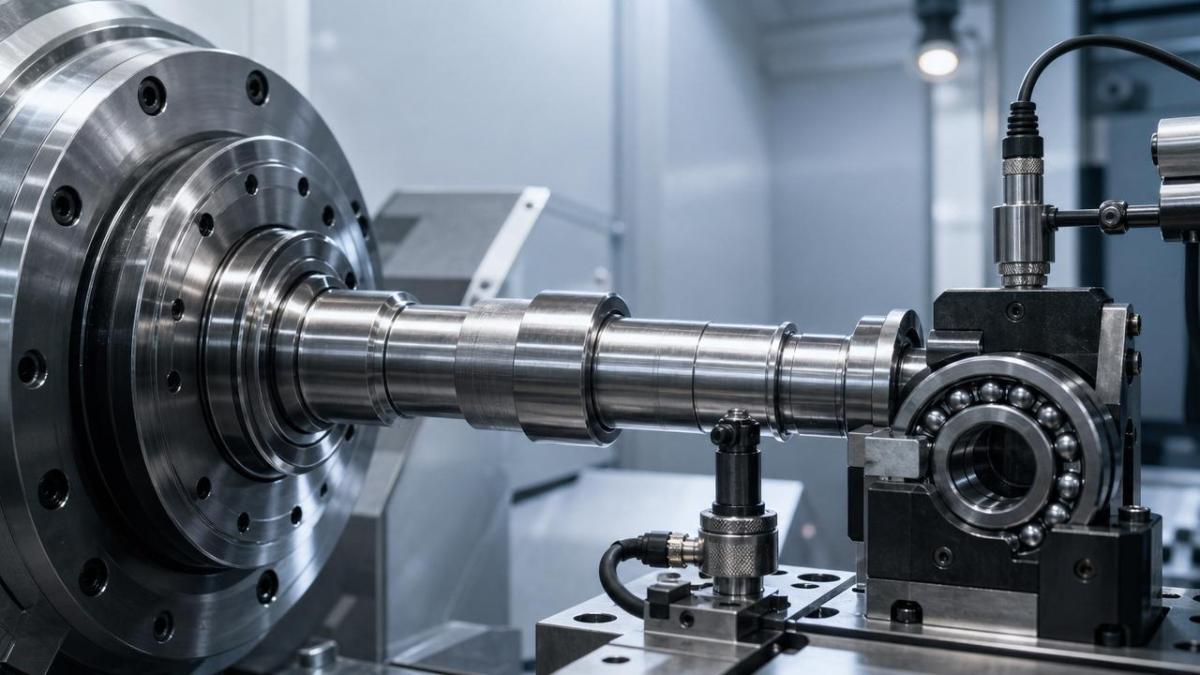
Traditional shaft failures often appeared after long service cycles. Today, early failure can happen much sooner because machines operate at higher speed, higher load, and tighter precision windows.
Advanced CNC systems now produce more complex geometries, thinner sections, and stricter concentricity requirements. That means Shaft Parts face less tolerance for machining errors, imbalance, or surface defects.
Another trend is digitalized production. Sensors detect vibration, heat, and spindle instability faster than before. As a result, early-stage shaft problems are more visible, not necessarily more rare.
Global supply chains also add risk. Material consistency, heat treatment quality, outsourced machining accuracy, and transport damage can all influence the service life of Shaft Parts.
The main signals behind early Shaft Parts failure are now easier to identify
Early failure rarely comes from one cause alone. It usually develops through a chain of weaknesses that begins in design, grows during machining, and accelerates during operation.
Common root causes
In many cases, surface damage starts small. Then cyclic loading turns a microscopic flaw into a crack. Once crack propagation begins, Shaft Parts can fail suddenly and without much visible warning.
Why these failures are increasing across CNC and automated manufacturing
Several industry shifts are making failure prevention more important. These shifts reflect broader changes across modern manufacturing, not isolated problems at one machine or one workshop.
Key driving factors
- Higher spindle speeds increase centrifugal force and thermal load on rotating Shaft Parts.
- Multi-axis machining creates more complex shaft features and narrower tolerance margins.
- Longer automated production cycles reduce opportunities for manual inspection.
- Mixed-batch production can introduce setup variation and hidden alignment issues.
- Pressure for lower cost sometimes affects raw material control and process discipline.
- Global sourcing may create variation in metallurgy, heat treatment, and finishing quality.
These factors do not guarantee failure, but they reduce safety margins. For critical Shaft Parts, even a minor process deviation can become a serious reliability issue.
The impact of weak Shaft Parts reaches far beyond a single component
When Shaft Parts fail early, the effect moves across multiple business functions. Quality outcomes, maintenance cost, delivery performance, and workplace safety can all be affected at the same time.
For precision machining, shaft instability can reduce dimensional accuracy, worsen tool wear, and trigger scrap in downstream operations. That is especially critical in tight-tolerance sectors such as aerospace and electronics.
For automated lines, shaft-related vibration can interrupt robotic handling, assembly positioning, and in-line inspection systems. One damaged shaft may create a chain reaction of alarms, stoppages, and retesting.
Typical operational consequences
- Reduced machine accuracy and unstable product quality
- Higher unplanned downtime and maintenance frequency
- Faster bearing, seal, and coupling wear
- Increased compliance risk in safety-sensitive applications
- More warranty claims and weaker customer confidence
The strongest prevention strategy starts before Shaft Parts enter service
Prevention is most effective when it begins upstream. The best results come from controlling design, material, machining, assembly, and maintenance as one connected reliability system.
Priority controls worth close attention
- Material verification: Check chemical composition, cleanliness, hardness, and traceability before machining.
- Machining precision: Control roundness, coaxiality, runout, and surface roughness using calibrated equipment.
- Heat treatment validation: Confirm hardness depth, residual stress balance, and microstructure consistency.
- Surface integrity: Avoid grinding burns, chatter marks, burrs, and sharp transition points.
- Assembly discipline: Maintain alignment, fit tolerance, and torque control during installation.
- Lubrication control: Use correct lubricant type, cleanliness standard, and replenishment interval.
Fatigue-resistant design also matters. Proper fillet radii, balanced geometry, and realistic load assumptions can significantly improve the life of Shaft Parts.
Inspection and monitoring are becoming the new baseline for reliable Shaft Parts
Modern manufacturing increasingly relies on predictive methods instead of waiting for visible damage. This shift helps identify weak Shaft Parts before they trigger major disruption.
Recommended monitoring approach
Vibration analysis, oil analysis, thermal monitoring, and crack detection are especially useful in high-value equipment. Together, they provide a more complete view of shaft health and failure progression.
What deserves immediate focus as Shaft Parts requirements keep rising
As machining accuracy and automation levels continue to rise, prevention must become more systematic. The following areas deserve immediate attention in any reliability improvement effort for Shaft Parts.
- Standardize material and heat treatment specifications across suppliers.
- Define clear acceptance limits for runout, balance, and surface finish.
- Link machining data with maintenance records to identify recurring failure patterns.
- Use failure analysis reports to update design and process control plans.
- Increase attention to lubrication cleanliness in automated, continuous-duty equipment.
- Adopt predictive monitoring for critical rotating assemblies.
Early failure in Shaft Parts is not just a maintenance problem. It is a signal about design assumptions, manufacturing discipline, and operating conditions. Addressing it early protects output, safety, and long-term equipment performance.
The next practical step is to review failure history, compare it with process capability, and build a prevention checklist covering material, machining, assembly, and monitoring. That approach turns shaft reliability into a measurable production advantage.
PREVIOUS ARTICLE
NEXT ARTICLE
Recommended for You
![]() ISO/TR 24122:2026 CNC Machine Carbon Footprint Guide PublishedManufacturing Policy Research Center
ISO/TR 24122:2026 CNC Machine Carbon Footprint Guide PublishedManufacturing Policy Research Center![]() Shenwei CNC Dual-Spindle Transfer Machine Passes TÜV Rheinland Production-Line Integration CertificationMachine Tool Industry Editorial Team
Shenwei CNC Dual-Spindle Transfer Machine Passes TÜV Rheinland Production-Line Integration CertificationMachine Tool Industry Editorial Team![]() China's CNC Machine Tool Penetration Rate Exceeds 51%Manufacturing Market Research Center
China's CNC Machine Tool Penetration Rate Exceeds 51%Manufacturing Market Research Center![]() VDMA-TÜV South Germany Releases 2026 CNC Green Procurement GuideManufacturing Policy Research Center
VDMA-TÜV South Germany Releases 2026 CNC Green Procurement GuideManufacturing Policy Research Center![]() Brazil INMETRO Enforcement: 37 CNC Lathes Rejected Over IoT ModuleManufacturing Policy Research Center
Brazil INMETRO Enforcement: 37 CNC Lathes Rejected Over IoT ModuleManufacturing Policy Research Center![]() Red Sea Crisis Escalates: Maersk Suspends CNC Equipment Bookings on Asia-Europe RoutesGlobal Machine Tool Trade Research Center
Red Sea Crisis Escalates: Maersk Suspends CNC Equipment Bookings on Asia-Europe RoutesGlobal Machine Tool Trade Research Center


Aris Katos
Future of Carbide Coatings
15+ years in precision manufacturing systems. Specialized in high-speed milling and aerospace grade alloy processing.
▶
Why Shaft Parts fail early and how to prevent itCNC Machining Technology Center▶
How do Shaft Parts defects start during machining?CNC Machining Technology Center▶
What defects in Shaft Parts often trace back to machiningCNC Machining Technology Center▶
What causes hidden defects in Shaft Parts machining?CNC Machining Technology Center▶
Why do Shaft Parts fail inspection more often than expected?CNC Machining Technology Center
Mastering 5-Axis Workholding Strategies
Join our technical panel on Nov 15th to learn about reducing vibrations in thin-wall components.

Providing you with integrated sanding solutions
Before-sales and after-sales services
Comprehensive technical support