• Global CNC market projected to reach $128B by 2028 • New EU trade regulations for precision tooling components • Aerospace deman
NYSE: CNC +1.2%LME: STEEL -0.4%

What defects in Shaft Parts often trace back to machining
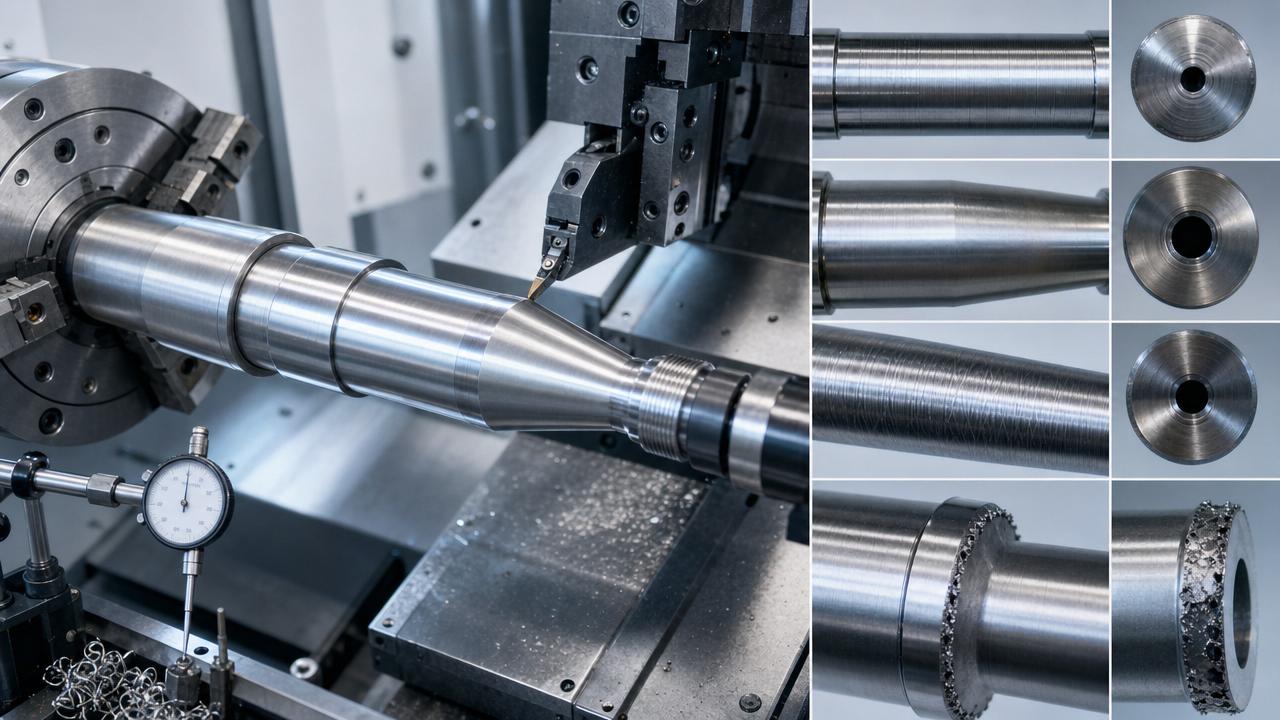
Many defects in Shaft Parts can be traced back to machining, from poor concentricity to surface tearing and hidden size drift.
In modern CNC production, these issues affect accuracy, fatigue life, assembly quality, and long-term operating safety.
For precision manufacturing, identifying machining-related causes is not only a quality task but also a production stability requirement.
This article explains which defects in Shaft Parts most often come from machining and how to control them effectively.
Machining Defects in Shaft Parts: Basic Definition and Scope
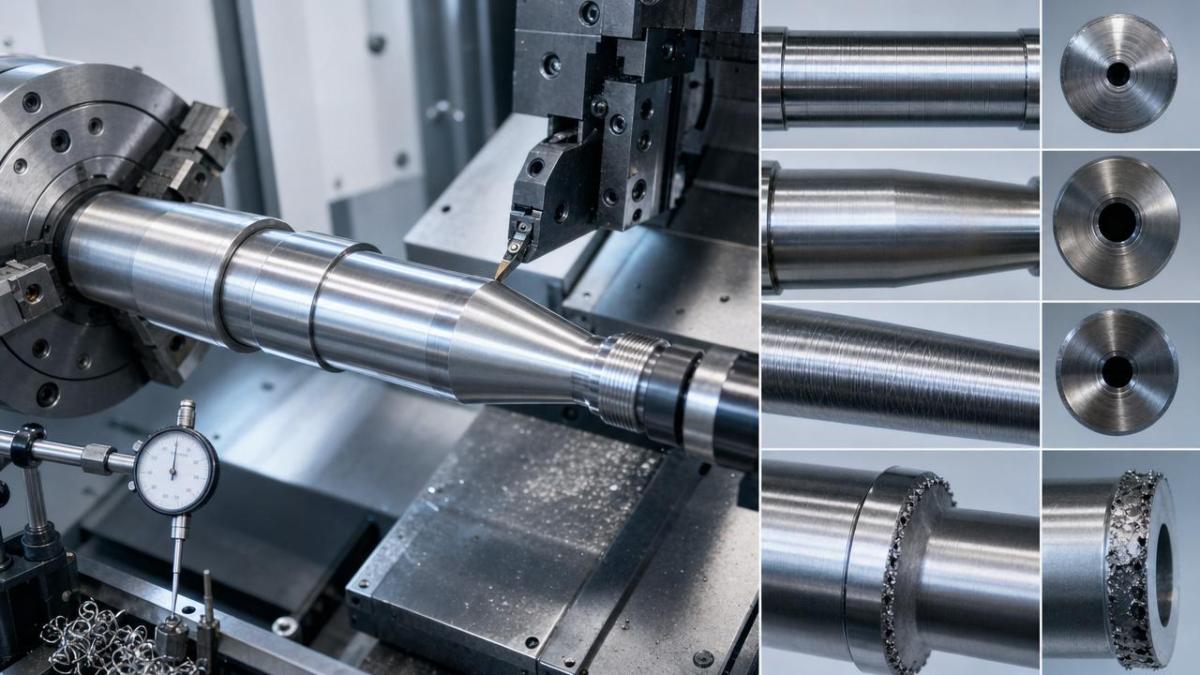
Shaft Parts are rotating or positioning components used in automotive, aerospace, energy, electronics, and industrial equipment.
They often require tight control of diameter, roundness, straightness, coaxiality, and surface integrity.
A defect linked to machining appears when turning, grinding, drilling, milling, clamping, or tool motion changes the intended geometry.
Some defects are visible immediately, such as chatter marks, burrs, scratches, or thermal discoloration.
Others stay hidden until balancing, assembly, load testing, or field operation reveals instability.
In CNC environments, even small machining errors can multiply across batches and create recurring nonconformity in Shaft Parts.
Common defect categories
- Dimensional deviation, including oversize, undersize, taper, and shoulder location error.
- Geometric deviation, including runout, out-of-roundness, bending, and poor concentricity.
- Surface defects, including tearing, chatter, burns, scoring, pits, and burr formation.
- Subsurface damage, including residual stress, microcracks, and heat-affected layers.
Why the Industry Focuses on Machining Quality in Shaft Parts
The global CNC machine tool industry is moving toward higher precision, automation, and digital process control.
That shift increases output, but it also exposes weak machining controls faster than before.
Shaft Parts are especially sensitive because they transmit motion, torque, load, and positional accuracy.
A small machining defect can affect bearing fit, seal performance, vibration, and service life.
Smart manufacturing systems now collect more data, yet root causes still require process understanding.
Defects in Shaft Parts That Often Trace Back to Machining
Several recurring defect types in Shaft Parts are closely linked to machining conditions rather than raw material alone.
Poor concentricity and runout
This defect often comes from improper chucking, worn centers, fixture error, or inconsistent datum transfer between operations.
It may also result from re-clamping after roughing without adequate reference correction.
Taper and diameter variation
Taper in Shaft Parts usually points to tool wear, machine misalignment, thermal growth, or insufficient rigidity.
Long slender shafts are highly vulnerable to deflection during turning and grinding.
Surface tearing and chatter marks
These defects often trace to unstable cutting parameters, poor insert geometry, weak support, or spindle vibration.
They reduce fatigue resistance and can accelerate wear at bearing or sealing interfaces.
Burns, microcracks, and thermal damage
Grinding burns and heat checks usually indicate excessive heat input, poor coolant delivery, or a loaded grinding wheel.
These conditions may leave residual tensile stress beneath an apparently acceptable surface.
Burrs and edge breakdown
Burrs in Shaft Parts often result from dull tools, wrong feed direction, poor exit support, or weak deburring control.
If not removed consistently, they can disrupt assembly and damage adjacent components.
Main Machining Factors Behind Shaft Parts Defects
Most machining defects in Shaft Parts come from a limited group of process variables.
Understanding them helps separate random error from systematic failure.
- Machine condition: spindle accuracy, guideway wear, thermal drift, and backlash affect geometry.
- Tool condition: wear, edge chipping, wrong coating, and poor tool balance damage surface quality.
- Workholding: excessive clamping force or unstable support bends slender Shaft Parts during machining.
- Cutting parameters: improper speed, feed, or depth can trigger vibration and heat accumulation.
- Coolant control: poor nozzle position or flow instability weakens chip evacuation and heat removal.
- Process sequence: roughing, heat treatment, semi-finishing, and grinding must follow deformation logic.
- Measurement practice: wrong gauging timing or unstable temperature conditions hide real dimensional variation.
Application Value of Early Defect Control in Shaft Parts
Controlling machining-related defects in Shaft Parts creates direct value across quality, cost, and delivery performance.
Stable geometry improves assembly repeatability and reduces line stoppage caused by fit issues.
Better surface integrity supports longer life in rotating systems exposed to friction, speed, and cyclic stress.
Accurate process control also lowers scrap, rework, and sorting costs in large-volume CNC production.
For export-oriented manufacturing, consistent Shaft Parts quality strengthens traceability and compliance confidence.
Typical Shaft Parts and Their Machining Risk Points
Practical Process Suggestions for Reducing Shaft Parts Defects
Reducing machining defects in Shaft Parts depends on disciplined process control, not a single corrective action.
Strengthen setup and datum control
Keep reference surfaces clean, verify center condition, and standardize re-clamping methods across operations.
Match support method to shaft rigidity
Use steady rests, tailstock support, or optimized clamping zones for long or thin Shaft Parts.
Monitor tool wear before visible failure
Set wear limits by dimension trend, not only by tool life estimates or surface appearance.
Control heat throughout finishing operations
Review coolant coverage, wheel dressing condition, and cycle timing where Shaft Parts require grinding.
Use layered inspection
Combine in-process checks, final geometry measurement, and surface verification to catch drift early.
- Track Cp and Cpk for critical diameters and runout features.
- Separate machine, tool, and operator variables during root cause analysis.
- Record defect location patterns on Shaft Parts, not only pass or fail counts.
- Review thermal stability during long automated production cycles.
Next-Step Focus for Stable Shaft Parts Manufacturing
When defects in Shaft Parts repeatedly appear, the most effective next step is process mapping by operation.
Link each defect to machine condition, tool state, fixture method, coolant control, and measurement timing.
This approach reveals whether the source is cutting instability, setup variation, or hidden thermal distortion.
In advanced CNC manufacturing, stable Shaft Parts quality comes from repeatable machining discipline supported by real production data.
A focused review of recurring defect patterns can reduce scrap, improve reliability, and strengthen long-term process capability.
PREVIOUS ARTICLE
NEXT ARTICLE
Recommended for You
![]() Delta NC5 CNC System Gains TÜV Safety Certification, Enters BMW Production ValidationMachine Tool Industry Editorial Team
Delta NC5 CNC System Gains TÜV Safety Certification, Enters BMW Production ValidationMachine Tool Industry Editorial Team![]() Vietnam's Draft AI Safety Rule for CNC Machines Requires Dual CertificationManufacturing Policy Research Center
Vietnam's Draft AI Safety Rule for CNC Machines Requires Dual CertificationManufacturing Policy Research Center![]() First CNC Machine Carbon Footprint Guide Released in ChinaManufacturing Policy Research Center
First CNC Machine Carbon Footprint Guide Released in ChinaManufacturing Policy Research Center![]() Brazil INMETRO Launches Spot Inspections on CNC LathesMachine Tool Industry Editorial Team
Brazil INMETRO Launches Spot Inspections on CNC LathesMachine Tool Industry Editorial Team![]() Japan METI Green Subsidy: Up to ¥4M for Chinese High-Efficiency CNC SystemsManufacturing Policy Research Center
Japan METI Green Subsidy: Up to ¥4M for Chinese High-Efficiency CNC SystemsManufacturing Policy Research Center![]() Red Sea Shipping Crisis Escalates: CNC Equipment Delays Hit 14.2 Days on Asia-Europe RoutesManufacturing Market Research Center
Red Sea Shipping Crisis Escalates: CNC Equipment Delays Hit 14.2 Days on Asia-Europe RoutesManufacturing Market Research Center


Aris Katos
Future of Carbide Coatings
15+ years in precision manufacturing systems. Specialized in high-speed milling and aerospace grade alloy processing.
▶
What defects in Shaft Parts often trace back to machiningCNC Machining Technology Center▶
What causes hidden defects in Shaft Parts machining?CNC Machining Technology Center▶
Why do Shaft Parts fail inspection more often than expected?CNC Machining Technology Center▶
What makes Shaft Parts fail earlier than expected?CNC Machining Technology Center▶
How to judge Shaft Parts quality before bulk orderingCNC Machining Technology Center
Mastering 5-Axis Workholding Strategies
Join our technical panel on Nov 15th to learn about reducing vibrations in thin-wall components.

Providing you with integrated sanding solutions
Before-sales and after-sales services
Comprehensive technical support