• Global CNC market projected to reach $128B by 2028 • New EU trade regulations for precision tooling components • Aerospace deman
NYSE: CNC +1.2%LME: STEEL -0.4%

What causes hidden defects in Shaft Parts machining?
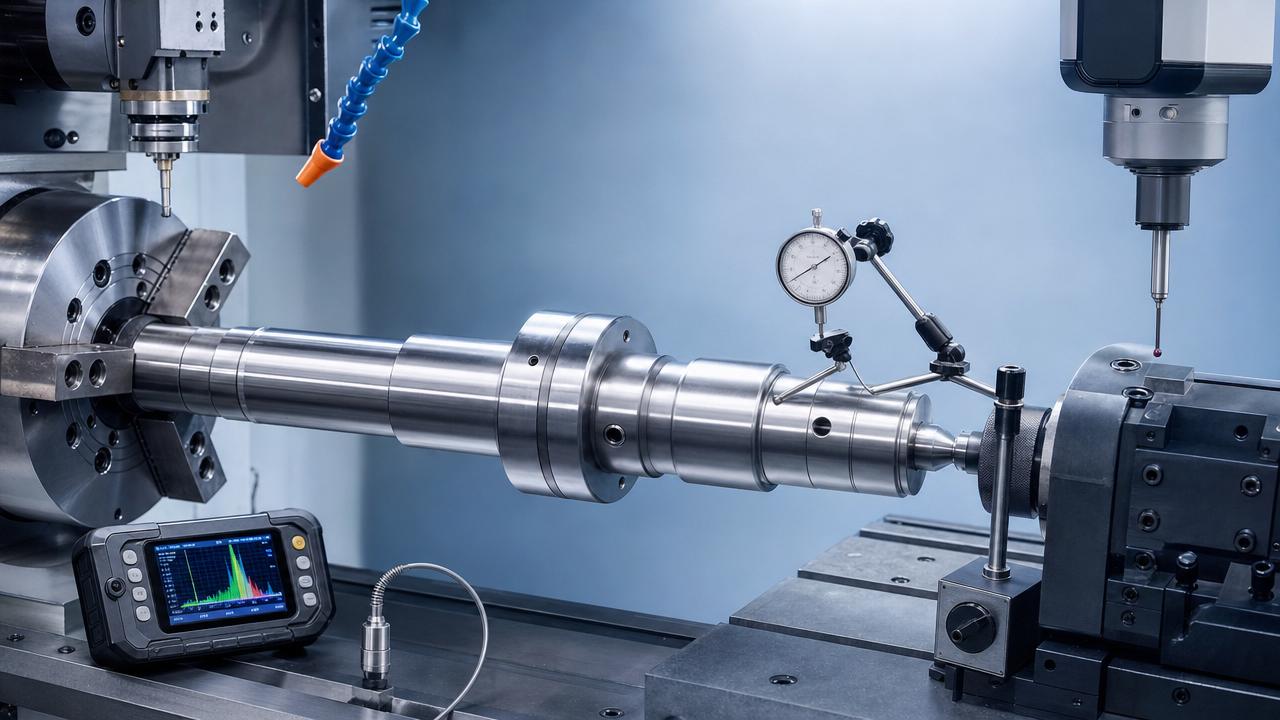
Hidden defects in Shaft Parts machining rarely come from one obvious mistake. They usually develop through a chain of small problems in material quality, setup, tooling, thermal behavior, process control, and inspection coverage. For quality control and safety managers, the real issue is not only what the defect is, but when it starts, how it escapes detection, and what risk it creates in service.
In high-precision manufacturing, shaft components often work under rotation, load, friction, vibration, and repeated stress cycles. That makes hidden defects especially dangerous. A shaft may pass dimensional inspection and still fail later because of subsurface cracks, residual stress, distortion, poor concentricity stability, or metallurgical inconsistency. Understanding these causes is the first step toward stronger prevention.
Why hidden defects in Shaft Parts are a serious quality and safety concern
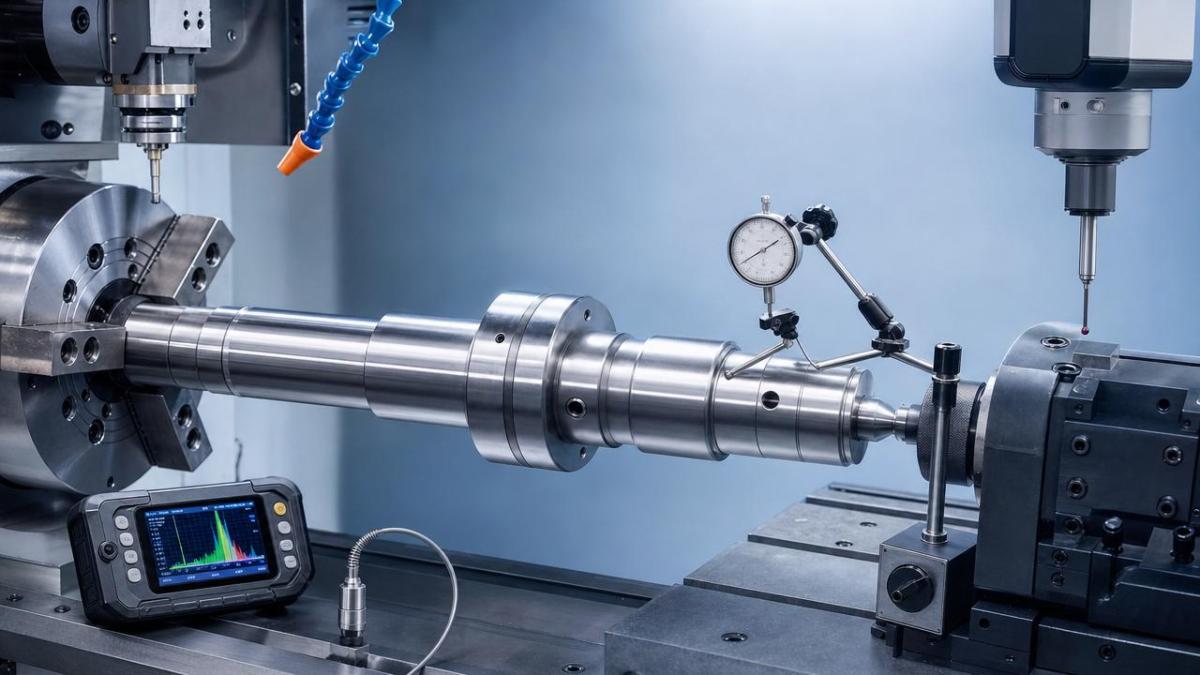
For many manufacturers, Shaft Parts are critical transmission or support elements. They influence alignment, torque transfer, bearing life, sealing performance, and machine stability. When hidden defects remain inside the part or are masked by acceptable surface measurements, the consequences can extend beyond scrap and rework into field failures, safety incidents, and customer claims.
Quality teams are often asked the same practical question: why did the part meet drawing requirements but still fail during assembly or operation? The answer is that conventional inspection may confirm size, roughness, and visible geometry, while missing internal damage, unstable process conditions, or defects that only appear after heat treatment, grinding, or service loading.
For safety managers, the priority is risk containment. Shaft failures can trigger overheating, vibration, seal leakage, broken transmission paths, or sudden machine shutdowns. In high-speed or heavy-load equipment, a hidden defect may progress from microscopic damage to catastrophic fracture. This is why defect prevention must begin upstream, long before final inspection.
What usually causes hidden defects during Shaft Parts machining
The most common causes fall into six interacting areas: material inconsistency, improper clamping, tool wear, unstable cutting parameters, thermal deformation, and process transfer errors between operations. Each factor alone can damage part integrity, but the highest risk often comes when several of them appear together in the same production route.
Material inconsistency is one of the earliest root causes. If bar stock or forged blanks contain segregation, inclusions, porosity, decarburization, or residual stress from prior processing, machining may expose or worsen those weaknesses. The defect did not start at the CNC machine, but machining can turn a dormant material issue into a reliability problem.
Clamping errors are another major source. Shaft Parts are sensitive to runout, coaxiality, straightness, and deformation under force. If the fixture applies uneven pressure, uses worn centers, or fails to support slender sections correctly, the shaft may be machined in a distorted state. Once unclamped, elastic recovery can shift dimensions and geometry beyond the true functional condition.
Tool wear can create hidden rather than obvious defects. A worn insert may still cut, but it increases heat, rubbing, burr formation, tearing, and subsurface strain. Surface finish may remain barely acceptable while metallurgical damage accumulates below the surface. This is especially important in finishing operations, where quality teams may assume the final pass is low risk.
Unstable cutting parameters also matter. Excessive speed, feed, or depth of cut can generate thermal loads and vibration. Parameters that are too conservative may cause rubbing instead of clean shearing. In both cases, the result can include work hardening, chatter marks, residual stress concentration, or microcrack initiation that may not be visible during routine checks.
Thermal effects are often underestimated. During roughing and finishing, heat can change local dimensions, alter stress distribution, and distort long shafts. If in-process measurements are taken before temperature stabilizes, the recorded values may look acceptable while the part continues to move later. Hidden deformation is especially common in long, thin, or asymmetrically machined shaft designs.
Process transfer errors occur when one operation creates a condition that later operations cannot fully correct. A shaft with poor datum control in turning may enter heat treatment with uneven stock. Grinding may then remove material unevenly, exposing burns, waviness, or stress imbalance. What appears as a grinding problem may actually originate from earlier machining decisions.
How raw material and heat treatment contribute to defects that machining cannot hide
Quality control for Shaft Parts should begin before the cutting process. Incoming material can carry defects that stay invisible until the part reaches final use. Inclusions, internal voids, banded structure, inconsistent hardness, or improper grain flow reduce fatigue strength and machining stability. These problems often become visible only after breakage analysis or advanced non-destructive testing.
Residual stress in raw material is particularly problematic. When a shaft blank is turned, drilled, or milled, stress redistribution can cause bending or size drift. Operators may compensate at the machine, but the part may still move after unclamping, heat treatment, or storage. This creates hidden geometric instability, even if immediate inspection results seem acceptable.
Heat treatment can strengthen Shaft Parts, but it can also introduce hidden risks. Improper quenching, tempering, or induction hardening may cause hardness variation, distortion, brittle zones, grinding sensitivity, or microstructural defects. If the hardened layer depth is uneven or transition zones are poorly controlled, the shaft may fail early under cyclic loading.
Another common issue is the mismatch between heat treatment condition and machining strategy. Hard-turning or finish grinding of treated shafts requires stable tool selection, coolant control, and stock allowance planning. If allowance is too small, decarburized layers or distortion may remain. If it is too large, excessive heat and stress may damage the surface integrity of the final part.
Why setup, support, and machine condition often create defects before inspection notices them
Many hidden defects in Shaft Parts machining are actually setup-related. Long shafts, stepped shafts, and thin-wall sections respond strongly to support quality. If tailstock pressure is excessive, the part can deflect during cutting. If support is insufficient, vibration and taper may develop. In either case, the defect may only appear during assembly, balancing, or field operation.
Centers, chucks, collets, and steady rests must be maintained as carefully as cutting tools. Worn center holes, damaged jaws, contamination on locating faces, or poor alignment between spindle and tailstock can all introduce geometry errors that seem random. Because these errors vary from batch to batch, they are often misdiagnosed as operator inconsistency instead of setup system weakness.
Machine tool condition also plays a direct role. Spindle runout, guideway wear, backlash, thermal drift, and lubrication issues can reduce repeatability. In the CNC machine tool industry, high nominal accuracy does not guarantee stable actual accuracy over time. For quality teams, the key question is not the machine’s brochure capability, but its proven process capability under real production loads.
Vibration deserves special attention. Chatter can leave visible marks, but low-level vibration may mainly affect subsurface structure, roundness stability, and fatigue performance. If monitoring focuses only on dimensional output, early vibration damage may be missed. Process signals such as spindle load, sound pattern, and tool life shift should therefore be treated as quality indicators, not only maintenance data.
Which machining-stage defects are most likely to escape routine quality checks
Several defect types are especially likely to remain hidden. Subsurface microcracks are a major example. They can be generated by aggressive cutting, thermal shock, grinding burn, or hard-turning instability. Since they may not break the visible surface immediately, they often escape visual inspection and standard dimensional measurement.
Residual stress concentration is another hidden issue. A shaft may show excellent size accuracy while carrying tensile stress near fillets, shoulders, keyways, or transition radii. Under rotating or alternating load, these areas become likely crack initiation points. This is why dimensional conformity alone is not enough for safety-critical Shaft Parts.
Poor concentricity transfer between operations is also common. If datums are changed carelessly between turning, heat treatment, and grinding, the final shaft may meet individual feature tolerances while still performing poorly as a functional rotating part. The defect is not a single wrong dimension, but a loss of geometric relationship that affects balance, bearing fit, and wear behavior.
Grinding burn and over-tempering can be difficult to identify without targeted methods. A polished shaft surface may look clean while hidden thermal damage reduces hardness or creates brittle structures. In service, this can shorten bearing seat life or trigger crack growth in stressed zones. When parts have high fatigue requirements, relying only on visual cleanliness is risky.
Another overlooked issue is burr-related damage. Burrs at oil holes, threads, grooves, and shoulders may seem minor, yet they can alter assembly fit, release particles into lubrication systems, or become local stress raisers. In quality reviews, such defects are sometimes classified as cosmetic when they actually affect safety and operating reliability.
How quality control and safety teams can identify root causes earlier
For quality and safety professionals, the best strategy is to shift from end-of-line detection to process-based prevention. Start by mapping where hidden defects are most likely to originate: incoming material, rough machining, semi-finishing, heat treatment, finishing, grinding, cleaning, and final handling. The process route itself often reveals where control gaps exist.
Risk-based inspection is more useful than equal inspection everywhere. Shaft Parts with high rotational speed, alternating load, or safety-critical function need stronger controls at stress-sensitive features such as fillets, bearing seats, splines, threads, and oil holes. Not every feature carries the same failure consequence, so inspection effort should follow functional risk.
Process capability analysis is essential. If Cp and Cpk values drift on roundness, runout, coaxiality, or hardness depth, hidden defects may already be developing even before nonconforming parts appear. Trend data from machine offsets, tool life records, spindle load, coolant condition, and rework rates can help identify weak points earlier than final inspection alone.
Cross-functional review is equally important. Hidden defects often sit between departments: purchasing approves material, production sets parameters, maintenance manages machine condition, and quality sees the failure result. A practical containment system requires these functions to share evidence instead of treating defects as isolated events.
When failures occur, root cause analysis should go beyond the last operation. Many organizations focus on the step where the defect becomes visible. For Shaft Parts, that approach is often misleading. The more useful question is: what earlier condition made the later defect possible? This shift improves corrective action quality and reduces repeat escapes.
What preventive actions reduce hidden defects in Shaft Parts machining
The most effective prevention begins with raw material control. Require traceable certificates, verify hardness and microstructure where needed, and use incoming inspection methods matched to failure risk. For critical Shaft Parts, ultrasonic testing, cleanliness review, or metallographic checks may be justified before machining starts.
Next, strengthen fixture and support design. Use clamping methods that minimize distortion, verify center condition regularly, and match support strategy to shaft length, diameter, and stiffness. For slender parts, steady rests, intermediate support, and balanced cutting sequences can greatly improve geometry stability and reduce hidden stress formation.
Tool management should be proactive rather than reactive. Define tool life limits based on quality signals, not just catastrophic wear. If burrs, temperature rise, spindle load changes, or finish variability increase near the end of tool life, replace tools before visible failure occurs. This is often cheaper than sorting questionable parts later.
Cutting parameter control must be standardized and validated. Avoid excessive heat input, control chip evacuation, and maintain coolant effectiveness. For high-precision shaft machining, parameter windows should be linked to material condition, feature type, and operation stage. Stable machining is not only about productivity; it is also about preserving subsurface integrity.
Introduce targeted inspection where hidden defects are most likely. Depending on application, this may include runout verification after unclamping, hardness depth checks after heat treatment, magnetic particle testing, eddy current testing, residual stress evaluation, or burn detection after grinding. The goal is not more inspection everywhere, but smarter inspection at failure-prone points.
Finally, build closed-loop learning from scrap, rework, and field feedback. If one shaft family repeatedly shows distortion, burn, or fatigue complaints, update the control plan, PFMEA, and work instructions. Hidden defects become manageable when organizations treat them as process patterns rather than isolated bad parts.
Conclusion: hidden defects are process risks, not just inspection misses
Hidden defects in Shaft Parts machining are usually caused by upstream process weaknesses rather than one final mistake. Material inconsistency, residual stress, poor clamping, machine instability, tool wear, thermal damage, and weak process transfer control all contribute to failures that may escape standard inspection.
For quality control and safety managers, the key lesson is clear: a shaft that looks acceptable is not always a shaft that is reliable. The most effective response is to combine material verification, stable machining practice, risk-based inspection, and cross-functional root cause analysis. That approach reduces production risk, protects operational safety, and improves long-term product performance.
PREVIOUS ARTICLE
NEXT ARTICLE
Recommended for You
![]() First Global CNC Machine Carbon Footprint Guide ReleasedManufacturing Policy Research Center
First Global CNC Machine Carbon Footprint Guide ReleasedManufacturing Policy Research Center![]() Delta Launches NC5 CNC Series with RTCP & SIL2 CertificationCNC Machining Technology Center
Delta Launches NC5 CNC Series with RTCP & SIL2 CertificationCNC Machining Technology Center![]() Japan METI Boosts Green Subsidies for Chinese CNC SystemsManufacturing Policy Research Center
Japan METI Boosts Green Subsidies for Chinese CNC SystemsManufacturing Policy Research Center![]() Brazil INMETRO Mandates IoT Modules for CNC LathesManufacturing Policy Research Center
Brazil INMETRO Mandates IoT Modules for CNC LathesManufacturing Policy Research Center![]() Red Sea Crisis Worsens: Suez Canal CNC Equipment Delays Hit 11.4 DaysGlobal Machine Tool Trade Research Center
Red Sea Crisis Worsens: Suez Canal CNC Equipment Delays Hit 11.4 DaysGlobal Machine Tool Trade Research Center![]() UL Mandates AI Failure Scenario Testing for CNC Equipment Safety CertificationManufacturing Policy Research Center
UL Mandates AI Failure Scenario Testing for CNC Equipment Safety CertificationManufacturing Policy Research Center


Aris Katos
Future of Carbide Coatings
15+ years in precision manufacturing systems. Specialized in high-speed milling and aerospace grade alloy processing.
▶
What causes hidden defects in Shaft Parts machining?CNC Machining Technology Center▶
Why do Shaft Parts fail inspection more often than expected?CNC Machining Technology Center▶
What makes Shaft Parts fail earlier than expected?CNC Machining Technology Center▶
How to judge Shaft Parts quality before bulk orderingCNC Machining Technology Center▶
Why Shaft Parts fail inspection more often than expectedCNC Machining Technology Center
Mastering 5-Axis Workholding Strategies
Join our technical panel on Nov 15th to learn about reducing vibrations in thin-wall components.

Providing you with integrated sanding solutions
Before-sales and after-sales services
Comprehensive technical support