• Global CNC market projected to reach $128B by 2028 • New EU trade regulations for precision tooling components • Aerospace deman
NYSE: CNC +1.2%LME: STEEL -0.4%

Eco-friendly Production Process Choices That Cut Waste Fast
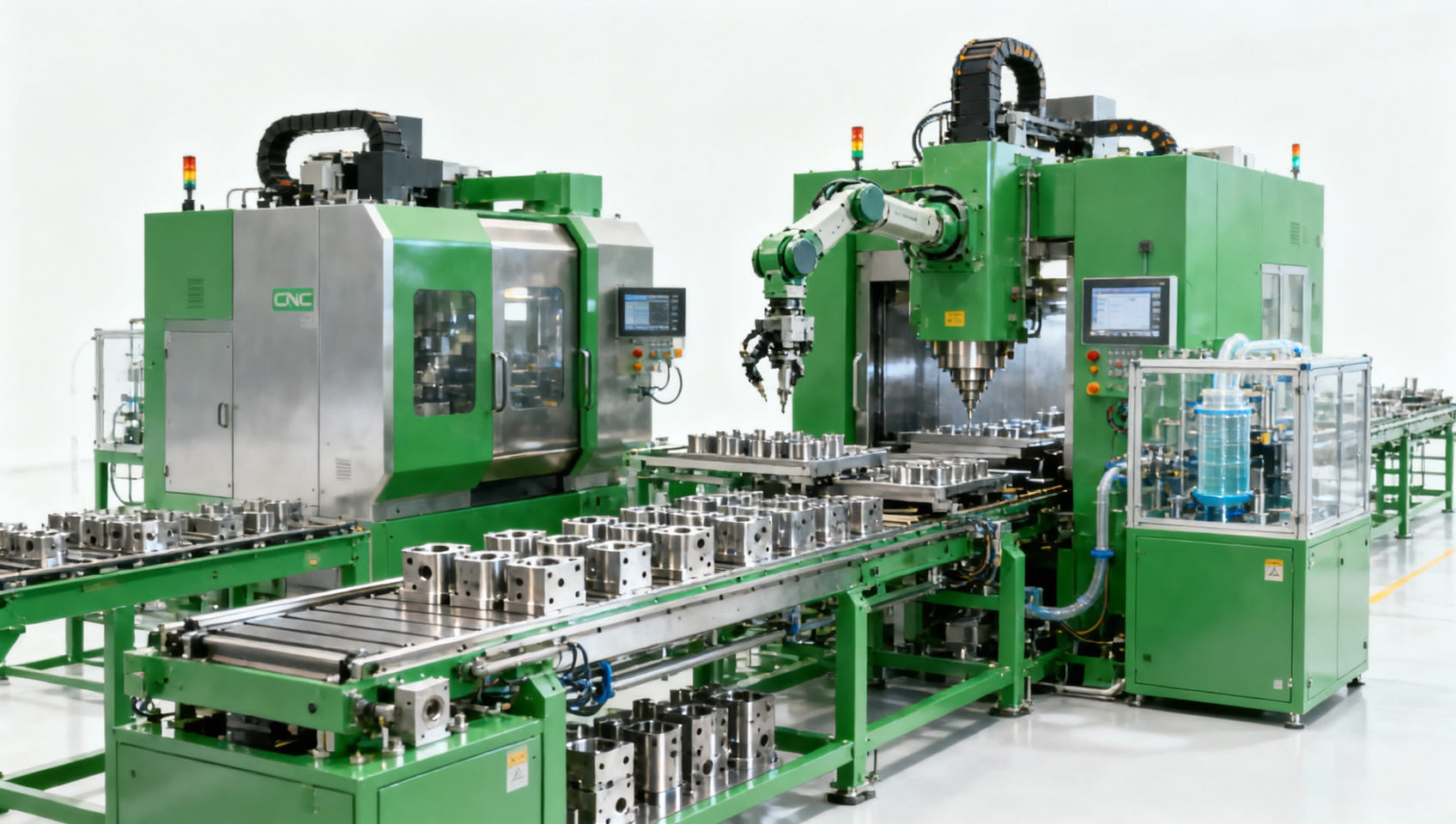
Manufacturers seeking faster waste reduction are rethinking every stage of production. From Eco-friendly Production Process for sustainable manufacturing to Industrial Automation integration for production line, the right choices can lower material loss, energy use, and operating costs without sacrificing precision. This article explores practical strategies that help information seekers, operators, buyers, and decision-makers build cleaner, smarter, and more competitive manufacturing systems.
In CNC machining and precision manufacturing, waste is rarely limited to scrap metal. It also includes excess cycle time, avoidable tool wear, overuse of coolant, unstable quality, rework, and energy losses during idle operation. For buyers and plant leaders, cutting waste fast means choosing production methods that improve throughput within 3 to 12 months rather than relying only on long-term sustainability plans.
That is why eco-friendly production process choices now matter in machine tool workshops, robotic cells, and flexible production lines. A cleaner process can reduce raw material loss by 5%–15%, lower electricity use per part, and improve consistency across small-batch and high-volume orders. The real advantage is not just environmental positioning; it is measurable manufacturing efficiency.
Where Waste Builds Up Fast in CNC and Automated Production
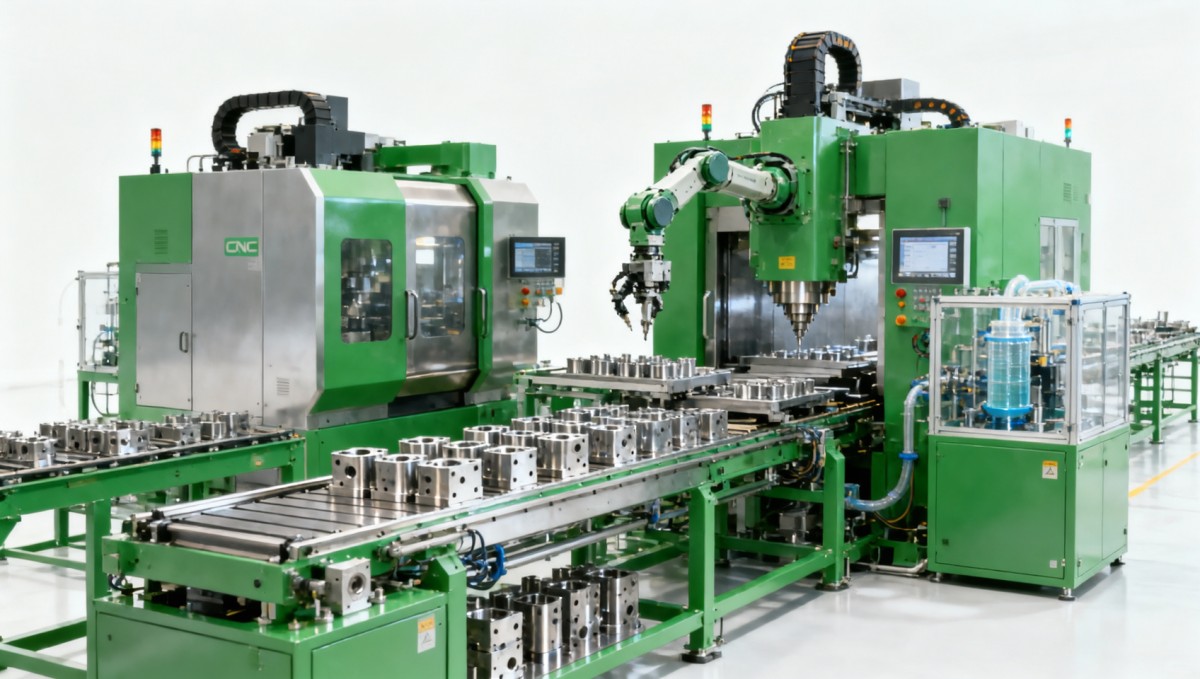
Before selecting a greener production method, manufacturers need to identify where waste is generated. In a typical CNC environment, the main sources are material overcutting, poor nesting or fixturing, unnecessary machine idle time, coolant contamination, and quality drift that triggers rework. In precision sectors such as automotive parts, aerospace structures, and electronics housings, even a deviation of ±0.02 mm can create expensive downstream losses.
Operations teams often focus first on visible scrap, yet hidden waste can be equally costly. A machining center that waits 90 seconds between operations may lose more productive capacity over a shift than a single rejected part. Likewise, a cutting tool changed too early raises consumable costs, while changing it too late increases chatter, burr formation, and part rejection.
Industrial automation adds another dimension. Robots, conveyors, and pallet systems can cut handling waste, but poorly synchronized automation may create queue time, double handling, or underused spindle hours. Faster waste reduction depends on looking at the whole production line rather than treating the CNC machine as an isolated asset.
Common Waste Categories in Precision Manufacturing
The table below shows the most common waste categories seen in CNC machining and automated production cells, along with the operational signs and the likely production impact.
The key lesson is that waste reduction should start with measurement across at least 4 dimensions: scrap rate, cycle time, energy per batch, and rework frequency. Plants that only track output quantity often miss the root causes that eco-friendly production process upgrades can fix quickly.
Practical diagnostic steps
- Audit one representative production family for 5 to 10 working days instead of reviewing a single shift.
- Separate startup scrap from steady-state scrap to avoid misleading averages.
- Track machine idle time above 30 seconds between operations, especially in robotic cells.
- Record coolant replacement frequency, filtration issues, and tool breakage events as waste indicators.
Eco-friendly Process Choices That Deliver Quick Results
Not every sustainability upgrade requires major capital expenditure. Some of the fastest gains come from process-level decisions that can be implemented during a normal maintenance cycle or production changeover. In CNC workshops, the most effective options often include near-net-shape material selection, minimum quantity lubrication, adaptive cutting parameters, and closed-loop coolant management.
Near-net-shape input materials reduce the amount of stock removed in machining. When a shaft, housing, or precision disc starts closer to final dimensions, less material becomes chip waste and cycle time drops. In many applications, reducing initial stock allowance by 1–3 mm can shorten roughing time significantly without compromising geometry or finish targets.
Another high-impact option is upgrading fluid management. Flood coolant can still be necessary for demanding cuts, but many operations benefit from better filtration, concentration control, and recirculation. In selected materials and toolpaths, minimum quantity lubrication can reduce fluid use sharply while improving chip evacuation and lowering cleaning effort after machining.
Comparing Fast-Impact Process Options
For procurement teams and production managers, the most useful comparison is not only technical feasibility but also implementation speed, likely savings area, and shop-floor complexity.
In most factories, adaptive cutting and better fluid management provide the fastest start because they can be trialed on one machine, one part family, or one shift. Near-net-shape sourcing creates larger material savings but usually needs closer supplier coordination and verification of blank tolerance ranges.
Selection criteria for fast deployment
- Choose one process that affects at least 20% of monthly production volume.
- Prefer upgrades with a verification cycle under 30 days.
- Confirm compatibility with part tolerance, surface roughness, and tool life targets.
- Include operator training time, usually 2 to 8 hours per team, in the rollout plan.
A practical eco-friendly production process is one that improves sustainability and throughput together. If the process lowers fluid use but increases scrap, it is not a true gain. The best decisions reduce waste across material, energy, and quality at the same time.
How Industrial Automation Cuts Waste Beyond Labor Savings
Industrial automation is often discussed as a labor strategy, but in precision manufacturing its waste reduction value is equally important. Robots, automatic tool measurement, pallet changers, in-line gauging, and machine monitoring systems can limit variation that causes rework, overprocessing, and scrap. The result is a more stable production line with fewer hidden losses.
For example, automated loading reduces part handling inconsistency and supports repeatable clamping orientation. In high-mix shops, automated probing shortens setup verification and catches offset errors before a full batch is affected. If a line produces 200 to 500 parts per day, preventing one recurring setup mistake can save more material than a minor tooling price reduction.
Digital integration also matters. Machine monitoring platforms that capture spindle load, alarm patterns, and idle time allow managers to identify waste zones by machine, shift, or part code. This gives buyers and decision-makers a stronger basis for equipment upgrades, especially when comparing stand-alone CNC machines with connected cells or flexible manufacturing systems.
Automation Functions Linked to Waste Reduction
The following table shows how specific automation functions contribute to cleaner and more efficient manufacturing outcomes.
Automation does not need to be fully lights-out to create value. Even a semi-automated cell can reduce non-cutting time by 10%–25% if loading, inspection, and job scheduling are aligned. The best results come when the automation design matches batch size, part family variation, and planned utilization hours.
Common mistakes in automation-led waste reduction
- Buying robotic handling before fixing unstable fixtures or inconsistent raw material quality.
- Adding monitoring software without assigning a weekly review owner and response process.
- Automating low-volume parts with frequent engineering changes, where reprogramming time cancels efficiency gains.
- Ignoring compressed air, filtration, and peripheral energy use when calculating savings.
For procurement and plant leadership, the right question is not whether automation is modern enough, but whether it removes one or more of the top 3 waste drivers in the current production line.
Procurement and Implementation: What Buyers Should Evaluate First
Waste reduction projects often fail during selection rather than during operation. Buyers may compare machine specifications carefully yet overlook tooling strategy, fluid systems, software compatibility, and training requirements. For an eco-friendly production process to perform in real factory conditions, purchasing decisions must align equipment, application, and service support.
A strong buying framework should cover at least 6 points: part material, tolerance range, annual volume, energy profile, maintenance load, and integration difficulty. For example, a machining center intended for aluminum electronics housings will need different coolant, chip handling, and spindle behavior than a system cutting hardened steel shafts or aerospace brackets.
Implementation planning is equally important. Most factories benefit from a 3-stage rollout: pilot validation, controlled expansion, and line-level standardization. This phased approach keeps risk manageable while generating usable data for operators, engineers, and executives.
Buyer Checklist for Cleaner Production Investments
The table below helps procurement teams compare process upgrades and equipment solutions using measurable decision factors rather than broad claims.
For many B2B buyers, the best supplier is the one that can explain how process settings, maintenance intervals, and integration steps affect waste performance after installation. A low purchase price means little if scrap, downtime, or coolant disposal costs rise during routine production.
A practical rollout sequence
- Run a baseline for 2 to 4 weeks and define current scrap, cycle time, and energy benchmarks.
- Test one production family with clear pass-fail criteria for quality and throughput.
- Train operators, maintenance staff, and programmers before line-wide rollout.
- Review results after 30, 60, and 90 days to confirm stable waste reduction.
This approach helps information seekers compare solutions, gives operators clear standards, and provides decision-makers with evidence for scaling investment across multiple lines or plants.
FAQ: Practical Questions About Waste Reduction in CNC Manufacturing
Below are common questions from manufacturers evaluating eco-friendly production process changes and industrial automation upgrades. These questions usually appear early in the buying journey and also during internal approval discussions.
How quickly can a CNC factory reduce waste without replacing all machines?
Many factories can achieve noticeable gains within 4 to 12 weeks by optimizing stock allowance, cutting parameters, coolant control, and setup verification. Replacing all machines is rarely the first step. In fact, process tuning on existing equipment often reveals 10%–20% improvement potential before any major capital purchase is required.
Which process changes are usually safest for precision parts?
The safest starting points are changes that preserve core machine rigidity and part geometry control, such as adaptive toolpaths, better probing routines, improved filtration, and more accurate tool life management. These measures can reduce waste while keeping tolerance capability within existing validated ranges, especially for parts with tight flatness, roundness, or surface finish requirements.
What should buyers ask suppliers before approving a cleaner production upgrade?
Buyers should ask for the expected implementation steps, the utility requirements, the operator training scope, and the maintenance changes needed over the first 6 months. They should also request clarification on what performance indicators will be used during acceptance, such as scrap reduction, cycle time change, or coolant consumption per batch.
Are eco-friendly processes only suitable for large factories?
No. Small and mid-sized workshops can often benefit faster because they have shorter approval paths and fewer production layers. A single CNC cell, lathe line, or machining center group can become a pilot area. Once results are stable, the same methods can be expanded to additional shifts, part families, or customer programs.
Fast waste reduction in manufacturing comes from practical decisions: identifying the real waste sources, selecting eco-friendly process changes with short verification cycles, and using industrial automation where it removes the biggest losses in quality, time, and energy. In the CNC machine tool industry, the strongest results appear when process engineering, equipment selection, and implementation planning are aligned from the start.
If your team is evaluating cleaner machining methods, production line upgrades, or automation options for precision manufacturing, now is the right time to compare solutions based on measurable operating impact. Contact us to discuss your production goals, get a tailored recommendation, and explore more solutions for efficient, lower-waste manufacturing.
Recommended for You
![]() Iranian LNG Vessels Breach U.S. Strait Blockade; Shanghai Crude Surges 4%Manufacturing Market Research Center
Iranian LNG Vessels Breach U.S. Strait Blockade; Shanghai Crude Surges 4%Manufacturing Market Research Center![]() Pakistan Launches CNC Localization Tender for CPEC II Smart Manufacturing ParkGlobal Machine Tool Trade Research Center
Pakistan Launches CNC Localization Tender for CPEC II Smart Manufacturing ParkGlobal Machine Tool Trade Research Center![]() NVIDIA Joins $1T Club; AI-Driven CNC Digital Twin Gains Global TractionCNC Machining Technology Center
NVIDIA Joins $1T Club; AI-Driven CNC Digital Twin Gains Global TractionCNC Machining Technology Center![]() World's First 5-Axis Middle-Grade Wire EDM Machine Enters Mass ProductionMachine Tool Industry Editorial Team
World's First 5-Axis Middle-Grade Wire EDM Machine Enters Mass ProductionMachine Tool Industry Editorial Team![]() China’s CNC Machine Tool Export Prices Up 11.3% in Q1 2026Global Machine Tool Trade Research Center
China’s CNC Machine Tool Export Prices Up 11.3% in Q1 2026Global Machine Tool Trade Research Center![]() Saudi Energy Security Boosts CNC Import Efficiency in Middle EastGlobal Machine Tool Trade Research Center
Saudi Energy Security Boosts CNC Import Efficiency in Middle EastGlobal Machine Tool Trade Research Center


Aris Katos
Future of Carbide Coatings
15+ years in precision manufacturing systems. Specialized in high-speed milling and aerospace grade alloy processing.
▶
Hannover Messe 2026: Green CNC & Carbon Labeling Take Center StageManufacturing Policy Research Center▶
Eco-friendly Production Process Choices That Cut Waste FastManufacturing Policy Research Center▶
Energy-saving machine tool: Are IE4 motors enough — or is system-level optimization needed?Manufacturing Policy Research Center▶
Energy-saving CNC manufacturing: Do efficiency claims hold up under real production loads?Manufacturing Policy Research Center▶
Manufacturing Industry Energy Rules Are Changing Cost ModelsManufacturing Policy Research Center
Mastering 5-Axis Workholding Strategies
Join our technical panel on Nov 15th to learn about reducing vibrations in thin-wall components.

Providing you with integrated sanding solutions
Before-sales and after-sales services
Comprehensive technical support