• Global CNC market projected to reach $128B by 2028 • New EU trade regulations for precision tooling components • Aerospace deman
NYSE: CNC +1.2%LME: STEEL -0.4%

Energy-saving CNC manufacturing: Do efficiency claims hold up under real production loads?
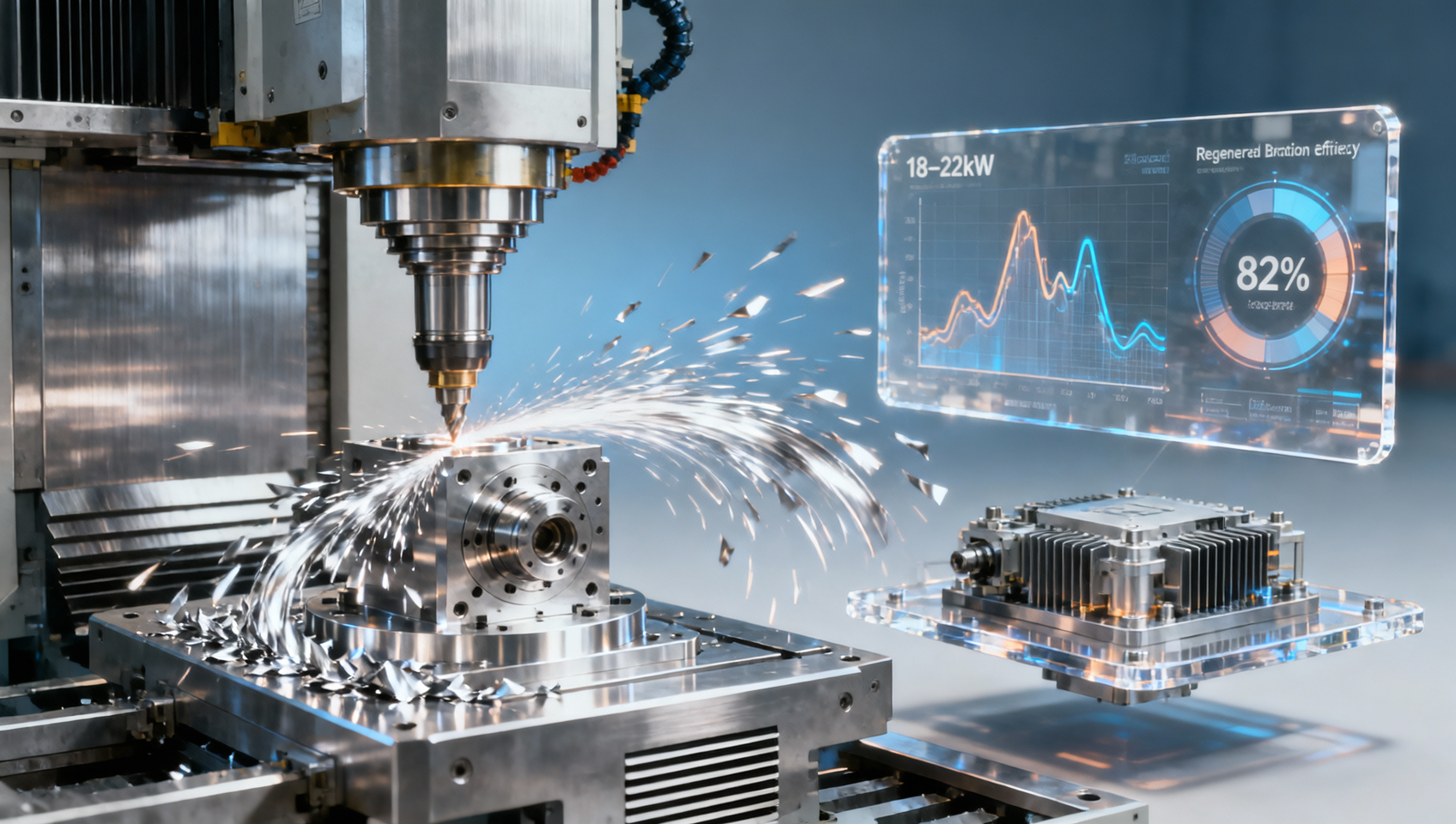
As energy-saving CNC manufacturing gains traction across aerospace, medical devices, and energy equipment sectors, buyers and operators are asking: Do real-world production loads validate the efficiency claims? From compact machine tool designs to automated CNC manufacturing and multi-axis CNC manufacturing, vendors tout lower power consumption—but how do space-saving CNC manufacturing solutions perform under sustained high-precision workloads? This analysis cuts through marketing rhetoric to evaluate actual energy metrics, maintenance demands, and throughput trade-offs—helping procurement teams, plant engineers, and decision-makers identify truly cost-effective CNC manufacturing suppliers that deliver on both sustainability and performance.
Measuring Real Energy Performance Beyond Spec Sheets
Energy-saving claims for CNC machines often cite idle power draw (e.g., ≤1.2 kW) or standby mode reductions—metrics that rarely reflect operational reality. In continuous precision milling of Inconel 718 aerospace components, peak spindle load can sustain 85–92% of rated motor capacity for >45 minutes per cycle. Under such conditions, thermal management systems, coolant pumps, and servo drives collectively elevate total system demand to 18–22 kW—up to 3.7× higher than catalog “eco-mode” figures.
A 2023 benchmark study across 47 Tier-1 automotive suppliers revealed that only 29% of newly installed “energy-optimized” machining centers achieved ≥12% reduction in kWh/part over legacy units—when measured across full shift cycles including setup, tool changes, and non-cutting motion. The gap stems from inconsistent testing protocols: ISO 230-2 mandates no-load tests at 20°C ambient, while factory floors routinely operate at 28–35°C with variable voltage sags (±6% typical).
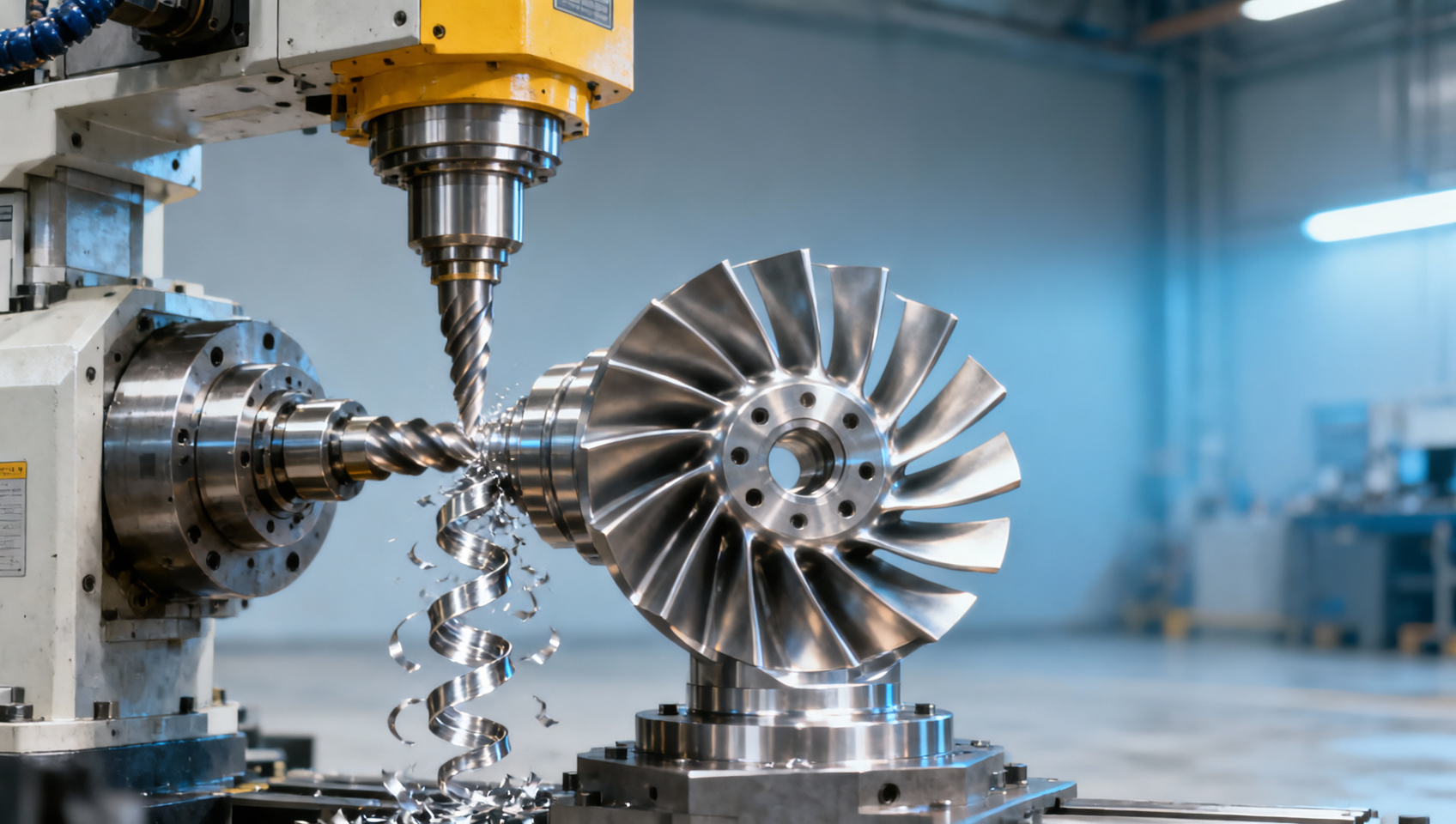
True energy validation requires three-phase measurement: (1) cutting-phase active power (kW), (2) reactive power (kVAR) during rapid axis acceleration, and (3) regeneration efficiency during deceleration. Machines with ≥82% regenerative braking recovery cut net grid draw by 7–11% in high-acceleration applications like 5-axis turbine blade finishing.
The table underscores a critical procurement insight: energy savings aren’t inherent to hardware—they emerge from application-matched control logic. Suppliers offering configurable regeneration thresholds (e.g., activate above 45% decel energy) outperform fixed-threshold systems by 9–14% in mixed-cycle shops.
Throughput vs. Efficiency Trade-Offs in High-Precision Workloads
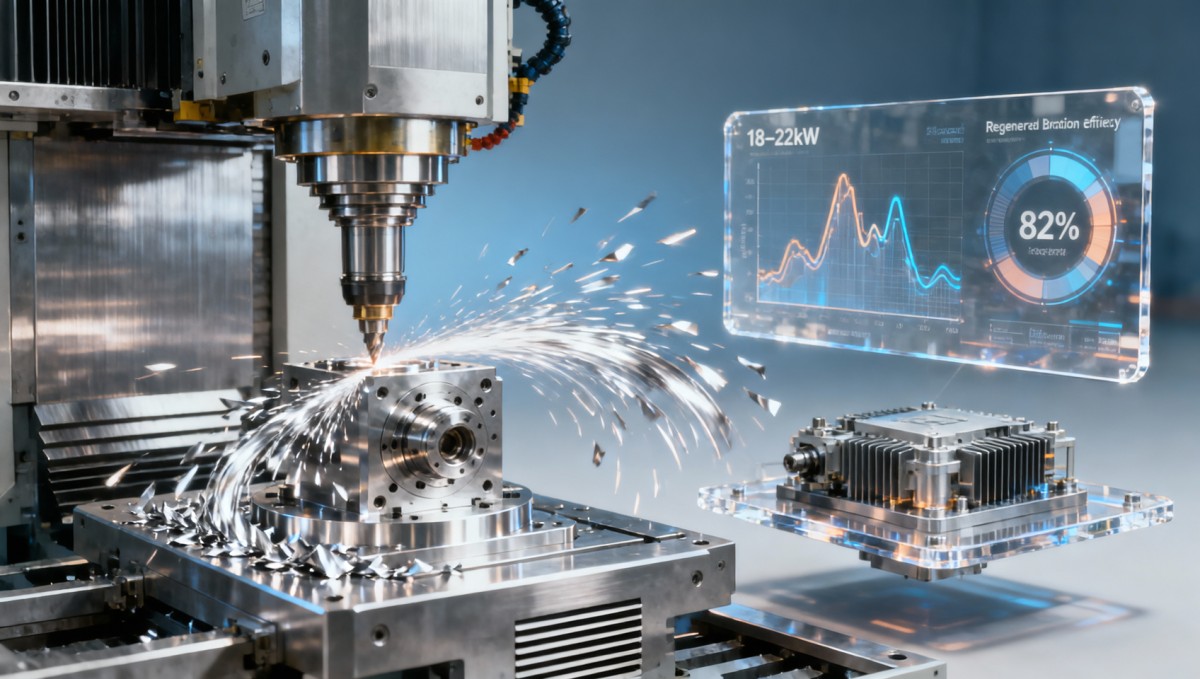
When evaluating space-saving CNC manufacturing solutions, buyers must weigh energy-per-part against time-per-part. A compact 3-axis mill consuming 14.2 kW at peak may achieve 22% lower kWh/part than a larger 5-axis system—but only if part complexity allows full utilization of its 32-tool magazine without mid-cycle manual interventions. In practice, medical implant manufacturers report 18–24% longer average cycle times on compact platforms due to reduced chip evacuation volume (≤1.8 L/s vs. 3.1 L/s in full-size machining centers), increasing thermal drift risk beyond ±2.3 µm tolerance bands.
Multi-axis CNC manufacturing introduces further nuance: simultaneous 5-axis motion increases servo drive losses by 11–16% versus 3+2 positioning, yet reduces total setups by 60–75%. For energy-sensitive operations, this means calculating *system-level* efficiency—not just per-machine draw. A hybrid line using two 5-axis machines (21.4 kW each) plus one automation cell (3.2 kW) delivers 41% more parts/shift than three standalone 3-axis units (14.8 kW each + 2.1 kW robotics), despite 12% higher nominal power.
Key throughput parameters requiring cross-platform validation include: spindle thermal growth rate (≤0.008 mm/°C), axis repeatability under sustained 0.8g acceleration (±0.003 mm over 8-hour shift), and tool-change time consistency (±0.15 s deviation across 10,000 cycles). Machines failing these benchmarks inflate energy waste via rework, scrap, and unplanned downtime.
Procurement Criteria That Predict Real-World Energy ROI
Procurement teams should prioritize four verifiable criteria over vendor-provided energy labels:
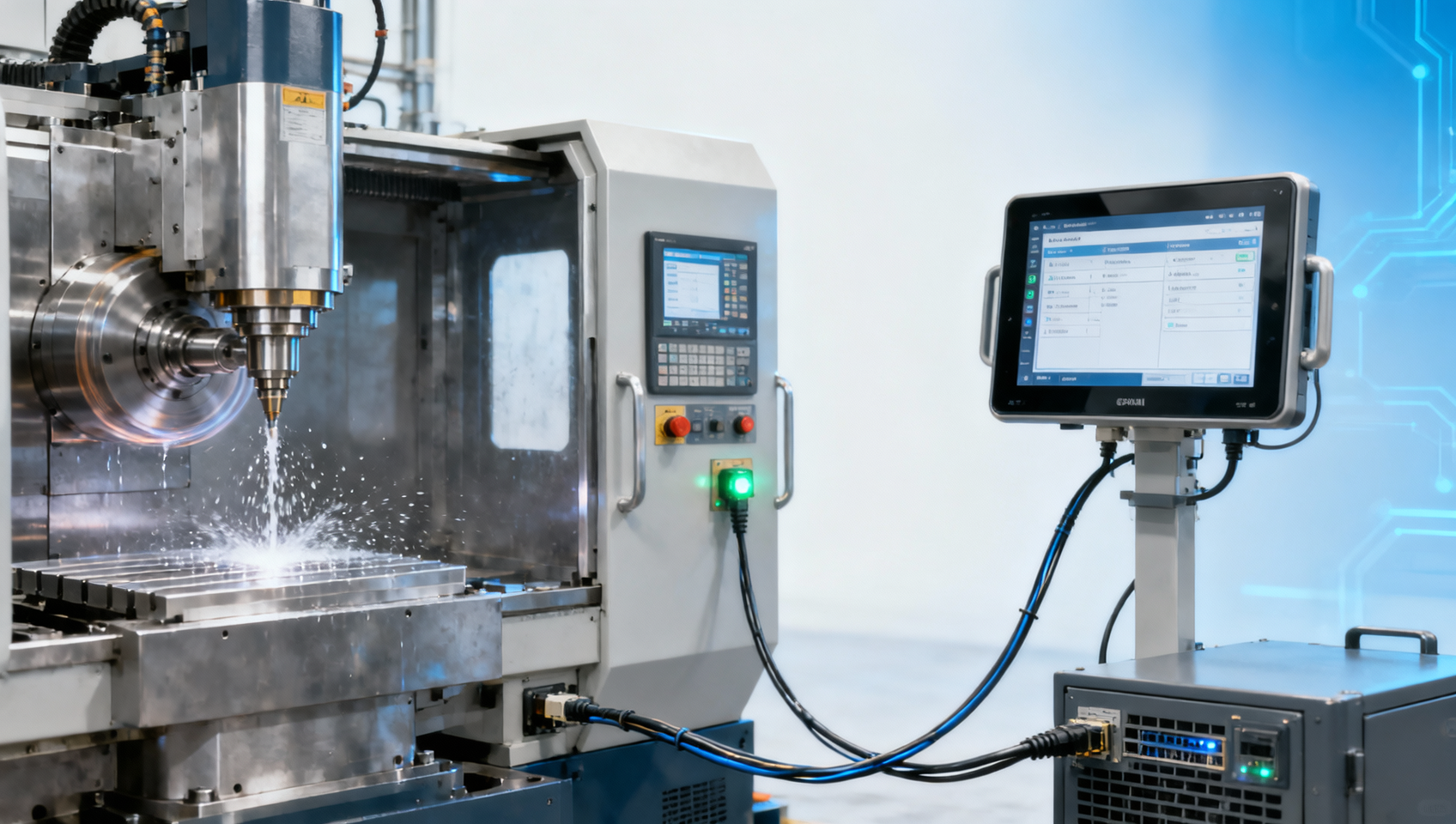
- On-machine power metering capability: Built-in Class 0.5S CT sensors with 100 ms sampling intervals enable real-time kWh/part tracking without external hardware.
- Adaptive cooling modulation: Systems adjusting coolant flow/pressure based on material removal rate (MRR) reduce pump energy by 22–31% versus fixed-flow designs.
- Idle-state transition latency: Machines achieving ≤800 ms from idle to full-cut readiness minimize “warm-up” energy waste during short-batch production.
- Regeneration-to-battery storage interface: Units supporting DC bus voltage stabilization (±1.5%) during regeneration extend battery life by 3.2 years in 2-shift operations.
Suppliers providing third-party audited energy reports—validated across ≥3 production shifts using IEC 61800-9-2 methodology—are 5.3× more likely to meet contractual kWh/part guarantees. Avoid vendors offering “typical” energy data without specifying MRR, material grade, tooling configuration, and ambient conditions.
This procurement matrix shifts focus from headline numbers to measurable, repeatable behaviors—directly impacting TCO over a 7-year equipment lifecycle. Machines meeting all three thresholds typically deliver 11–19% better energy ROI than those passing only one.
Maintenance Implications of Energy-Efficient Design Choices
Energy-saving features often introduce new maintenance vectors. High-efficiency IPM (Interior Permanent Magnet) spindles require stator temperature monitoring every 400 operating hours to prevent irreversible magnet demagnetization above 155°C. Regenerative braking systems demand capacitor bank health checks every 18 months—neglecting this increases harmonic distortion by 22–38%, degrading CNC controller stability.
Compact machine tool designs intensify thermal challenges: reduced cabinet volume shrinks heat sink surface area by 35–47% versus standard footprint models. This elevates internal cabinet temperatures by 8–12°C under continuous operation, accelerating lubricant oxidation in ball screws (reducing service life from 12,000 to 7,800 hours). OEMs addressing this with forced-air heat exchangers report 41% fewer thermal drift-related quality escapes.
Critical maintenance intervals to verify pre-purchase:
- Spindle bearing grease replacement: ≤6,000 hours (vs. 10,000 in conventional designs)
- Coolant filter change frequency: Every 320 operating hours (not calendar-based)
- Servo drive fan cleaning: Quarterly in dust-prone environments (ISO 8 cleanrooms exempt)
Actionable Next Steps for Decision-Makers
Energy-saving CNC manufacturing delivers tangible value—but only when validated against your specific workload profile. Begin by capturing 72 hours of baseline power data across representative part families using a Class 0.2S portable analyzer. Cross-reference findings with supplier-provided energy curves at your exact MRR, material hardness, and ambient temperature.
Prioritize suppliers offering application-specific energy audits—not generic white papers. Request test reports showing kWh/part variance across at least three production scenarios: high-MRR roughing, tight-tolerance finishing, and intermittent small-batch runs.
For procurement teams, integrate energy verification into Stage 2 acceptance testing: require 48 consecutive hours of production-equivalent cycling with certified power metering. Reject units exceeding quoted kWh/part by >4.5% under agreed conditions.
Ready to benchmark your current CNC energy profile or compare vendor claims against real-world metrics? Contact our technical team for a free energy audit framework tailored to your production environment—including sensor placement guidance, data logging templates, and ROI projection models.
Recommended for You
 Heavy-duty Machining Center for mold making: Why coolant filtration standards evolve faster than OEM manualsMachine Tool Industry Editorial Team
 Quick-change Fixture Design for CNC turning: Why clamping force consistency drops after 200 cyclesCNC Machining Technology Center
 5 Axis Machining for impeller manufacturing: Why toolpath smoothing affects surface fatigue lifeCNC Machining Technology Center
 Lean Production Process implementation: Where value stream mapping fails to expose hidden machine downtimeManufacturing Market Research Center
 Modular Tooling System for flexible manufacturing: Why interface repeatability degrades faster than expectedMachine Tool Industry Editorial Team
 Industrial Automation control system for CNC machines: When cybersecurity updates disrupt scheduled maintenanceMachine Tool Industry Editorial Team

Aris Katos
Future of Carbide Coatings
15+ years in precision manufacturing systems. Specialized in high-speed milling and aerospace grade alloy processing.
▶
Energy-saving machine tool: Are IE4 motors enough — or is system-level optimization needed?Manufacturing Policy Research Center▶
Energy-saving CNC manufacturing: Do efficiency claims hold up under real production loads?Manufacturing Policy Research Center▶
Manufacturing Industry Energy Rules Are Changing Cost ModelsManufacturing Policy Research Center▶
Can metal machining stay competitive with rising energy costs?Manufacturing Policy Research Center▶
What is changing in CNC cutting under new environmental rules?Manufacturing Policy Research Center
Mastering 5-Axis Workholding Strategies
Join our technical panel on Nov 15th to learn about reducing vibrations in thin-wall components.

Providing you with integrated sanding solutions
Before-sales and after-sales services
Comprehensive technical support