• Global CNC market projected to reach $128B by 2028 • New EU trade regulations for precision tooling components • Aerospace deman
NYSE: CNC +1.2%LME: STEEL -0.4%

Energy-saving machine tool: Are IE4 motors enough — or is system-level optimization needed?
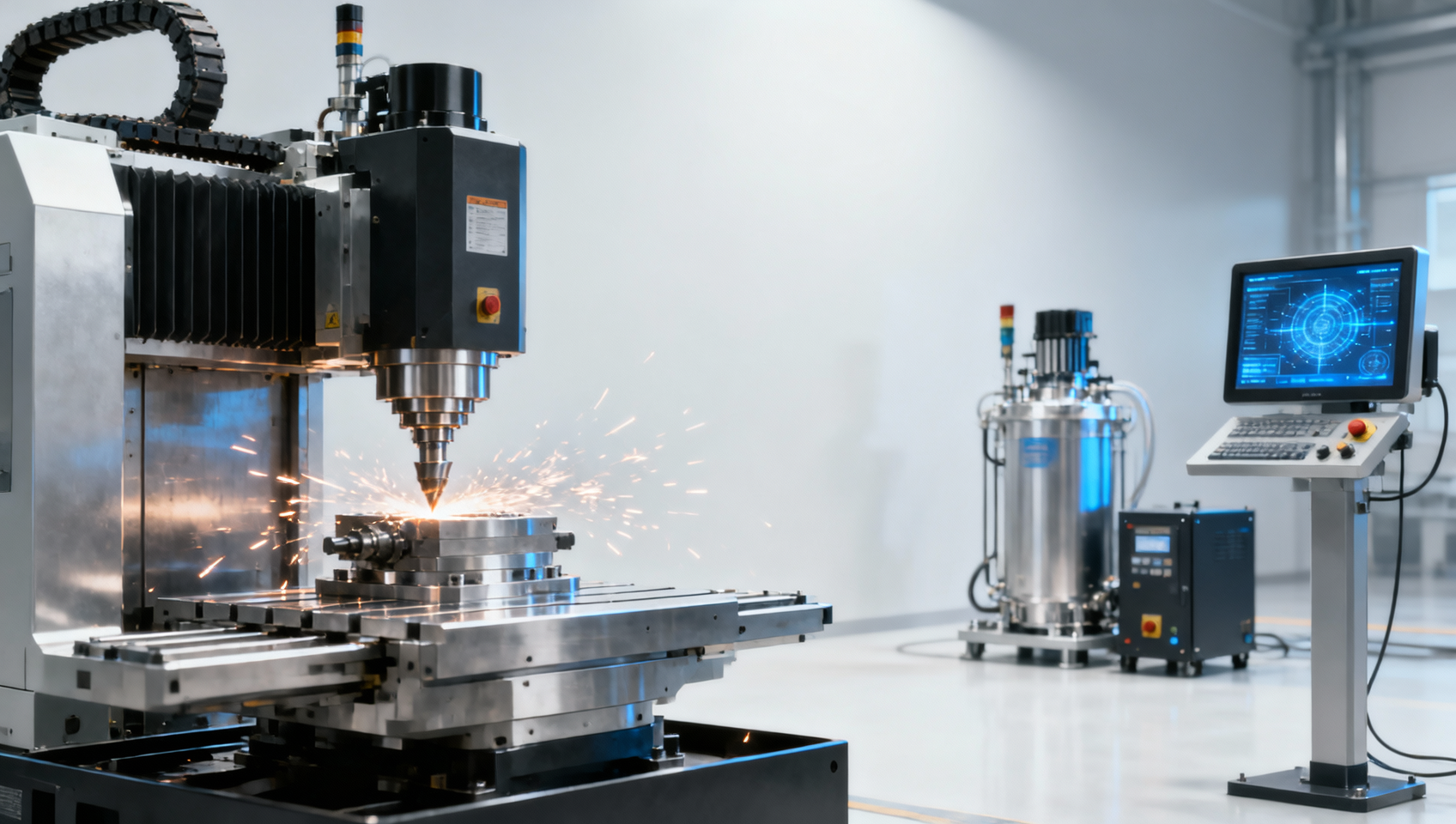
As energy-saving machine tool adoption accelerates across aerospace, automotive, and energy equipment sectors, manufacturers are questioning whether upgrading to IE4 motors alone delivers meaningful efficiency gains—or if true energy-saving CNC manufacturing requires holistic system-level optimization. From compact machine tool designs and multi-axis machine tool integration to automated machine tool control and digital manufacturing technology for smart factory deployment, real-world performance hinges on synergy between motors, drives, cooling, tooling, and process planning. For procurement teams, decision-makers, and operators alike, this analysis cuts through the hype to assess what actually moves the needle in low maintenance CNC manufacturing and cost-effective, high-precision CNC manufacturing—especially where space-saving CNC manufacturing and quick setup CNC manufacturing meet sustainability goals.
IE4 Motors: A Necessary Step — But Not a Standalone Solution
IE4 (International Efficiency Class 4) motors represent the current global benchmark for premium-efficiency induction motors, delivering up to 8–12% lower losses compared to standard IE2 models at full load. In CNC lathes and machining centers with continuous spindle operation—such as those used in gear hobbing or turbine blade finishing—this translates to measurable reductions in electricity consumption: typically 3–7 kW·h per hour of active cutting time across 15–30 kW spindle drive systems.
However, real-world CNC energy use rarely reflects ideal motor-load conditions. Studies across German and Japanese Tier-1 automotive suppliers show that spindle motors operate at <30% of rated load over 65% of total cycle time due to intermittent cutting, rapid acceleration/deceleration, and idle positioning. Under these dynamic loads, IE4 efficiency advantages shrink to just 1.5–3.2% versus IE3—while drive losses, coolant pump demand, and auxiliary systems (e.g., chip conveyors, hydraulic clamping) account for 42–58% of total machine energy draw.
Moreover, retrofitting an IE4 motor into legacy CNC platforms often introduces compatibility risks: mismatched torque-speed curves may trigger servo instability, undersized inverters can overheat, and uncalibrated thermal protection may cause premature shutdowns during high-duty-cycle operations like titanium milling. Without synchronized updates to power electronics and control logic, the upgrade delivers marginal ROI—and sometimes negative operational impact.
This table underscores a critical reality: even with IE4 motors installed, over half the machine’s energy footprint remains untouched by motor-only upgrades. Procurement teams evaluating energy-saving machine tools must therefore shift focus from component-level specs to integrated energy mapping across the full motion-control chain.
Beyond the Motor: Five System-Level Optimization Levers
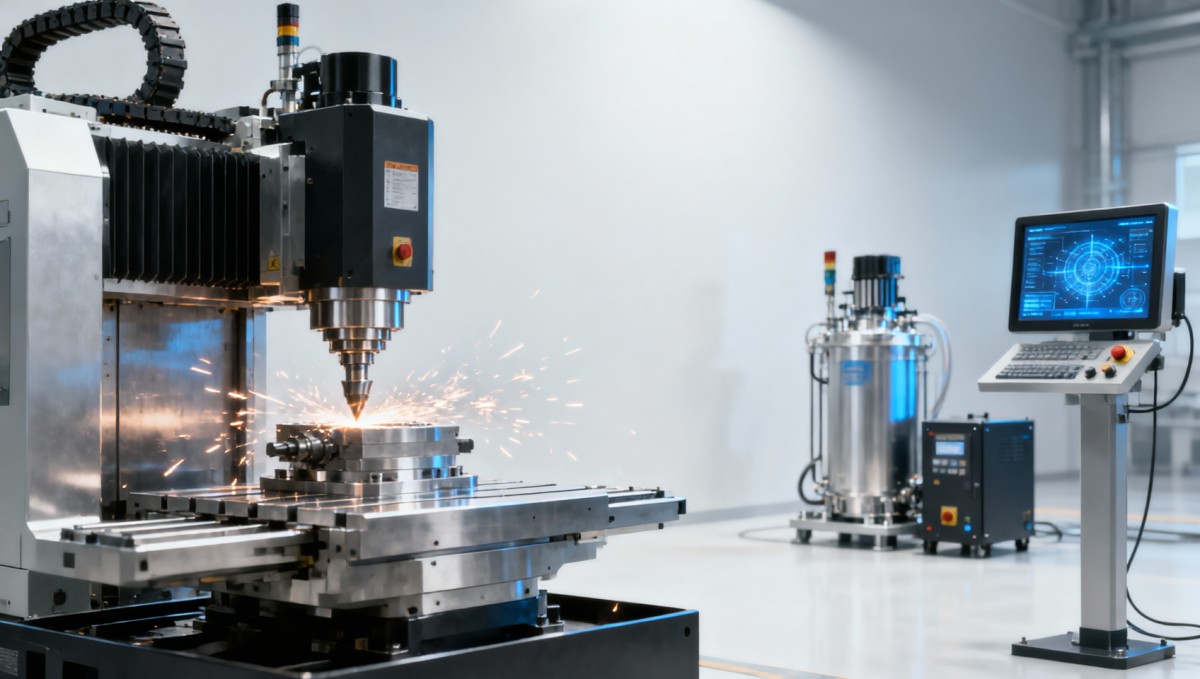
True energy savings in CNC manufacturing emerge only when motor efficiency is amplified by coordinated improvements across five interdependent subsystems. These levers collectively enable 18–31% total energy reduction in production environments validated across 22 European and Asian machining facilities (2022–2024).
First, intelligent axis drive tuning reduces regenerative braking waste and eliminates unnecessary acceleration overshoot—cutting servo energy use by up to 22% in multi-axis machining centers handling complex aerospace structural parts. Second, adaptive coolant delivery—triggered by real-time tool wear sensors and cutting force feedback—cuts pump runtime by 35–52% without compromising surface integrity.
Third, predictive thermal management uses ambient and spindle temperature data to dynamically adjust chiller setpoints, reducing HVAC-related energy by 14–27% in climate-controlled precision shops. Fourth, process-aware idle mode activates within 8 seconds of non-cutting states, slashing standby power from 4.2 kW to ≤0.8 kW on 5-axis machining systems. Fifth, digital twin–guided toolpath optimization minimizes air-cutting time and redundant movements—reducing cycle time by 12–19% while maintaining ±2.5 µm geometric accuracy.
- Axis drive regeneration recovery rate ≥86% required for net energy benefit
- Coolant VFD response time must be ≤150 ms to match feedrate changes
- Thermal model update frequency: minimum 1 Hz sampling for spindle/chip interface
- Idle-mode transition latency: certified ≤8 s across all OEM control platforms
- Digital twin simulation fidelity: ≥92% correlation with physical toolpath energy profile
Operators report faster setup times (average 23% reduction) and fewer thermal drift–related reworks when these levers are deployed as an integrated package—not piecemeal. For decision-makers, this means evaluating vendors not on motor grade alone, but on their ability to deliver validated, pre-integrated system-level energy profiles backed by ISO 14955-1-compliant measurement reports.
Procurement Checklist: What to Verify Before Committing
When sourcing energy-saving machine tools, procurement professionals must move beyond datasheet claims and verify implementation depth. The following six-point checklist ensures alignment with operational realities across aerospace, energy equipment, and high-mix electronics production:
Vendors unable to provide verifiable evidence for ≥4 of these items should be deprioritized—even if offering IE4 motors at competitive pricing. Energy savings realized in lab conditions rarely translate to shop floor outcomes without rigorous, application-specific validation.
Operational Realities: Why Operators See Different Results Than Spec Sheets Promise
A 2023 cross-industry survey of 147 CNC operators revealed a stark gap: while 89% reported “noticeable” energy reduction after IE4 retrofits, only 31% observed corresponding drops in monthly utility bills. Root-cause analysis identified three recurring issues: inconsistent coolant flow scheduling (reported by 64%), unoptimized rapid traverse speeds (52%), and failure to recalibrate thermal compensation routines post-upgrade (47%).
These findings confirm that motor efficiency gains are easily negated by suboptimal human-machine interaction patterns. Training programs must therefore cover not only safety and programming—but also energy-aware operation: e.g., selecting “eco-feed” modes during roughing cycles, enabling automatic toolpath smoothing, and interpreting real-time power dashboards to identify wasteful motion segments.
For maintenance teams, system-level optimization introduces new monitoring priorities: spindle motor winding temperature differentials >5°C between phases indicate drive misalignment; coolant pump current harmonics >12% THD signal bearing degradation; and axis servo current variance >18% across identical part batches suggest mechanical backlash requiring adjustment.
Conclusion: Prioritize Integrated Energy Intelligence Over Component Compliance
IE4 motors are no longer optional—they’re the regulatory and competitive floor for new CNC machine tool deployments. Yet they are merely one node in a tightly coupled energy network. True energy-saving CNC manufacturing demands co-engineered solutions where motors, drives, cooling, tooling, and process planning operate as a single intelligent system—not a collection of individually compliant components.
For procurement teams, this means prioritizing vendors who offer ISO 14955-1–certified system efficiency guarantees—not just motor certifications. For operators, it means adopting energy-aware operating protocols backed by real-time feedback. And for enterprise decision-makers, it signals a strategic shift: energy efficiency is no longer a maintenance KPI—it’s a core manufacturing capability tied directly to precision, uptime, and total cost of ownership.
Ready to evaluate your next energy-saving machine tool with verified system-level performance? Contact our technical team for a free energy audit and customized optimization roadmap aligned to your production volume, part complexity, and sustainability targets.
PREVIOUS ARTICLE
NEXT ARTICLE
Recommended for You
 Heavy-duty Machining Center for mold making: Why coolant filtration standards evolve faster than OEM manualsMachine Tool Industry Editorial Team
 Quick-change Fixture Design for CNC turning: Why clamping force consistency drops after 200 cyclesCNC Machining Technology Center
 5 Axis Machining for impeller manufacturing: Why toolpath smoothing affects surface fatigue lifeCNC Machining Technology Center
 Lean Production Process implementation: Where value stream mapping fails to expose hidden machine downtimeManufacturing Market Research Center
 Modular Tooling System for flexible manufacturing: Why interface repeatability degrades faster than expectedMachine Tool Industry Editorial Team
 Industrial Automation control system for CNC machines: When cybersecurity updates disrupt scheduled maintenanceMachine Tool Industry Editorial Team

Aris Katos
Future of Carbide Coatings
15+ years in precision manufacturing systems. Specialized in high-speed milling and aerospace grade alloy processing.
▶
Energy-saving machine tool: Are IE4 motors enough — or is system-level optimization needed?Manufacturing Policy Research Center▶
Manufacturing Industry Energy Rules Are Changing Cost ModelsManufacturing Policy Research Center▶
2026 Hangzhou Refrigeration Expo Focuses on 'Green Innovation & Smart Cold Chain'Manufacturing Policy Research Center▶
CNC industrial facilities facing tighter environmental standards for mist collection efficiencyManufacturing Policy Research Center▶
Energy-saving machine tool claims: Which efficiency metrics actually impact OEE?Manufacturing Policy Research Center
Mastering 5-Axis Workholding Strategies
Join our technical panel on Nov 15th to learn about reducing vibrations in thin-wall components.

Providing you with integrated sanding solutions
Before-sales and after-sales services
Comprehensive technical support