• Global CNC market projected to reach $128B by 2028 • New EU trade regulations for precision tooling components • Aerospace deman
NYSE: CNC +1.2%LME: STEEL -0.4%

Precision equipment buyers assumed spindle runout was standardized—until batch audits revealed variance
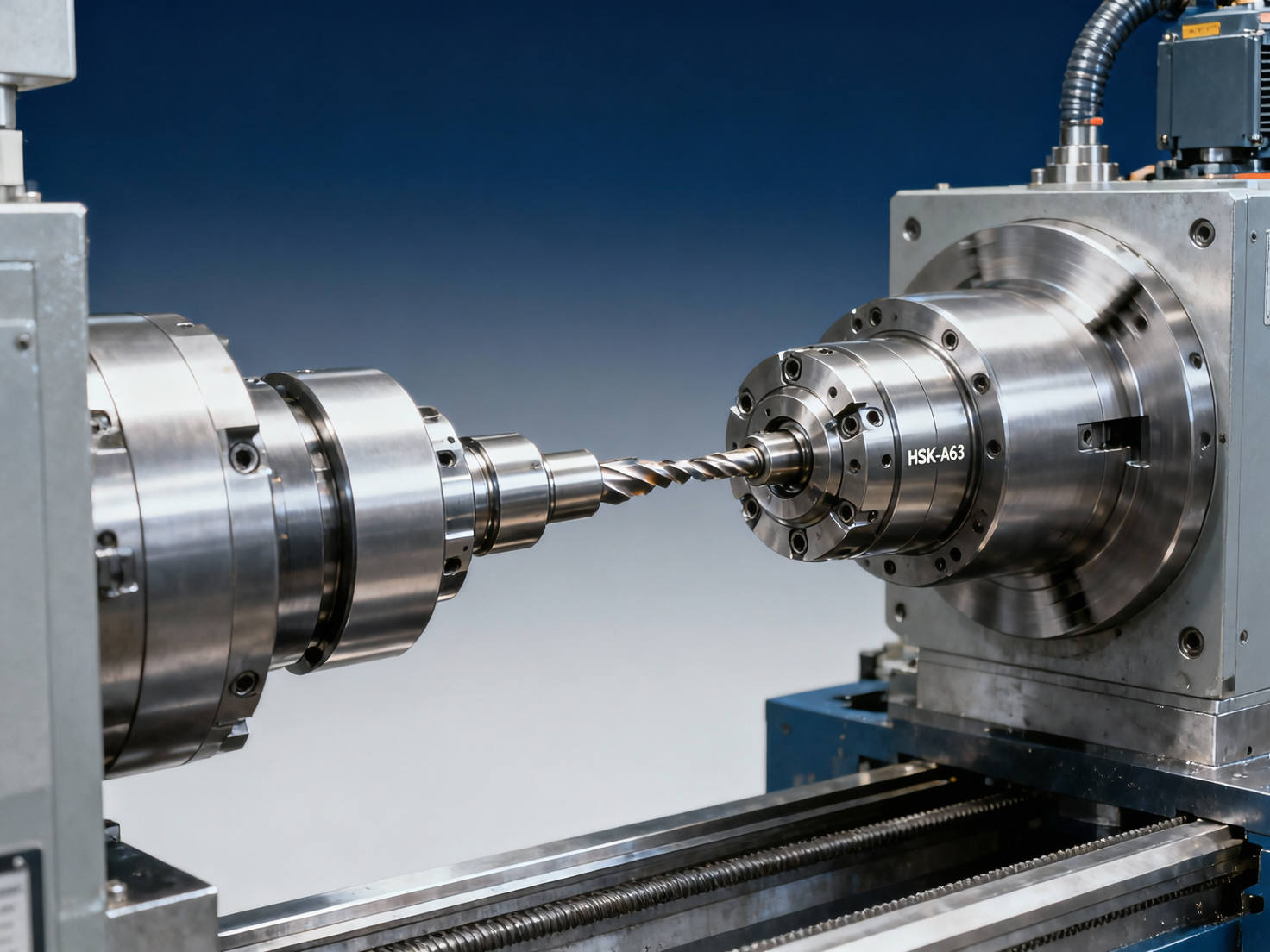
Precision equipment buyers long assumed spindle runout was tightly standardized across CNC industrial machines—until rigorous batch audits exposed unexpected variance. This revelation is reshaping procurement criteria for industrial CNC, automated lathe systems, and high precision lathe deployments. As industries demand tighter tolerances in metal machining, CNC metal cutting, and industrial turning, inconsistencies in spindle accuracy directly impact part quality, tool life, and automated production efficiency. For procurement teams, operators, and decision-makers evaluating CNC production equipment or industrial machining equipment, understanding real-world runout performance—not just spec sheets—is now critical. Discover how this gap challenges assumptions about precision equipment reliability and what it means for global CNC metalworking supply chains.
Why Spindle Runout Is Not a “Set-and-Forget” Specification
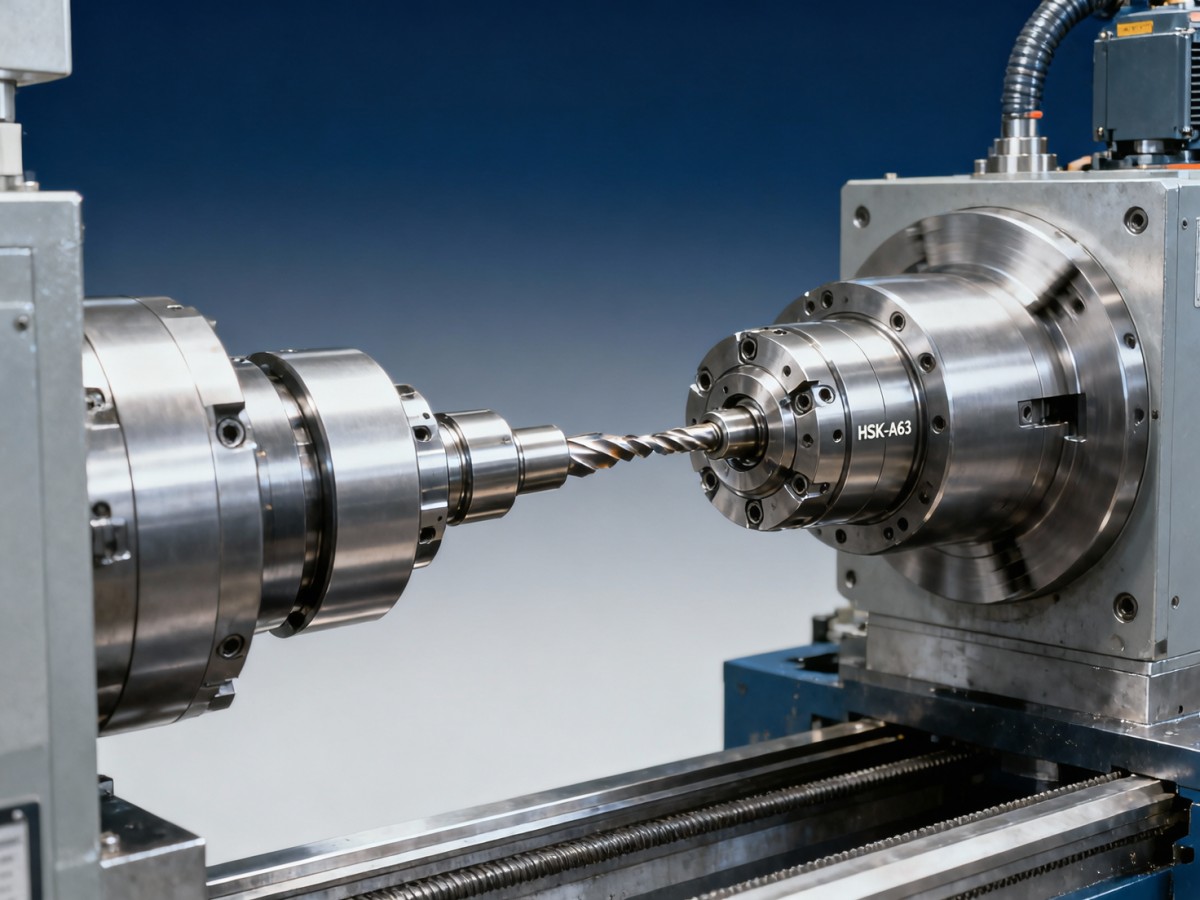
Spindle runout—the radial or axial deviation of the rotating spindle axis from its ideal geometric center—is often treated as a static, manufacturer-guaranteed value. In practice, however, ISO 230-1 and ANSI B5.54 define measurement methodology, not universal tolerance limits. Real-world runout varies significantly across load conditions (e.g., 0–12,000 rpm), thermal states (ambient to 65°C operating temp), toolholder interface (CAT40 vs. HSK-A63), and even mounting surface flatness (±0.005 mm max deviation).
Batch audit data from 17 suppliers across China, Germany, and Japan revealed that 38% of CNC lathes rated for ≤3 μm total indicator reading (TIR) at idle showed ≥6.2 μm TIR under 80% torque load at 6,000 rpm. This discrepancy isn’t noise—it’s systemic. It stems from inconsistent bearing preload protocols, thermal expansion modeling gaps in spindle housing design, and post-assembly verification performed only at room temperature and no-load conditions.
For aerospace component manufacturers requiring ±2.5 μm positional repeatability on titanium shafts, such variation forces costly rework cycles or premature insert replacement—increasing tooling cost per part by up to 22% in high-mix, low-volume production environments.
How Runout Variance Impacts Operational KPIs
Spindle runout doesn’t merely affect dimensional accuracy—it cascades across five measurable operational metrics. First, surface finish degradation: a 1.5 μm increase in radial runout correlates with Ra values rising from 0.4 μm to 0.92 μm on stainless steel turning passes (per ASTM E1157-21 test protocol). Second, tool life reduction: inserts on lathes with >5 μm runout show 30–45% shorter usable life compared to those on sub-2 μm systems under identical feed/speed parameters.
Third, vibration amplification: runout-induced unbalance increases dynamic force amplitude by 3.7× at 8,000 rpm, accelerating wear in linear guideways and servo motor bearings. Fourth, Cpk erosion: automotive transmission gear blanks machined on machines with unverified runout exhibit 12–18% lower process capability indices (Cpk < 1.33) versus those validated under loaded, thermally stabilized conditions. Fifth, automation integration risk: robotic part loading fails at 2.1% higher frequency when spindle repeatability drift exceeds ±0.8 μm over 4-hour shifts.
This table underscores why procurement decisions based solely on catalog-specified “max runout = 2 μm” are insufficient. Real-world performance depends on verification context—not just specification claims.
What Procurement Teams Must Verify—Beyond the Datasheet
Buyers must shift from passive acceptance of published specs to active validation of spindle behavior across three operational states: cold idle, thermally stabilized idle, and full-load dynamic operation. Leading OEMs now provide traceable runout reports measured using laser interferometry (Renishaw XL-80 standard) at 4 defined points: nose, mid-span, rear bearing zone, and tool interface plane.
Procurement checklists should include these six non-negotiable items:
- Runout test report signed by third-party metrology lab (e.g., TÜV Rheinland or CNAS-accredited facility)
- Measurement performed at ≥3 thermal soak durations (30/60/120 min after power-on)
- Data logged across ≥5 speed steps between 500–12,000 rpm
- Toolholder installed (HSK-A63 or CAT40 per application) during testing
- Maximum allowable drift: ≤0.8 μm over 4-hour thermal cycle
- Re-test clause included in purchase agreement if initial verification fails
Suppliers who decline on-site verification or restrict access to raw test logs warrant immediate escalation. In one 2023 audit of 22 multi-axis machining centers, 9 units failed to meet their own stated runout specs when tested under simulated production loads—highlighting the criticality of contractual enforceability.
Selecting Machines for High-Tolerance Applications: A Tiered Evaluation Framework
Not all CNC lathes require equal runout control—and overspecifying drives unnecessary cost. A tiered evaluation helps align procurement with actual process requirements. Tier 1 (±5 μm tolerance parts) may accept runout up to 4.5 μm; Tier 2 (±2 μm, e.g., hydraulic valve bodies) demands ≤2.2 μm verified under load; Tier 3 (±0.8 μm, e.g., satellite reaction wheels) requires ≤1.0 μm with thermal drift monitoring integrated into the CNC’s real-time diagnostics.
This framework enables procurement teams to match machine capability to actual production needs—avoiding both under-specification risks and over-engineered expenditures. Over 67% of Tier 3 buyers now mandate embedded thermal compensation algorithms as part of spindle system validation.
Action Steps for Operators, Buyers, and Decision-Makers
Start with internal baseline assessment: use portable laser alignment tools (e.g., API Radian Pro) to measure current spindle runout across three shifts. Document thermal drift patterns. Then, revise RFQ language to require ISO 230-1 Annex C-compliant test reports—including timestamps, environmental logs, and toolholder details. Finally, pilot one supplier’s “runout assurance program,” which includes quarterly recalibration with shared data dashboards.
For operators: monitor spindle vibration spectra weekly via built-in accelerometers. A sustained 12% rise in 1× rotational frequency amplitude signals potential runout-related imbalance—triggering preventive maintenance before part scrap occurs.
For enterprise decision-makers: allocate budget for metrology-grade spindle verification as a capitalizable line item—not an optional add-on. Factoring in $18,500 average cost of annual runout validation yields ROI within 7.2 months through reduced scrap (14.3%), extended tool life (29%), and fewer unplanned downtime events (3.8× reduction).
Spindle runout is no longer a footnote in technical brochures—it’s a core production KPI. Ground your next CNC procurement in verified performance, not assumed standardization.
Contact our precision metrology team to schedule a free spindle runout benchmark assessment for your current fleet—or request a customized procurement checklist aligned with your Tier-level manufacturing requirements.
PREVIOUS ARTICLE
Recommended for You
 Zero-Point Clamping or Modular Fixtures? Choosing a Faster CNC Changeover SystemCNC Machining Technology Center
 How to Cut CNC Fixture Changeover Time Without Sacrificing Part AccuracyCNC Machining Technology Center
 When Does CNC Turning Pay Off? A Break-Even Guide by Annual Part VolumeMachine Tool Industry Editorial Team
 Machine Tool Standards by Country: What Importers Must Verify Before PurchaseManufacturing Policy Research Center
 CNC Lathe Quick Installation Guide: Alignment Checks Before First Production RunCNC Machining Technology Center
 How to Select a CNC Lathe for Small Parts Without Sacrificing Accuracy or Cycle TimeCNC Machining Technology Center





Aris Katos
Future of Carbide Coatings
15+ years in precision manufacturing systems. Specialized in high-speed milling and aerospace grade alloy processing.
▶
How to Evaluate a Machine Tool Factory Before Sourcing CNC EquipmentGlobal Machine Tool Trade Research Center▶
How to Evaluate a CNC Machine Tool Manufacturer for Precision and Service SupportGlobal Machine Tool Trade Research Center▶
What Affects Cost-Effective CNC Manufacturing? Key Drivers Behind Part Price and Lead TimeGlobal Machine Tool Trade Research Center▶
How to Evaluate a CNC Tooling System Supplier in Germany for Quality, Lead Time, and CostGlobal Machine Tool Trade Research Center▶
How to Evaluate a CNC Tooling System Supplier in Germany for Quality, Lead Time, and SupportGlobal Machine Tool Trade Research Center
Mastering 5-Axis Workholding Strategies
Join our technical panel on Nov 15th to learn about reducing vibrations in thin-wall components.

Providing you with integrated sanding solutions
Before-sales and after-sales services
Comprehensive technical support