• Global CNC market projected to reach $128B by 2028 • New EU trade regulations for precision tooling components • Aerospace deman
NYSE: CNC +1.2%LME: STEEL -0.4%

Shaft Parts Manufacturer in Japan: What to Check Before Ordering Precision Shafts
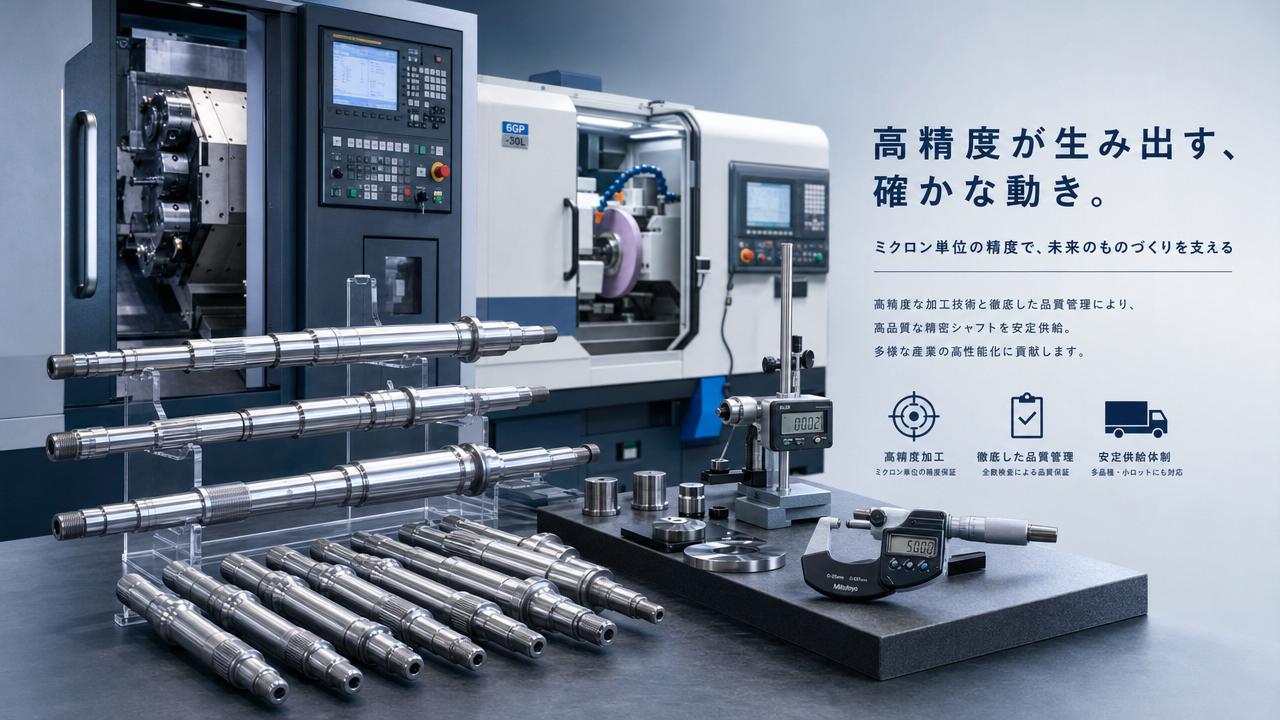
Why a Shaft Parts Manufacturer in Japan Deserves Closer Review
Choosing a reliable Shaft Parts Manufacturer in Japan can directly affect machining accuracy, delivery stability, and total procurement cost. For precision shafts used in CNC equipment, robotics, automated lines, and high-performance industrial systems, early checks matter more than late corrections.
Japan has a strong reputation in precision manufacturing. That said, not every supplier fits every order. The best result usually comes from checking capability, process discipline, and communication before discussing only price.
In the CNC machine tool industry, shafts often work inside spindles, feed systems, motors, reducers, and motion assemblies. A small error in straightness, hardness, or concentricity can easily become vibration, wear, assembly trouble, or field failure.
That is why a practical review process helps. When comparing any Shaft Parts Manufacturer in Japan, focus on the points below and use them to narrow suppliers faster.
[Image 01: Precision shaft inspection and CNC machining in a Japanese factory]
The first things worth checking
- Confirm whether the Shaft Parts Manufacturer in Japan regularly produces similar shaft diameters, lengths, tolerances, and batch sizes, not just general turned parts with loosely comparable specifications.
- Check material sourcing in detail, including steel grade, heat treatment route, hardness range, traceability records, and whether equivalent international standards can be matched without substitution risk.
- Review tolerance control methods, especially for roundness, concentricity, straightness, runout, and surface finish, because these values often decide assembly stability more than basic dimensions do.
- Ask what processes are kept in-house, such as turning, grinding, heat treatment coordination, polishing, and final inspection, since too many outside steps can weaken schedule control.
- Verify measurement capability, including CMM, roundness testers, roughness meters, hardness testing, and gauge calibration, so the inspection report reflects real process control rather than paperwork only.
- Check export experience, packaging method, and document accuracy, because an excellent shaft can still become a costly problem if labeling, customs files, or rust protection fail.
How to compare suppliers without getting lost in quotations
Quotations for precision shafts can look similar on the surface. The difference usually hides in process assumptions, inspection scope, and risk allocation.
A capable Shaft Parts Manufacturer in Japan will often ask detailed questions before quoting. That is usually a good sign, not a delay. It shows the supplier is trying to price the real job instead of guessing low and adjusting later.
Questions that reveal real capability
- Request a sample inspection report for a similar shaft, then compare actual measured values, tolerances, and report format to your drawing requirements before approving trial production.
- Ask which dimensions are controlled after heat treatment and grinding, because quoting a tight tolerance is easy, but maintaining it through every process step is harder.
- Check whether the supplier can suggest drawing improvements, such as practical datum settings or realistic finish notes, without weakening function or increasing hidden costs.
- Review lot traceability from raw bar to final shipment, especially when shafts enter automotive, aerospace, energy, or high-duty automation equipment with strict quality records.
What often gets overlooked in precision shaft orders
Many sourcing problems do not start in machining. They start in unclear drawings, missing application details, or incomplete inspection expectations.
For example, one Shaft Parts Manufacturer in Japan may quote based on standard turning and cylindrical grinding, while another assumes superfinishing, special packing, and full dimensional reporting. The lower price may not be the lower total cost.
Common blind spots
- Do not review diameter tolerance alone; shoulder position, keyway accuracy, thread quality, chamfer consistency, and burr control can also decide whether shafts assemble smoothly on-site.
- Surface finish needs context, because the required Ra on bearing seats, seal contact areas, and non-functional sections may differ and should not be copied blindly everywhere.
- Packaging deserves attention when ordering from overseas, since long transit, humidity, and handling shocks can damage polished shafts even when factory inspection passed perfectly.
- Small trial orders should still include quality documents, because skipping certification, first article review, or material proof at the start often creates confusion in larger repeat orders.
- Tooling ownership, fixture cost, and minimum batch expectations should be clarified early, especially for custom shaft geometries used in automated production lines or machine tool assemblies.
Different applications need different checks
Shafts for CNC spindles, servo systems, conveyors, reducers, and robotic joints do not carry the same risk. Matching the review process to the application makes supplier selection more accurate.
For CNC machine tool assemblies
In machine tools, shaft precision directly affects runout, rigidity, and long-term accuracy. Here, concentricity, heat treatment stability, and grinding quality deserve extra attention.
If the Shaft Parts Manufacturer in Japan already serves machine tool, spindle, or feed mechanism applications, that background usually helps with tighter process discipline and documentation quality.
For automation and robotics
In robotics and automated lines, shafts often need repeatability across batches more than extreme single-part precision. Consistent dimensions, good coating control, and stable lead time become critical.
It also helps to confirm how design changes are managed. A supplier with disciplined revision control can prevent mixed lots during ongoing production programs.
For energy and heavy-duty equipment
Larger shafts used in pumps, compressors, or energy systems often bring tougher material and distortion challenges. In these cases, rough machining allowance, stress relief, and final straightness control matter a lot.
A Shaft Parts Manufacturer in Japan with experience in long or heavy shafts should be able to explain how it prevents bending, handling damage, and measurement drift during production.
A simple way to reduce cost without inviting quality risk
Cost control does not always mean pushing unit price down. In precision shaft sourcing, it usually means preventing avoidable rework, late clarification, and performance failure after installation.
- Provide a complete drawing package with tolerance notes, material callout, hardness target, surface finish, and application description so the supplier can quote the right process path.
- Separate critical dimensions from general dimensions in the drawing, which helps the Shaft Parts Manufacturer in Japan focus inspection effort where function truly depends on precision.
- Use a pilot batch to confirm machining route, inspection format, packing method, and shipping condition before releasing larger volumes or annual blanket purchase schedules.
- Compare total landed cost, not unit price only, including scrap risk, logistics, communication speed, customs handling, and possible downtime caused by unstable shaft quality.
- Set approval rules for material substitution, process changes, and outside treatment vendors, because uncontrolled changes often create the most expensive hidden quality problems later.
Before placing the order
A good Shaft Parts Manufacturer in Japan should feel transparent, consistent, and technically grounded. Clear answers, realistic tolerances, and complete records are usually stronger signals than a fast quote alone.
Before confirming an order, review sample reports, process flow, lead time assumptions, packaging details, and quality response rules one more time. That short step often prevents long delays later.
In a market shaped by precision manufacturing, automation, and smart factory demands, the right supplier decision supports both performance and cost control. When evaluating any Shaft Parts Manufacturer in Japan, practical checks beat assumptions every time.
Start with one drawing, one target application, and one trial batch. That gives a clear basis to judge quality, consistency, and long-term fit before scaling up.
PREVIOUS ARTICLE
NEXT ARTICLE
Recommended for You
![]() FANUC Links FIELD System Data with Copilot to Advance Shop-Floor Data UseCNC Machining Technology Center
FANUC Links FIELD System Data with Copilot to Advance Shop-Floor Data UseCNC Machining Technology Center Smart Manufacturing for Aerospace: Building Traceability Across CNC OperationsCNC Machining Technology Center
![]() Mitsubishi Electric Announces Physical AI System Linking Humanoid Robots and CNC MachinesMachine Tool Industry Editorial Team
Mitsubishi Electric Announces Physical AI System Linking Humanoid Robots and CNC MachinesMachine Tool Industry Editorial Team Precision Machining for Defense: Supplier Quality and Traceability ChecksManufacturing Market Research Center
![]() Nidec Machine Tool Launches MVR-5X Five-Axis Gantry MachineMachine Tool Industry Editorial Team
Nidec Machine Tool Launches MVR-5X Five-Axis Gantry MachineMachine Tool Industry Editorial Team Choosing a Precision Disc Parts Manufacturer in China: Tolerances and Quality ChecksManufacturing Market Research Center


Aris Katos
Future of Carbide Coatings
15+ years in precision manufacturing systems. Specialized in high-speed milling and aerospace grade alloy processing.
▶
Vietnam Ends CNC Import Cap, Tightens VKFTA ChecksGlobal Machine Tool Trade Research Center▶
Qingdao Backs Provincial Machine Tool ClusterGlobal Machine Tool Trade Research Center▶
India Weighs Tariff Relief for Localized Machine ToolsGlobal Machine Tool Trade Research Center▶
India Drafts Machine Tool Localization Incentive PlanGlobal Machine Tool Trade Research Center▶
India Imposes 20% Duty on Parboiled Rice ExportsGlobal Machine Tool Trade Research Center
▶
Mastering 5-Axis Workholding Strategies
Join our technical panel on Nov 15th to learn about reducing vibrations in thin-wall components.

Providing you with integrated sanding solutions
Before-sales and after-sales services
Comprehensive technical support