• Global CNC market projected to reach $128B by 2028 • New EU trade regulations for precision tooling components • Aerospace deman
NYSE: CNC +1.2%LME: STEEL -0.4%

How to Evaluate an Automation Line for Automotive Assembly Before Project Launch
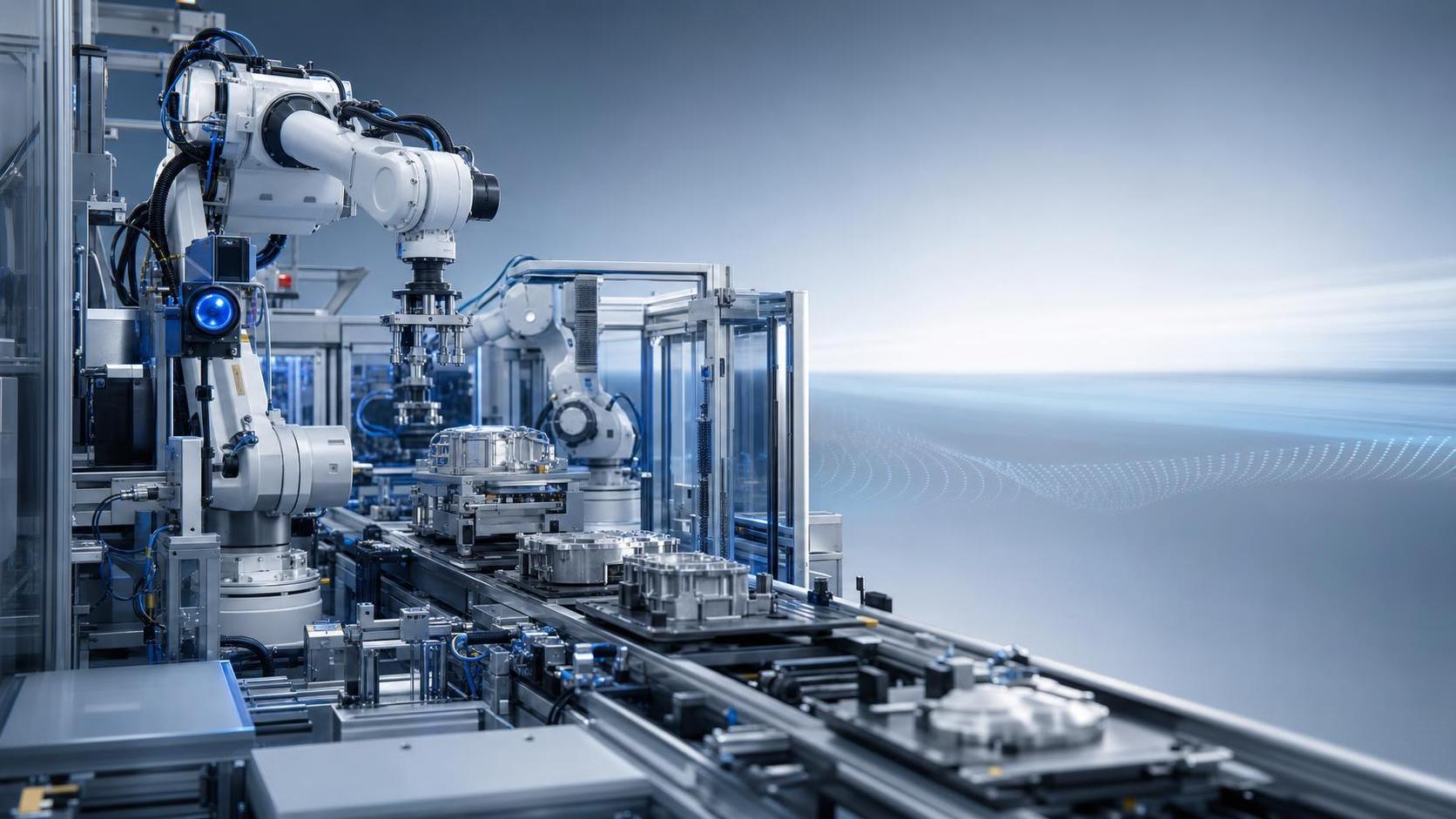
Launching an Automation Line for Automotive Assembly is rarely a simple equipment decision. It is a production strategy choice that affects throughput, quality stability, labor structure, digital visibility, and future model changeovers.
That is why pre-launch evaluation matters. In automotive manufacturing, even a well-built line can underperform when cycle time assumptions, part tolerances, tooling logic, or data integration are misread early.
The issue is even more relevant now. CNC machine tools, precision fixtures, robots, and smart factory systems are becoming more connected, while launch schedules are becoming less forgiving.
A practical assessment should look beyond specifications. It should test whether the Automation Line for Automotive Assembly fits the real product mix, process flow, and business targets behind the project.
What the evaluation really covers
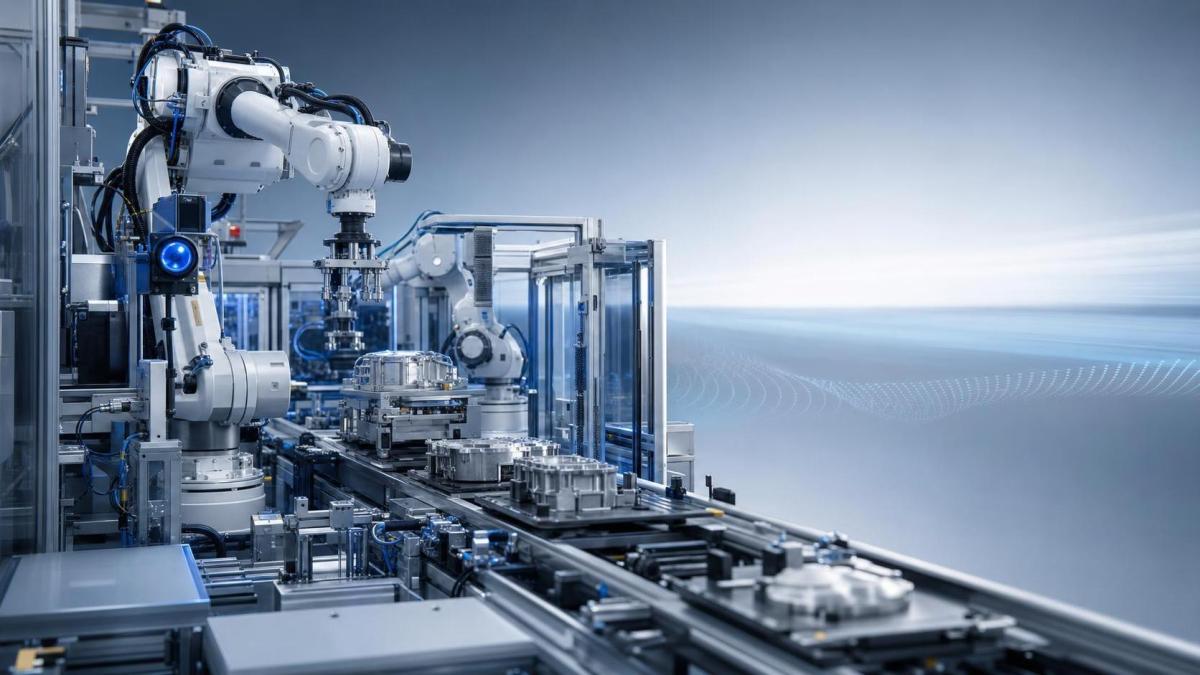
An Automation Line for Automotive Assembly usually combines transfer systems, robotic handling, fastening stations, inspection points, fixtures, safety devices, and production software into one coordinated workflow.
In many plants, it also connects upstream machining and downstream testing. That link matters because assembly performance is often limited by part variation created earlier in CNC and precision manufacturing stages.
So the real question is not whether the line is automated. The question is whether the full line architecture can consistently assemble the intended product under normal production conditions.
A useful evaluation checks technical capability, operational resilience, and commercial logic at the same time. Looking at only one of these usually creates expensive surprises during commissioning.
Why this matters in the current manufacturing landscape
Automotive programs now face shorter launch cycles, more model variants, tighter traceability demands, and stronger pressure on cost per unit. Those conditions raise the bar for every Automation Line for Automotive Assembly.
At the same time, the wider machine tool industry is moving toward higher precision, higher automation, and deeper digital integration. That shift changes how assembly lines should be judged before capital is committed.
A line that looked sufficient five years ago may now lack recipe control, data capture, flexible fixturing, or diagnostics needed for modern launch performance.
Global supply chains also influence evaluation. Components, tooling, spares, and service support may come from different regions, so lead time risk and service continuity need to be reviewed as carefully as mechanics.
Start with product and process fit
The first filter is compatibility with the actual assembly task. A promising line concept can still fail if the product family includes frequent engineering changes, mixed variants, or highly sensitive joining requirements.
Part geometry, fastening strategy, tolerance stack-up, and handling orientation should all be reviewed together. This is especially important when machined housings, shafts, discs, or structural parts enter assembly with tight positional requirements.
A pre-launch review should confirm several points:
- Whether incoming part tolerances match fixture and robot repeatability.
- Whether critical joining steps can hold target capability over long runs.
- Whether model variants can be handled without excessive manual intervention.
- Whether rework paths are defined for nonconforming assemblies.
If those answers remain vague, the line concept is not ready, regardless of how advanced the hardware appears.
Check the role of upstream precision equipment
Automotive assembly does not exist in isolation. CNC lathes, machining centers, cutting tools, and workholding systems shape the dimensional stability of the parts being assembled.
If an Automation Line for Automotive Assembly depends on perfect component consistency, but upstream processes deliver drifting dimensions, the line may show false downtime, jam events, or excessive rejection.
That is why launch teams should review capability data from machining, not only assembly simulation output.
Capacity is more than cycle time
Many early proposals focus on nominal cycle time. That number matters, but it is only one part of line capacity.
A better view includes uptime assumptions, buffer design, changeover loss, operator intervention, maintenance windows, and the time needed for inspection or traceability tasks.
For an Automation Line for Automotive Assembly, the useful question is whether the line can hit required output across a full shift pattern, not just during a stable demonstration run.
This is often where optimistic business cases begin to weaken. The line may look productive in theory, while real operating constraints reduce annual output significantly.
Flexibility, control, and quality assurance
Automotive programs change. Fixtures wear, suppliers vary, product revisions arrive, and optional configurations grow over time. A rigid system may perform well on day one and become a bottleneck later.
That makes flexibility a core part of evaluating an Automation Line for Automotive Assembly. Flexibility does not mean unlimited complexity. It means practical adaptability without excessive cost or downtime.
Key indicators include recipe management, servo adjustment range, tool change strategy, programmable inspection limits, and fixture design that supports planned variant expansion.
Quality control deserves equal attention. In-line vision, torque monitoring, leak testing, presence detection, barcode traceability, and error-proofing logic should be judged by detection reliability, not by feature count.
A strong line design also defines what happens after a defect is found. Segregation, containment, repair routing, and record retention should already be visible before project launch.
Digital integration is now part of the decision
The line should not be evaluated as a stand-alone machine group. It should be reviewed as a data source within a larger manufacturing system.
That means checking PLC structure, MES connectivity, alarm history, parameter traceability, remote diagnostics, and reporting logic for OEE, maintenance, and process capability.
In a smart factory environment, weak data architecture can limit improvement long after mechanical issues are solved.
Commercial risk and long-term ownership cost
The purchase price of an Automation Line for Automotive Assembly is only the visible layer of cost. The larger financial impact often comes from ramp-up delays, spare parts exposure, software dependence, and maintenance burden.
A practical evaluation should compare total ownership factors such as:
- Expected consumables and tooling replacement cycles.
- Availability of local service and critical spare parts.
- Software licensing, update control, and cybersecurity support.
- Training depth for operators, maintenance, and process teams.
- Expansion cost if capacity or model count rises later.
Return on investment should therefore be tested against realistic ramp assumptions. A cheaper line with fragile uptime can become more expensive than a stronger system with higher initial capital.
A practical pre-launch review framework
Before approval, it helps to build a structured review that combines engineering, operations, quality, and supply considerations into one decision record.
The framework does not need to be complex. It needs to be disciplined and evidence-based.
- Map the full process from incoming parts to final verification.
- Validate line assumptions against actual product and tolerance data.
- Stress-test capacity using downtime, changeover, and recovery scenarios.
- Review flexibility for planned variants and engineering changes.
- Confirm traceability, inspection logic, and defect handling paths.
- Compare life-cycle cost, supplier support, and digital integration readiness.
When those checks are documented early, the Automation Line for Automotive Assembly becomes easier to compare across suppliers, technologies, and layout concepts.
The next step is straightforward. Build a short evaluation matrix around process fit, capacity realism, quality control, flexibility, and ownership cost, then test every proposal against the same criteria before launch decisions are locked.
PREVIOUS ARTICLE
NEXT ARTICLE
Recommended for You
![]() Mitsubishi Electric Announces Physical AI System Linking Humanoid Robots and CNC MachinesMachine Tool Industry Editorial Team
Mitsubishi Electric Announces Physical AI System Linking Humanoid Robots and CNC MachinesMachine Tool Industry Editorial Team Precision Machining for Defense: Supplier Quality and Traceability ChecksManufacturing Market Research Center
![]() Nidec Machine Tool Launches MVR-5X Five-Axis Gantry MachineMachine Tool Industry Editorial Team
Nidec Machine Tool Launches MVR-5X Five-Axis Gantry MachineMachine Tool Industry Editorial Team Choosing a Precision Disc Parts Manufacturer in China: Tolerances and Quality ChecksManufacturing Market Research Center
![]() Siemens Executive Says AI Could Raise Factory Automation to 80%Manufacturing Market Research Center
Siemens Executive Says AI Could Raise Factory Automation to 80%Manufacturing Market Research Center Choosing Automated Machine Tools for High-Mix, Low-Volume ProductionMachine Tool Industry Editorial Team


Aris Katos
Future of Carbide Coatings
15+ years in precision manufacturing systems. Specialized in high-speed milling and aerospace grade alloy processing.
▶
How to Evaluate an Automation Line for Automotive Assembly Before Project LaunchCNC Machining Technology Center▶
EU Tightens Conformity Rules for Automated LinesCNC Machining Technology Center▶
Where Industrial Robotics for Warehouse Automation Delivers the Fastest ROICNC Machining Technology Center▶
Automation Line for Automotive Assembly: Key Equipment and Layout FactorsCNC Machining Technology Center▶
Industrial Automation projects fail when handoff is poorly plannedCNC Machining Technology Center
▶
Mastering 5-Axis Workholding Strategies
Join our technical panel on Nov 15th to learn about reducing vibrations in thin-wall components.

Providing you with integrated sanding solutions
Before-sales and after-sales services
Comprehensive technical support