• Global CNC market projected to reach $128B by 2028 • New EU trade regulations for precision tooling components • Aerospace deman
NYSE: CNC +1.2%LME: STEEL -0.4%

How to Evaluate a Machine Tool Factory: 7 Checks Before Requesting a Quote
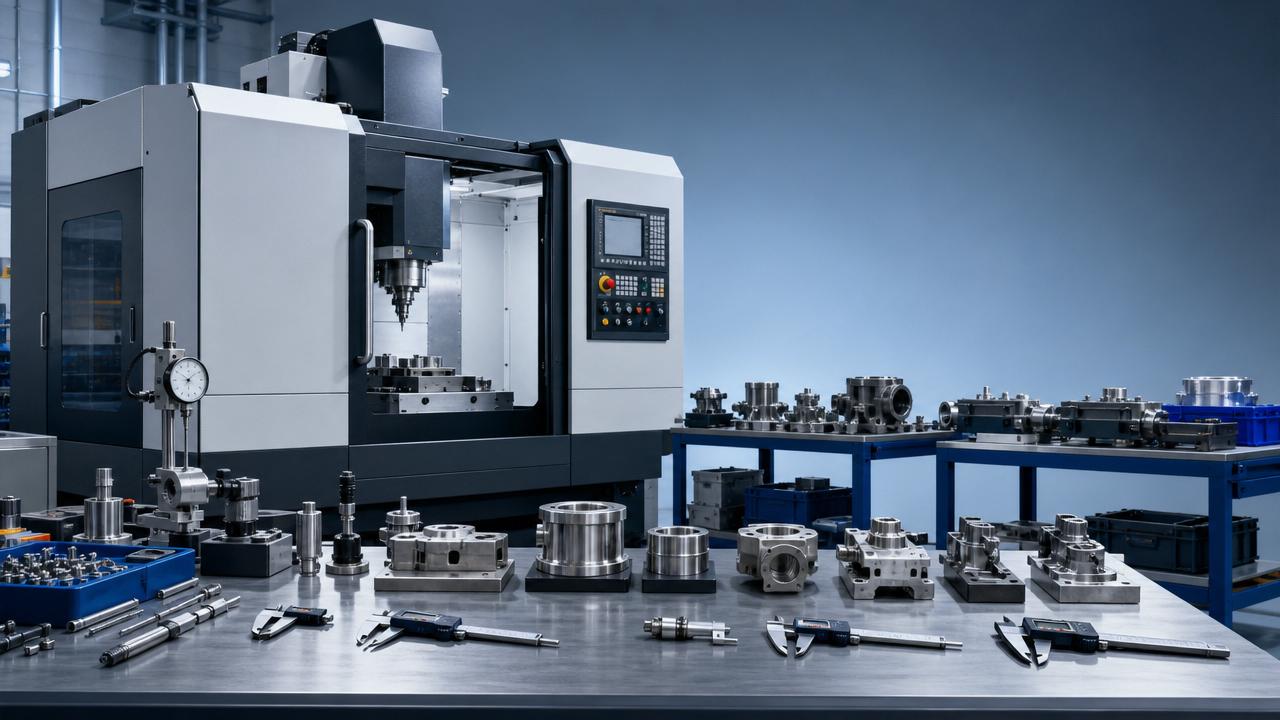
How to Evaluate a Machine Tool Factory: 7 Checks Before Requesting a Quote
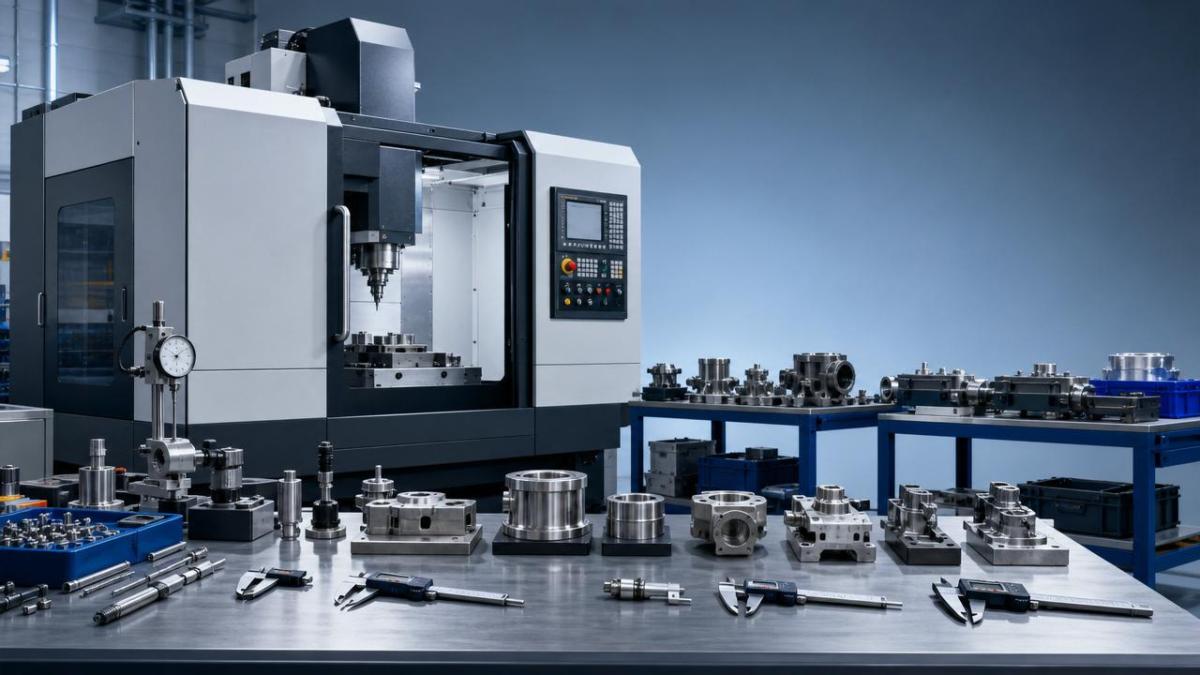
Before asking for pricing, buyers need proof, not promises.
A machine tool factory may look strong online, yet fail on delivery, quality, or after-sales response.
That gap creates real cost.
It can mean delayed installation, unstable accuracy, extra spare parts, or long shutdowns during production.
In the CNC market, a quote is only useful after the supplier has been screened properly.
A capable machine tool factory should show consistency in manufacturing, engineering, inspection, and support.
This matters even more when sourcing CNC lathes, machining centers, or automated production equipment for demanding applications.
The seven checks below help reduce sourcing risk before you compare prices.
1. Confirm What the Machine Tool Factory Actually Manufactures
Start with the most basic question.
Is the supplier a real machine tool factory, an assembler, or a trading company with outsourced production?
This distinction affects pricing, lead time control, customization speed, and accountability.
Ask which core parts are made in-house.
That usually includes bed casting machining, spindle assembly, sheet metal work, electrical integration, and final testing.
A serious machine tool factory can explain its production scope clearly.
- Request a current product list and model range.
- Ask for workshop videos with recent production dates.
- Check whether serial numbers match the listed models.
- Verify if key assemblies come from stable suppliers.
If the answer stays vague, that is already useful information.
A quote from the wrong supplier type can hide risk that appears only after payment.
2. Review Capacity, Workflow, and Delivery Discipline
Many delays happen long before shipping.
The issue is usually overloaded planning, weak subcontractor control, or poor internal scheduling.
A reliable machine tool factory should explain monthly output, bottleneck processes, and standard lead times by machine category.
Look beyond the published timeline.
Ask how they manage urgent orders, engineering changes, and imported components with long procurement cycles.
In actual sourcing, stable delivery often matters more than the shortest promise.
Useful checks include production planning boards, work-in-progress records, and shipment history for similar models.
When a machine tool factory can show process flow from machining to assembly to test run, confidence increases quickly.
3. Inspect Quality Control Beyond Certificates
Certificates help, but they are not enough.
The real question is how the machine tool factory controls geometric accuracy, repeatability, vibration, noise, and thermal stability.
Ask for inspection records tied to actual machines, not generic samples.
A strong supplier usually has incoming inspection, in-process checks, assembly validation, and final acceptance testing.
It should also identify how nonconforming parts are isolated and corrected.
This is especially important for CNC machine tools used in aerospace parts, automotive shafts, and precision electronics components.
A simple checklist can reveal a lot.
A machine tool factory with mature quality systems answers fast and shows evidence.
4. Evaluate Engineering Strength and Customization Ability
Price becomes misleading when technical understanding is weak.
A good machine tool factory should ask about workpiece material, tolerance, surface finish, tool path logic, cycle time, and automation interface.
That level of discussion shows engineering depth.
This matters when projects need special fixtures, bar feeders, robotic loading, probe systems, or software integration.
From recent market changes, more buyers need flexible production rather than standard standalone machines.
That means the machine tool factory must support adaptation, not just assembly.
- Ask for similar case studies by industry.
- Review layout drawings and utility requirements.
- Check response quality to technical questions.
- Confirm software, controller, and servo options.
If every request gets a yes without technical detail, be careful.
Strong factories explain limits as clearly as capabilities.
5. Check Supply Chain Stability for Critical Components
A machine tool factory is only as stable as its component network.
Spindles, linear guides, ball screws, controllers, motors, bearings, and hydraulic parts all affect performance and maintenance cost.
One hidden supplier change can alter accuracy or service life.
Ask for the approved brand list for key components.
Then ask what happens if one brand becomes unavailable.
This is where many low quotes become expensive later.
In practical business terms, supply chain transparency protects both uptime and spare parts planning.
A trustworthy machine tool factory should confirm whether substitutions need written approval before production.
6. Verify Export Experience and Documentation Accuracy
For international orders, technical ability alone is not enough.
The machine tool factory should understand export packing, customs paperwork, voltage standards, manuals, installation guidance, and destination compliance requirements.
Shipping mistakes can delay projects for weeks.
Ask which countries the factory has shipped to recently.
Request sample packing photos, manuals, and acceptance documents in English.
Also check whether the machine tool factory can support remote commissioning or local service coordination.
This becomes more important for automated lines and multi-axis systems with complex setup needs.
Clear documentation is a strong sign of process maturity.
7. Test After-Sales Response Before You Request the Quote
This is the check many teams leave too late.
Yet after-sales support often defines the real cost of buying from a machine tool factory.
Before requesting a formal quote, send several technical and service questions.
Measure how clearly and how quickly the team responds.
Ask about spare parts lead time, warranty scope, troubleshooting steps, and escalation contacts.
A dependable machine tool factory should have a defined service workflow, not improvised replies.
More importantly, the service promise should align with the factory’s actual staffing and technical resources.
Fast and specific answers today usually predict smoother support after installation.
A Practical Way to Use These 7 Checks
Do not treat supplier evaluation as a one-time form.
Use these checks as a scoring method before price comparison starts.
For example, rank each machine tool factory on manufacturing scope, quality evidence, engineering support, component control, export readiness, and service responsiveness.
That approach makes the final quote easier to interpret.
A lower price from a weak machine tool factory is rarely a better deal.
By contrast, a higher quote backed by process control and real support may reduce total cost over years of operation.
Before you ask for numbers, ask for evidence.
That simple shift leads to better supplier selection, stronger negotiation, and fewer surprises after the order is placed.
Recommended for You
![]() FANUC Links FIELD System Data with Copilot to Advance Shop-Floor Data UseCNC Machining Technology Center
FANUC Links FIELD System Data with Copilot to Advance Shop-Floor Data UseCNC Machining Technology Center Smart Manufacturing for Aerospace: Building Traceability Across CNC OperationsCNC Machining Technology Center
![]() Mitsubishi Electric Announces Physical AI System Linking Humanoid Robots and CNC MachinesMachine Tool Industry Editorial Team
Mitsubishi Electric Announces Physical AI System Linking Humanoid Robots and CNC MachinesMachine Tool Industry Editorial Team Precision Machining for Defense: Supplier Quality and Traceability ChecksManufacturing Market Research Center
![]() Nidec Machine Tool Launches MVR-5X Five-Axis Gantry MachineMachine Tool Industry Editorial Team
Nidec Machine Tool Launches MVR-5X Five-Axis Gantry MachineMachine Tool Industry Editorial Team Choosing a Precision Disc Parts Manufacturer in China: Tolerances and Quality ChecksManufacturing Market Research Center


Aris Katos
Future of Carbide Coatings
15+ years in precision manufacturing systems. Specialized in high-speed milling and aerospace grade alloy processing.
▶
How to verify spare part compatibility for Yunnan CY Group lathesMachine Tool Industry Editorial Team▶
Is CNC Machining Hub Better Than Local Shops for Prototyping?Machine Tool Industry Editorial Team▶
German Hydraulic Parts Plant Sale Signals Local Supply ShiftMachine Tool Industry Editorial Team▶
How to Evaluate a Machine Tool Factory: 7 Checks Before Requesting a QuoteMachine Tool Industry Editorial Team▶
Shenwei CNC Dual-Spindle Transfer Machine Passes TÜV Rheinland Production-Line Integration CertificationMachine Tool Industry Editorial Team
▶
Mastering 5-Axis Workholding Strategies
Join our technical panel on Nov 15th to learn about reducing vibrations in thin-wall components.

Providing you with integrated sanding solutions
Before-sales and after-sales services
Comprehensive technical support