• Global CNC market projected to reach $128B by 2028 • New EU trade regulations for precision tooling components • Aerospace deman
NYSE: CNC +1.2%LME: STEEL -0.4%

How to Choose a CNC Tooling System for Titanium Machining: Tool Holders, Rigidity, and Heat Control
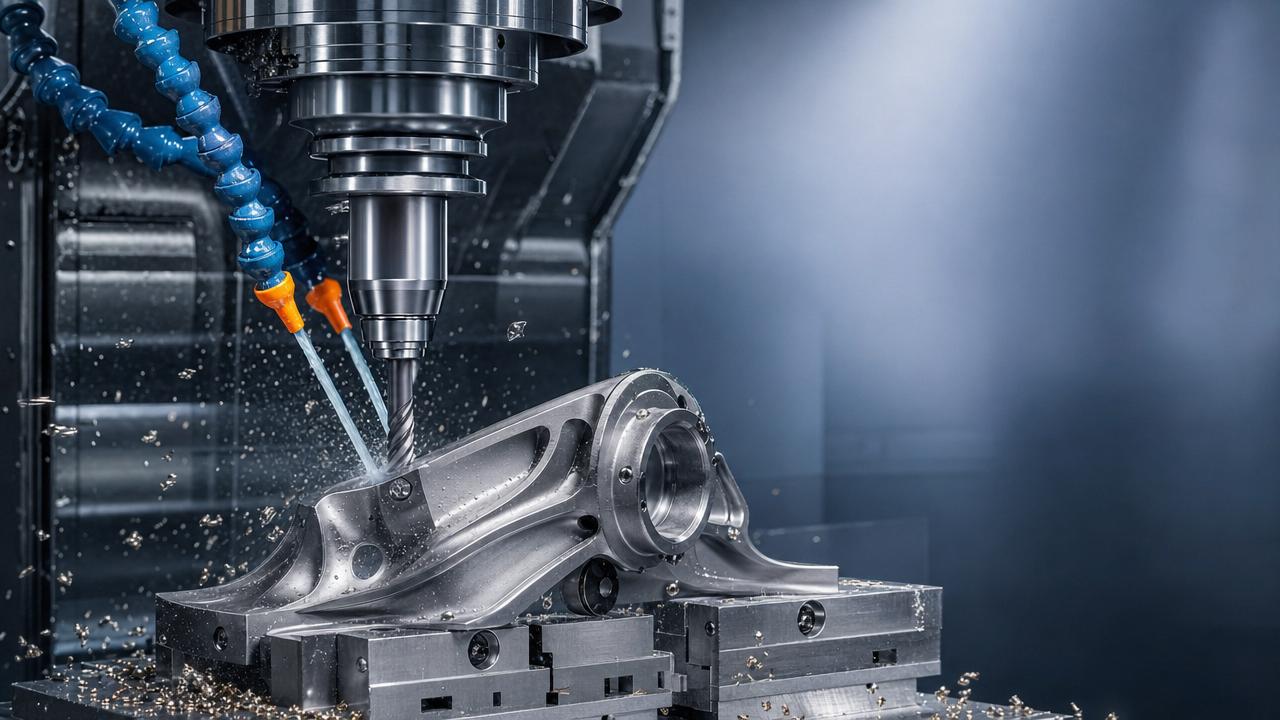
Why does a CNC Tooling System for titanium machining need special attention?
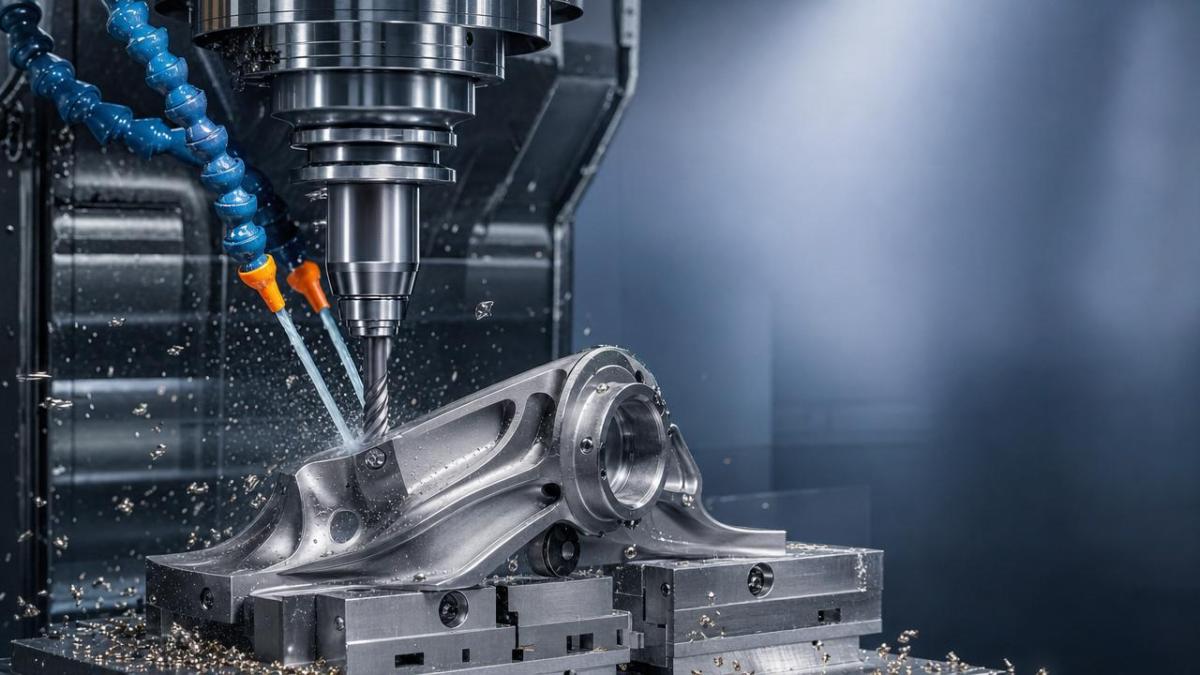
Titanium looks attractive on paper. It is strong, light, and corrosion resistant. It is also one of the most demanding materials in precision machining.
That is why the CNC Tooling System for titanium machining cannot be treated like a standard setup for steel or aluminum.
The main issue is not only hardness. Titanium keeps heat close to the cutting zone, resists deformation, and reacts badly to chatter.
In practical production, a weak tooling chain often shows up as edge chipping, unstable surface finish, poor dimensional repeatability, or sudden tool failure.
Across aerospace, energy equipment, medical parts, and advanced automotive applications, these risks matter because scrap is expensive and process windows are narrow.
A well-matched CNC Tooling System for titanium machining supports three goals at once: better rigidity, better thermal control, and more predictable tool life.
That is especially important in a manufacturing environment moving toward automation, multi-axis machining, and data-driven quality control.
What actually makes titanium so difficult to machine?
A common misunderstanding is that titanium fails tools simply because it is tough. The bigger problem is the way it behaves during cutting.
Titanium has low thermal conductivity. Heat stays concentrated near the insert edge and tool holder interface instead of leaving with the chip.
It also keeps cutting forces high, even when the chip load looks moderate. Small vibration becomes damaging very quickly.
More importantly, titanium machining often involves deep cavities, thin walls, and long overhangs. That combination punishes any weakness in the spindle-to-tool connection.
If the tooling system lacks stiffness, the process usually becomes unstable before feed and speed targets are reached.
The result is not just lower productivity. It can also mean recutting chips, thermal cracks, work hardening, and inconsistent part geometry.
So when evaluating a CNC Tooling System for titanium machining, the better question is not “Will it cut?” but “Will it stay stable under heat and load?”
Which tool holder style is usually the safer choice?
There is no single holder for every titanium job. Still, some holder types consistently perform better when rigidity and runout control matter.
Hydraulic chucks offer strong damping and good runout accuracy. They are often useful for finishing, smaller cutters, and surface-sensitive work.
Shrink fit holders provide high concentricity and compact nose geometry. They are often favored in high-speed contouring and tight-access areas.
Heavy-duty milling chucks generally bring stronger gripping torque. They fit roughing operations better, especially when interrupted cuts are involved.
Collet systems can work, but standard versions are often less ideal for demanding titanium cuts because clamping consistency and rigidity may vary.
A practical comparison helps narrow the decision.
The best CNC Tooling System for titanium machining often mixes holder styles by operation rather than forcing one holder across every step.
How much does rigidity matter compared with cutting parameters?
More than many teams expect. Cutting data matters, but titanium rewards stiffness before speed.
If the spindle, holder, extension, and cutter form a flexible stack, no parameter sheet will fully save the process.
A rigid CNC Tooling System for titanium machining reduces vibration amplitude, keeps chip thickness more consistent, and protects the cutting edge from impact loading.
Short gauge length is usually one of the fastest improvements. Every extra millimeter of overhang increases deflection risk.
Interface quality matters too. HSK, BIG-PLUS, and other high-contact systems are often preferred where spindle connection stability is critical.
Needle movement at the tool tip may look minor during setup. Under load, it can become chatter, tapered walls, or broken corners.
When comparing options, it helps to review these checkpoints:
- Maximum permitted overhang for the operation
- Runout at the cutting diameter, not only at the holder nose
- Torque transmission under interrupted cutting
- Balance quality for higher spindle speeds
- Repeatability after multiple tool changes
In automated cells and flexible production lines, repeatable rigidity becomes even more valuable because process drift is harder to catch manually.
If heat is the real enemy, what should be checked first?
Start with coolant delivery, not just coolant type. Titanium machining often fails because fluid never reaches the hottest point effectively.
Through-tool coolant can make a meaningful difference. It targets the interface where heat and chip evacuation problems usually begin.
High-pressure coolant is especially useful in drilling, deep pocket milling, and slotting, where chips tend to stay in the cut.
Dry cutting is possible in some cases, but it needs a controlled strategy. It should not be used as a shortcut when the tooling system is unstable.
Heat control also depends on chip shape. If chips are stringy, smeared, or recut, thermal load rises quickly.
The holder design can help here. Slim designs improve access, while sealed coolant channels prevent pressure loss and contamination.
A useful rule is simple: if edge wear looks random, check mechanics; if wear looks burned, welded, or cratered, check heat flow immediately.
Quick warning signs of poor heat control
- Blue or darkened chips during a process that should stay cooler
- Built-up edge appearing early in the tool life cycle
- Surface tearing near exit points or corners
- Tool life changing sharply between similar batches
Where do selection mistakes usually happen?
The most common mistake is buying the tool holder as a standalone item. Titanium performance depends on the whole tooling chain.
Another frequent error is focusing on catalog speed limits while ignoring clamping torque, damping behavior, and coolant path design.
Some setups also fail because the holder is technically accurate but not suitable for the cutter diameter or engagement pattern.
There is also a cost trap. A cheaper holder can look attractive until scrap, downtime, and insert consumption are added back into the calculation.
In global machine tool markets, stronger suppliers now support digital setup records, presetting data, and interface consistency. That matters for repeatability.
A short evaluation table can keep the decision grounded.
What is a sensible way to compare options before standardizing?
The safest method is to compare tooling systems by application family, not by one isolated sample part.
Group jobs by titanium grade, cutter type, reach requirement, and coolant strategy. Then compare holder performance within those groups.
Track measurable items, not impressions only. Tool life per edge, dimensional drift, spindle load variation, and setup repeatability are usually enough to start.
For a CNC Tooling System for titanium machining, the winning choice is often the one with fewer process interruptions, not the highest theoretical speed.
It also helps to review support factors. Availability of spare components, balancing service, presetting compatibility, and delivery stability all affect long-term use.
This matters in international production networks, where machine platforms, spindle interfaces, and maintenance practices may differ by site.
A practical next step is to build a simple selection standard:
- Define acceptable runout and gauge length limits
- Separate roughing, semi-finishing, and finishing holder choices
- Specify coolant requirements by operation type
- Record wear patterns during trials, not only cycle time
- Review total cost per part after several batches
Choosing a CNC Tooling System for titanium machining is really about reducing uncertainty. Better holder fit, stronger rigidity, and cleaner heat control usually pay back through stability.
Before locking in a standard, map the actual titanium applications, compare holder behavior under load, and confirm which setup stays repeatable over time.
That approach leads to a more reliable machining process and a better basis for future automation, quality control, and cross-site production planning.
NEXT ARTICLE
Recommended for You
![]() Mitsubishi Electric Announces Physical AI System Linking Humanoid Robots and CNC MachinesMachine Tool Industry Editorial Team
Mitsubishi Electric Announces Physical AI System Linking Humanoid Robots and CNC MachinesMachine Tool Industry Editorial Team Precision Machining for Defense: Supplier Quality and Traceability ChecksManufacturing Market Research Center
![]() Nidec Machine Tool Launches MVR-5X Five-Axis Gantry MachineMachine Tool Industry Editorial Team
Nidec Machine Tool Launches MVR-5X Five-Axis Gantry MachineMachine Tool Industry Editorial Team Choosing a Precision Disc Parts Manufacturer in China: Tolerances and Quality ChecksManufacturing Market Research Center
![]() Siemens Executive Says AI Could Raise Factory Automation to 80%Manufacturing Market Research Center
Siemens Executive Says AI Could Raise Factory Automation to 80%Manufacturing Market Research Center Choosing Automated Machine Tools for High-Mix, Low-Volume ProductionMachine Tool Industry Editorial Team


Aris Katos
Future of Carbide Coatings
15+ years in precision manufacturing systems. Specialized in high-speed milling and aerospace grade alloy processing.
▶
KATS Expands CE Recognition for CNC Clamping SystemsMachine Tool Industry Editorial Team▶
How to Evaluate a Tooling System for Precision Machining: 7 Key Specs That MatterMachine Tool Industry Editorial Team▶
ITC Opens 337 Probe Into Chinese CNC Tool CoatingsMachine Tool Industry Editorial Team▶
Vietnam Ends 5% Tariff on Chinese CNC Tool ImportsMachine Tool Industry Editorial Team▶
Japan Ends Import License Rule for Chinese Cutting ToolsMachine Tool Industry Editorial Team
▶
Mastering 5-Axis Workholding Strategies
Join our technical panel on Nov 15th to learn about reducing vibrations in thin-wall components.

Providing you with integrated sanding solutions
Before-sales and after-sales services
Comprehensive technical support