• Global CNC market projected to reach $128B by 2028 • New EU trade regulations for precision tooling components • Aerospace deman
NYSE: CNC +1.2%LME: STEEL -0.4%

Lean Production Process Implementation: Key Steps to Reduce Waste and Improve Flow
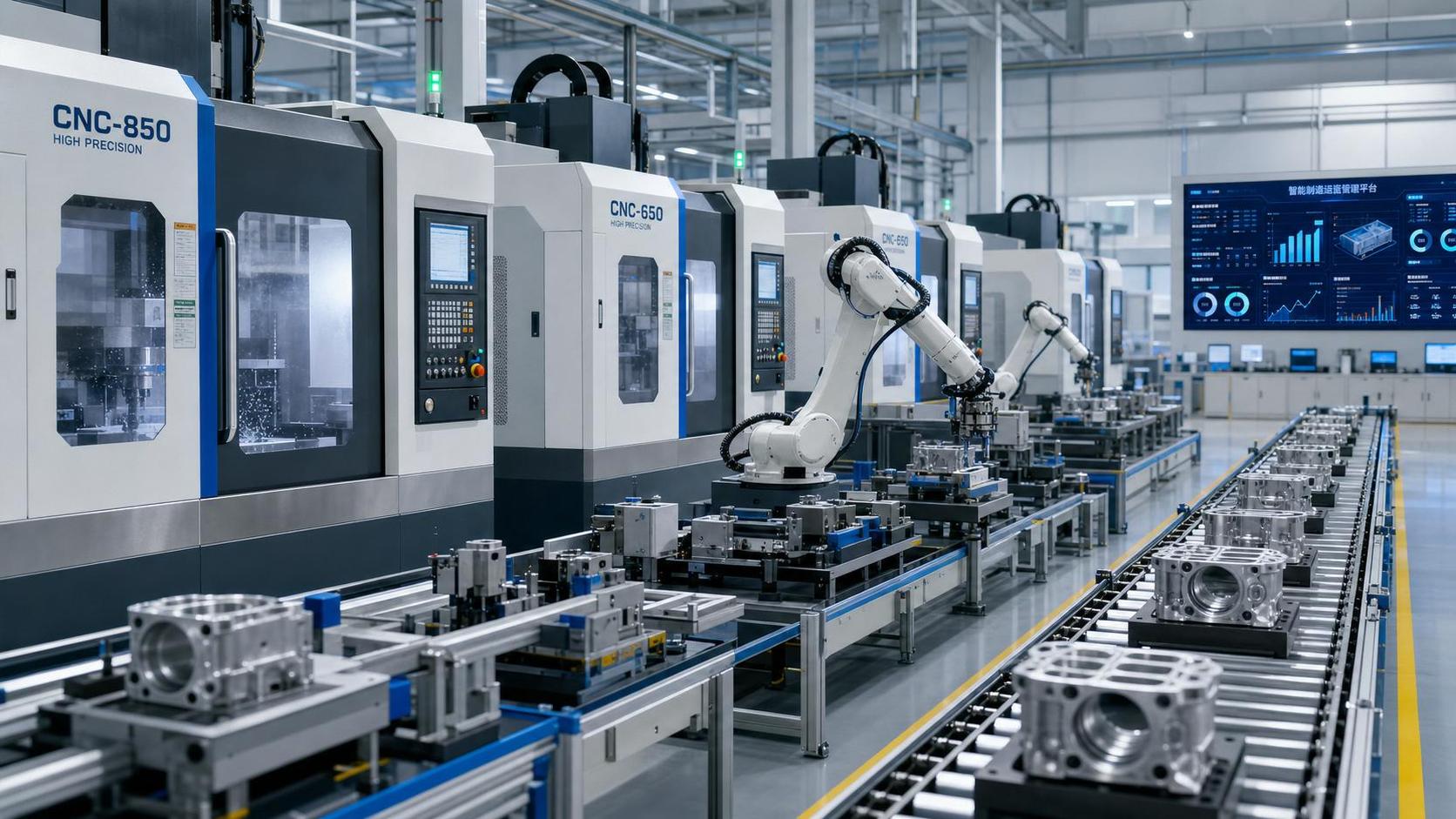
Lean Production Process Implementation: Key Steps to Reduce Waste and Improve Flow
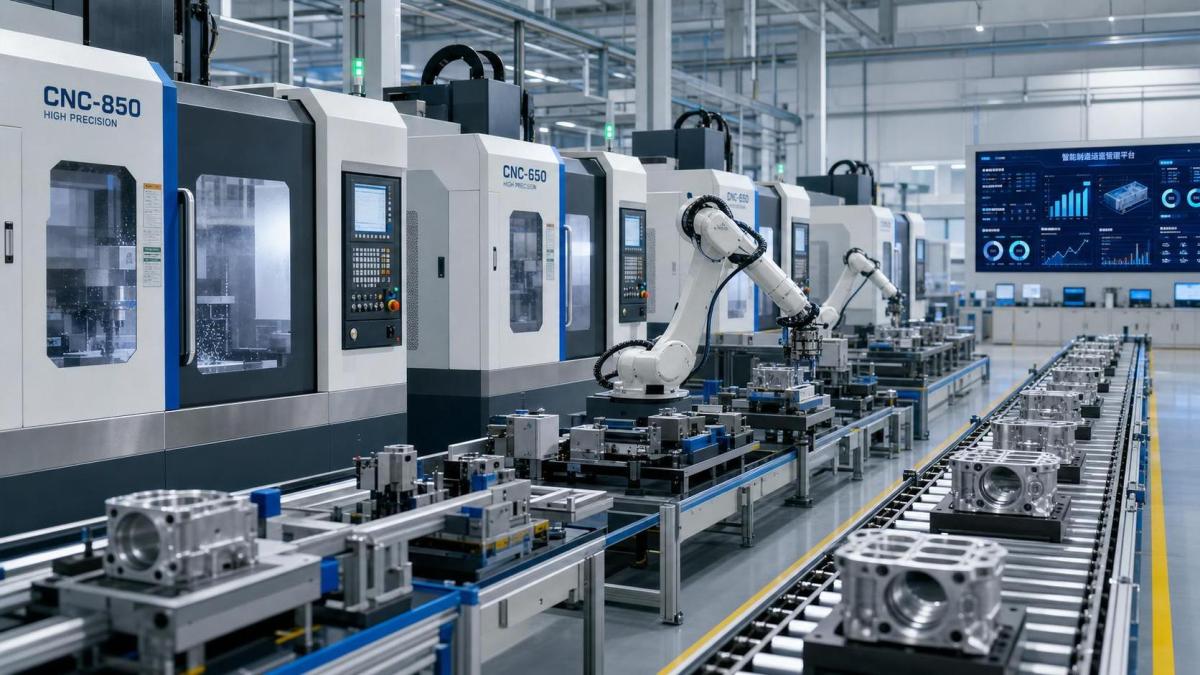
Lean Production Process implementation is no longer a niche improvement method. It is now a practical operating model for manufacturers facing cost pressure, shorter lead times, and rising quality expectations.
In CNC machining and precision manufacturing, waste often hides inside waiting time, excess movement, repeated setups, unbalanced workloads, and poor data visibility. These issues slow delivery and reduce margin.
A strong Lean Production Process implementation helps teams expose those losses early. It also creates steadier flow, better machine utilization, and more predictable output across automated and manual operations.
For project-driven manufacturing environments, lean is not just about cutting cost. It is about building a production system that responds faster without losing control of quality or schedule.
That matters even more today. CNC lathes, machining centers, robots, fixtures, and digital systems are becoming more connected, but complexity also rises with every upgrade.
This is why Lean Production Process implementation should start with a clear operating purpose. The goal is not to run faster everywhere. The goal is to improve flow where value is actually created.
Why Lean Matters in Modern CNC Manufacturing
Precision manufacturing depends on stability. When material flow breaks, machine capacity becomes fragmented, operators improvise, and delivery reliability starts to slip.
Lean Production Process implementation addresses that by focusing on value-added work. It pushes teams to examine every activity and ask a simple question: does this step move the product forward?
In a CNC environment, common waste includes:
- Waiting for programs, tools, fixtures, or approvals
- Excess inventory between machining and inspection
- Frequent setup changes that interrupt flow
- Rework caused by unstable processes or unclear standards
- Machine downtime hidden behind scheduling gaps
From a business view, these losses do more than waste labor. They tie up capital, weaken planning accuracy, and limit the return on advanced equipment investments.
A practical Lean Production Process implementation brings discipline to those pressure points. It turns improvement from a vague idea into a repeatable operating habit.
Step 1: Map the Current Process Before Changing It
The first rule of Lean Production Process implementation is simple: do not optimize what you do not fully understand.
Start by mapping the actual workflow from order release to final delivery. Include machining, setup, inspection, transport, queue time, tooling support, and data handoffs.
This step often reveals a gap between the documented process and the real process. In many factories, the hidden delays sit between departments, not inside a single machine cycle.
Value stream mapping is useful here because it shows both material flow and information flow. That combination matters when production depends on ERP data, CNC programs, and inspection records.
During mapping, track these core indicators:
- Total lead time
- Actual machining time
- Setup duration
- Queue and waiting time
- First-pass yield
A good Lean Production Process implementation begins with facts, not assumptions. Once the current state is visible, improvement priorities become easier to defend and sequence.
Step 2: Identify Waste That Blocks Production Flow
After mapping, the next move is to classify waste in concrete terms. Lean Production Process implementation works best when waste is described by impact, location, and frequency.
For example, one machining cell may lose time through frequent tool searching. Another may suffer from oversized batch production that creates long inspection queues.
This is where many lean projects go off track. Teams jump to generic solutions without isolating the real source of instability.
A focused Lean Production Process implementation should rank waste by business effect. Delays affecting bottleneck machines usually deserve attention before small local inefficiencies.
Step 3: Standardize Work and Stabilize Critical Operations
No Lean Production Process implementation can succeed without stable repeatable work. If every shift runs differently, the process cannot improve in a controlled way.
Standardized work does not mean rigid bureaucracy. It means defining the best known method for setup, tool change, inspection, material movement, and machine recovery.
In precision manufacturing, standardization should cover both physical and digital steps. Program naming, revision control, tooling lists, and parameter checks all affect flow.
This is especially important on automated lines. A small inconsistency upstream can stop a robot cell or create quality drift that remains unnoticed for hours.
Useful standardization targets include:
- Setup preparation outside machine time
- Tool presetting and life monitoring
- First-piece approval rules
- Operator response to alarms or deviations
- Visual controls for job status and priority
A disciplined Lean Production Process implementation reduces avoidable variation first. Once the process is stable, teams can improve speed without creating new quality risk.
Step 4: Build Flow Around Bottlenecks, Not Around Assumptions
Every production system has a constraint. In CNC machining, it may be a five-axis center, heat treatment capacity, final inspection, or fixture availability.
Lean Production Process implementation becomes effective when improvement work is tied to the actual bottleneck. That is where flow gains produce measurable business results.
This may require smaller batches, better sequencing, faster setup, or tighter scheduling discipline. In some cases, it means protecting bottleneck uptime more than maximizing every machine’s local efficiency.
A common mistake is pushing all departments to stay busy. That sounds efficient, but it often creates excess work-in-process and hides where flow is truly blocked.
A stronger Lean Production Process implementation aligns release rates with real capacity. That keeps the system moving instead of flooding it with partially finished work.
Step 5: Use Data, Visual Controls, and Daily Problem Solving
Lean is often described as a people system, and that is true. But in advanced manufacturing, people need clean signals to act quickly and correctly.
A mature Lean Production Process implementation combines frontline routines with simple performance data. Teams should see output, delay causes, scrap trends, and downtime by shift.
Visual management matters because it shortens response time. If a cell falls behind plan, the issue should be visible before it becomes a weekly report.
Daily problem solving works best when it follows a pattern:
- Confirm the gap between plan and actual
- Identify the direct cause
- Apply a short-term containment action
- Remove the root cause with ownership and timing
This is where digital integration can help. Machine monitoring, MES feedback, and tooling data can support Lean Production Process implementation when they improve decisions, not just dashboards.
Common Risks During Lean Production Process Implementation
Even well-planned lean programs can lose momentum. Most failures come from weak execution habits rather than weak lean concepts.
The most common risks include chasing too many projects at once, measuring activity instead of results, and launching improvements without operator involvement.
Another risk is treating Lean Production Process implementation as a short campaign. Flow improvement requires routine review, leadership follow-through, and steady reinforcement.
In high-mix manufacturing, copying a lean model from another factory can also backfire. Product complexity, tolerance demands, and scheduling patterns must shape the approach.
The better path is practical and phased. Start where waste is visible, prove improvement with data, then expand once the new method holds under daily production pressure.
How to Move From Pilot Improvement to Long-Term Results
A pilot cell can demonstrate what Lean Production Process implementation can achieve. It cannot, by itself, transform the wider factory.
To scale results, convert pilot learning into standards, training routines, review mechanisms, and investment priorities. That keeps improvement from staying local and temporary.
In CNC and precision manufacturing, long-term gains usually come from combining lean methods with automation discipline, process engineering, and stronger production planning.
The most reliable starting point is straightforward:
- Map one value stream clearly
- Fix one major source of waste
- Stabilize one critical process
- Review results every day
- Scale only after control is proven
That approach keeps Lean Production Process implementation grounded in operational reality. It also creates a better foundation for smart factory upgrades, flexible lines, and more resilient global manufacturing performance.
When the objective is clearer flow, lower waste, and stronger delivery performance, lean works best as a management system, not a slogan. That is where durable results begin.
Recommended for You
![]() Mitsubishi Electric Announces Physical AI System Linking Humanoid Robots and CNC MachinesMachine Tool Industry Editorial Team
Mitsubishi Electric Announces Physical AI System Linking Humanoid Robots and CNC MachinesMachine Tool Industry Editorial Team Precision Machining for Defense: Supplier Quality and Traceability ChecksManufacturing Market Research Center
![]() Nidec Machine Tool Launches MVR-5X Five-Axis Gantry MachineMachine Tool Industry Editorial Team
Nidec Machine Tool Launches MVR-5X Five-Axis Gantry MachineMachine Tool Industry Editorial Team Choosing a Precision Disc Parts Manufacturer in China: Tolerances and Quality ChecksManufacturing Market Research Center
![]() Siemens Executive Says AI Could Raise Factory Automation to 80%Manufacturing Market Research Center
Siemens Executive Says AI Could Raise Factory Automation to 80%Manufacturing Market Research Center Choosing Automated Machine Tools for High-Mix, Low-Volume ProductionMachine Tool Industry Editorial Team


Aris Katos
Future of Carbide Coatings
15+ years in precision manufacturing systems. Specialized in high-speed milling and aerospace grade alloy processing.
▶
Choosing Automated Machine Tools for High-Mix, Low-Volume ProductionMachine Tool Industry Editorial Team▶
Choosing Industrial Robots for Warehouse Picking and PalletizingMachine Tool Industry Editorial Team▶
Digital Manufacturing for Smart Factories: Connecting Legacy Machines to MESMachine Tool Industry Editorial Team▶
Selecting Machine Tools for Automotive Parts: Accuracy, Throughput, and AutomationMachine Tool Industry Editorial Team▶
Smart Manufacturing for Small Businesses: Where Automation Delivers the Fastest ROIMachine Tool Industry Editorial Team
▶
Mastering 5-Axis Workholding Strategies
Join our technical panel on Nov 15th to learn about reducing vibrations in thin-wall components.

Providing you with integrated sanding solutions
Before-sales and after-sales services
Comprehensive technical support