• Global CNC market projected to reach $128B by 2028 • New EU trade regulations for precision tooling components • Aerospace deman
NYSE: CNC +1.2%LME: STEEL -0.4%

How to Evaluate a Multi-axis Machining System for Titanium Parts?
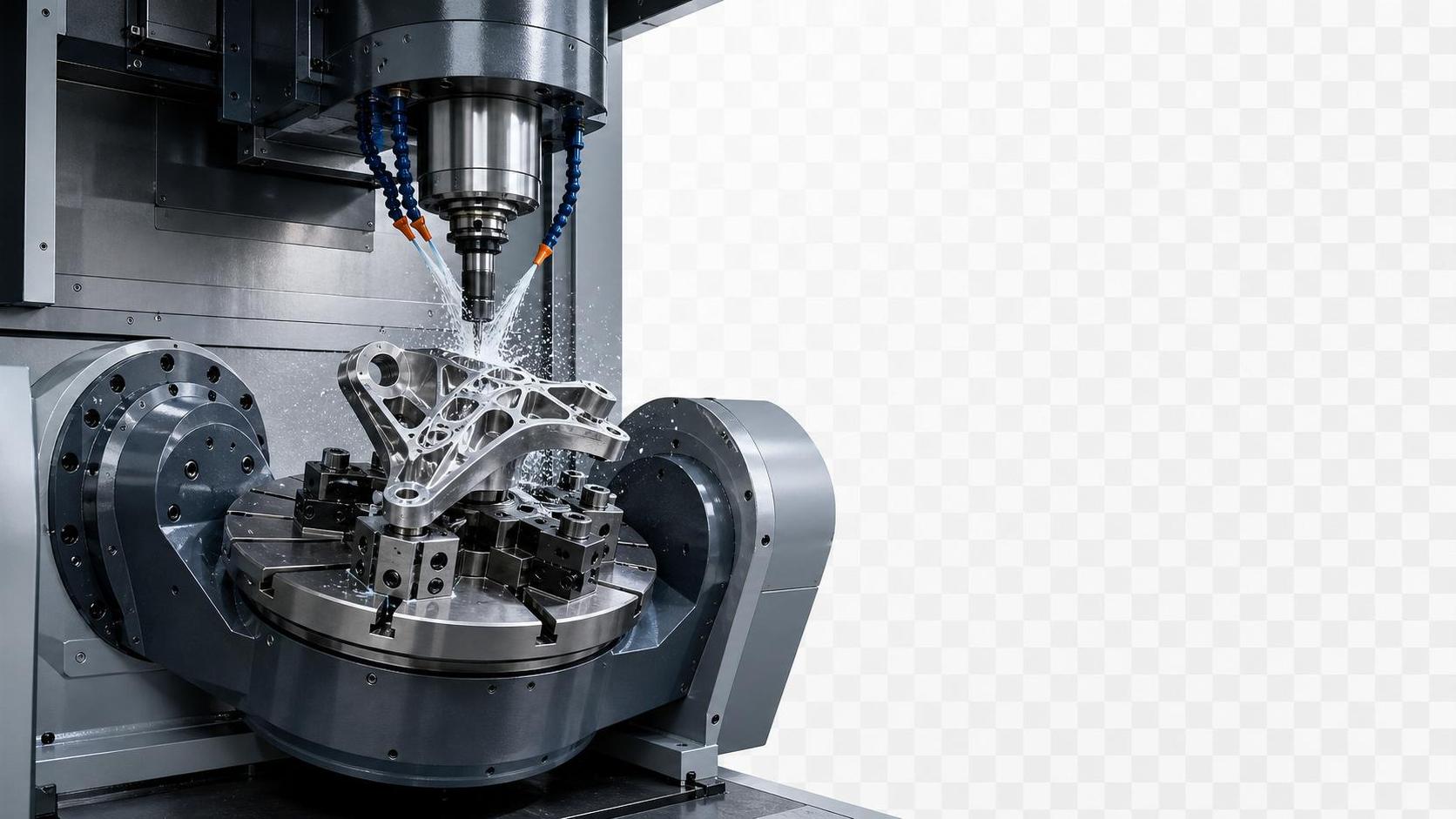
Why Titanium Changes the Evaluation Standard
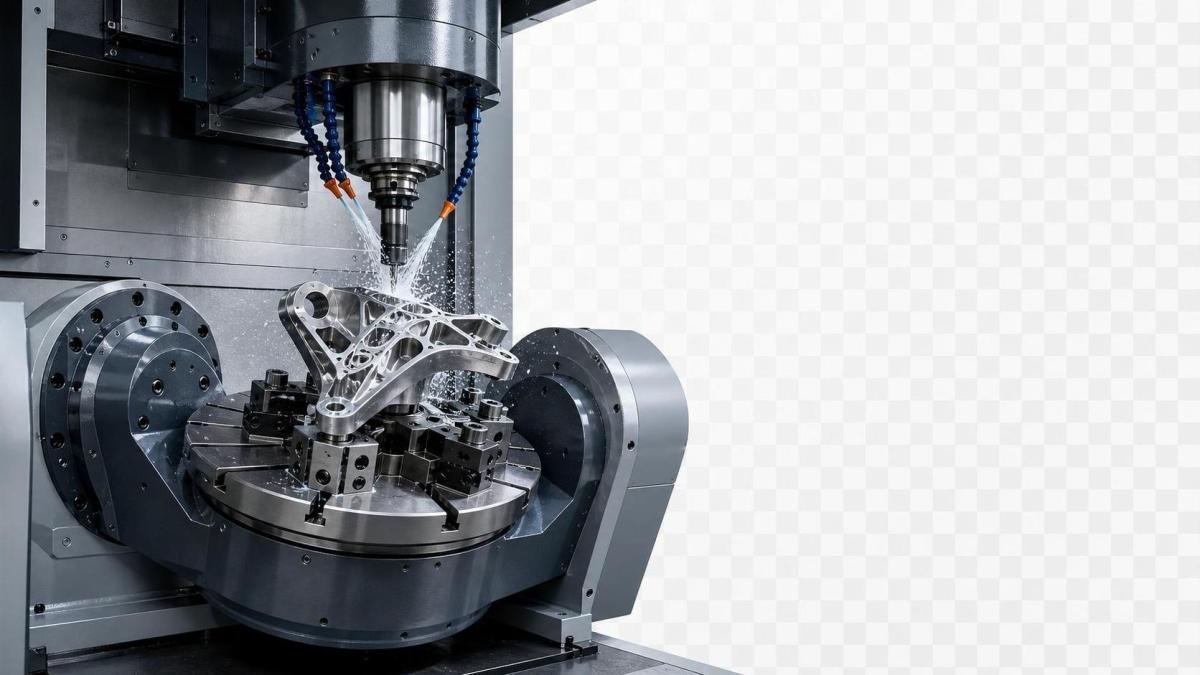
Selecting the right Multi-axis Machining System for Titanium requires more than checking spindle speed or axis count. For technical evaluation, the real question is process control under stress.
Titanium parts are demanding because the material keeps heat near the cutting zone. That raises tool wear, increases chatter risk, and quickly exposes weak machine structure.
A capable Multi-axis Machining System for Titanium must stay stable during deep pocketing, contouring, and five-axis positional changes. Small weaknesses become scrap, rework, or unstable cycle times.
This also means evaluation should focus on system behavior, not brochure claims. A machine can look strong on paper and still struggle with titanium in production.
In practice, a sound decision comes from linking machine design, cutting strategy, automation fit, and long-term maintainability. That is where real production value shows up.
Start with the Part and Process Window
Before comparing suppliers, define the titanium part family clearly. Geometry, wall thickness, tolerance band, and surface finish requirements should drive the entire evaluation path.
A Multi-axis Machining System for Titanium used for aerospace brackets needs different priorities than one producing medical, energy, or structural components.
Look at the real process window:
- Material grade, such as Ti-6Al-4V or near-beta titanium
- Typical stock condition and removal volume
- Required roughing and finishing balance
- Part size, clamping faces, and reachable tool angles
- Expected annual volume and batch variation
This stage often reveals whether a trunnion machine, swivel head design, or hybrid layout makes more sense. It also prevents overbuying features with little production value.
From a decision standpoint, this is the baseline. Without it, every later comparison becomes vague and overly dependent on sales language.
Rigidity Is the First Real Filter
For any Multi-axis Machining System for Titanium, rigidity matters more than headline acceleration. Titanium punishes flexible structures and weak rotary axes almost immediately.
Evaluate the complete load path. That includes bed casting, column design, spindle interface, rotary table stiffness, and the clamping behavior of the B and C axes.
Ask practical questions during review:
- How does the machine behave under heavy roughing cuts?
- What is the vibration response at long tool overhang?
- Does rotary positioning remain repeatable after thermal growth?
- Can the fixture setup stay stable across long cycle times?
Vendor test cuts should include aggressive titanium conditions, not only light finishing moves. A polished demo on aluminum tells you very little here.
More importantly, watch spindle load fluctuation, sound signature, burr behavior, and dimensional drift between first and last parts. Those signals often tell the real story.
Spindle, Torque, and Thermal Stability
Many buyers focus on maximum rpm, but titanium usually cares more about usable torque, power continuity, and heat control across long machining cycles.
A reliable Multi-axis Machining System for Titanium should maintain torque in the lower and mid-speed range where titanium cutting actually happens.
Check these points closely:
- Continuous spindle power rather than short peak numbers
- Bearing temperature control during extended roughing
- Thermal compensation logic and real field performance
- Warm-up stability before critical finishing operations
- Coolant-through-spindle capacity at production pressure
Thermal behavior is often the hidden differentiator. Two machines may achieve the same initial tolerance, yet only one holds it after six hours of mixed operations.
That difference matters because titanium programs frequently combine roughing, semi-finishing, and finishing in one setup. Drift across those stages directly affects quality and throughput.
Axis Kinematics and Real Five-Axis Accuracy
A Multi-axis Machining System for Titanium should be judged by coordinated motion quality, not just axis travel numbers. Kinematics determine both tool engagement and finished part accuracy.
Review rotary axis speed, backlash control, positioning repeatability, and interpolation smoothness. Titanium rewards stable engagement and punishes abrupt motion changes.
Machine geometry also matters. Certain part families benefit from better tool access with a head-head or head-table layout, especially when fixtures consume table space.
Ask for evidence from test artifacts, ball-bar data, volumetric compensation, and actual five-axis contour results. Evaluation should include both static and dynamic accuracy.
A useful comparison method is simple:
Tooling, Fixturing, and Chip Control Compatibility
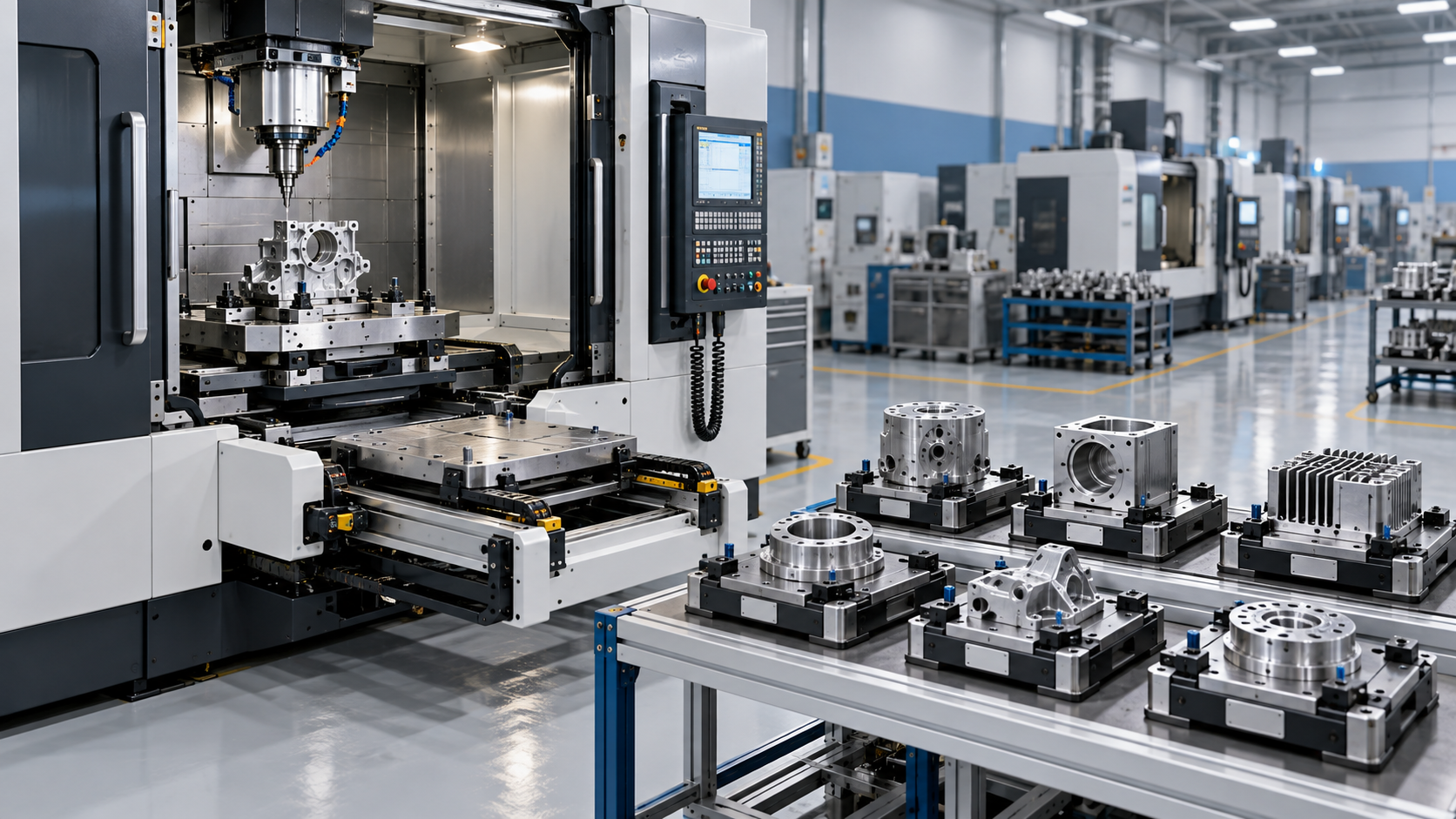
Even a strong Multi-axis Machining System for Titanium can underperform if tooling and workholding are poorly matched to the machine platform.
Check spindle taper options, tool magazine capacity, tool length limits, and compatibility with shrink-fit, hydraulic, or high-rigidity holders.
Titanium also creates chip evacuation challenges. In deep cavities or closed pockets, poor chip control raises heat and damages both tool and surface quality.
The machine should support:
- High-pressure coolant delivery at the spindle
- Reliable chip flushing around complex fixtures
- Adequate enclosure flow and conveyor capacity
- Probe access without compromising cycle stability
Fixture design deserves equal attention. Thin-wall titanium parts need support strategy, controlled clamping force, and predictable datum retention across multiple operations.
In actual sourcing decisions, this area often decides whether the machine reaches target yield or becomes a constant process tuning project.
Automation, Data, and Shopfloor Fit
A modern Multi-axis Machining System for Titanium should fit the broader production system, not operate as an isolated asset.
This becomes more important when labor constraints, traceability demands, and mixed-model production are increasing across precision manufacturing.
Evaluate the practical integration points:
- Robot or pallet system compatibility
- Tool life monitoring and broken tool detection
- In-process measurement and offset updates
- MES, ERP, or machine data connectivity
- Alarm diagnostics and remote support capability
The best machine for titanium is not always the most complex one. It is the one that fits your staffing model, maintenance capability, and scheduling reality.
That is especially relevant for global plants where uptime support, spare part response, and software service can vary sharply by region.
Build a Decision Model Around Risk and Value
A serious evaluation should end with a weighted decision model. That keeps the Multi-axis Machining System for Titanium assessment tied to operational outcomes.
Useful scoring categories include machine rigidity, thermal control, five-axis accuracy, chip handling, automation readiness, service network, and total cost of ownership.
Do not stop at purchase price. Include tooling consumption, scrap exposure, maintenance intervals, floor space, training needs, and ramp-up time to stable output.
A practical final checklist helps:
- Validate with titanium test cuts that match your part family
- Review dimensional stability over a full production-length cycle
- Confirm tooling, fixture, and coolant system compatibility
- Check local service response and spare parts availability
- Model total cost per acceptable part, not machine price alone
When these points are verified together, the selection process becomes much clearer. You are no longer buying machine features. You are buying predictable titanium capability.
That is the right standard for choosing a Multi-axis Machining System for Titanium in any high-precision manufacturing environment shaped by quality, uptime, and long-term production economics.
Recommended for You
![]() Mitsubishi Electric Announces Physical AI System Linking Humanoid Robots and CNC MachinesMachine Tool Industry Editorial Team
Mitsubishi Electric Announces Physical AI System Linking Humanoid Robots and CNC MachinesMachine Tool Industry Editorial Team Precision Machining for Defense: Supplier Quality and Traceability ChecksManufacturing Market Research Center
![]() Nidec Machine Tool Launches MVR-5X Five-Axis Gantry MachineMachine Tool Industry Editorial Team
Nidec Machine Tool Launches MVR-5X Five-Axis Gantry MachineMachine Tool Industry Editorial Team Choosing a Precision Disc Parts Manufacturer in China: Tolerances and Quality ChecksManufacturing Market Research Center
![]() Siemens Executive Says AI Could Raise Factory Automation to 80%Manufacturing Market Research Center
Siemens Executive Says AI Could Raise Factory Automation to 80%Manufacturing Market Research Center Choosing Automated Machine Tools for High-Mix, Low-Volume ProductionMachine Tool Industry Editorial Team


Aris Katos
Future of Carbide Coatings
15+ years in precision manufacturing systems. Specialized in high-speed milling and aerospace grade alloy processing.
▶
Choosing a CNC Machine for Mold Making: Accuracy, Rigidity, and Surface FinishCNC Machining Technology Center▶
How to Cut CNC Machining Energy Use per Part Without Longer Cycle TimesCNC Machining Technology Center▶
Will a Mazak CNC retrofit work with your existing servo drives?CNC Machining Technology Center▶
Do energy-efficient machine tools reduce power use at partial load?CNC Machining Technology Center▶
Comparing energy-efficient machine tools by energy use per partCNC Machining Technology Center
▶
Mastering 5-Axis Workholding Strategies
Join our technical panel on Nov 15th to learn about reducing vibrations in thin-wall components.

Providing you with integrated sanding solutions
Before-sales and after-sales services
Comprehensive technical support