• Global CNC market projected to reach $128B by 2028 • New EU trade regulations for precision tooling components • Aerospace deman
NYSE: CNC +1.2%LME: STEEL -0.4%

Heavy duty machine tool buyers notice a quiet shift in frame rigidity specs — and it’s not about cost
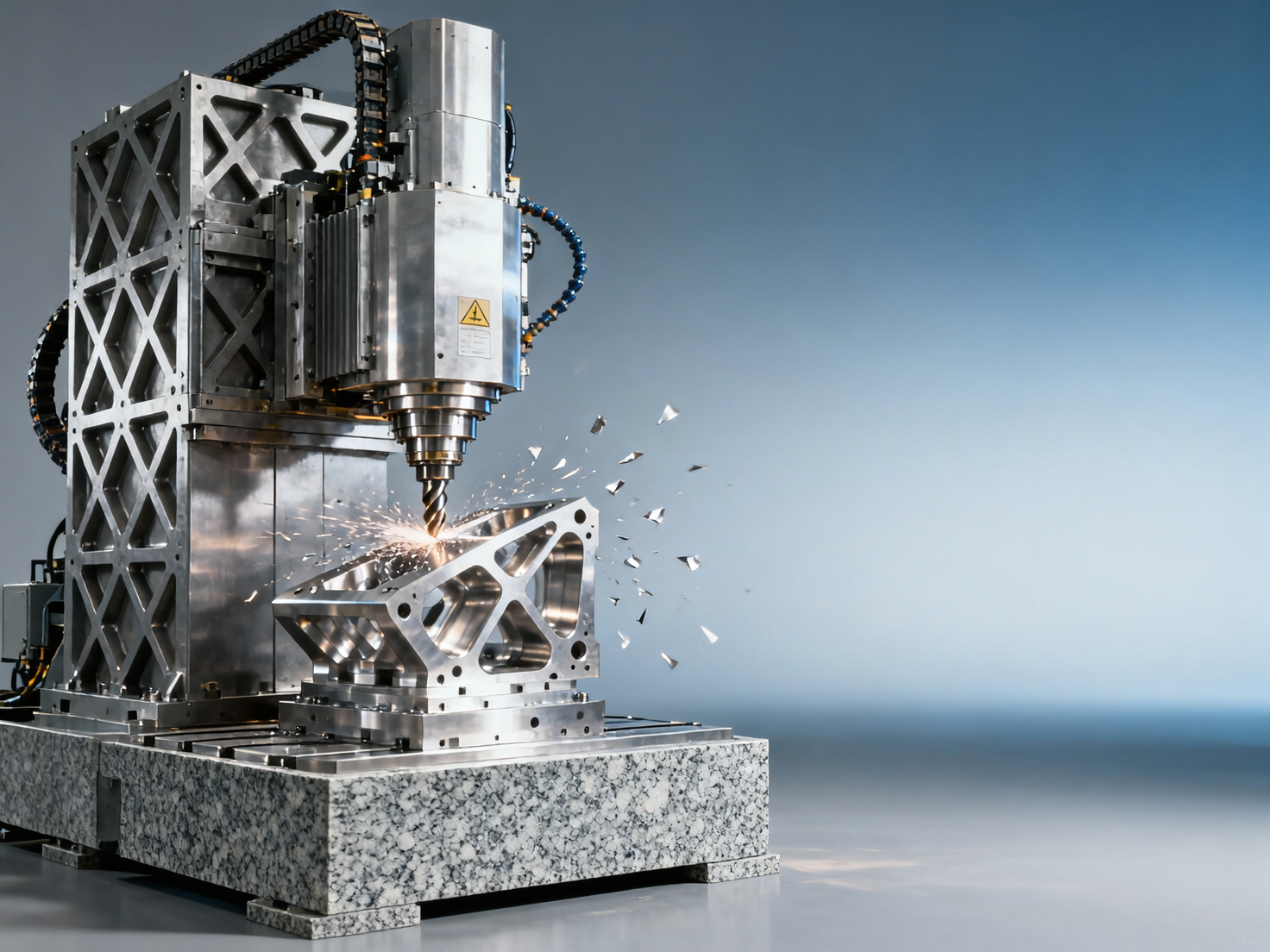
Heavy duty machine tool buyers — from aerospace and automotive manufacturers to electronics production facilities — are increasingly prioritizing frame rigidity over traditional cost metrics. This quiet shift reflects deeper industry evolution: as multi-axis machine tool applications expand in high precision machine tool environments, rigidity directly impacts part accuracy, cycle time, and long-term ROI. Leading CNC machine tool manufacturers and machine tool suppliers worldwide are redefining specs — not just for strength, but for dynamic stability under real-world loads. Whether you're a procurement professional evaluating a machine tool exporter or an engineer specifying equipment for smart factory integration, understanding this trend is critical to selecting the right heavy duty machine tool for tomorrow’s manufacturing demands.
Why Frame Rigidity Is Now a Primary Selection Criterion — Not a Secondary Spec
In high-precision CNC machining, frame rigidity isn’t just about resisting static deformation. It determines how well a machine maintains dimensional stability during aggressive cutting cycles — especially under thermal drift, multi-axis simultaneous motion, and intermittent high-torque loads. Industry testing shows that machines with dynamic rigidity above 120 N/μm achieve up to 35% tighter geometric tolerances on complex aerospace structural parts compared to those rated at 70–90 N/μm.
This metric now carries more weight than base material cost per ton. A cast-iron frame with optimized rib geometry and finite-element validated stress distribution may cost 8–12% more upfront but delivers measurable gains: 22% longer tool life in titanium milling, 17% reduction in post-machining inspection time, and 40% fewer recalibration events over 18 months of continuous operation.
The shift is especially pronounced among Tier-1 automotive suppliers deploying 5-axis machining centers for EV powertrain housings — where ±3 μm positional repeatability across 2-meter work envelopes is non-negotiable. Rigidity specs are no longer buried in appendix tables; they’re front-and-center in RFQs and supplier scorecards.
How Rigidity Impacts Real-World Performance Across Key Applications
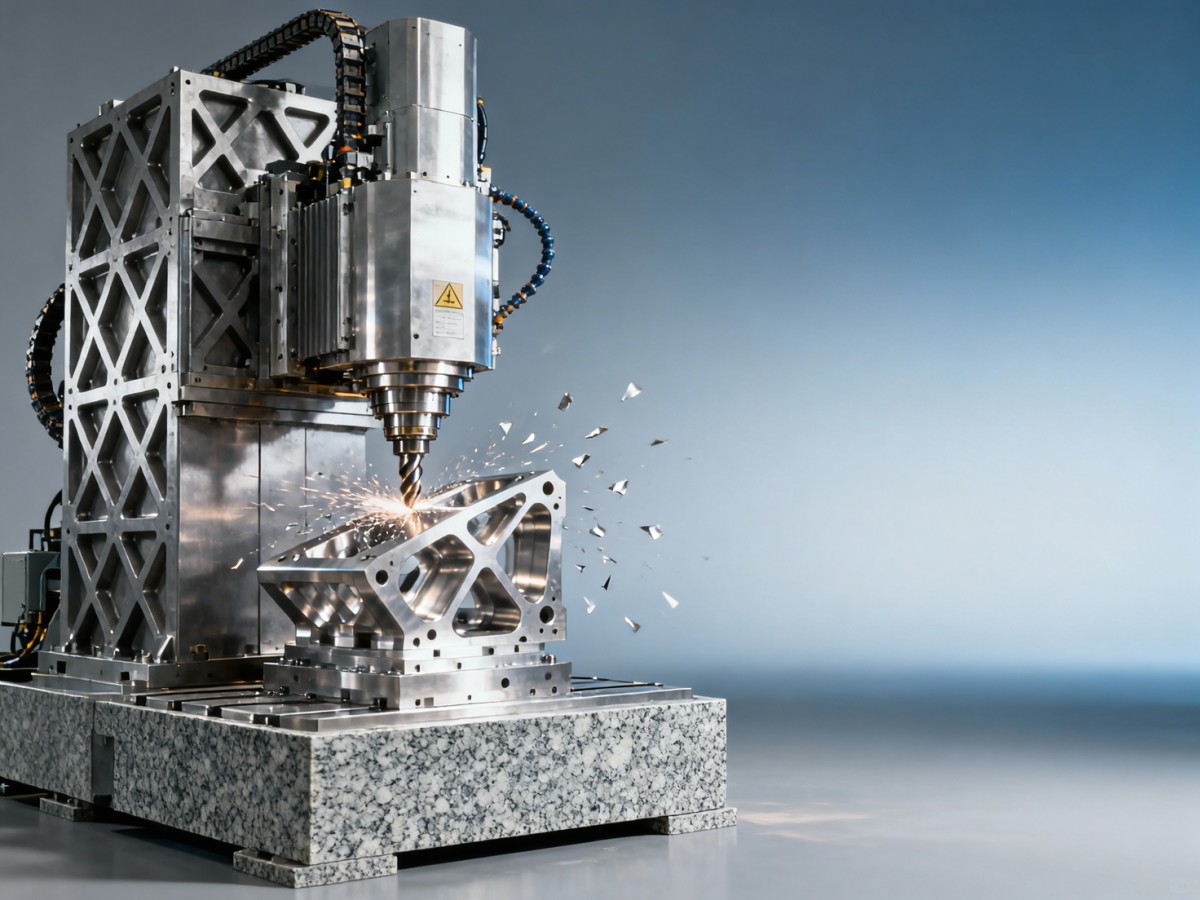
Rigidity performance varies significantly by application load profile. Aerospace monolithic wing ribs demand sustained torsional stiffness under 50+ kN cutting forces across 30-minute uninterrupted cycles. In contrast, electronics enclosure machining requires rapid acceleration/deceleration stability — where frame resonance suppression below 120 Hz becomes critical to avoid micro-vibrations that degrade surface finish (Ra < 0.4 μm).
Multi-axis machining introduces compound loading: simultaneous X-Y-Z linear motion plus A/C rotary torque creates dynamic coupling effects. Machines with integrated granite bases and cross-ribbed column designs demonstrate 30–45% lower modal displacement at first bending mode (typically 85–110 Hz) — directly translating into reduced chatter marks on thin-walled aluminum enclosures used in medical imaging systems.
Below is a comparison of rigidity-sensitive performance indicators across three high-demand sectors:
These thresholds aren’t theoretical benchmarks — they’re validated through ISO 230-2 vibration testing and correlated with field data from over 200 production sites across Germany, Japan, and China. Machines falling below these values consistently require 2–3 additional finishing passes or manual hand-scraping — adding 11–18 hours per part in high-mix, low-volume aerospace job shops.
What to Verify During Technical Evaluation — Beyond the Brochure
Procurement teams must move beyond static “maximum load capacity” claims. Rigidity verification requires layered validation — starting with structural FEA reports, progressing to modal analysis documentation, and concluding with on-site test-cutting protocols. Leading OEMs now provide third-party certified rigidity maps showing stiffness gradients across the entire working volume (X/Y/Z/A/C axes), not just center-point values.
Key checkpoints include:
- Request ISO 230-2 compliance report with measured natural frequencies and damping ratios — verify first bending mode exceeds 105 Hz for 5-axis machining centers
- Confirm dynamic rigidity is measured under simultaneous 3-axis feed + 2-axis rotation, not static load conditions
- Validate thermal rigidity retention: frame deflection should remain within ±1.5 μm over 4-hour continuous operation at 22°C ambient
- Review finite element mesh density: credible reports use ≥2 million elements with convergence testing across 3 load cases
Without these, spec sheets risk conflating “structural mass” with true dynamic rigidity — a distinction that costs end users an average of $142,000 annually in unplanned downtime and scrap across mid-size production lines.
Why Choose Our Rigidity-Optimized CNC Machine Tool Solutions
We specialize in heavy duty CNC machine tools engineered for verified dynamic rigidity — not just static strength. Every model undergoes modal testing at our ISO 17025-accredited lab, with full spectral analysis reports provided pre-shipment. Our modular design platform allows customization of base geometry, damping inserts, and thermal compensation algorithms — tailored to your specific workpiece mix and cycle requirements.
Whether you need a 5-axis machining center for titanium airframe components, a high-torque turning center for EV gearbox casings, or a compact multi-tasking system for precision electronics housings, we deliver documented rigidity performance aligned to your production KPIs — backed by 3-year structural warranty and on-site rigidity validation support.
Contact us today to request: rigidity mapping for your target work envelope, modal analysis sample report, lead time for configured rigidity-optimized build, or test-cutting protocol alignment. We’ll help you quantify ROI before purchase — not after.
Recommended for You
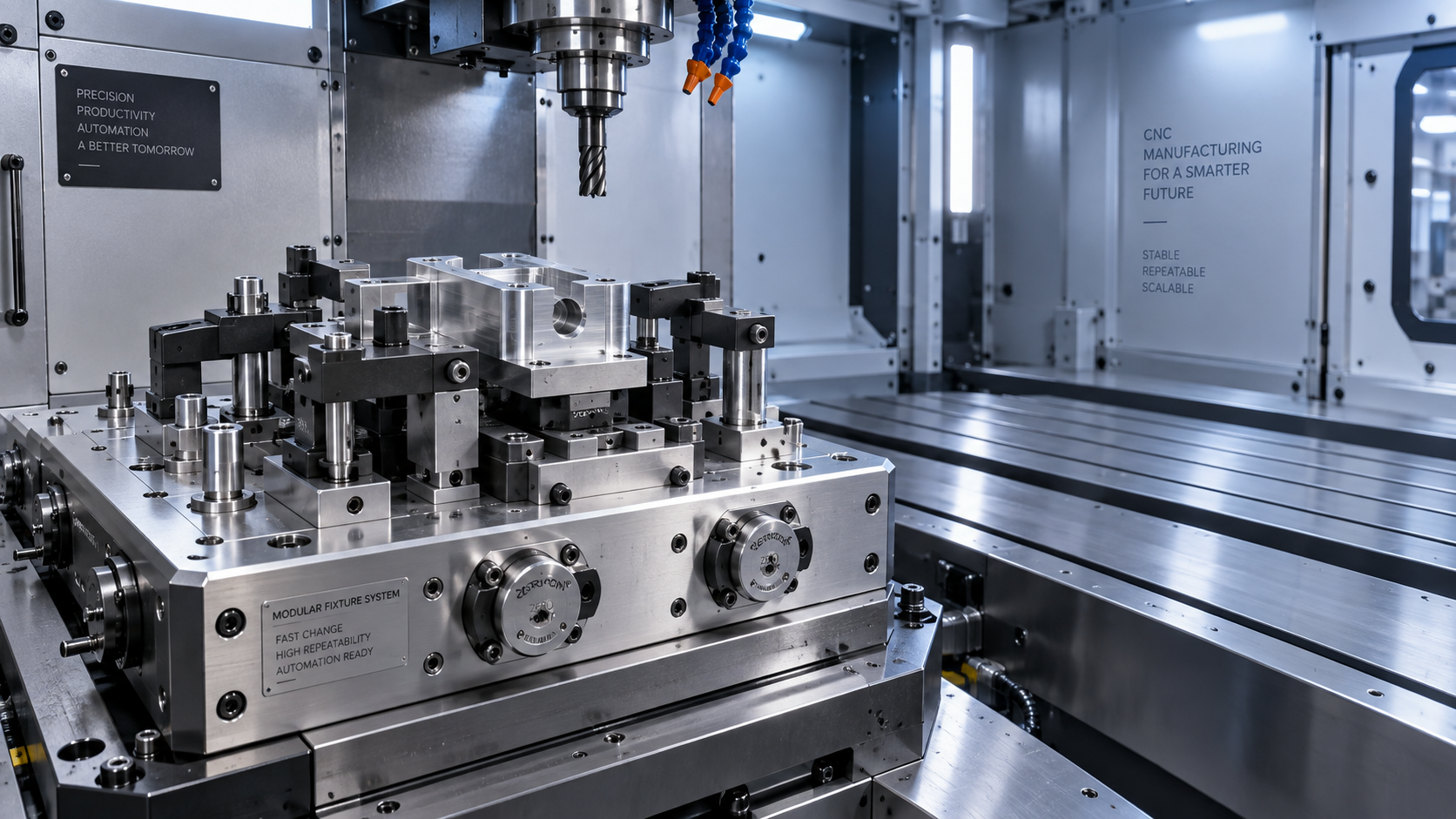
 Zero-Point Clamping or Modular Fixtures? Choosing a Faster CNC Changeover SystemCNC Machining Technology Center
 How to Cut CNC Fixture Changeover Time Without Sacrificing Part AccuracyCNC Machining Technology Center
 When Does CNC Turning Pay Off? A Break-Even Guide by Annual Part VolumeMachine Tool Industry Editorial Team
 Machine Tool Standards by Country: What Importers Must Verify Before PurchaseManufacturing Policy Research Center
 CNC Lathe Quick Installation Guide: Alignment Checks Before First Production RunCNC Machining Technology Center
 How to Select a CNC Lathe for Small Parts Without Sacrificing Accuracy or Cycle TimeCNC Machining Technology Center

Aris Katos
Future of Carbide Coatings
15+ years in precision manufacturing systems. Specialized in high-speed milling and aerospace grade alloy processing.
▶
How to Compare Machine Tools for Small-Batch vs Mass Production JobsMachine Tool Industry Editorial Team▶
Multi-Axis Machine Tool Selection Guide: Travel, Spindle, Accuracy, and Control SystemMachine Tool Industry Editorial Team▶
How to Evaluate Precision Equipment for Tight-Tolerance Parts and Stable OutputMachine Tool Industry Editorial Team▶
KATS Tightens CNC Grinder Import Test RulesMachine Tool Industry Editorial Team▶
Precision Lathe Types Compared: Swiss-Type, Slant Bed, and Flat Bed DifferencesMachine Tool Industry Editorial Team
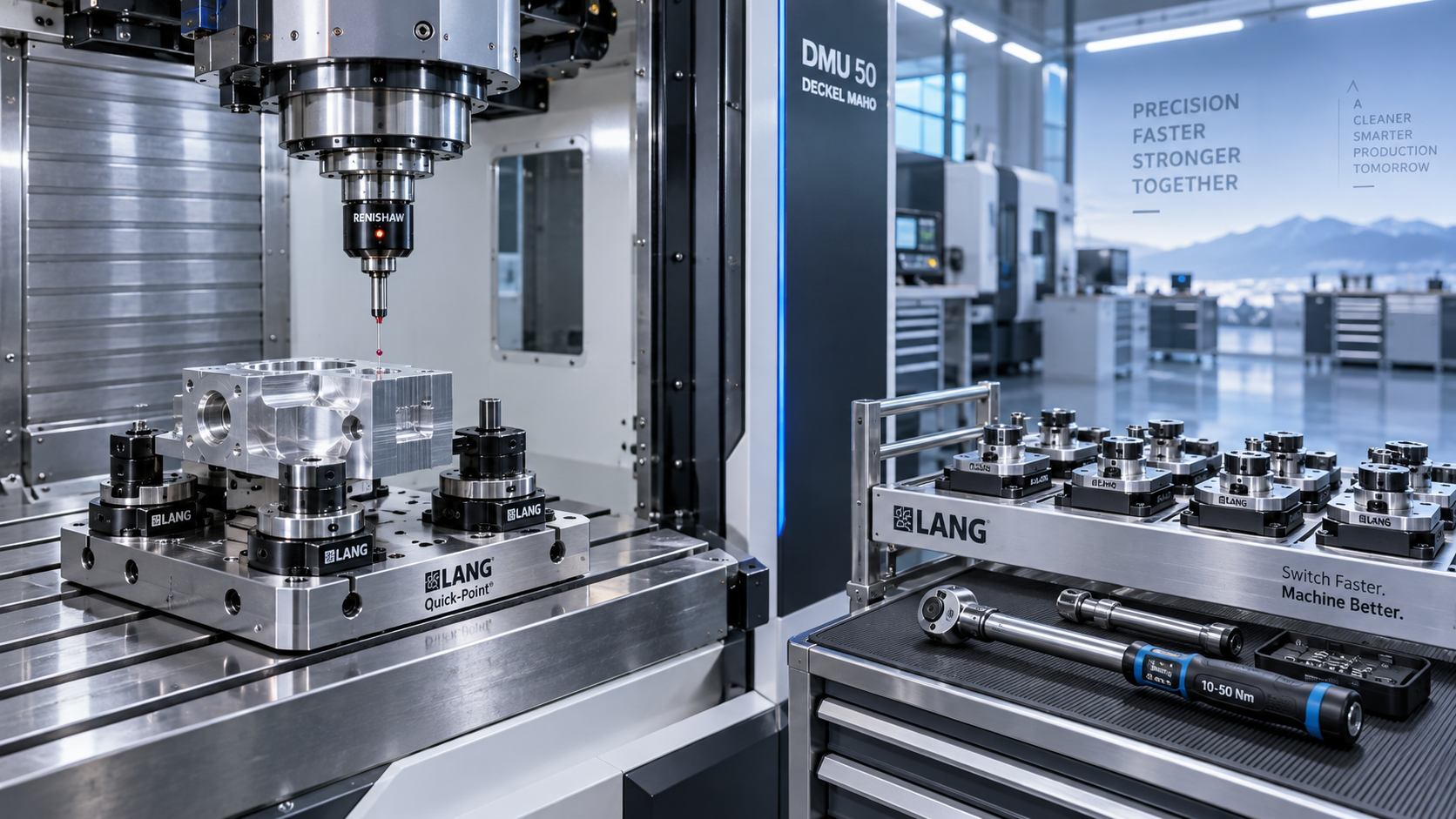
Mastering 5-Axis Workholding Strategies
Join our technical panel on Nov 15th to learn about reducing vibrations in thin-wall components.

Providing you with integrated sanding solutions
Before-sales and after-sales services
Comprehensive technical support