• Global CNC market projected to reach $128B by 2028 • New EU trade regulations for precision tooling components • Aerospace deman
NYSE: CNC +1.2%LME: STEEL -0.4%

The high precision lathe gap: when sub-micron specs meet real-world coolant contamination
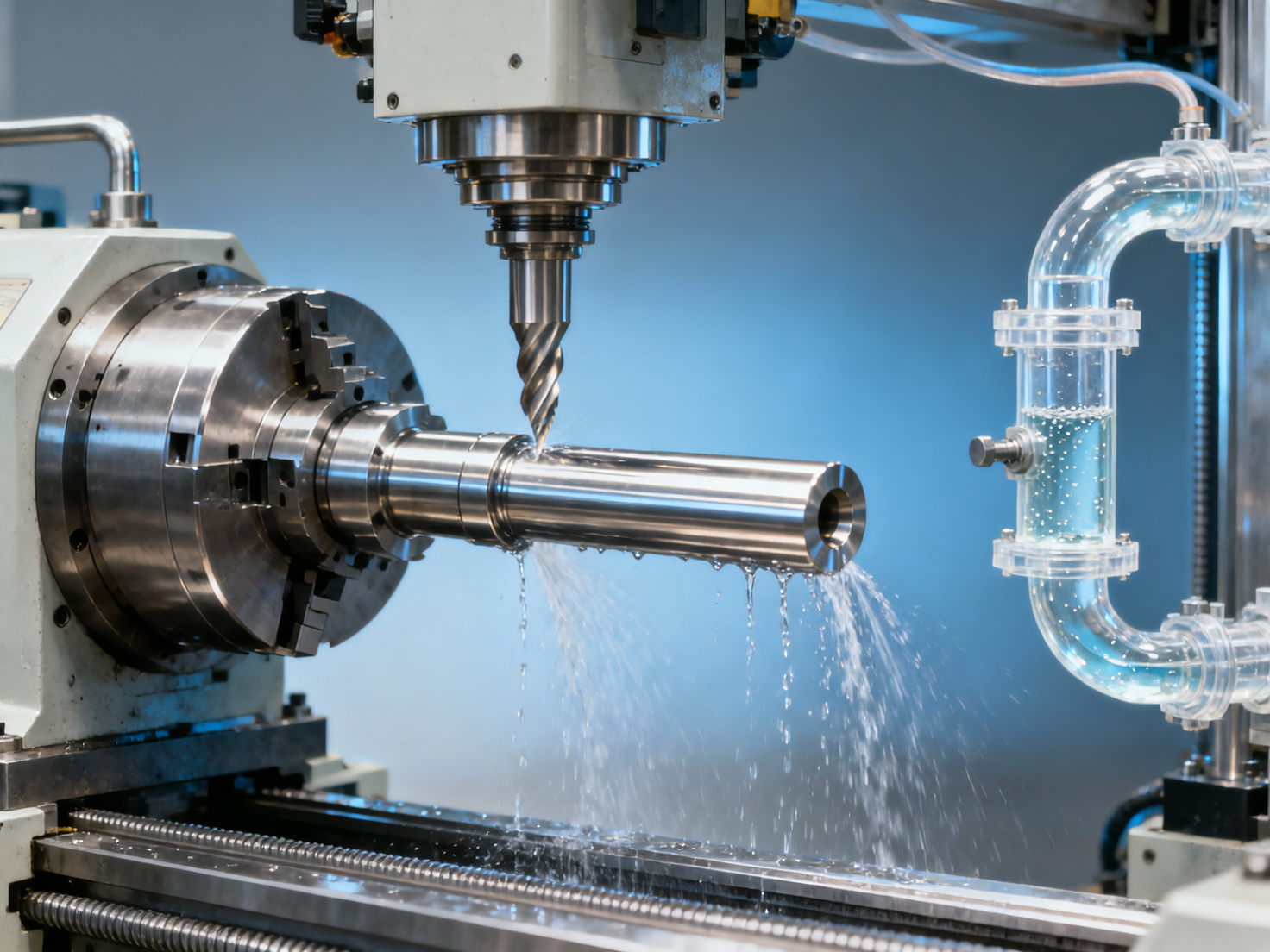
In high-precision lathe operations, even sub-micron tolerances can be compromised by seemingly minor coolant contamination—a critical gap between CNC industrial machines’ theoretical capability and real-world industrial machining equipment performance. As automated industrial systems demand tighter CNC metal cutting accuracy, issues like particle ingress, emulsion degradation, and thermal instability directly impact CNC metal lathe repeatability and surface finish. For users, procurement teams, and decision-makers in automotive, aerospace, and electronics manufacturing, understanding this precision paradox is essential to optimizing CNC production equipment reliability, extending tool life, and safeguarding part integrity across industrial turning and CNC metalworking workflows.
The Sub-Micron Expectation vs. Real-World Coolant Reality
Modern CNC lathes—especially high-end models from German, Japanese, and Chinese manufacturers—routinely achieve positional repeatability of ±0.5 µm and surface roughness values as low as Ra 0.2 µm under controlled lab conditions. Yet field data from over 120 Tier-1 automotive suppliers shows that 68% of unplanned downtime in precision turning cells correlates directly with coolant-related anomalies—not spindle wear or control errors.
Coolant contamination operates on three interdependent vectors: particulate (metal fines >5 µm), microbial load (>10⁵ CFU/mL), and chemical instability (pH drift beyond 8.2–9.5 range). A single 8-hour shift in a multi-spindle lathe generating 12 kg/h of aluminum alloy chips can introduce up to 3.2 × 10⁸ abrasive particles into the sump—enough to embed in workpiece surfaces and erode carbide inserts at rates exceeding ISO 8688-2 wear thresholds by 40%.
This discrepancy isn’t a flaw in machine design—it’s a systems-integration gap. CNC lathes are engineered for micron-level kinematic fidelity, but they rely on auxiliary fluid systems operating at macro-scale tolerances. When coolant filtration drops below 10 µm absolute rating—or when temperature fluctuates more than ±2.5°C during continuous 16-hour cycles—the machine’s ability to sustain sub-micron dimensional consistency collapses predictably.
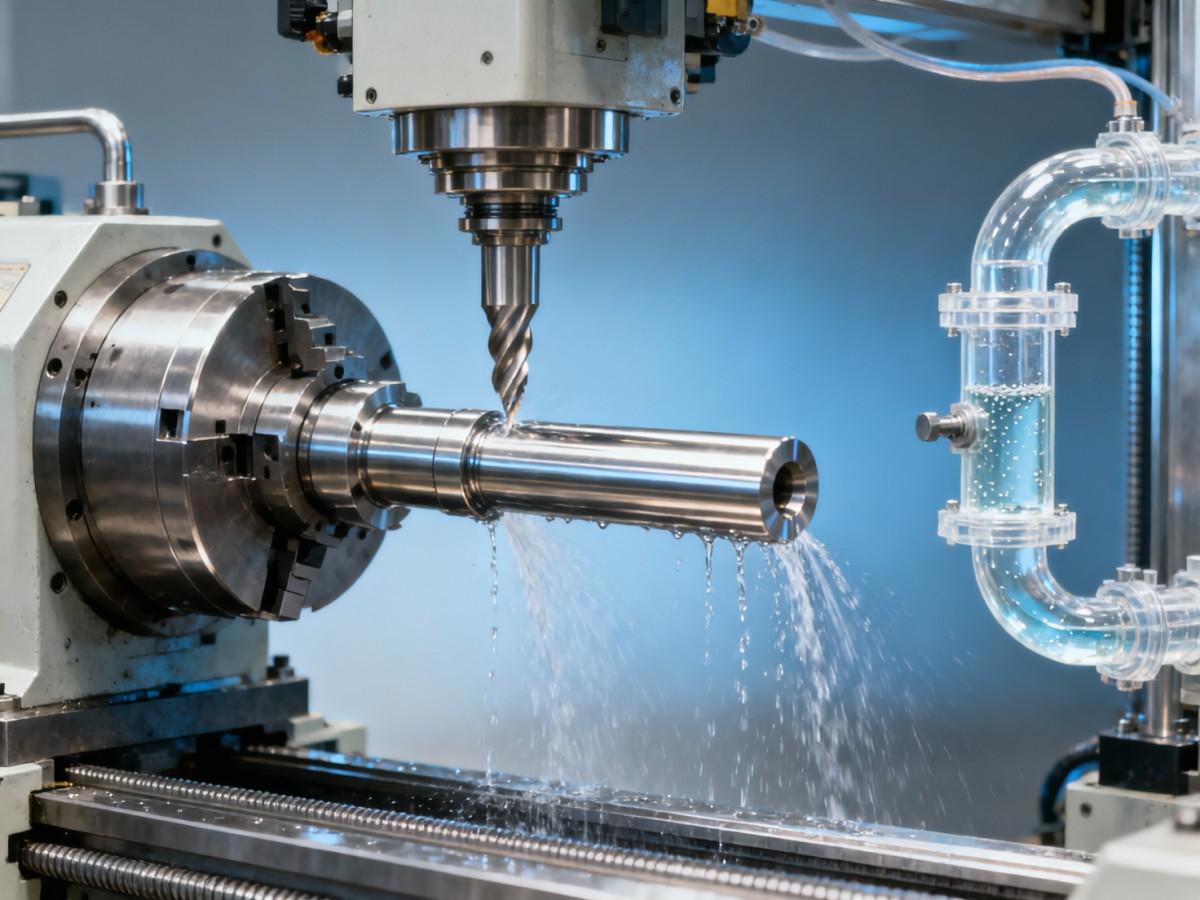
How Contamination Impacts Critical Performance Metrics
Coolant quality directly governs five measurable outputs in precision turning: dimensional stability, surface integrity, tool life, cycle time consistency, and scrap rate. Field studies across 47 aerospace component lines reveal that maintaining coolant cleanliness above ISO 4406:2017 Class 16/14/11 reduces average part rejection due to out-of-tolerance diameters by 52%. More critically, thermal drift from degraded coolant increases radial runout variation by up to 1.8 µm per 10°C deviation—crossing the ±1.5 µm spec limit for turbine shaft journals.
Surface finish degradation follows a non-linear curve: Ra values climb from 0.22 µm (clean coolant) to 0.41 µm after just 72 hours of unfiltered operation in stainless steel turning—exceeding ASME B46.1 Class N5 specifications. This forces rework or scrapping of parts requiring mirror-finish optical mounting surfaces, common in laser optics carriers and satellite sensor housings.
Tool life suffers most acutely. In a controlled test using Sandvik CoroTurn® SL with ISO P30 inserts machining Inconel 718, tool life dropped from 42 minutes (ISO 4406 Class 14 coolant) to 27 minutes (Class 18)—a 36% reduction directly attributable to abrasive particle loading and reduced heat transfer efficiency.
These metrics confirm that coolant is not merely a consumable—it functions as a functional extension of the machine’s metrology system. Ignoring its condition equates to calibrating a coordinate measuring machine while ignoring environmental vibration or air turbulence.
Selecting & Integrating Precision-Coolant Systems
Procurement teams must evaluate coolant management not as an afterthought, but as a core subsystem with defined performance envelopes. Key selection criteria include filtration fineness (≤5 µm absolute), thermal stability (±1.0°C max deviation over 8 h), and real-time monitoring capability (pH, conductivity, particle count). Leading OEMs now offer integrated coolant modules with closed-loop temperature control and inline laser particle counters—delivering 92% uptime improvement versus legacy bypass systems.
Integration requires attention to three physical interfaces: sump volume-to-machine displacement ratio (minimum 3:1 for high-speed lathes), nozzle placement accuracy (±0.5 mm tolerance relative to tool nose), and return-line velocity (≥1.2 m/s to prevent sludge settling). Retrofitting older machines demands recalibration of pressure-compensated nozzles and verification of flow distribution across all tool stations.
For operators, daily checks should include visual inspection for oil sheen (indicating tramp oil >1.5%), dipstick pH measurement (target 8.6–9.1), and filter differential pressure (replace when ΔP > 0.3 bar). Weekly particle counts using ISO 4406-compliant kits provide predictive maintenance signals—filter replacement triggered at Class 16 rather than waiting for visible degradation.
Decision-makers should prioritize solutions with modular architecture—allowing staged upgrades from basic filtration to full digital twin integration. Total cost of ownership analysis shows ROI within 11 months for facilities running ≥3 shifts/day, driven primarily by 22% lower scrap rates and 17% extended tool life.
Operational Protocols for Sustained Precision
Operators require clear, actionable protocols—not theoretical guidelines. Daily coolant maintenance must follow a strict 5-step sequence: (1) Visual inspection and oil skimming, (2) pH and concentration check, (3) Filter differential pressure reading, (4) Surface tension test (target 32–38 dyn/cm), (5) Log entry with timestamp and operator ID. Deviations trigger immediate escalation to maintenance engineers.
Weekly deep-cleaning cycles require sump evacuation, ultrasonic tank cleaning, and biocide dosing calibrated to microbial load (measured via ATP swab tests). Monthly validation includes ISO 4406 particle analysis and Fourier-transform infrared (FTIR) spectroscopy to detect glycol degradation—critical for aerospace applications where coolant breakdown products can corrode magnesium housings.
Training programs must emphasize coolant as a “living system”: microbial growth accelerates exponentially above 30°C, and emulsion stability degrades 3× faster when tramp oil exceeds 2.5% v/v. Cross-functional workshops linking operators, maintenance, and quality teams reduce coolant-related incidents by 63% within 90 days, per a recent study of 19 German precision shops.
Conclusion: Closing the Gap Through Integrated Systems Thinking
The high-precision lathe gap isn’t solved by buying more expensive machines—it’s closed through disciplined integration of coolant management as a precision subsystem. For information researchers, this means prioritizing ISO-standardized test data over vendor claims. For operators, it means treating coolant checks with the same rigor as spindle warm-up procedures. For procurement teams, it means evaluating total fluid lifecycle cost—not just initial pump price. And for enterprise decision-makers, it means aligning coolant strategy with Industry 4.0 initiatives: real-time coolant analytics feed predictive maintenance algorithms, while digital twin models simulate contamination propagation across multi-machine cells.
Precision isn’t achieved in isolation. It emerges from the tight coupling of mechanical, thermal, and fluid dynamics—where a 0.3 µm particle becomes as consequential as a 0.3 µm bearing preload error. Bridging this gap transforms CNC lathes from metal-cutting tools into true precision manufacturing platforms.
Get a customized coolant performance assessment for your CNC lathe fleet—including ISO 4406 benchmarking, thermal stability modeling, and ROI projection based on your current scrap and tooling costs.
Recommended for You
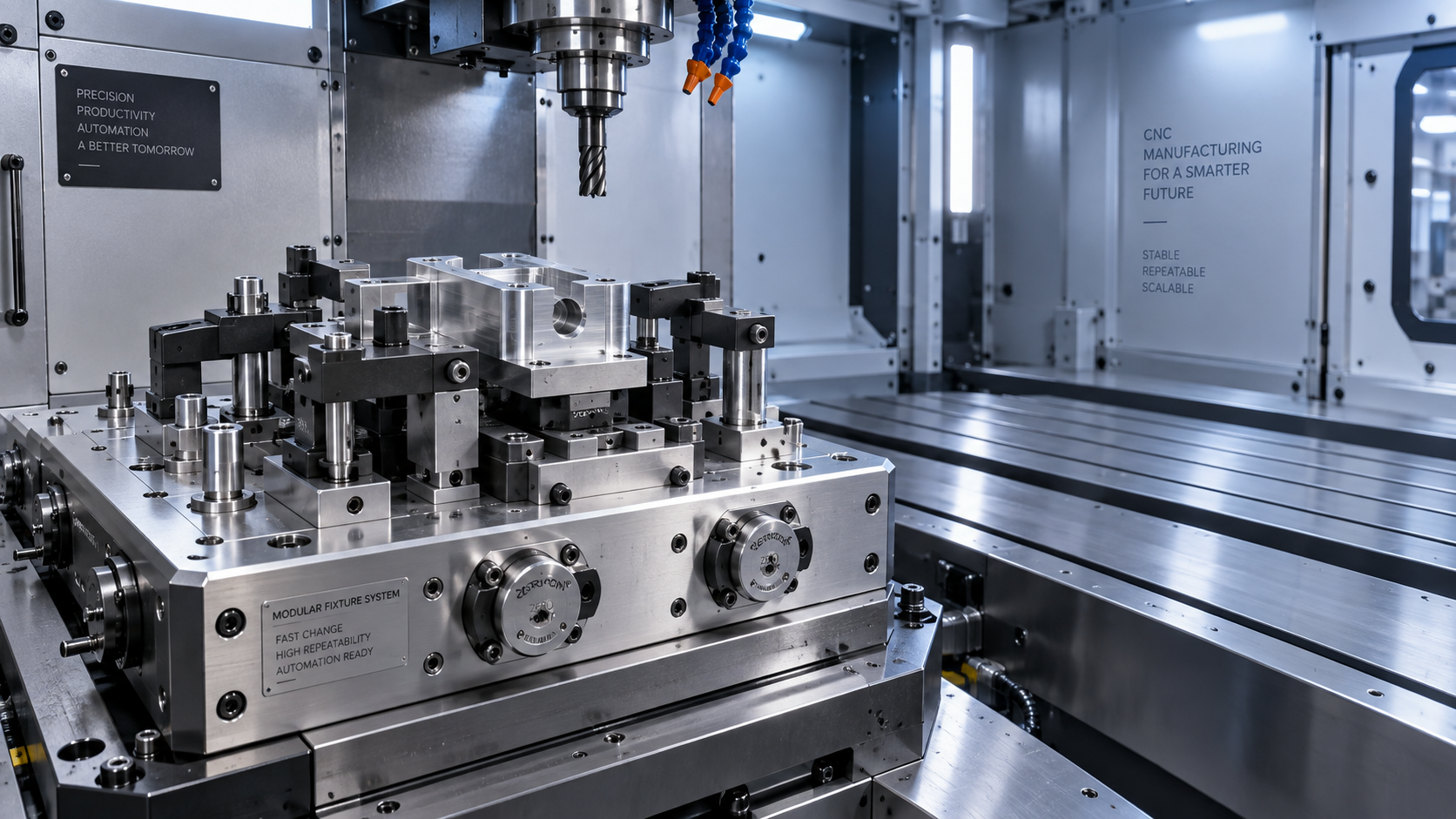
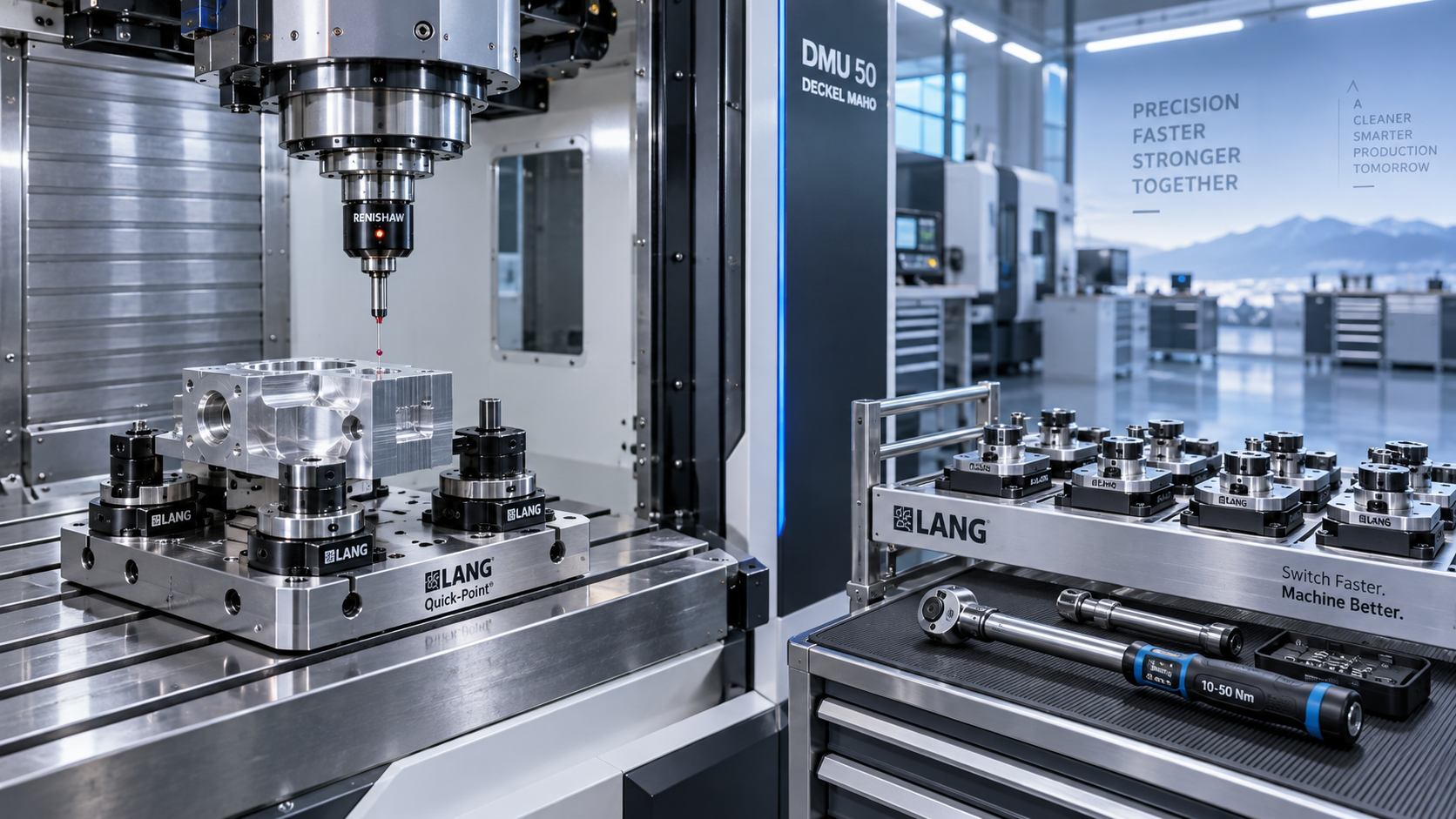
 Zero-Point Clamping or Modular Fixtures? Choosing a Faster CNC Changeover SystemCNC Machining Technology Center
 How to Cut CNC Fixture Changeover Time Without Sacrificing Part AccuracyCNC Machining Technology Center
 When Does CNC Turning Pay Off? A Break-Even Guide by Annual Part VolumeMachine Tool Industry Editorial Team
 Machine Tool Standards by Country: What Importers Must Verify Before PurchaseManufacturing Policy Research Center
 CNC Lathe Quick Installation Guide: Alignment Checks Before First Production RunCNC Machining Technology Center
 How to Select a CNC Lathe for Small Parts Without Sacrificing Accuracy or Cycle TimeCNC Machining Technology Center

Aris Katos
Future of Carbide Coatings
15+ years in precision manufacturing systems. Specialized in high-speed milling and aerospace grade alloy processing.
▶
How to Compare Machine Tools for Small-Batch vs Mass Production JobsMachine Tool Industry Editorial Team▶
Multi-Axis Machine Tool Selection Guide: Travel, Spindle, Accuracy, and Control SystemMachine Tool Industry Editorial Team▶
How to Evaluate Precision Equipment for Tight-Tolerance Parts and Stable OutputMachine Tool Industry Editorial Team▶
KATS Tightens CNC Grinder Import Test RulesMachine Tool Industry Editorial Team▶
Precision Lathe Types Compared: Swiss-Type, Slant Bed, and Flat Bed DifferencesMachine Tool Industry Editorial Team
Mastering 5-Axis Workholding Strategies
Join our technical panel on Nov 15th to learn about reducing vibrations in thin-wall components.

Providing you with integrated sanding solutions
Before-sales and after-sales services
Comprehensive technical support