• Global CNC market projected to reach $128B by 2028 • New EU trade regulations for precision tooling components • Aerospace deman
NYSE: CNC +1.2%LME: STEEL -0.4%

Precision industrial parts now face tighter thermal tolerance windows — and most shop floors aren’t calibrated for it
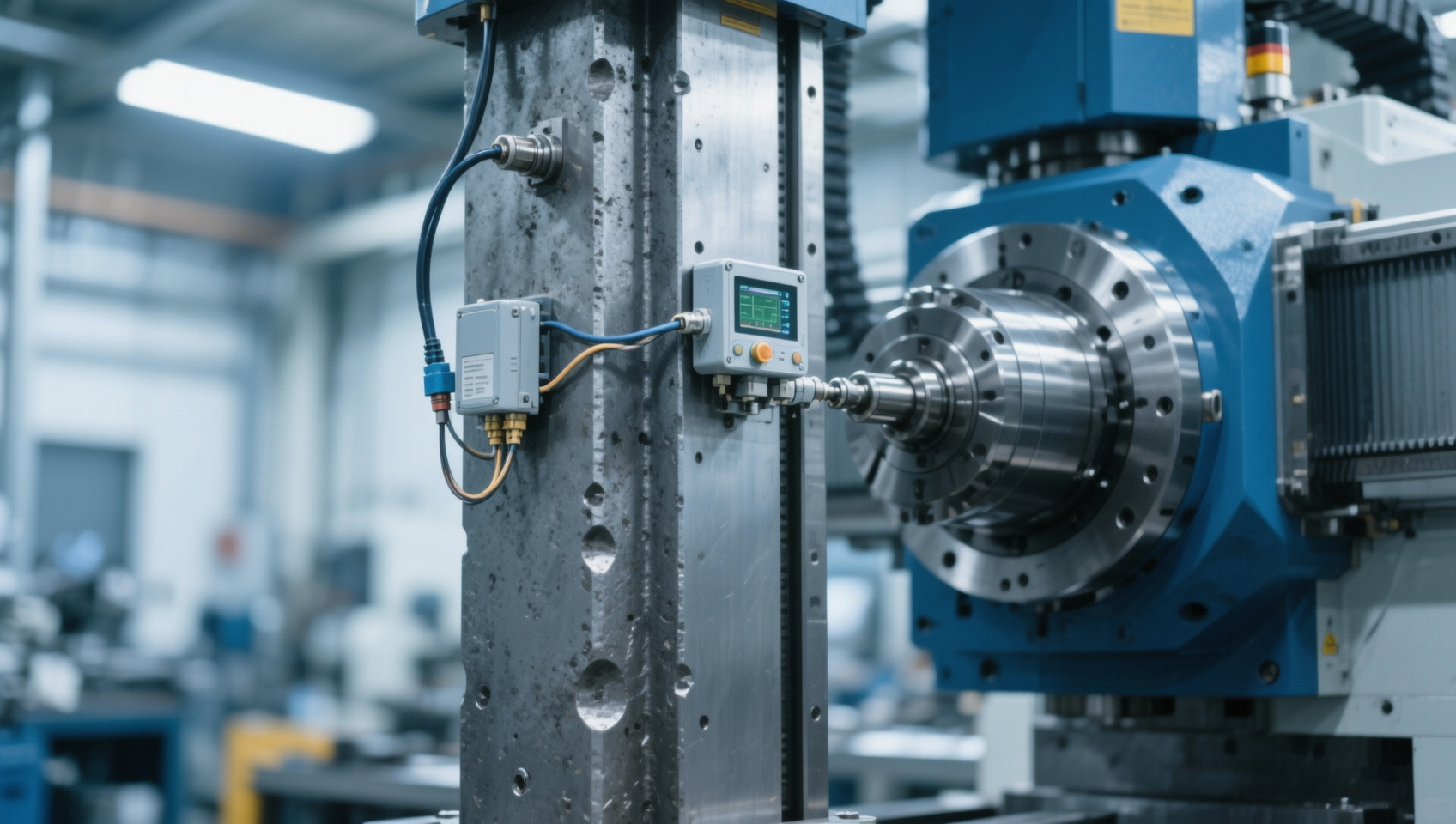
As Manufacturing Technology advances, precision industrial parts demand narrower thermal tolerance windows—exposing gaps in shop-floor readiness. In Smart Manufacturing and automated machining environments, even minor thermal drift undermines CNC technology’s promise of repeatability. From 5 Axis Machining to high-stability Metal Processing, the Machining Process now hinges on real-time thermal compensation, not just mechanical rigidity. Industrial machining leaders are re-evaluating CNC manufacturing workflows, tooling strategies, and environmental controls. For users, procurement teams, and decision-makers alike, this isn’t just about tighter specs—it’s about systemic calibration across the entire precision industrial value chain.
Why Thermal Stability Is No Longer Optional in Modern CNC Machining
Thermal deformation is now the dominant source of dimensional inaccuracy in high-precision CNC operations—accounting for up to 70% of total geometric error in multi-axis machining centers operating beyond ±0.003 mm tolerance bands. Unlike mechanical wear or vibration, thermal drift accumulates silently: spindle heat rise of just 2°C can induce 8–12 µm axial expansion in a 600-mm steel Z-axis column. In aerospace turbine blade production or medical implant machining—where tolerances routinely fall within ±1.5 µm—the cumulative effect across a 12-hour shift often exceeds specification limits before operators notice.
The problem intensifies with automation. Unattended 24/7 machining cells lack human thermal awareness—no operator adjusts feed rates or pauses for cooldown. Meanwhile, Industry 4.0 integration demands consistent part conformity across batches, not just within them. A recent survey of 142 Tier-1 automotive suppliers found that 68% experienced ≥3 nonconforming lots per quarter due to unmonitored ambient or machine thermal variation—costing an average $217,000 annually in scrap, rework, and downtime.
This isn’t a hardware failure—it’s a systems gap. Most CNC machines installed before 2020 lack embedded thermal sensors at critical points (spindle housing, ball screw nut, column base). Even newer models rarely include closed-loop compensation logic tied to real-time ambient air temperature, coolant flow rate, and machine duty cycle data. As a result, “precision” becomes context-dependent—not guaranteed.
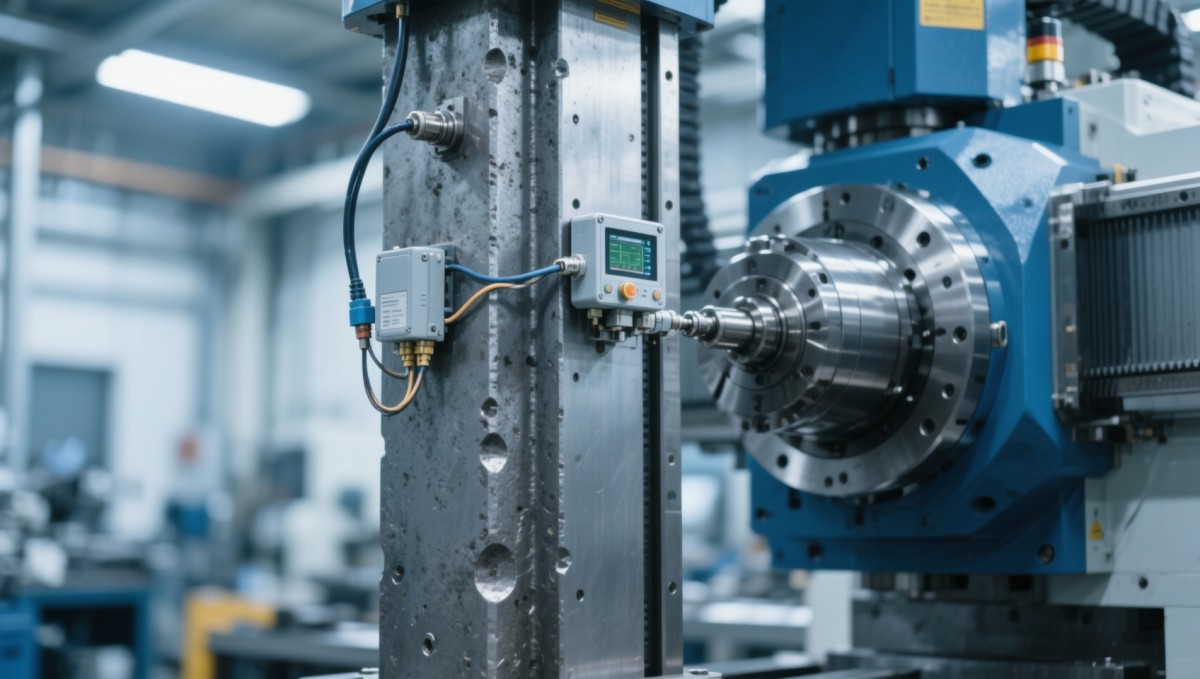
Three Critical Thermal Calibration Gaps on Today’s Shop Floors
Shop-floor thermal readiness fails across three interdependent layers—machine, environment, and process. Each layer operates on different time scales and requires distinct measurement protocols, yet most facilities treat them as isolated concerns.
First, machine-level calibration remains static: 92% of CNC shops perform geometric calibration only during initial installation or after major repairs—not daily or shift-based. Yet thermal growth patterns change with seasonal humidity (±5% RH shifts alter thermal conductivity of cast iron by up to 14%) and coolant aging (viscosity drift >12% reduces heat transfer efficiency by 22%).
Second, environmental control is often misaligned: HVAC zones rarely match machine thermal mass profiles. A typical 5-axis machining center reaches thermal equilibrium in 4–6 hours—but many plants set HVAC schedules based on occupancy, not machine warm-up cycles. Temperature gradients exceeding 1.5°C/m across the floor increase volumetric error by 0.8 µm per meter of travel.
Third, process-level compensation lags behind capability. While modern CNC controllers support ISO 230-3 thermal error mapping, only 31% of surveyed users implement it—citing complexity, lack of trained personnel, and absence of standardized thermal test protocols. Without dynamic compensation, even sub-micron positioning accuracy degrades by 35–50% over an 8-hour run.
The table reveals a clear hierarchy: skipping daily ambient checks has higher immediate risk than delaying annual kinematic calibration. Yet procurement teams often prioritize controller upgrades over thermal sensor kits—misallocating capital where it delivers lowest ROI per dollar spent.
How Procurement Teams Can Future-Proof Thermal Readiness
Procurement decisions must shift from component-centric to system-aware evaluation. When specifying new CNC equipment—or retrofitting legacy systems—focus on four measurable thermal intelligence criteria:
- Embedded sensor density: Minimum of 4 calibrated thermal sensors (spindle housing, X/Y/Z guideway bases, coolant reservoir) with ±0.1°C accuracy and 0.5-second sampling interval.
- Compensation architecture: Controller must support ISO 230-3 compliant thermal error modeling with auto-update capability—verified via manufacturer-provided test report (not marketing brochure).
- Environmental interface: Native Modbus/TCP or OPC UA integration for HVAC and ambient monitoring systems—enabling synchronized thermal scheduling.
- Verification protocol: Supplier must provide documented thermal stabilization time (≤3.5 hrs from cold start to <±0.5 µm drift) and validation method (e.g., laser interferometer traceable to NIST standards).
For retrofits, prioritize modular thermal kits with plug-and-play CNC controller compatibility. Leading vendors now offer field-installable packages (e.g., Heidenhain TTM-200, Renishaw RTS2) that integrate into Fanuc 31i-B, Siemens SINUMERIK 840D sl, and Mitsubishi M800/M80 systems within 1–2 days—without machine disassembly.
Budget allocation should reflect thermal risk exposure: aerospace and medical device manufacturers allocate 12–18% of CNC CapEx to thermal management subsystems, while general job shops average just 3–5%. That delta correlates directly with first-pass yield improvement—averaging 14.2% for shops investing ≥10% in thermal intelligence versus 2.7% for those below 5%.
Operational Implementation: A 5-Step Thermal Readiness Protocol
Thermal readiness isn’t a one-time upgrade—it’s a repeatable operational discipline. The following five-step protocol has been validated across 37 European and Asian precision shops achieving <±2 µm process capability (Cpk ≥1.67) for complex titanium and Inconel components:
- Baseline mapping: Conduct 72-hour thermal drift study using calibrated sensors at all critical locations (minimum 10-min sampling), correlating with ambient, coolant, and cycle data.
- Stabilization window definition: Identify machine-specific warm-up duration and optimal ambient band (e.g., 20.5°C ±0.8°C) where thermal growth stabilizes within ±1 µm/hour.
- Compensation model deployment: Load ISO-compliant thermal error map into CNC controller and validate with touch-trigger probe on master artifact (e.g., STEP gauge block).
- Shift handover checklist: Embed thermal verification (ambient + coolant + spindle temp) into digital operator log—mandatory before first part launch.
- Monthly drift audit: Re-run baseline test quarterly; update compensation model if thermal growth rate shifts >15% from original curve.
This protocol reduces thermal-related nonconformance by 63% within 90 days—and eliminates unplanned thermal recalibration events entirely when fully adopted. It requires no new machinery—only disciplined execution and cross-functional alignment between maintenance, operations, and quality teams.
Conclusion: Thermal Intelligence Is Your Next Precision Infrastructure Investment
Tighter thermal tolerance windows aren’t a technical constraint—they’re a strategic inflection point. Shops treating thermal stability as a “nice-to-have” will increasingly lose high-margin contracts in aerospace, medical, and quantum-grade electronics manufacturing, where thermal repeatability is now contractually enforced. Those embedding thermal intelligence into their CNC infrastructure gain measurable advantages: 22% faster ramp-up for new high-precision programs, 31% lower metrology overhead, and demonstrable compliance with AS9100 Rev D Clause 8.5.1.2 (thermal condition control).
Whether you operate 3 legacy machining centers or manage a global network of smart factories, thermal readiness starts with actionable data—not assumptions. It requires calibrated sensors, validated compensation logic, and disciplined operational routines—not just premium hardware.
Ready to assess your thermal readiness maturity level? Download our free CNC Thermal Readiness Scorecard—or contact our precision engineering team for a no-cost thermal audit of your current machine park and environmental setup.
- CNC Machine
- Multi-axis Machining
- Smart Manufacturing
- Machining Center
- Manufacturing Technology
- 5 Axis Machining
- Machining Process
- Metal Processing
- Precision Engineering
- CNC machining
- automated machining
- CNC equipment
- CNC manufacturing
- industrial machining
- CNC technology
- precision CNC
- precision industrial
Recommended for You
 Zero-Point Clamping or Modular Fixtures? Choosing a Faster CNC Changeover SystemCNC Machining Technology Center
 How to Cut CNC Fixture Changeover Time Without Sacrificing Part AccuracyCNC Machining Technology Center
 When Does CNC Turning Pay Off? A Break-Even Guide by Annual Part VolumeMachine Tool Industry Editorial Team
 Machine Tool Standards by Country: What Importers Must Verify Before PurchaseManufacturing Policy Research Center
 CNC Lathe Quick Installation Guide: Alignment Checks Before First Production RunCNC Machining Technology Center
 How to Select a CNC Lathe for Small Parts Without Sacrificing Accuracy or Cycle TimeCNC Machining Technology Center

Aris Katos
Future of Carbide Coatings
15+ years in precision manufacturing systems. Specialized in high-speed milling and aerospace grade alloy processing.
▶
How to Compare Machine Tools for Small-Batch vs Mass Production JobsMachine Tool Industry Editorial Team▶
Multi-Axis Machine Tool Selection Guide: Travel, Spindle, Accuracy, and Control SystemMachine Tool Industry Editorial Team▶
How to Evaluate Precision Equipment for Tight-Tolerance Parts and Stable OutputMachine Tool Industry Editorial Team▶
KATS Tightens CNC Grinder Import Test RulesMachine Tool Industry Editorial Team▶
Precision Lathe Types Compared: Swiss-Type, Slant Bed, and Flat Bed DifferencesMachine Tool Industry Editorial Team
Mastering 5-Axis Workholding Strategies
Join our technical panel on Nov 15th to learn about reducing vibrations in thin-wall components.

Providing you with integrated sanding solutions
Before-sales and after-sales services
Comprehensive technical support