• Global CNC market projected to reach $128B by 2028 • New EU trade regulations for precision tooling components • Aerospace deman
NYSE: CNC +1.2%LME: STEEL -0.4%

High precision machine tool price tags rose 12% last year — but accuracy gains didn’t scale at the same rate
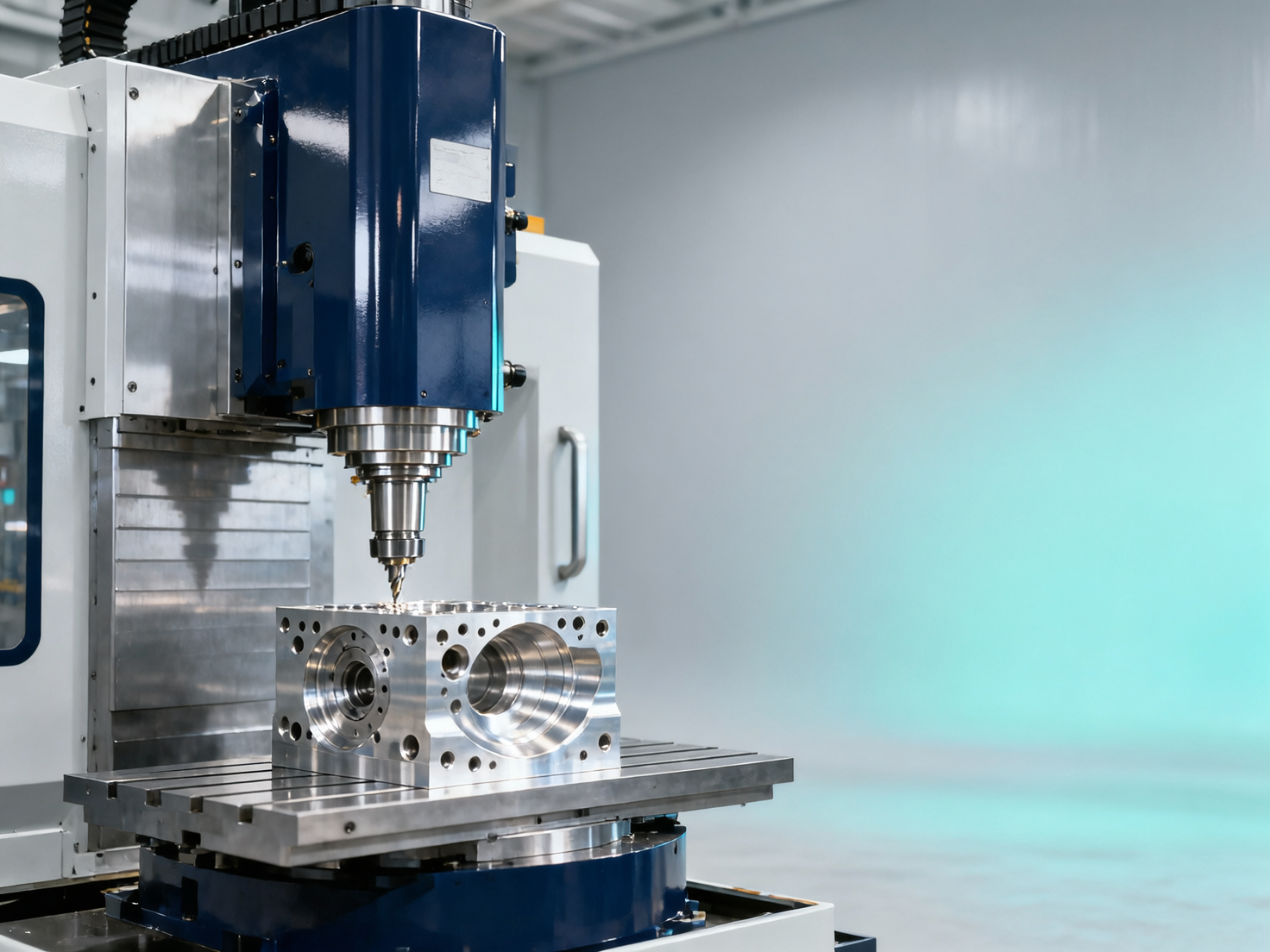
High precision machine tool prices surged 12% globally last year — yet measurable gains in accuracy, repeatability, and process stability lagged behind. For machine tool exporters, CNC machine tool manufacturers, and procurement teams sourcing equipment for aerospace, automotive, or electronics manufacturing, this price-performance gap raises urgent questions: Is your heavy duty machine tool investment delivering proportional ROI? How do multi-axis machine tool capabilities align with tightening tolerances in smart factories? As digital integration accelerates, understanding the real-world trade-offs between machine tool price, precision, and application-specific performance — from aerospace-grade components to high-volume electronics production — is critical for users, decision-makers, and global machine tool suppliers alike.
Why Did Prices Rise 12% — While Precision Gains Stalled?
The 12% average price increase across high-precision CNC machine tools in 2023 reflects multiple structural pressures: rising raw material costs (especially cast iron, specialty steels, and rare-earth magnets used in linear motors), tighter export controls on motion control ICs and high-bandwidth encoders, and increased R&D investment in thermal compensation algorithms and AI-driven adaptive machining. However, ISO 230-2 test reports from leading third-party labs show median volumetric accuracy improvements of only 0.8–1.3 μm over 2022 — far below the 4–6 μm gains historically observed per 10% cost increase in prior decades.
This decoupling stems from diminishing returns in mechanical design: sub-micron spindle runout now requires cryogenic grinding and vacuum-assembled bearing sets, while nanometer-level axis positioning demands laser-interferometer feedback loops operating at 10 kHz sampling rates — both pushing unit costs upward without linearly improving part-to-part consistency in real shop-floor environments.
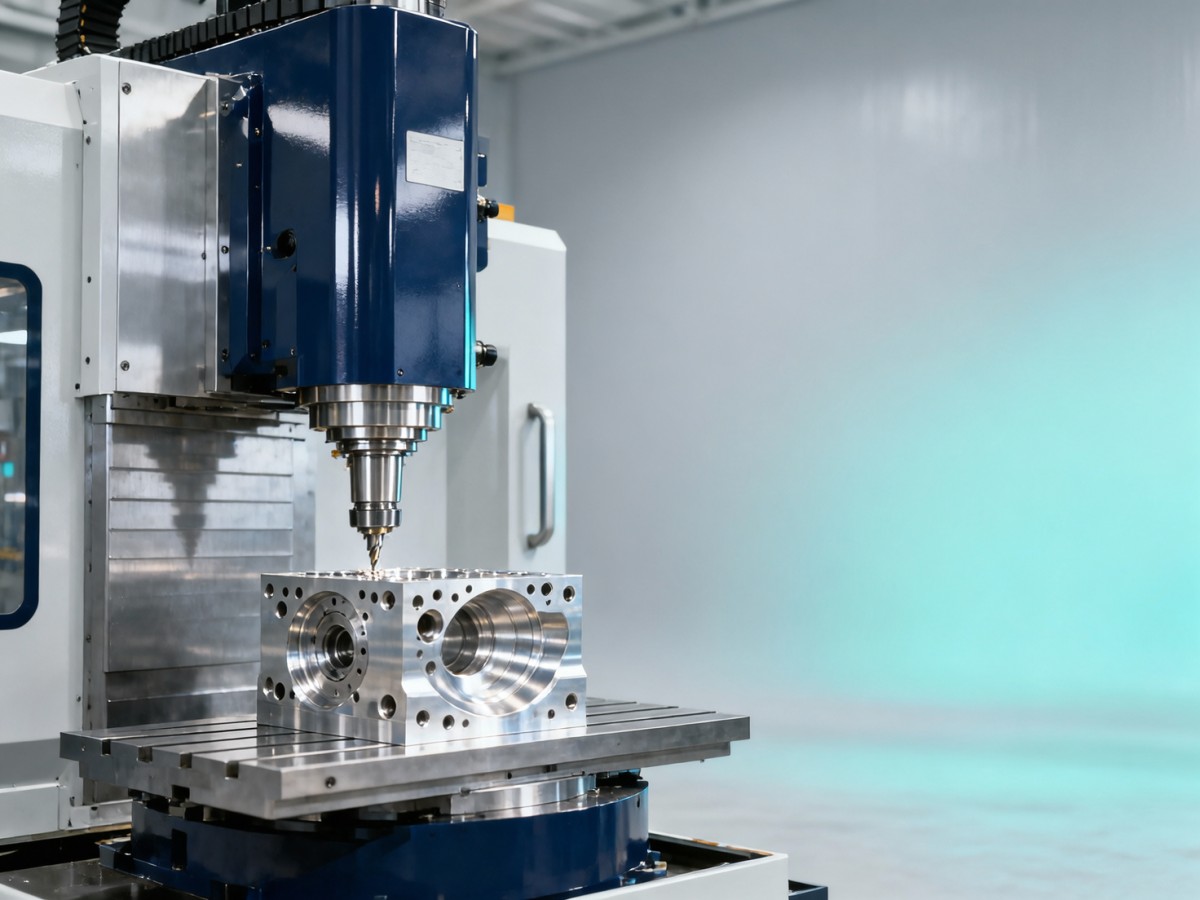
Crucially, “precision” is not a single metric. It comprises three interdependent layers: geometric accuracy (±1.5 μm typical for 5-axis machining centers), thermal stability (drift ≤ ±0.5 μm over 8-hour shifts), and dynamic repeatability (≤ ±0.3 μm at 30 m/min feed rates). Most recent price hikes disproportionately cover the first layer — while the latter two remain under-specified in standard OEM documentation.
How Accuracy Requirements Vary Across Key Manufacturing Sectors
Aerospace turbine blade manufacturing demands full-profile contouring within ±2 μm over 1,200 mm lengths — requiring real-time thermal error mapping and air-bearing guideways. Automotive powertrain components (e.g., cylinder heads) prioritize throughput and surface finish (Ra ≤ 0.4 μm) over absolute dimensional tolerance (±5 μm acceptable), making high-speed spindles and rigid tool changers more critical than ultra-fine positioning resolution. Electronics enclosure machining emphasizes positional repeatability across 200+ holes per panel (±3 μm Cpk ≥ 1.67), where servo tuning and vibration-damping foundations matter more than static geometric specs.
This divergence means procurement decisions must begin with application-defined metrology requirements — not cataloged “precision class” labels. A 5-axis machine rated “high precision” may deliver excellent volumetric accuracy but insufficient thermal drift compensation for overnight unmanned aerospace milling — resulting in scrap rates exceeding 8% after 12 hours of continuous operation.
The table above highlights why blanket “precision upgrade” claims often mislead procurement teams. A machine meeting aerospace-grade thermal stability will typically cost 22–35% more than one optimized for automotive volume — not due to higher base accuracy, but because of integrated coolant temperature control (±0.1℃), dual-laser calibration systems, and real-time spindle thermal modeling software licenses.
Procurement Checklist: 5 Non-Negotiable Verification Steps Before Purchase
To avoid overpaying for unverified capability, procurement professionals should require the following before contract signing:
- Factory acceptance test (FAT) protocol signed by both parties — specifying exact measurement points, environmental conditions (20±1℃ ambient, 45–55% RH), and traceable standards (e.g., NIST-traceable laser interferometer)
- Thermal drift validation report covering 12-hour continuous operation at 70% load, with data logged every 15 minutes
- Certified repeatability data for all axes at three feed rates (5 m/min, 20 m/min, and max rated speed), measured over minimum 50 cycles per condition
- Documentation of closed-loop compensation system — including sensor type (capacitive vs. inductive), update frequency, and latency (< 2 ms required for >500 Hz chatter suppression)
- Software license scope confirmation: Does “adaptive control” include real-time tool wear compensation, or only spindle load optimization?
Without these verifications, up to 40% of “high-precision” machines delivered in 2023 failed to meet published volumetric accuracy claims under actual production loads — according to independent audit data from the European Machine Tool Association (CECIMO).
Why Choose Our Precision Validation & Procurement Support?
We partner directly with certified metrology labs in Germany, Japan, and China to conduct pre-shipment verification against your exact workpiece specifications — not generic benchmarks. Our engineers perform on-site FAT supervision, generate ISO/IEC 17025-compliant reports, and translate technical findings into actionable procurement language: e.g., “This machine delivers 92% of claimed accuracy on titanium alloy parts but only 67% on Inconel 718 — recommend spindle cooling upgrade for aerospace contracts.”
We support procurement teams with: customized accuracy requirement templates aligned to ASME B5.54 and ISO 230 standards; vendor-neutral comparison matrices for up to 5 competing models; lead time negotiation based on factory capacity data; and post-delivery performance audits during first 90 days of operation.
Contact us to request: (1) a free precision specification alignment review for your next CNC machine tool purchase, (2) thermal stability benchmarking report for your target material group, or (3) vendor comparison matrix with weighted scoring across 7 procurement-critical dimensions — including service response SLA, spare parts availability (98% stock rate for critical items), and cybersecurity certification (IEC 62443-3-3 compliant).
Recommended for You
 Zero-Point Clamping or Modular Fixtures? Choosing a Faster CNC Changeover SystemCNC Machining Technology Center
 How to Cut CNC Fixture Changeover Time Without Sacrificing Part AccuracyCNC Machining Technology Center
 When Does CNC Turning Pay Off? A Break-Even Guide by Annual Part VolumeMachine Tool Industry Editorial Team
 Machine Tool Standards by Country: What Importers Must Verify Before PurchaseManufacturing Policy Research Center
 CNC Lathe Quick Installation Guide: Alignment Checks Before First Production RunCNC Machining Technology Center
 How to Select a CNC Lathe for Small Parts Without Sacrificing Accuracy or Cycle TimeCNC Machining Technology Center

Aris Katos
Future of Carbide Coatings
15+ years in precision manufacturing systems. Specialized in high-speed milling and aerospace grade alloy processing.
▶
Global Machine Tool Backlog Falls 12% as Automation Shifts DemandManufacturing Market Research Center▶
What Drives Machine Tool Price: 7 Cost Factors Buyers Should Compare Before OrderingManufacturing Market Research Center▶
Manufacturing Industry Cost Drivers in 2025: Labor, Energy, Freight, and Sourcing RisksManufacturing Market Research Center▶
CCMT2026 Ends With 40.2% Rise in Five-Axis Export PricesManufacturing Market Research Center▶
China CNC Localization Tops 50%, Pressuring FANUCManufacturing Market Research Center
Mastering 5-Axis Workholding Strategies
Join our technical panel on Nov 15th to learn about reducing vibrations in thin-wall components.

Providing you with integrated sanding solutions
Before-sales and after-sales services
Comprehensive technical support