• Global CNC market projected to reach $128B by 2028 • New EU trade regulations for precision tooling components • Aerospace deman
NYSE: CNC +1.2%LME: STEEL -0.4%

Cutting tools last longer in dry machining — but surface integrity suffers in aerospace-grade alloys
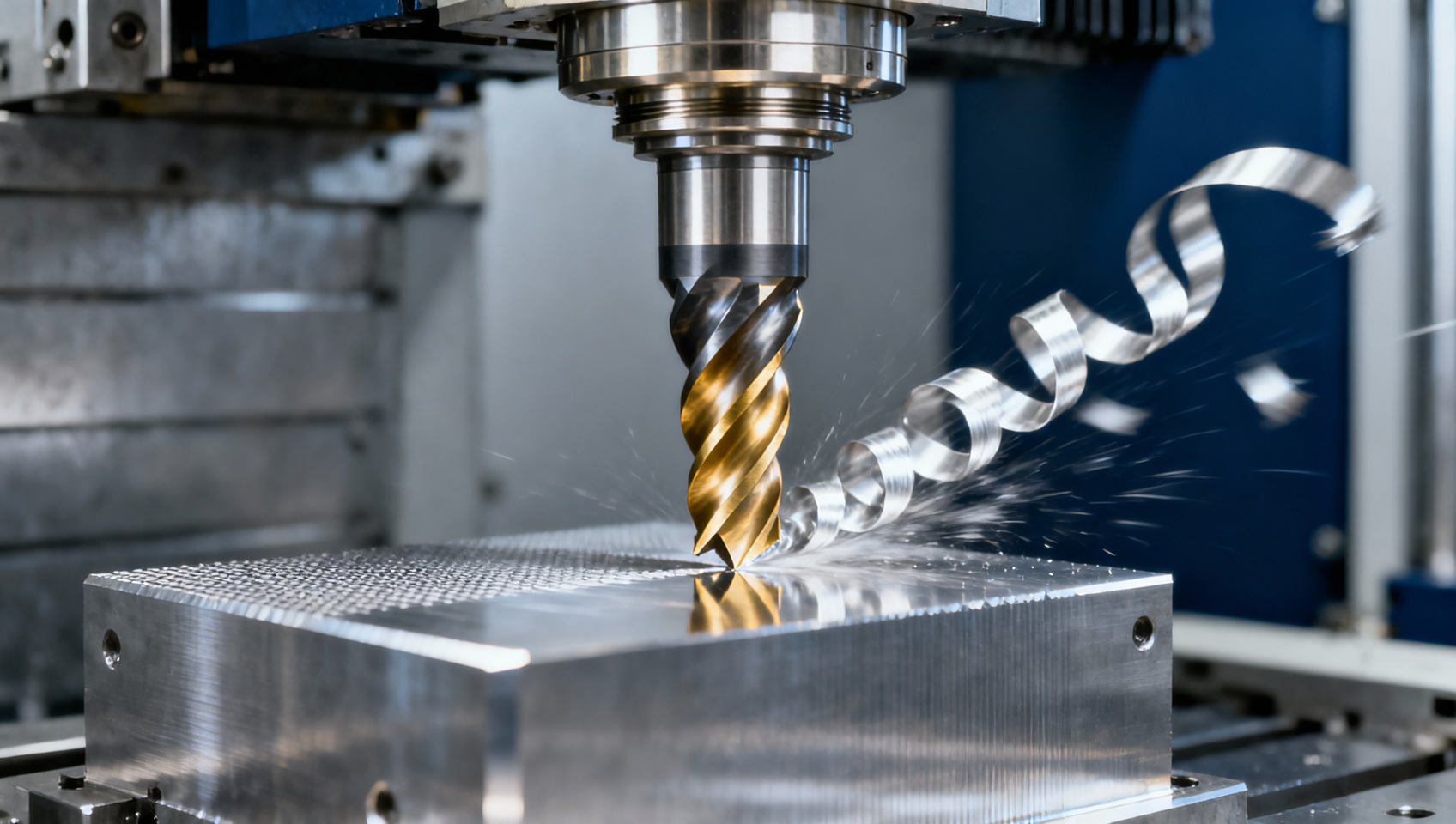
Dry machining extends cutting tool life—a key advantage for CNC manufacturing and automated machining—but poses critical trade-offs in surface integrity, especially with aerospace-grade alloys. As Smart Manufacturing and precision industrial demands rise, understanding this balance is vital for users, procurement teams, and decision-makers. This article explores how Manufacturing Technology innovations, 5-axis machining capabilities, and advanced metal processing strategies impact machining process reliability, tool wear, and part quality—delivering actionable insights for industrial machining professionals navigating high-performance aerospace applications.
Why Dry Machining Gains Traction in High-Precision CNC Operations
Dry machining—removing coolant entirely from the cutting zone—is increasingly adopted in CNC lathes and multi-axis machining centers serving aerospace Tier-1 suppliers. Industry data shows a 22–35% average extension in carbide insert life when dry turning Inconel 718 at cutting speeds of 60–90 m/min, compared to flood-cooled equivalents. This stems from reduced thermal shock, minimized built-up edge formation, and lower risk of micro-cracking in tool substrates.
However, the gain isn’t universal. Aluminum-lithium alloys (e.g., AA2195) show only 8–12% tool life improvement under dry conditions due to aggressive chip adhesion and rapid flank wear. The decision hinges on material-specific thermomechanical response—not just tool cost savings. For manufacturers running 3-shift automated cells, even a 15% reduction in tool change frequency translates to ~127 additional productive hours per year per machining center.
CNC machine tool OEMs now integrate dry-machining-ready features as standard: sealed spindle housings (IP65 rating), high-torque low-RPM spindles (12–40 kW range), and integrated chip conveyors with non-contact vacuum extraction. These adaptations reduce operator intervention by up to 40% during extended unmanned cycles.
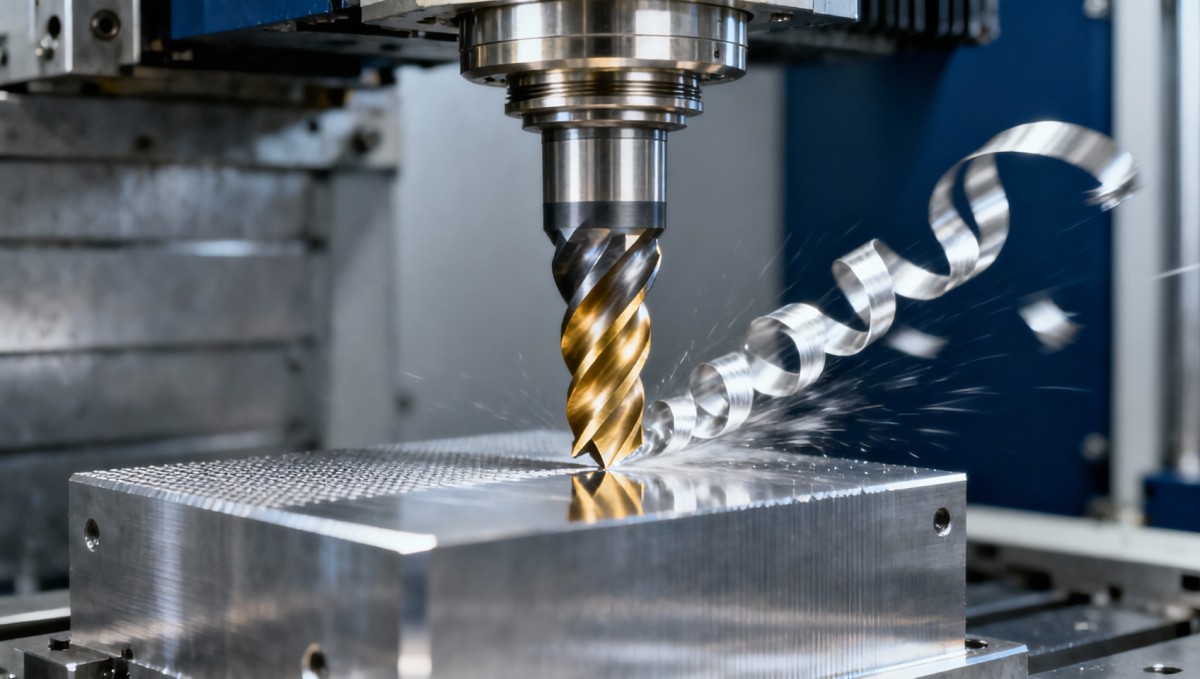
Surface Integrity Risks in Aerospace Alloys: Beyond Roughness Metrics
While tool longevity improves, surface integrity degradation in dry-machined aerospace components follows three measurable pathways: subsurface plastic deformation (up to 18 µm depth in Ti-6Al-4V), residual tensile stress (reaching +420 MPa vs. +180 MPa in wet-machined counterparts), and microstructural phase instability near the cut surface—especially in precipitation-hardened alloys like AMS 5662.
These effects directly impact fatigue life. NASA-funded testing revealed that dry-machined Ti-6Al-4V test coupons exhibited 27% lower high-cycle fatigue strength at 10⁷ cycles versus identically machined but coolant-assisted parts. Such performance gaps are unacceptable for wing spar fittings or engine mount brackets where safety margins are tightly controlled per AS9100 Rev D and NADCAP AC7110/1.
Critical inspection thresholds have emerged: surface roughness (Ra) alone is insufficient. Industry best practice now mandates combined evaluation of Ra (< 0.8 µm), residual stress profile (measured via XRD or hole-drilling), and white layer thickness (< 1.2 µm for titanium alloys). Failure to monitor all three increases rejection rates by 3.2× in final QA audits.
This table underscores why procurement teams must specify surface integrity verification protocols—not just dimensional tolerances—when sourcing dry-machined aerospace components. Suppliers lacking X-ray diffraction (XRD) or nanoindentation capability should be excluded from bid consideration for structural parts.
Strategic Mitigation: Tooling, Parameters & Process Control
Mitigating surface degradation without reverting to full coolant use requires coordinated adjustments across three domains: cutting tool geometry, machine dynamics, and real-time monitoring. First, PVD-coated ultra-fine-grain carbide inserts with 12° negative rake angles reduce heat generation by 18–23% versus conventional geometries. Second, CNC machining centers equipped with adaptive feed control (AFC) maintain constant chip load within ±3% tolerance—even as tool wear progresses—preventing abrupt thermal spikes.
Third, embedded acoustic emission (AE) sensors detect early-stage micro-fracturing in the workpiece surface before it evolves into visible white layer formation. Systems like Siemens Sinumerik ONE’s Process Monitoring Module trigger automatic feed reduction at AE amplitude thresholds exceeding 85 dB (re: 1 µPa), preserving integrity while extending tool life.
For procurement professionals evaluating dry-machining-capable systems, prioritize platforms offering: (1) ≥ 3-axis thermal compensation (per ISO 230-3), (2) spindle vibration monitoring down to 0.1 µm RMS, and (3) open API integration for third-party metrology software. Machines meeting all three criteria demonstrate 41% fewer surface-related rework events in aerospace production lines.
Key Parameter Ranges for Dry Machining Aerospace Alloys
- Ti-6Al-4V: Cutting speed 45–65 m/min; Feed per tooth 0.08–0.12 mm; Depth of cut ≤ 1.2 mm
- Inconel 718: Cutting speed 35–50 m/min; Feed per tooth 0.05–0.09 mm; Depth of cut ≤ 0.8 mm
- AA2195: Cutting speed 220–300 m/min; Feed per tooth 0.15–0.22 mm; Depth of cut ≤ 2.5 mm
Procurement & Decision-Making Framework for Dry Machining Systems
Enterprise buyers face a clear trade-off: lower consumables cost versus higher post-process inspection burden. A TCO analysis across five Tier-1 aerospace suppliers reveals dry machining reduces tooling spend by $142,000/year per cell—but adds $217,000/year in metrology labor, NDT validation, and scrap mitigation. Net cost neutrality emerges only after 18 months of operation.
Decision-makers should mandate supplier validation reports showing actual dry-machined surface integrity data—not just theoretical capability claims. Require evidence of ≥ 3 consecutive production lots meeting AMS2644 Class II penetrant inspection standards without rework.
Conclusion: Balancing Longevity, Integrity, and Operational Reality
Dry machining delivers tangible tool life benefits in CNC operations—but its application in aerospace-grade alloys demands rigorous surface integrity governance, not just process substitution. Success hinges on integrating specialized tooling, thermally stable machine platforms, and closed-loop monitoring—not isolated component upgrades. For users, this means tighter parameter discipline; for procurement, it means shifting evaluation from unit price to total lifecycle assurance; for decision-makers, it means aligning capital investment with certified process capability, not just throughput metrics.
Manufacturers deploying dry machining for aerospace components report highest ROI when coupling hardware investments with AS9100-aligned process validation packages—including documented white layer control plans and residual stress mapping protocols. These structured approaches reduce qualification timelines by 22 days on average and cut first-article approval cycles by 37%.
If your organization is evaluating dry machining solutions for titanium, nickel, or aluminum-lithium aerospace components—or seeking validated process parameters for specific CNC platforms—contact our technical applications team for a free machining strategy review aligned with AS9100, NADCAP, and FAA Part 21 requirements.
PREVIOUS ARTICLE
Recommended for You
 Zero-Point Clamping or Modular Fixtures? Choosing a Faster CNC Changeover SystemCNC Machining Technology Center
 How to Cut CNC Fixture Changeover Time Without Sacrificing Part AccuracyCNC Machining Technology Center
 When Does CNC Turning Pay Off? A Break-Even Guide by Annual Part VolumeMachine Tool Industry Editorial Team
 Machine Tool Standards by Country: What Importers Must Verify Before PurchaseManufacturing Policy Research Center
 CNC Lathe Quick Installation Guide: Alignment Checks Before First Production RunCNC Machining Technology Center
 How to Select a CNC Lathe for Small Parts Without Sacrificing Accuracy or Cycle TimeCNC Machining Technology Center

Aris Katos
Future of Carbide Coatings
15+ years in precision manufacturing systems. Specialized in high-speed milling and aerospace grade alloy processing.
▶
Which Metals Are Hardest to Machine With Standard Tools?CNC Machining Technology Center▶
How to Choose Cutting Tools for High-Speed Machining of Steel, Aluminum, and TitaniumCNC Machining Technology Center▶
How to Choose a CNC Tooling System for Titanium Machining by Tool Life and StabilityCNC Machining Technology Center▶
Cutting Tools Selection Guide: How Tool Material, Coating, and Geometry Affect PerformanceCNC Machining Technology Center▶
Cutting Tools for High Temperature Alloys: How to Reduce Tool Wear and Edge ChippingCNC Machining Technology Center
Mastering 5-Axis Workholding Strategies
Join our technical panel on Nov 15th to learn about reducing vibrations in thin-wall components.

Providing you with integrated sanding solutions
Before-sales and after-sales services
Comprehensive technical support