• Global CNC market projected to reach $128B by 2028 • New EU trade regulations for precision tooling components • Aerospace deman
NYSE: CNC +1.2%LME: STEEL -0.4%

CNC metal cutting burr problems that slow downstream assembly
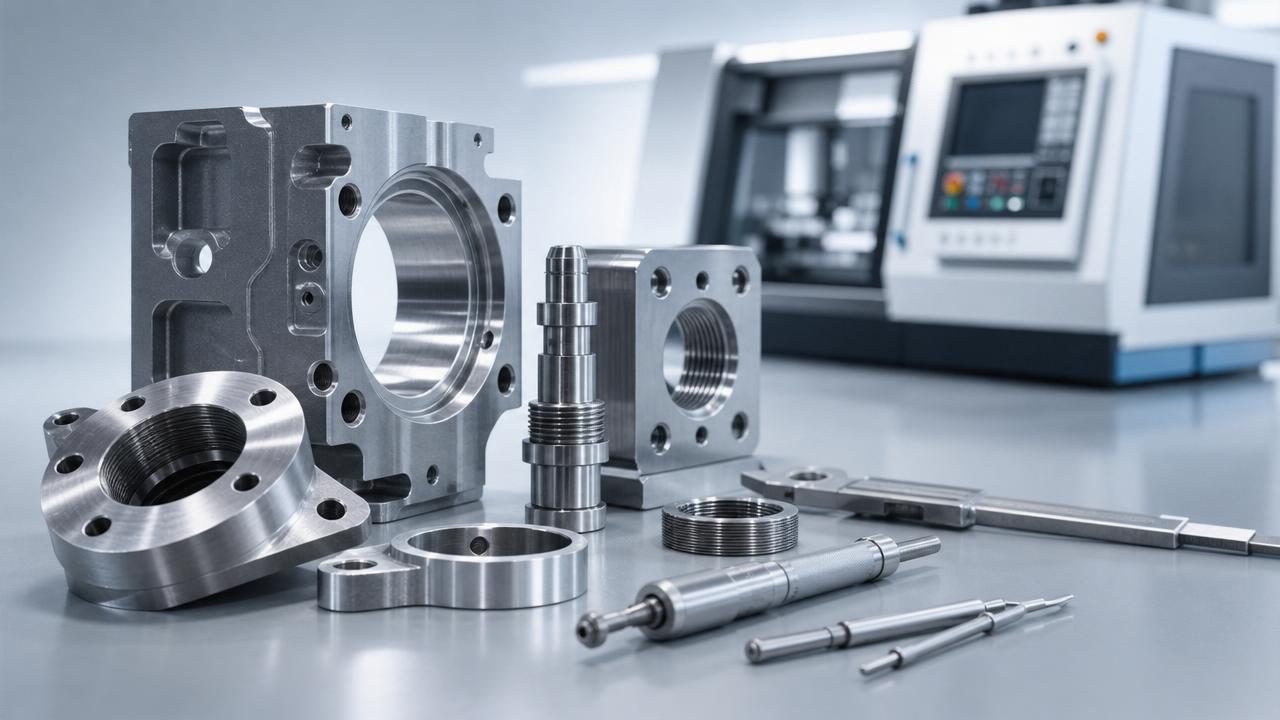
In CNC metal cutting, burr formation is more than a cosmetic defect—it can delay assembly, compromise fit, create safety risks, and increase inspection workload. For quality control and safety teams, understanding why burrs occur and how they affect downstream processes is essential to reducing rework, improving consistency, and keeping production lines efficient.
For most readers searching this topic, the core question is practical: which burr problems actually slow assembly, why they keep happening, and what controls can reduce escapes without adding excessive cost. The short answer is that burrs become a downstream bottleneck when they are not treated as a process capability issue. They affect part seating, hole alignment, fastener engagement, sealing performance, operator handling safety, and final inspection time.
For quality control personnel and safety managers, the priority is not a theoretical definition of burrs. It is knowing how to identify high-risk burr conditions, connect them to root causes in CNC metal cutting, and decide where prevention is more effective than deburring after the fact. That is where the biggest gains in assembly flow, product consistency, and operator protection usually come from.
Why burrs in CNC metal cutting create bigger problems in assembly than many teams expect
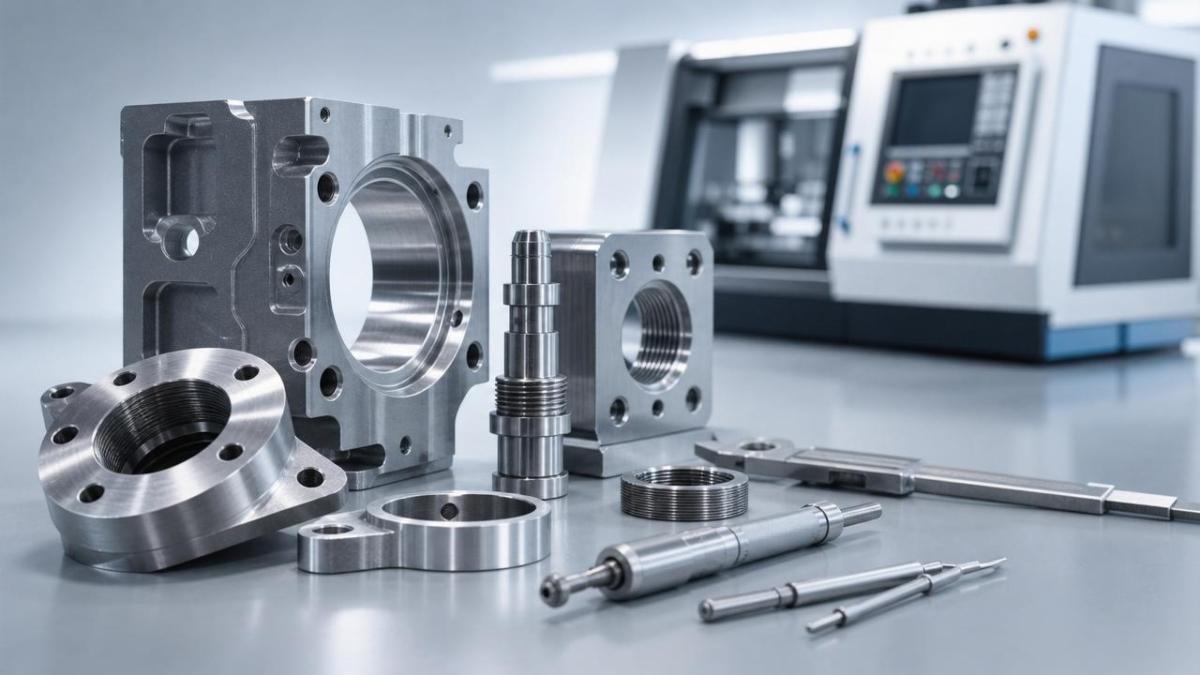
Burrs are often underestimated because they may appear small compared with the overall dimensions of a machined part. In practice, even a minor edge projection can interfere with downstream assembly if the part depends on tight positional fit, surface contact, or repeatable insertion. What looks acceptable at the machine can become a source of stoppage at the assembly station.
Common downstream effects include poor mating between components, extra force during insertion, failure of pins or shafts to seat fully, scratched surfaces during handling, inconsistent torque on threaded features, and contamination from detached burr fragments. In high-mix or precision assembly environments, these issues can quickly add up to line delays and costly sorting activity.
For safety teams, burrs also increase direct human risk. Operators handling unfinished edges may experience cuts, glove damage, or reduced grip when positioning parts. Burr fragments can become foreign material hazards in enclosed assemblies, hydraulic systems, or electronic housings. That means the burr issue is both a quality concern and a workplace safety concern.
A useful way to think about burr severity is not just by size, but by function. A burr on a non-contact external edge may have limited impact. A burr on a hole entrance, sealing face, thread start, locating shoulder, slot, or chamfer can cause immediate assembly disruption. Quality teams should therefore classify burrs by functional criticality rather than relying only on a general visual standard.
Which burr locations are most likely to slow downstream assembly
Not all burrs carry the same risk. The most problematic locations are usually those tied to alignment, sealing, fastening, or sliding motion. In CNC metal cutting, these high-risk areas should receive closer inspection and tighter control plans because even small deviations can increase cycle time later in production.
Holes are one of the most common trouble spots. Burrs at hole exits can obstruct pins, bushings, rivets, and bolts. Burrs at hole entrances can interfere with countersinks, distort seating of fastener heads, or create false readings during gauging. Where hole position and edge quality both matter, burr formation can trigger repeated insertion attempts and unnecessary force at assembly.
Threads are another major source of delay. A burr at the thread start may cause cross-threading, high starting torque, or failed automated fastening. On manually assembled parts, operators may compensate by applying more force, which raises both ergonomic and product damage risks. In automated systems, burr-induced thread problems often show up as torque faults or stoppages.
Slots, grooves, and pocket edges can also create hidden assembly issues. Burrs in these areas may trap mating parts, prevent clips from locking, or scrape seals and wire insulation during insertion. Similarly, burrs along precision datum edges can affect fixture repeatability, causing a quality problem that appears to be an assembly alignment issue but actually starts in machining.
Finally, external perimeter burrs should not be ignored when parts are handled manually or stacked in containers. They can cause operator injury, snag packaging materials, and damage neighboring parts. These effects may not stop the line immediately, but they still raise labor time, scrap risk, and safety exposure.
What causes burrs in CNC metal cutting to become persistent quality problems
Burr formation is a normal byproduct of material separation, but persistent or excessive burrs usually point to unstable process conditions. For QC teams, the important question is not whether burrs can occur, but why certain operations repeatedly produce burrs large enough to affect function. The answer often lies in the interaction of tool condition, cutting parameters, workpiece material, and feature geometry.
Tool wear is one of the most common causes. As a cutting edge degrades, it tends to push and tear material rather than shear it cleanly. This often increases burr size at exits, corners, and thin sections. If burr levels worsen gradually over a production run, tool life management may be the first place to investigate.
Feed rate and spindle speed also matter. Parameters that are too aggressive can leave unstable edge conditions, while overly conservative cutting can increase rubbing and plastic deformation. The correct settings depend on material, tool geometry, coating, coolant strategy, and feature type. A parameter set that works well for cycle time may still create unacceptable burr risk if edge quality is not part of process validation.
Material characteristics play a major role. Ductile metals are more prone to burr formation because they deform before separation. Softer aluminum alloys, certain stainless steels, copper alloys, and low-carbon steels can all produce burrs differently. Work-hardened surfaces, forged skins, and variable material batches may further increase inconsistency from one lot to another.
Part geometry is another factor that quality teams should watch closely. Thin walls, interrupted cuts, cross-holes, corner breakouts, and edge exits near unsupported sections often produce larger burrs. In many cases, the burr problem is not caused by poor machining discipline alone. It is a process-design issue created by a challenging feature and insufficient preventive controls.
Machine condition and fixturing can also contribute. Vibration, poor clamping support, spindle runout, and unstable workholding can all affect edge formation. When burr complaints come mainly from one machine, one shift, or one fixture setup, a localized equipment or setup issue may be involved rather than a broader programming problem.
How quality control teams can distinguish cosmetic burrs from assembly-critical burrs
One of the most effective ways to reduce waste is to stop treating all burrs as equal. If every edge receives the same response, teams may spend too much time on low-risk surfaces while missing burrs that truly affect assembly. A better approach is to define acceptance criteria based on functional impact and risk.
Start by mapping where assembly contact actually occurs. Identify the surfaces and features that guide insertion, carry clamp load, hold seals, accept threaded engagement, or locate the part in the next process. These are the places where burr criteria should be the most specific. Generic instructions such as “remove all sharp edges” are usually not enough for consistent decision-making.
Quality teams should work with manufacturing engineering and assembly operators to create burr severity categories. For example, a category might be assigned for safety-critical sharp edges, another for functional edge obstruction, and another for low-risk cosmetic burrs. This makes inspection more consistent and helps prioritize corrective action when defects are found.
Measurement methods should also match the risk. Visual inspection alone may be acceptable for low-risk perimeter edges, but critical holes, threads, and sealing faces may require magnification, tactile standards, go/no-go verification, or profile measurement. If a burr can affect fit but cannot be judged reliably by the naked eye, the inspection method needs to be upgraded.
It is also helpful to compare burr findings with actual assembly symptoms. If repeated insertion force, fastening errors, seal damage, or operator complaints are concentrated on certain part numbers, those parts should be reviewed for edge-condition controls. Linking incoming or in-process inspection data to assembly performance creates a stronger basis for process improvement.
What safety managers should watch for when burrs reach downstream operations
From a safety standpoint, burrs are often treated as minor hazards until they generate an injury or contamination event. That is a mistake. In facilities where parts are moved manually, transferred in bulk, or assembled at speed, burr-related hazards should be included in routine risk assessment and workstation design review.
The most obvious risk is laceration. Sharp edges on machined components can cut fingers, wrists, and forearms during part loading, unloading, inspection, and assembly. Even when gloves are worn, burrs may pierce or snag glove material, reducing dexterity and increasing the chance of mishandling. If operators need to reposition parts repeatedly because of poor fit, exposure time increases as well.
Burrs can also create indirect safety problems. Detached metal fragments may contaminate assemblies, jam moving mechanisms, or fall into enclosed systems where they later cause failure. In sectors such as automotive, energy equipment, electronics, and aerospace supply chains, this kind of hidden contamination can become a serious product reliability issue.
Another concern is ergonomic strain. When burrs interfere with normal fit, operators may apply extra hand force, repeat insertion attempts, or use improvised tools to complete the task. These workarounds are warning signs that the machining defect is shifting risk downstream. Safety managers should treat abnormal assembly force as a trigger for quality escalation, not just a training issue.
A strong burr-control program therefore supports both product safety and occupational safety. Incident prevention is more effective when safety observations, near-miss reports, and assembly feedback are shared with machining and quality teams rather than remaining isolated within EHS records.
How to reduce burr-related delays without relying only on manual deburring
Many factories respond to burr complaints by adding more deburring labor. While this may provide short-term relief, it rarely solves the root issue and often creates variability of its own. Manual deburring depends heavily on operator skill, consistency, access to the feature, and time available per part. It can also remove too much material if not controlled carefully.
A better strategy is to reduce burr formation at the source wherever possible. That may involve optimizing toolpath direction, adjusting exit strategy on holes and contours, changing tool geometry, revising speeds and feeds, improving support near thin sections, or introducing more suitable cutting tools for the material. Small changes in how the cut exits the workpiece can sometimes make a major difference.
Tool management is especially important. If burr size increases as tools age, define a replacement interval based not only on dimensional tolerance but also on edge quality performance. Some shops wait until dimensions drift before changing tools, but burr growth may become unacceptable earlier than dimensional failure.
Process sequencing can help as well. In some parts, a later finishing pass, chamfer operation, or back-up cut can reduce burr risk on critical features. In others, changing the order of operations may prevent a burr from being trapped in a hard-to-access area. These decisions should be evaluated against cycle time, but the tradeoff is often justified if downstream assembly disruption is costly.
Where deburring remains necessary, standardization matters. Define which features must be deburred, which tools or methods are approved, what edge condition is required, and how verification is performed. Without that structure, deburring becomes a variable rework activity rather than a controlled part of the process.
What an effective burr-control checklist looks like for QC and assembly-facing teams
For teams that need practical action, a structured checklist is often more useful than broad guidance. An effective burr-control review should begin with the question: which features directly affect fit, fastening, sealing, alignment, handling, or contamination risk? Those features should be clearly marked on drawings, control plans, or inspection instructions.
Next, confirm whether burr criteria are measurable. If the requirement is vague, inspectors and operators will make inconsistent calls. Use defined language for edge break, burr height, sharpness condition, or functional pass/fail at critical locations. Where possible, include visual standards or approved reference samples.
Then review process stability indicators. Are burr complaints tied to tool age, specific materials, one machine, one program revision, one supplier lot, or one shift? Patterns like these often reveal whether the issue is systemic or localized. Good containment starts with separating random escapes from repeatable process failure.
Also check whether assembly feedback is captured quickly enough. If downstream teams are reworking parts without reporting the defect formally, machining operations may not see the true cost of the issue. A closed-loop escalation path between assembly, quality, production, and maintenance is essential.
Finally, include safety verification. If burrs have caused cuts, glove damage, handling difficulty, or fragment contamination, those events should be reviewed alongside quality data. This broader view helps justify corrective action and makes it easier to prioritize process improvements that protect both productivity and people.
Why burr prevention is often a higher-value investment than burr detection alone
Inspection can stop some defective parts from reaching assembly, but detection alone does not remove the source of delay. In fact, if burrs are common, increased inspection may simply move labor from assembly to sorting and verification. For organizations focused on leaner production, the better return usually comes from preventing high-risk burrs in CNC metal cutting before they enter the flow.
Prevention reduces more than scrap. It lowers inspection burden, shortens assembly cycle time, improves first-pass yield, reduces injury exposure, and strengthens confidence in automated fastening or insertion processes. These gains are especially valuable in industries where precision parts move quickly between machining, cleaning, inspection, and assembly with little buffer time.
For decision-makers, the key is to compare the cost of upstream control with the hidden cost of downstream disruption. If a burr issue causes repeated fit checks, operator intervention, rework, injury risk, or line stoppages, the total impact is usually much larger than the visible deburring expense. That is why burr prevention should be evaluated as a productivity and risk-management measure, not just a finishing detail.
In CNC metal cutting, burr problems that slow downstream assembly are rarely just cosmetic. They are often signs of unstable cutting conditions, insufficient feature-specific standards, or a gap between machining output and assembly requirements. For quality control and safety teams, the most effective response is to focus on function-critical burr locations, classify risk clearly, connect defects to root causes, and push prevention upstream whenever possible.
When burr control is handled this way, the result is not only cleaner parts. It is smoother assembly, fewer injuries, lower inspection effort, and more reliable production performance across the manufacturing chain.
PREVIOUS ARTICLE
Recommended for You
 Machine Tool Standards by Country: What Importers Must Verify Before PurchaseManufacturing Policy Research Center
 CNC Lathe Quick Installation Guide: Alignment Checks Before First Production RunCNC Machining Technology Center
 How to Select a CNC Lathe for Small Parts Without Sacrificing Accuracy or Cycle TimeCNC Machining Technology Center
 How to Select a Slant Bed Lathe for High-Precision Shaft and Chuck WorkCNC Machining Technology Center
 Smart Manufacturing for Small Businesses: Where Automation Delivers the Fastest ROIMachine Tool Industry Editorial Team
 How to Specify a CNC Lathe for High-Volume Automotive Shaft ProductionCNC Machining Technology Center

Aris Katos
Future of Carbide Coatings
15+ years in precision manufacturing systems. Specialized in high-speed milling and aerospace grade alloy processing.
▶
Which Metals Are Hardest to Machine With Standard Tools?CNC Machining Technology Center▶
How to Choose Cutting Tools for High-Speed Machining of Steel, Aluminum, and TitaniumCNC Machining Technology Center▶
How to Choose a CNC Tooling System for Titanium Machining by Tool Life and StabilityCNC Machining Technology Center▶
Cutting Tools Selection Guide: How Tool Material, Coating, and Geometry Affect PerformanceCNC Machining Technology Center▶
Cutting Tools for High Temperature Alloys: How to Reduce Tool Wear and Edge ChippingCNC Machining Technology Center
Mastering 5-Axis Workholding Strategies
Join our technical panel on Nov 15th to learn about reducing vibrations in thin-wall components.

Providing you with integrated sanding solutions
Before-sales and after-sales services
Comprehensive technical support