• Global CNC market projected to reach $128B by 2028 • New EU trade regulations for precision tooling components • Aerospace deman
NYSE: CNC +1.2%LME: STEEL -0.4%

How to Choose a CNC Tooling System for Titanium Machining by Tool Life and Stability
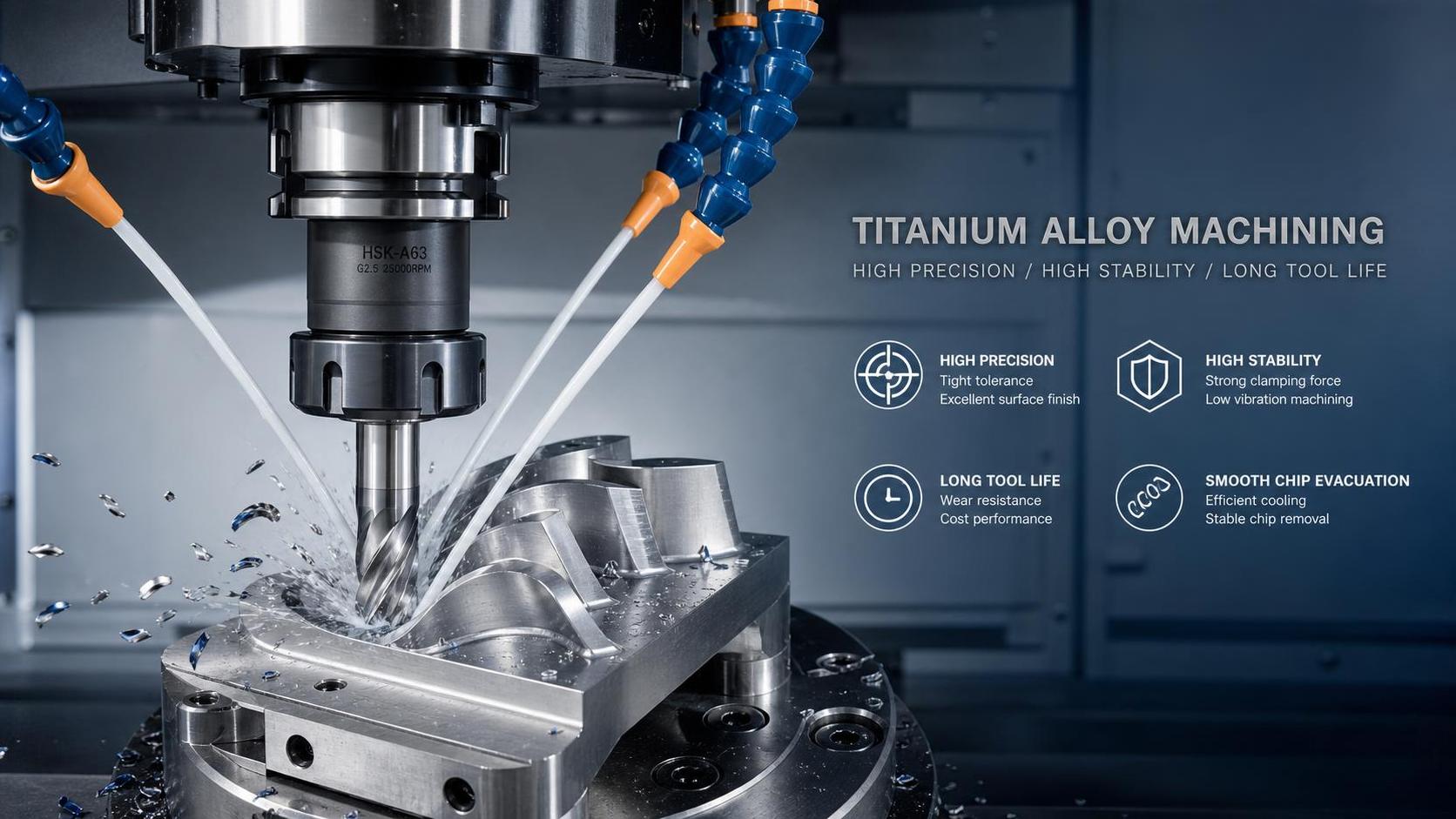
How to Choose a CNC Tooling System for Titanium Machining by Tool Life and Stability
Choosing the right CNC Tooling System for titanium machining is a practical decision, not a catalog exercise.
Titanium creates heat quickly, resists cutting, and punishes weak setups through chatter, edge failure, and unstable cycle times.
That is why tool life and stability should lead the selection process from the start.
For machining centers, CNC lathes, and multi-axis systems, the tooling system affects part quality, spindle load, scrap risk, and delivery performance.
In real production, a stable tooling package often matters more than pushing the highest cutting data on paper.
This article explains how to evaluate a CNC Tooling System for titanium machining through holder design, interface strength, clamping method, overhang control, and process consistency.
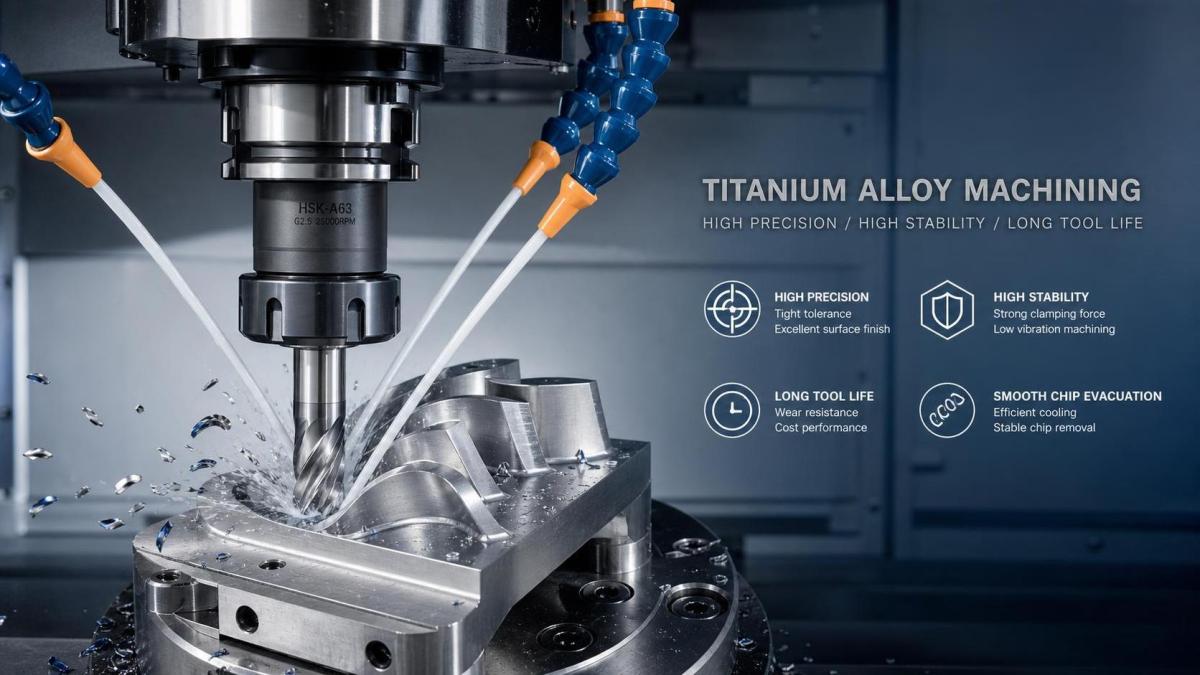
The goal is simple: longer tool life, fewer interruptions, and more predictable titanium machining results.
Why Titanium Changes the Tooling Decision
Titanium alloys behave very differently from aluminum, mild steel, or cast iron.
They keep strength at high temperature, conduct heat poorly, and create concentrated cutting loads at the tool edge.
This means the cutting zone gets hot while the insert and holder absorb more stress.
A CNC Tooling System for titanium machining must therefore do three things well.
- Hold the tool with high rigidity.
- Reduce vibration under interrupted or deep cutting conditions.
- Maintain repeatable runout and clamping force.
If one of these conditions is weak, tool life usually collapses first.
The second symptom is unstable surface finish or dimensional drift.
The third symptom is hidden cost, because operators slow feeds to protect the process.
Start with Tool Life, Not Just Purchase Price
A cheaper holder can look attractive during sourcing, but titanium rarely rewards low upfront cost alone.
The better approach is to compare total operating impact.
When selecting a CNC Tooling System for titanium machining, review these cost drivers first.
- Insert consumption per batch.
- Unexpected machine stoppages.
- Tool change time and setup repeatability.
- Scrap and rework from vibration or taper variation.
- Cycle time lost through conservative parameter limits.
A more stable holder often enables a lower cost per component, even if the purchase price is higher.
This is especially true in aerospace, energy equipment, and complex structural parts.
In those jobs, one unstable setup can affect several downstream operations.
Choose the Right Spindle Interface for Stability
The spindle connection is the foundation of any CNC Tooling System for titanium machining.
If the interface lacks rigidity, performance losses show up before the cutting edge reaches its real limit.
For heavy milling and difficult titanium work, dual-contact interfaces often provide better bending resistance than older taper-only systems.
HSK, BIG-PLUS, and other rigid interface formats are widely considered for this reason.
The best choice still depends on the machine platform, spindle condition, and job mix.
When comparing interfaces, look at these factors.
- Radial stiffness during side cutting.
- Repeatability after multiple tool changes.
- Torque transfer under high spindle load.
- Compatibility with existing machining centers and tool presetting routines.
If titanium accounts for a large share of machine hours, interface quality deserves more weight than general-purpose flexibility.
Match the Holder Type to the Operation
Not every holder style behaves the same in titanium machining.
The right CNC Tooling System for titanium machining should be selected by operation, not by habit.
For roughing, hydraulic chucks may improve damping, but they may not match the torque needs of every heavy cut.
Shrink-fit holders offer strong concentricity and compact geometry, which helps in semi-finishing and finishing.
High-precision collet systems can work well for lighter operations, but they require careful runout control.
Side-lock holders may still appear in some shops, yet they usually introduce more runout risk for demanding titanium parts.
A practical selection guide looks like this.
This is where process stability becomes more useful than one universal holder policy.
Control Overhang, Runout, and Clamping Force
Many titanium problems come from setup geometry rather than cutting grade alone.
A CNC Tooling System for titanium machining should keep the assembly as short and direct as possible.
Every extra millimeter of overhang increases deflection and raises chatter risk.
Runout also matters more than many teams expect.
If one flute cuts more than the others, heat builds unevenly and the edge fails early.
That shortens tool life and makes spindle load less predictable.
Use this checklist during process setup.
- Minimize gauge length whenever tool access allows.
- Measure runout at the cutting diameter, not only at the holder nose.
- Confirm clamping torque or shrink condition every time.
- Avoid worn collets, damaged tapers, and repeated mixed-brand assemblies.
- Standardize presetting procedures across shifts.
These details seem small, but they often separate stable titanium machining from recurring trouble.
Do Not Ignore Coolant Delivery and Chip Control
A CNC Tooling System for titanium machining is not only the holder body.
Coolant access, nozzle direction, and chip evacuation all influence tool life and process stability.
Titanium keeps heat near the cutting edge, so coolant has to reach the active zone effectively.
Through-tool coolant often improves consistency in drilling, deep pocketing, and high-load milling.
Poor chip evacuation creates recutting, and recutting quickly damages both inserts and part surfaces.
When reviewing a tooling package, ask three direct questions.
- Does the holder support effective coolant delivery for the real toolpath?
- Can chips leave the cut cleanly in deep or closed features?
- Will coolant pressure remain stable across the planned batch size?
In many shops, improving coolant targeting delivers a faster gain than changing the insert grade first.
Build a Selection Process Around Risk
The best CNC Tooling System for titanium machining usually comes from structured evaluation, not isolated supplier claims.
A risk-based review works especially well for projects with tight quality targets and delivery pressure.
Start by grouping parts according to machining risk.
- Thin-wall aerospace components.
- Deep cavity structural parts.
- High-value discs or shafts with long cycle times.
- Multi-axis parts with difficult access angles.
Then compare tooling options against clear process indicators.
- Tool life spread between best and worst cycles.
- Surface finish variation across the batch.
- Spindle load fluctuation.
- Setup change repeatability.
- Recovery speed after tool replacement.
This gives a more realistic basis for investment decisions across CNC machining operations.
What a Good Decision Looks Like in Practice
A strong decision is rarely the most complex one.
It is the one that fits machine capability, part geometry, cutting strategy, and production rhythm.
For titanium, the right CNC Tooling System for titanium machining should reduce uncertainty first.
That means stable interfaces, suitable holder types, controlled overhang, reliable clamping, and effective coolant delivery.
From there, tool life improves, cutting data becomes more repeatable, and planning gets easier.
When reviewing the next titanium project, validate the tooling system against actual risk points, not generic preferences.
That is usually the fastest path to better stability, lower cost per part, and more dependable delivery.
Recommended for You
![]() Mitsubishi Electric Announces Physical AI System Linking Humanoid Robots and CNC MachinesMachine Tool Industry Editorial Team
Mitsubishi Electric Announces Physical AI System Linking Humanoid Robots and CNC MachinesMachine Tool Industry Editorial Team Precision Machining for Defense: Supplier Quality and Traceability ChecksManufacturing Market Research Center
![]() Nidec Machine Tool Launches MVR-5X Five-Axis Gantry MachineMachine Tool Industry Editorial Team
Nidec Machine Tool Launches MVR-5X Five-Axis Gantry MachineMachine Tool Industry Editorial Team Choosing a Precision Disc Parts Manufacturer in China: Tolerances and Quality ChecksManufacturing Market Research Center
![]() Siemens Executive Says AI Could Raise Factory Automation to 80%Manufacturing Market Research Center
Siemens Executive Says AI Could Raise Factory Automation to 80%Manufacturing Market Research Center Choosing Automated Machine Tools for High-Mix, Low-Volume ProductionMachine Tool Industry Editorial Team


Aris Katos
Future of Carbide Coatings
15+ years in precision manufacturing systems. Specialized in high-speed milling and aerospace grade alloy processing.
▶
Choosing machining tools for thin-wall electronics housingsCNC Machining Technology Center▶
Which Metals Are Hardest to Machine With Standard Tools?CNC Machining Technology Center▶
How to Choose Cutting Tools for High-Speed Machining of Steel, Aluminum, and TitaniumCNC Machining Technology Center▶
How to Choose a CNC Tooling System for Titanium Machining by Tool Life and StabilityCNC Machining Technology Center▶
Cutting Tools Selection Guide: How Tool Material, Coating, and Geometry Affect PerformanceCNC Machining Technology Center
▶
Mastering 5-Axis Workholding Strategies
Join our technical panel on Nov 15th to learn about reducing vibrations in thin-wall components.

Providing you with integrated sanding solutions
Before-sales and after-sales services
Comprehensive technical support