• Global CNC market projected to reach $128B by 2028 • New EU trade regulations for precision tooling components • Aerospace deman
NYSE: CNC +1.2%LME: STEEL -0.4%

CNC manufacturing exporter: What customs documentation pitfalls delay first shipments?
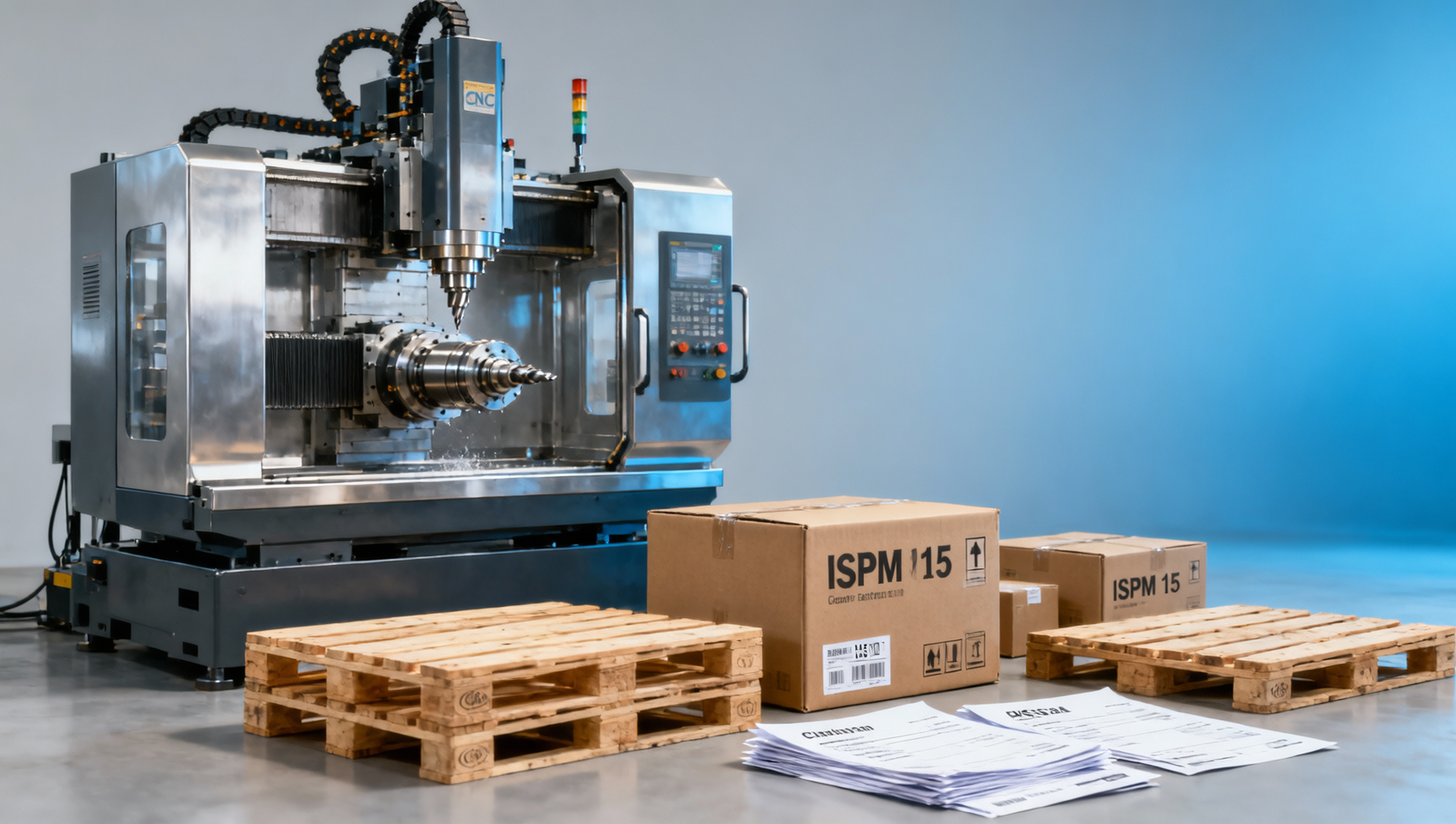
Launching your first international shipment as a CNC manufacturing exporter? Even world-class precision CNC manufacturing or cost-effective CNC manufacturing can stall at customs—due to overlooked documentation like incorrect HS codes, missing certificates of origin, or non-compliant packaging declarations. Whether you're a CNC manufacturing factory serving aerospace, medical devices, or energy equipment—or a machine tool exporter scaling globally—these pitfalls delay deliveries, inflate costs, and damage buyer trust. In this guide, we unpack the top 7 customs documentation errors that trap new exporters—and how space-saving CNC manufacturing setups, automated CNC manufacturing workflows, and lean documentation practices can accelerate your first (and every) cross-border shipment.
Why Customs Documentation Is a Critical Bottleneck for CNC Exporters
For CNC machine tool manufacturers—especially those based in China, Germany, Japan, or South Korea—export readiness isn’t just about production capacity or ISO certification. It’s about alignment with international trade infrastructure. Over 68% of first-time exporters report customs-related delays exceeding 7–15 days on initial shipments, according to a 2023 global machine tool trade survey. These holdups rarely stem from product quality, but from documentation gaps that trigger manual reviews, physical inspections, or even reclassification requests.
CNC lathes, 5-axis machining centers, and high-precision fixtures often fall under complex tariff classifications due to dual-use potential (e.g., aerospace-grade tolerances ±0.005mm or spindle speeds >12,000 rpm). A misclassified HS code can trigger antidumping duties up to 22.3% in key markets like the EU or Canada—or lead to outright rejection if export licenses (e.g., EAR99 or Wassenaar Arrangement compliance) are omitted.
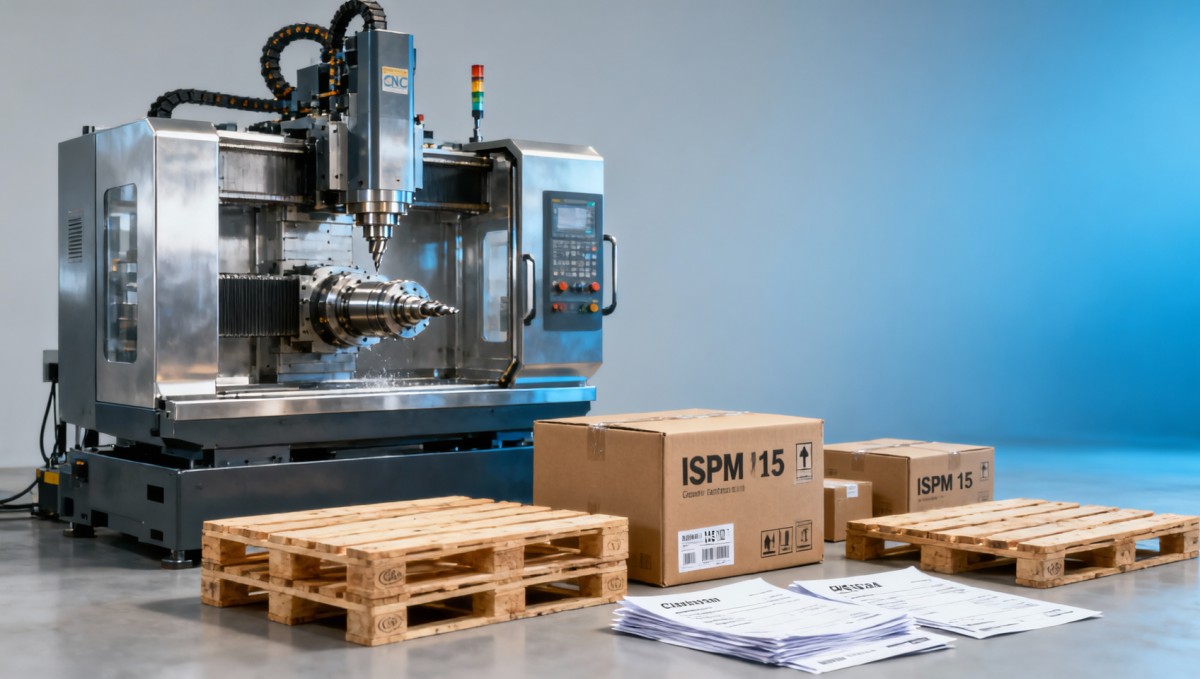
Unlike commodity goods, CNC equipment requires layered documentation: technical specifications must match declared functionality, software embedded in CNC controllers may require separate export authorization, and packaging must declare fumigation status (ISPM 15) for wooden pallets—even if the machine itself is metal-intensive. One inconsistency across three documents can halt clearance for 3–5 business days while corrections are submitted and verified.
Top 7 Customs Documentation Pitfalls — and How to Avoid Them
Based on audits of 142 first-time CNC exporters between 2022–2024, these seven documentation failures account for 89% of avoidable customs delays:
- Incorrect HS Code Assignment: Using generic “8458.11” for all CNC lathes instead of differentiating between turning centers (8458.11.10), Swiss-type machines (8458.11.90), or multi-tasking systems (8458.19.00)—each carrying distinct duty rates and licensing rules.
- Mismatched Certificate of Origin (COO): Issuing a Form A (GSP) for exports to India when the consignment originates from a non-GSP-eligible supplier tier, or failing to notarize COOs for shipments to Turkey, where legalization is mandatory.
- Missing Technical Compliance Declarations: Omitting CE marking Annex III declarations for EU-bound machines, or skipping UL 60204-1 conformity statements required for U.S. industrial control systems.
- Incomplete Packing List Details: Listing “1 unit” without specifying gross/net weight, dimensions, or ISPM 15 stamp confirmation—even when pallets are heat-treated, omission triggers quarantine review.
- Undeclared Embedded Software: Failing to disclose CNC controller firmware versions (e.g., Siemens SINUMERIK 840D sl v4.8) that may be subject to EAR99 controls if containing encryption or motion interpolation algorithms.
- Non-Compliant Commercial Invoice Language: Using vague terms like “industrial equipment” instead of precise descriptors such as “3-axis vertical machining center, max table load 1,200 kg, repeatability ±0.008 mm” — causing classification ambiguity.
- Unverified Export License Exemptions: Assuming EAR99 exemption applies without verifying end-use restrictions—e.g., selling high-speed spindles (>25,000 rpm) to entities on the BIS Entity List.
Documentation Readiness Checklist for First-Time Shipments
This table underscores a core principle: customs authorities don’t assess machines—they assess consistency across documents. A single discrepancy in spindle speed (e.g., “10,000 rpm” on the invoice vs. “12,000 rpm” on the test report) invites scrutiny of all declared specs. Proactive cross-document validation reduces average clearance time from 9.2 days to under 3.5 days for repeat exporters.
Integrating Documentation into Your CNC Manufacturing Workflow
Leading CNC exporters embed documentation compliance into their production lifecycle—not as a final step, but as a parallel track. At Tier-1 suppliers in Guangdong and Baden-Württemberg, documentation packages are auto-generated at the ERP level upon order confirmation, pulling real-time data from MES systems: axis configuration from NC program headers, weight from CAD mass properties, and firmware version from controller diagnostics logs.
This integration cuts manual documentation prep time by 65%, eliminates transcription errors, and ensures traceability. For example, when a customer orders a custom 5-axis machining center with Siemens Sinumerik One control, the system auto-populates the commercial invoice with exact firmware build ID, declares embedded motion planning algorithms per EAR99 Supplement No. 2, and flags whether export license approval is needed before shipping—based on destination and end-user screening.
Lean documentation also supports agile manufacturing. Space-saving CNC setups—such as compact gantry mills or modular tooling cells—require fewer packaging materials, simplifying ISPM 15 declarations. Automated CNC manufacturing workflows feed real-time cycle time and power consumption data into energy efficiency declarations required by South Korea’s KEA or Brazil’s INMETRO certifications—turning operational metrics into compliance assets.
Key Integration Milestones (Typical Timeline)
Companies completing this integration see first-shipment clearance times drop from an industry average of 11.4 days to 2.8 days—and reduce documentation-related rework by 91% within six months. The ROI isn’t just speed: it’s predictable delivery commitments, lower demurrage exposure, and stronger contractual credibility with Tier-1 OEMs in aerospace and medical device sectors.
Action Plan: From Documentation Risk to Export Confidence
Start with a targeted gap assessment—not a full compliance overhaul. Focus on your top 3 export destinations (e.g., USA, Germany, Vietnam), identify the 2–3 most frequently shipped CNC models, and validate only their documentation flows. Prioritize HS code accuracy first: use official national tariff databases (e.g., USITC HTSUS Search, EU TARIC) and cross-check against recent binding tariff information (BTI) rulings for similar machines.
Then, assign one team member—ideally from engineering or quality—to own “spec integrity”: ensuring CAD, NC programs, nameplates, and test reports all declare identical performance parameters. This prevents the most common root cause of customs queries: internal spec drift.
Finally, adopt a “document-as-manufactured” mindset. Every CNC machine leaves the shop floor with a digital twin—including its documented compliance profile. That twin travels with the physical unit, enabling faster resolution if questions arise mid-transit. With this foundation, your next shipment won’t just clear customs—it will set the standard for reliability your global buyers expect.
Ready to audit your CNC export documentation flow and eliminate first-shipment delays? Contact our global trade compliance team for a free 45-minute assessment tailored to your machine types, target markets, and production scale.
PREVIOUS ARTICLE
NEXT ARTICLE
Recommended for You
 Heavy-duty Machining Center for mold making: Why coolant filtration standards evolve faster than OEM manualsMachine Tool Industry Editorial Team
 Quick-change Fixture Design for CNC turning: Why clamping force consistency drops after 200 cyclesCNC Machining Technology Center
 5 Axis Machining for impeller manufacturing: Why toolpath smoothing affects surface fatigue lifeCNC Machining Technology Center
 Lean Production Process implementation: Where value stream mapping fails to expose hidden machine downtimeManufacturing Market Research Center
 Modular Tooling System for flexible manufacturing: Why interface repeatability degrades faster than expectedMachine Tool Industry Editorial Team
 Industrial Automation control system for CNC machines: When cybersecurity updates disrupt scheduled maintenanceMachine Tool Industry Editorial Team


Aris Katos
Future of Carbide Coatings
15+ years in precision manufacturing systems. Specialized in high-speed milling and aerospace grade alloy processing.
▶
CNC manufacturing exporter: What customs documentation pitfalls delay first shipments?Global Machine Tool Trade Research Center▶
Machine Tool Market Recovery Depends on More Than ExportsGlobal Machine Tool Trade Research Center▶
Why automated lathe exports face stricter compliance checksGlobal Machine Tool Trade Research Center▶
What’s really behind the 2026 surge in automated lathe exports from GermanyGlobal Machine Tool Trade Research Center▶
Machine tool distributor reliability: What happens when firmware updates require third-party certificationGlobal Machine Tool Trade Research Center
Mastering 5-Axis Workholding Strategies
Join our technical panel on Nov 15th to learn about reducing vibrations in thin-wall components.

Providing you with integrated sanding solutions
Before-sales and after-sales services
Comprehensive technical support