• Global CNC market projected to reach $128B by 2028 • New EU trade regulations for precision tooling components • Aerospace deman
NYSE: CNC +1.2%LME: STEEL -0.4%

Machine Tool Market Recovery Depends on More Than Exports
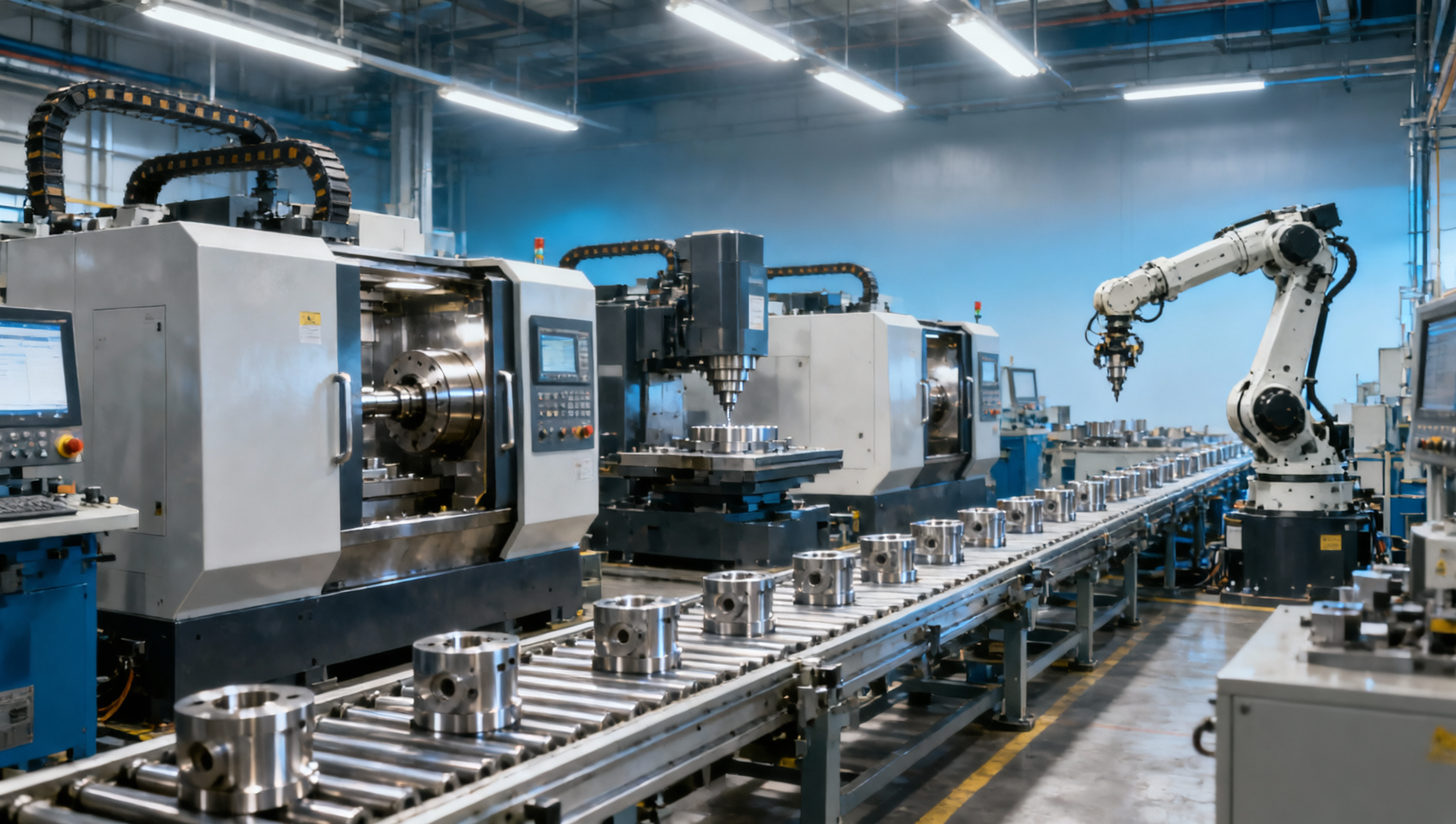
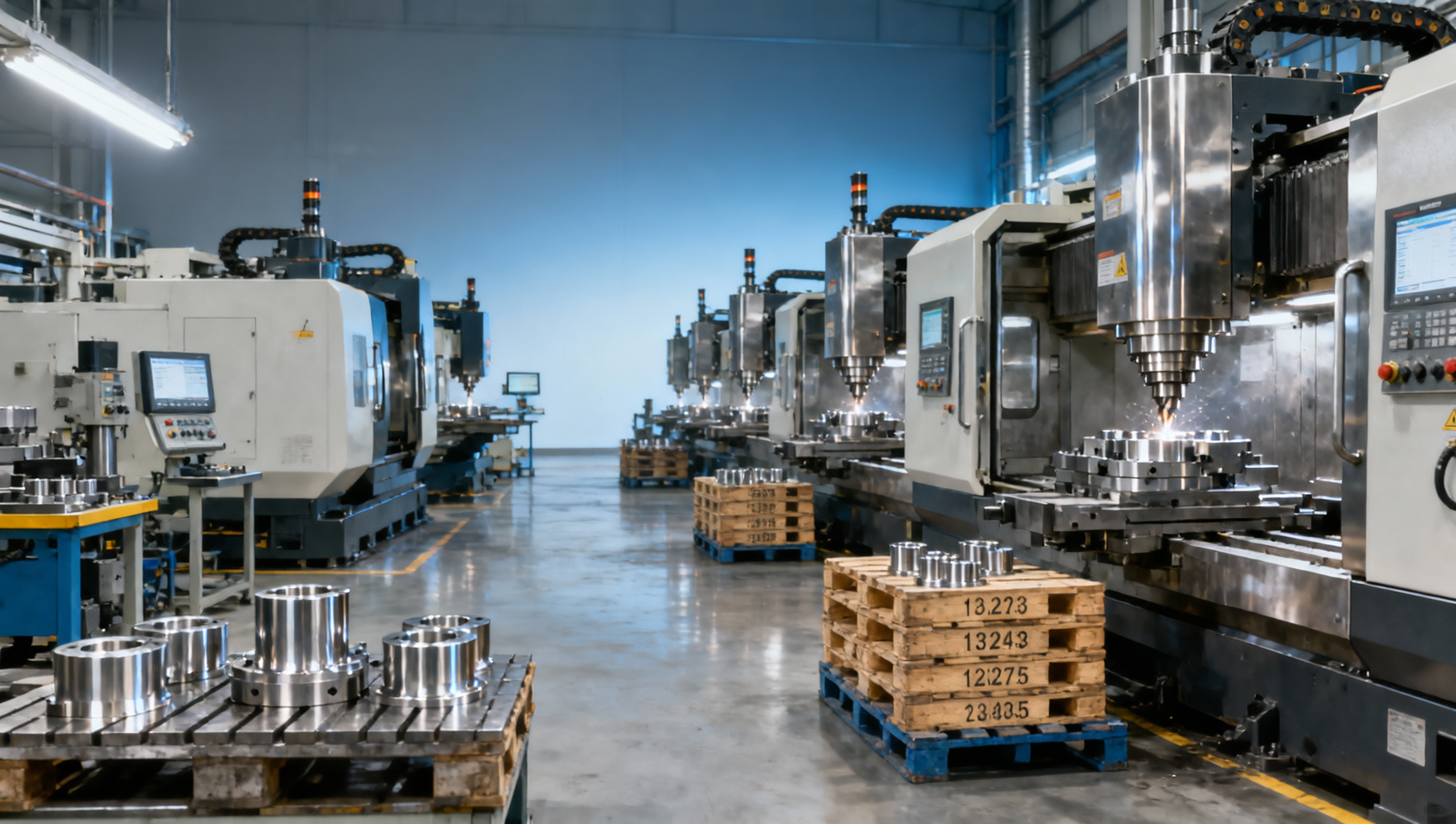
The recovery of the Machine Tool Market will depend on more than export growth alone. As Global Manufacturing shifts toward Industrial Automation, automated production, and smarter CNC industrial systems, demand is being reshaped across the Manufacturing Industry. From metal machining and CNC milling to industrial lathe and vertical lathe applications, companies must align technology, investment, and production strategy to stay competitive.
Why export growth alone cannot drive a full machine tool market recovery
For many manufacturers, exports remain an important revenue channel, but they are no longer a sufficient indicator of a healthy machine tool market. A temporary rise in overseas orders can improve capacity utilization for 3–6 months, yet it does not automatically solve weak domestic investment, delayed equipment replacement, or low confidence in capital spending. In the CNC machine tool industry, recovery becomes sustainable only when production demand, financing conditions, and shop-floor modernization move together.
This matters across automotive manufacturing, aerospace, energy equipment, and electronics production. Buyers are not simply asking for more machines. They are asking for shorter setup time, tighter tolerance control, lower labor dependence, and better integration with automated production lines. A machine tool market recovery based only on exports may increase shipment volume, but it often leaves unresolved the deeper issue of whether end users are upgrading from conventional production to digital, connected, and more flexible manufacturing systems.
For information researchers, the key question is not whether exports are rising, but what type of demand is growing. Are buyers ordering standard CNC lathes for short-term replacement, or are they investing in multi-axis machining centers, industrial robots, and smart factory cells? For procurement teams and decision-makers, this distinction affects supplier selection, lead-time expectations, spare-parts planning, and total cost of ownership over 5–8 years.
Operators and production managers see the issue from another angle. If export-led volume grows while machine utilization remains unstable, shops may run into bottlenecks in tooling, fixturing, maintenance, and programming support. In practical terms, true recovery is visible when machine uptime improves, scrap rates fall within stable process windows, and equipment investment supports both domestic and international demand.
What signals a stronger recovery in the manufacturing industry?
A stronger recovery usually combines 4 signals: replacement of aging machines, investment in automation, expansion of high-precision parts production, and improved visibility on order backlogs. These signals often appear over 2–4 quarters rather than in a single export season. When companies purchase CNC milling, turning, and inspection equipment together, it suggests a broader commitment to process capability rather than a narrow response to trade demand.
- Replacement demand: older machines with poor repeatability, high maintenance frequency, or limited automation interfaces are gradually phased out.
- Process upgrade demand: manufacturers shift from simple machining to multi-process integration, often combining turning, milling, drilling, and probing in one setup.
- Digital demand: users increasingly expect machine data collection, remote diagnostics, and production visibility at machine, line, and plant level.
- Labor pressure response: skilled labor shortages push buyers toward machines with faster setup, easier programming, and stable automatic tool change performance.
When these factors appear together, the machine tool market recovery becomes more balanced. It moves beyond export dependence and supports longer-term competitiveness in global manufacturing.
How demand is changing across CNC machine tools and automated production
Demand in the machine tool market is changing from quantity-focused purchasing to capability-focused investment. A shop that once compared only spindle power or travel range now also compares automation compatibility, software openness, probing options, and unattended production potential. In many facilities, the decision is no longer “buy a machine” but “build a production cell” that can deliver stable output over 2 shifts or even 24/7 operations with planned intervention points.
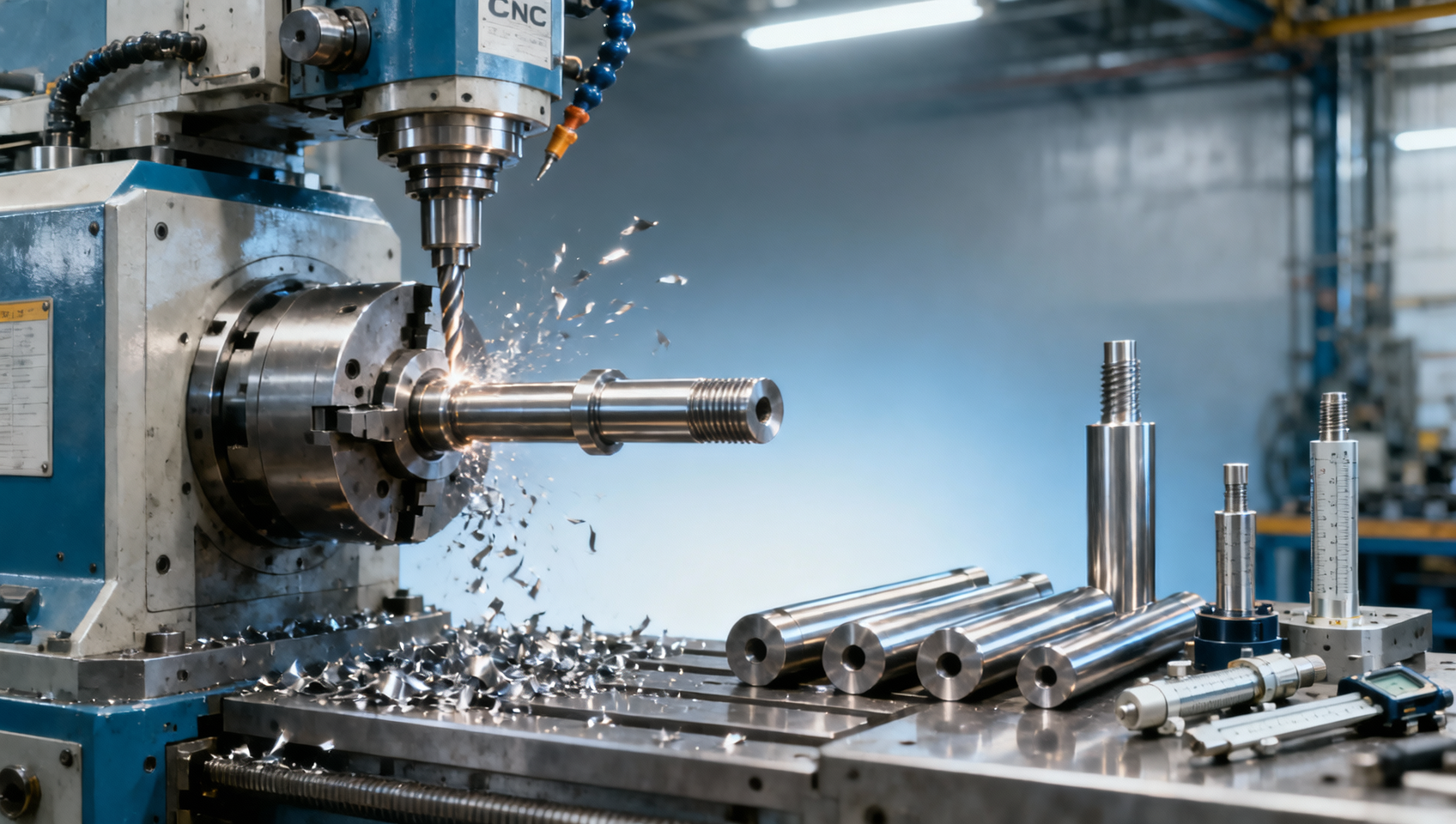
This shift is especially visible in metal machining and CNC industrial systems used for complex shafts, precision discs, housings, and structural parts. In the past, growth in exports could pull orders for standalone machines. Today, manufacturers want machine tools that fit a wider production strategy, including pallet systems, robot loading, tool life monitoring, and data feedback into quality management. As a result, machine tool suppliers that only compete on price face stronger pressure than those that can support process planning and integration.
Different buyer groups evaluate this change differently. Operators care about cycle consistency, interface usability, and maintenance access. Procurement teams focus on delivery windows, spare parts, and service response within 24–72 hours when possible. Business leaders examine return on investment, utilization rates, and how quickly new equipment can support new product introduction within a 6–12 month planning cycle.
The table below shows how demand drivers have shifted in the machine tool market and why export growth is only one part of the picture.
The comparison shows why recovery increasingly depends on automation, process stability, and system compatibility. A company that buys only for immediate export demand may fill near-term orders, but a company that invests in production capability is better positioned for long-cycle growth.
Which machine categories benefit most from this shift?
Machining centers, CNC lathes, vertical lathes, and multi-axis systems all benefit, but not in the same way. High-mix, mid-volume producers often prioritize machining centers with automatic tool changers and probing. Heavy-part manufacturers may focus on vertical lathe platforms with stable rigidity and easier automation around loading. Precision suppliers serving aerospace or electronics tend to value thermal stability, repeatability, and digital process traceability more than simple output speed alone.
In other words, the machine tool market recovery is becoming segmented. The strongest demand often follows sectors where process complexity, labor pressure, and quality requirements are all increasing at the same time.
What procurement teams should evaluate before investing in CNC machine tools
Procurement decisions in the machine tool market are now more complex than comparing quotations from 3 suppliers. The practical evaluation should include machine capability, application fit, after-sales support, integration readiness, and delivery certainty. A lower initial price can become expensive if the machine requires frequent manual intervention, has long spare-parts lead times, or cannot meet target accuracy under continuous production conditions.
For purchasing managers, at least 5 checkpoints should be reviewed before final approval: part type, tolerance target, production volume, automation plan, and service availability. These checkpoints help align capital expenditure with production reality. For example, a machine intended for prototype and small-batch work may need flexibility in tooling and programming, while a machine for repeat orders may need stronger focus on uptime, palletization, and cycle balance.
Decision-makers should also compare the full timeline. A standard configuration may ship in 6–12 weeks, while a customized solution with automation, probing, or special fixtures may require 12–20 weeks depending on complexity and supplier coordination. If installation, training, and acceptance take another 1–3 weeks, poor planning can delay output even when the machine arrives on time.
The table below can be used as a practical procurement guide for CNC machine tools, industrial lathes, and automated production equipment.
A structured review like this helps purchasing teams compare suppliers on usable business value instead of headline pricing. In the current machine tool market, disciplined evaluation often matters more than chasing the fastest quote.
A simple 4-step investment review process
- Define the production target: identify annual volume, batch size, target tolerance, and desired staffing model.
- Validate the process route: confirm whether turning, milling, drilling, probing, and deburring should be separated or combined.
- Compare supplier capability: review technical proposal quality, installation support, and realistic service coverage.
- Plan implementation: include foundation, power, compressed air, training, tooling, and first-batch trial production.
This process is especially useful for enterprises that are upgrading from manual or semi-automatic workflows to CNC industrial systems and automated production lines.
Where smart manufacturing and automation create the strongest recovery momentum
The strongest recovery momentum in the machine tool market often comes from application scenarios where precision, consistency, and throughput must improve together. Automotive parts suppliers need stable cycle times and reliable repeatability over medium to large batches. Aerospace suppliers need traceable quality and multi-axis capability for complex geometries. Energy equipment producers often require rigid machines for large or difficult-to-machine parts. Electronics production needs compact precision, low vibration, and fine process control.
These scenarios share a common requirement: machine tools must work as part of a broader production system. A CNC milling machine linked with tool management and probing can reduce variation between shifts. A vertical lathe integrated with automatic loading can improve productivity while reducing manual handling risk. A machining center connected to a digital production dashboard can help managers monitor downtime causes every day, every week, and every month.
For operators, automation creates value when it removes repetitive intervention without making the machine harder to run. For management, it creates value when planned output becomes more predictable. That is why smart manufacturing is not only a technology trend. It is a recovery mechanism that supports better labor allocation, improved machine utilization, and more resilient production planning.
Below is a practical view of where different machine configurations fit best across industrial applications.
This application mapping is useful because it links machine tool market recovery to real production demand. It shows that stronger growth is likely where automation and precision are business necessities, not optional upgrades.
Common implementation risks during automation upgrades
Many projects underperform not because the machine is unsuitable, but because implementation is incomplete. A plant may install a capable CNC machine yet delay fixture validation, tool presetting, or operator training for 2–6 weeks. That gap reduces the expected return and creates the false impression that the machine tool market recovery is weaker than it really is.
- Underestimating auxiliary requirements such as coolant management, chip handling, and compressed air stability.
- Buying a machine with automation potential but no immediate plan for loading, tool monitoring, or process verification.
- Failing to define acceptance criteria for accuracy, cycle time, and first-batch yield before delivery.
These issues can be managed with better project planning and supplier communication from the early quotation stage.
FAQ: practical questions buyers ask about machine tool market recovery
How should buyers judge whether demand is temporary or structural?
Look beyond order volume. Structural demand usually includes repeat purchasing, higher automation content, and investment in related systems such as tooling, probing, and digital monitoring. If demand is driven mainly by short-term export orders without domestic capacity planning, it may last only one or two quarters. If it includes replacement programs and line upgrades, it is more likely to support longer recovery.
What evidence should be reviewed?
Review machine utilization, backlog quality, customer mix, and whether new projects require tighter tolerances or faster turnaround. These indicators are often more reliable than shipment volume alone.
What are the most common mistakes when purchasing CNC machine tools?
The most common mistakes are buying based only on price, ignoring process match, and underestimating after-sales support. Another frequent issue is selecting a machine for today’s part size and material without considering 12–24 months of future product change. This can force premature reinvestment or cause production constraints earlier than expected.
How can procurement teams reduce this risk?
Prepare a clear technical checklist, involve operators and process engineers in evaluation, and request acceptance criteria tied to real parts whenever possible. That approach improves supplier comparison and shortens internal approval cycles.
Are smart factory features necessary for all machine tool investments?
Not all investments need a full smart factory architecture from day one. However, most modern buyers should at least consider basic connectivity, maintenance diagnostics, and automation interface readiness. Even if advanced functions are added later, starting with compatible equipment avoids expensive retrofits. For many plants, a phased approach over 2 or 3 stages is more practical than a single large transformation.
What is a realistic delivery and implementation timeline?
It depends on machine type and customization level. Standard CNC machine tools may be available in roughly 6–12 weeks. More complex systems with automation, custom fixtures, or inspection integration may need 12–20 weeks. Installation, training, test cutting, and acceptance often add 1–3 weeks. Buyers should plan the complete project timeline rather than the shipping date only.
Why work with a platform that understands both global supply and production reality
When the machine tool market recovery depends on more than exports, buyers need more than product listings. They need market analysis, technical context, and practical support for comparing CNC machine tools, precision manufacturing solutions, and automated production strategies. A platform focused on global CNC machining and precision manufacturing can help bridge the gap between industry news and actual purchasing action.
This is especially valuable for research teams tracking suppliers across China, Germany, Japan, South Korea, and other manufacturing hubs. Differences in machine configuration, service models, delivery practices, and component ecosystems can have a major effect on project success. Better visibility helps buyers avoid mismatched quotations and narrow shortlists more efficiently.
If you are evaluating CNC lathes, machining centers, vertical lathes, multi-axis systems, cutting tools, fixtures, or automated assembly solutions, the most useful next step is not a generic inquiry. It is a focused discussion around 6 core items: part type, required process, tolerance range, expected volume, delivery window, and service expectations. That information makes technical comparison and quotation review far more productive.
Contact us if you need support with parameter confirmation, product selection, typical delivery cycles, automation matching, certification-related questions, sample machining discussion, or quotation coordination. With the right technical and market guidance, companies can respond to machine tool market recovery with better timing, lower risk, and a more competitive production strategy.
NEXT ARTICLE
Recommended for You
 Global Manufacturing Lead Times Improve but Not EverywhereGlobal Machine Tool Trade Research Center
 Machine Tool Market Inventory Pressure Is Building AgainGlobal Machine Tool Trade Research Center
 Metal Lathe vs CNC Milling for Low Volume Round PartsCNC Machining Technology Center
 CNC Cutting Gas Choice Affects More Than Edge FinishCNC Machining Technology Center
 CNC Metalworking Shops Face New Pressure on TraceabilityManufacturing Policy Research Center
 Automated Lathe Cycle Time Gains Can Hide Quality LossesCNC Machining Technology Center


Aris Katos
Future of Carbide Coatings
15+ years in precision manufacturing systems. Specialized in high-speed milling and aerospace grade alloy processing.
▶
Machine Tool Market Recovery Depends on More Than ExportsGlobal Machine Tool Trade Research Center▶
What’s really behind the 2026 surge in automated lathe exports from GermanyGlobal Machine Tool Trade Research Center▶
Machine tool distributor reliability: What happens when firmware updates require third-party certificationGlobal Machine Tool Trade Research Center▶
CNC manufacturing exporter challenges in 2026: Beyond customs paperwork and CE markingGlobal Machine Tool Trade Research Center▶
What’s driving the surge in CNC lathe exports to Southeast Asia — beyond just priceGlobal Machine Tool Trade Research Center
Mastering 5-Axis Workholding Strategies
Join our technical panel on Nov 15th to learn about reducing vibrations in thin-wall components.

Providing you with integrated sanding solutions
Before-sales and after-sales services
Comprehensive technical support