• Global CNC market projected to reach $128B by 2028 • New EU trade regulations for precision tooling components • Aerospace deman
NYSE: CNC +1.2%LME: STEEL -0.4%

Automated Production Line gaps that appear between design and launch
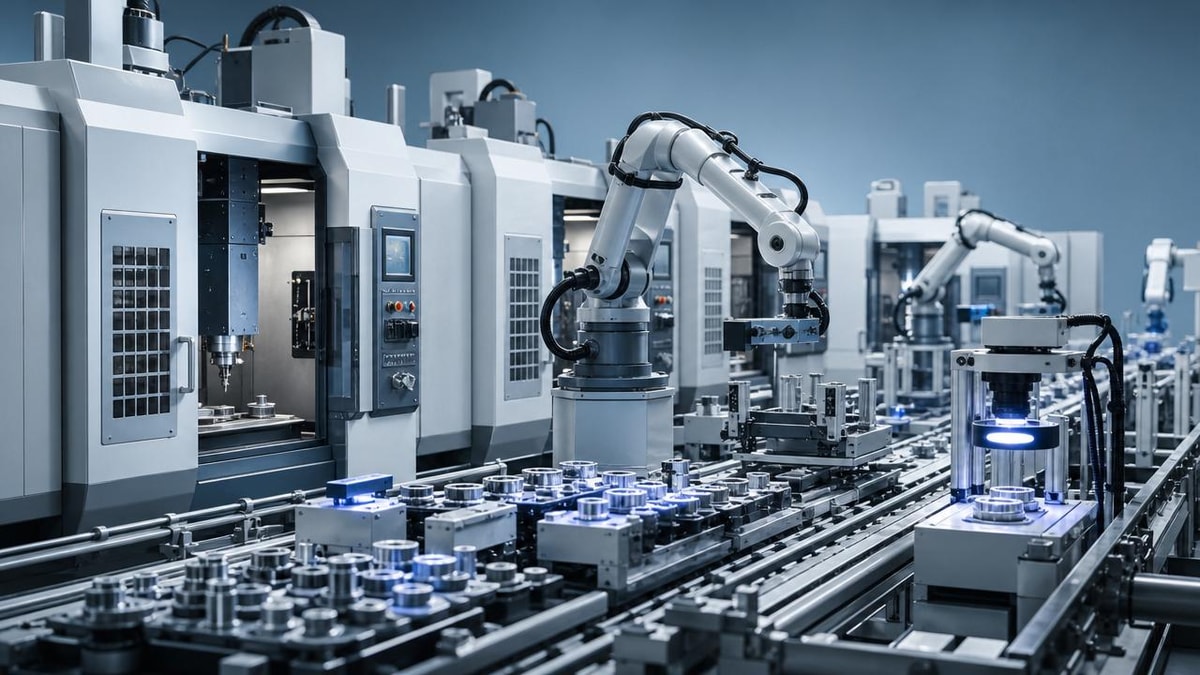
An Automated Production Line often looks complete on paper, yet critical gaps can emerge between design approval and successful launch. For project managers and engineering leads, these hidden issues can delay commissioning, increase costs, and disrupt quality targets. Understanding where planning, integration, and on-site execution fall out of sync is essential to delivering a stable, efficient, and scalable production system.
What the gap really means in an Automated Production Line
In manufacturing, the phrase Automated Production Line usually refers to a connected system of CNC machine tools, robots, fixtures, transfer units, inspection stations, control software, and material handling equipment working as one process chain. The design package may include cycle time targets, layout drawings, utility requirements, process flow, safety logic, and digital control architecture. However, the period between approved design and production launch is where many assumptions are tested for the first time.
The “gap” is not only a technical defect. It is often the difference between planned performance and real operating conditions. A line may pass design review but still fail to reach output because component tolerances vary, operator access is poor, robot reach is limited, upstream parts are unstable, or data exchange between machines is incomplete. For project leaders, these are not isolated problems. They are coordination failures across engineering, procurement, controls, tooling, installation, and production readiness.
This topic matters across automotive, aerospace, electronics, energy equipment, and precision manufacturing because modern lines are more integrated than ever. CNC lathes, machining centers, multi-axis systems, industrial robots, and automated inspection cells now depend on synchronized software, accurate fixtures, reliable tool management, and stable logistics. As smart manufacturing expands globally, an Automated Production Line is no longer judged by equipment quality alone, but by how smoothly the entire system moves from concept to sustained output.
Why the industry pays close attention to launch-stage gaps
The CNC machine tool sector sits at the center of advanced manufacturing. Precision, repeatability, and automation are expected, especially in high-value applications such as engine components, structural aerospace parts, battery housings, precision discs, and complex shafts. In these environments, a delayed launch affects much more than schedule. It can interrupt customer deliveries, delay validation, consume engineering resources, and weaken confidence in future automation projects.
Several industry trends make launch gaps more visible. First, product complexity is rising, which means line designs must support tighter tolerances and more process steps. Second, automation density is increasing, so small interface errors can spread across multiple stations. Third, digital integration is becoming standard, requiring MES connectivity, traceability, machine data capture, and coordinated control logic. Finally, global supply chains often involve multiple equipment vendors, making system ownership less clear unless project governance is strong.
For project management teams, this means the most difficult risks often appear after design sign-off but before stable production. At this stage, every overlooked detail becomes expensive: air supply quality, coolant management, chip evacuation, tool presetting, fixture repeatability, robot gripper wear, sensor placement, software handshakes, and operator recovery procedures. A well-designed Automated Production Line can still struggle if launch planning is treated as a final checklist instead of a structured integration phase.
Common gaps between design and launch
Most launch problems fall into a limited number of categories. Recognizing them early helps teams prioritize prevention instead of relying on last-minute troubleshooting.
Behind these symptoms is usually a missing link in cross-functional alignment. A process engineer may optimize machining time without confirming robot handling stability. A controls supplier may complete logic sequencing without finalizing exception recovery with operators. A machine builder may install equipment on time, but utility connections, calibration routines, and spare part definitions may still be incomplete. In an Automated Production Line, success depends on the interfaces between disciplines, not only on each discipline’s individual quality.
Where these gaps show up in CNC and precision manufacturing
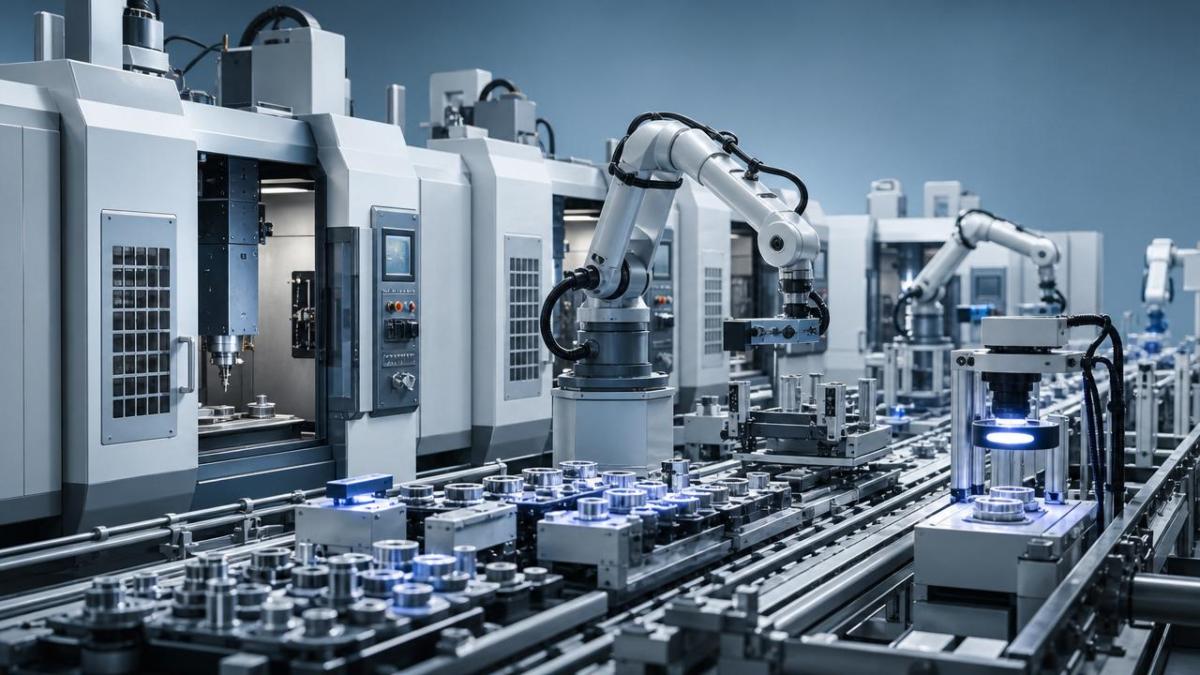
The issue is especially important in the global CNC machining and precision manufacturing industry because process stability is directly linked to equipment capability. In a standalone machine, a fault may be local and manageable. In an Automated Production Line, one unstable station can block the entire system. That is why launch gaps often appear in highly automated machining cells, transfer lines, palletized machining centers, robotic loading systems, and integrated measuring stations.
Consider a line producing precision shafts for automotive transmission systems. On paper, the process may look balanced across turning, milling, washing, gauging, and unloading. At launch, however, thermal variation may affect dimensional consistency, chips may interfere with sensors, wash cycle timing may bottleneck the line, or gauging results may not synchronize correctly with CNC offsets. None of these issues necessarily indicate poor equipment. They reveal that real-world manufacturing behavior was not fully closed during design.
A similar pattern appears in aerospace or energy equipment production, where large structural parts require multi-axis machining, strict traceability, and stable fixture positioning. Even minor mismatches between digital planning and workshop conditions can slow launch significantly. As manufacturers adopt smart factory models, these challenges expand to include data reliability, remote diagnostics, predictive maintenance readiness, and integration with plant-wide scheduling systems.
Business value of closing the gap early
For project managers and engineering leads, closing launch gaps is not only a technical duty. It creates measurable business value. A better-prepared Automated Production Line reaches SOP faster, reduces unplanned engineering changes, and improves confidence in output forecasts. This supports customer delivery commitments and lowers the hidden cost of repeated commissioning activity.
There is also a quality advantage. When fixture behavior, tool life, control logic, and inspection feedback are validated before full-rate production, the line is more likely to achieve repeatable process capability. This matters in precision manufacturing, where scrap is expensive and customer tolerance windows are tight. Stable launch also improves training effectiveness because operators learn on a process that behaves predictably rather than one that changes every shift.
From a strategic perspective, organizations that manage this transition well are more prepared to scale automation. They can replicate successful methods across plants, compare supplier performance more fairly, and build stronger internal standards for digital integration, acceptance criteria, and industrial engineering reviews. In short, reducing the gap protects both current project performance and future automation maturity.
Typical scenarios and who benefits most
Not every project experiences the same risk profile. The value of gap management is highest when line complexity, quality demands, or supplier coordination are high.
These scenarios are common across automotive components, electronics housings, energy equipment parts, and export-oriented precision manufacturing facilities. In each case, the Automated Production Line must perform not only as a machine sequence, but as a business system that supports delivery, quality assurance, and long-term process control.
Practical recommendations for project managers and engineering leads
A strong launch does not happen by accident. It requires a disciplined transition plan from design to execution. First, define clear interface ownership early. Every handoff between CNC machines, robots, conveyors, inspection units, software platforms, and utilities should have a named owner, acceptance criteria, and escalation route. This reduces the common problem of issues being identified but not resolved because responsibility is unclear.
Second, validate process assumptions under realistic conditions. Simulation is useful, but it should be supported by actual cutting trials, fixture repeatability studies, tool life verification, and maintenance access checks. For an Automated Production Line, real production materials, real tolerances, and realistic operator behavior reveal risks that models alone may miss.
Third, treat software and controls as launch-critical deliverables, not final add-ons. PLC logic, CNC programs, robot paths, alarm structures, interlocks, and MES communication should be tested together with failure recovery scenarios. A line that runs once under ideal conditions is not truly launch-ready if it cannot recover smoothly from a blocked part, sensor fault, or communication timeout.
Fourth, build production readiness into the project timeline. Operator training, spare part planning, preventive maintenance tasks, standard work, quality reaction plans, and shift support coverage must be prepared before SOP. Too many projects focus on equipment completion while underestimating the importance of plant readiness. In practice, many launch delays are caused by weak recovery capability rather than by basic machine failure.
Fifth, use phased acceptance instead of one final milestone. FAT, SAT, dry run, pilot build, capability confirmation, and ramp-up review should each have measurable outputs. This allows teams to detect whether the Automated Production Line is merely installed, functionally integrated, process-capable, or truly production-stable. Those are different conditions and should not be confused.
A practical framework for reducing launch risk
A useful way to manage the transition is to review the line through five lenses: process, equipment, controls, people, and data. Process asks whether cutting parameters, part flow, and quality checks are proven. Equipment asks whether machines, tools, fixtures, and automation hardware can hold performance consistently. Controls asks whether sequencing, interlocks, and traceability work together. People asks whether operators and maintenance staff can run and recover the line. Data asks whether production signals are accurate enough for decision-making and continuous improvement.
If one lens is weak, launch stability suffers. This is why an Automated Production Line should be reviewed as a whole operating system. For leaders managing cross-border suppliers or complex manufacturing programs, this framework helps convert abstract launch risk into visible work packages and measurable readiness checks.
Conclusion and next-step thinking
The distance between design approval and a successful launch is often where the true difficulty of an Automated Production Line becomes visible. In the CNC machine tool and precision manufacturing sector, that distance is shaped by process validation, mechanical integration, controls coordination, operator readiness, and data reliability. When these areas are aligned early, manufacturers gain faster ramp-up, better quality stability, and stronger return on automation investment.
For project managers and engineering leads, the key is to move beyond equipment completion and focus on system readiness. A well-planned Automated Production Line is not only designed correctly; it is launched with enough discipline to perform under real production conditions. Teams that approach launch as a structured integration stage, supported by realistic validation and clear ownership, are far more likely to deliver a production system that is efficient, scalable, and ready for long-term manufacturing success.
PREVIOUS ARTICLE
NEXT ARTICLE
Recommended for You
![]() Beijing’s New E-Bike Lock Regulation Spurs CNC Housing DemandGlobal Machine Tool Trade Research Center
Beijing’s New E-Bike Lock Regulation Spurs CNC Housing DemandGlobal Machine Tool Trade Research Center![]() New Drone Standard GB/T 44723–2026 Takes Effect May 2026Manufacturing Policy Research Center
New Drone Standard GB/T 44723–2026 Takes Effect May 2026Manufacturing Policy Research Center![]() New Maritime Code Takes Effect May 1, 2026: CNC Equipment Shipping Rules UpdatedManufacturing Market Research Center
New Maritime Code Takes Effect May 1, 2026: CNC Equipment Shipping Rules UpdatedManufacturing Market Research Center![]() 2026 China Cycle Shanghai: CNC E-Bike Frame Capacity Draws ODM FocusManufacturing Market Research Center
2026 China Cycle Shanghai: CNC E-Bike Frame Capacity Draws ODM FocusManufacturing Market Research Center![]() 2026 Foshan Tanzhou Auto Expo: EV Parts Sourcing FocusGlobal Machine Tool Trade Research Center
2026 Foshan Tanzhou Auto Expo: EV Parts Sourcing FocusGlobal Machine Tool Trade Research Center![]() New Hazardous Chemicals Safety Law Takes Effect May 2026Manufacturing Policy Research Center
New Hazardous Chemicals Safety Law Takes Effect May 2026Manufacturing Policy Research Center


Aris Katos
Future of Carbide Coatings
15+ years in precision manufacturing systems. Specialized in high-speed milling and aerospace grade alloy processing.
▶
Automated Production Line gaps that appear between design and launchMachine Tool Industry Editorial Team▶
What breaks first in automated production under mixed-part runs?Machine Tool Industry Editorial Team▶
When an Automated Production Line needs a redesignMachine Tool Industry Editorial Team▶
Space-saving CNC manufacturing without losing throughputMachine Tool Industry Editorial Team▶
Automated production lines fail when data flow is ignoredMachine Tool Industry Editorial Team
Mastering 5-Axis Workholding Strategies
Join our technical panel on Nov 15th to learn about reducing vibrations in thin-wall components.

Providing you with integrated sanding solutions
Before-sales and after-sales services
Comprehensive technical support